SAVE THE ARCTIC!
The North Way
The interest in opening Arctic sea routes, like the Northwest Passage (NWP) and Northeast Passage (NSR)/Northern Sea Route (NSR), stems from climate change reducing ice, offering shorter shipping routes between Europe/Asia and the Americas, saving time and fuel compared to the Suez/Panama Canals, and unlocking vast natural resources (oil, gas, minerals). Russia actively develops the NSR, while the US, Canada, and others focus on the NWP, leading to geopolitical disputes over sovereignty and control of these emerging trade routes and resources, despite significant environmental risks and navigational challenges like icebergs.
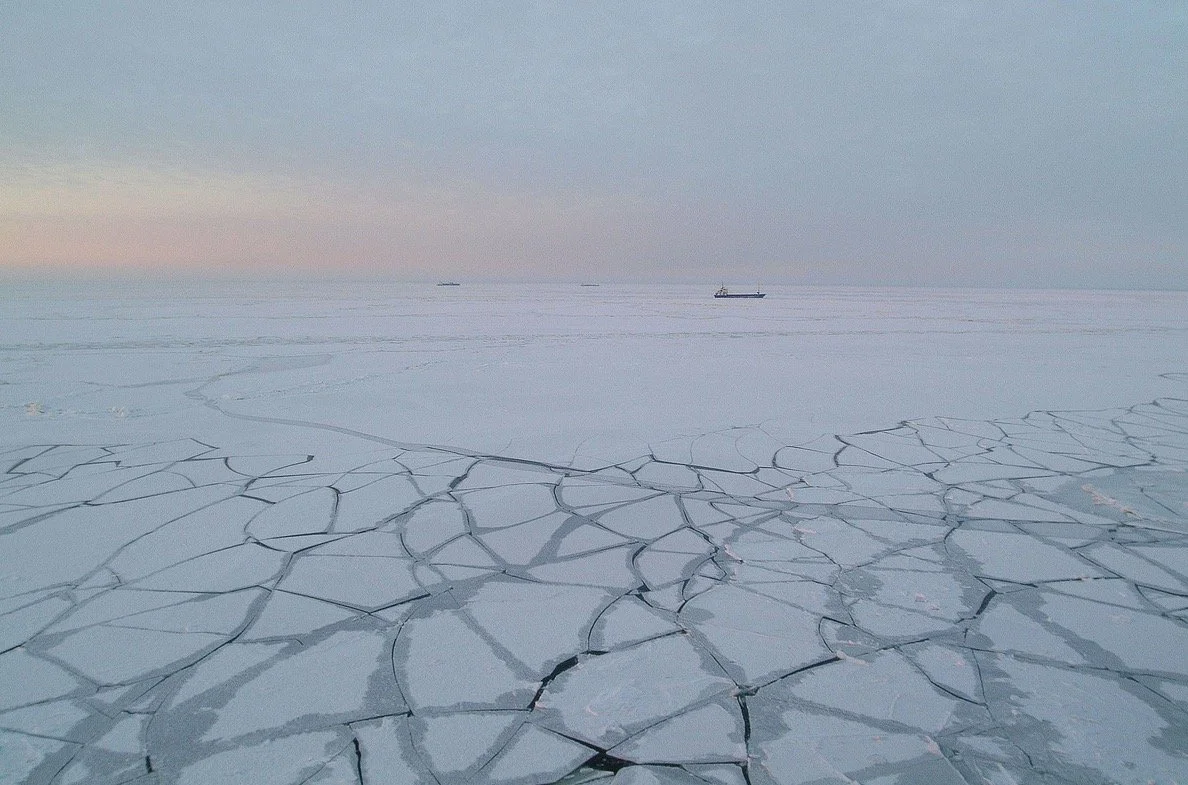
Ships trapped in the ice of the Gulf of Finland. The melting of the Gulf of Finland's sea ice is a key indicator of climate change, showing a significant trend of shorter ice seasons, thinner ice, and warmer surface waters over recent decades, though variability exists year-to-year. While some winters see extensive freezing, like the significant freeze of 2024/2025, the long-term data reveals a decrease in overall ice duration, with earlier melts in the north but sometimes delayed melts in the Gulf itself due to local conditions, all pointing to a warming Baltic Sea system influenced by global climate shifts.
The Earth lost about 28 trillion tons of ice between 1994 and 2017, and it is now melting at a rate of 1.2 trillion tons a year. That's more than the weight of all living things on earth. Each year. In fact, it's enough that the Earth's crust is moving, both vertically and horizontally as a result.
Key Arctic Routes
Northeast Passage (NSR): Along Russia's Arctic coast, heavily developed by Russia, which seeks to control it for revenue and strategic advantage.
Northwest Passage (NWP): Through Canada's Arctic Archipelago, a network of routes with complex legal status (international vs. internal waters) and significant ice.
Transpolar Sea Route (TSR): A potential future route over the North Pole, currently mostly inaccessible.
Why the Interest?
Shorter Trade Routes: Dramatically reduces transit distances between Asia and Europe/North America.
Economic Potential: Access to vast untapped oil, gas, and mineral reserves.
Strategic & Geopolitical Importance: Nations compete for control, infrastructure, and influence in the Arctic.
Challenges & Concerns
Environmental Impact: Increased shipping and development pose risks to fragile ecosystems.
Navigational Hazards: Still challenging due to sea ice, icebergs, and lack of infrastructure, requiring icebreakers.
Legal & Political Disputes: Contested claims over sovereignty and navigation rights, especially between Russia and Western nations.
Melting Arctic to Open Up New Trade Routes and Geopolitical ...
15 ago 2023 — Access not only creates opportunities for the maritime sector, but the region is rich in fossil fuels, critical minerals and marin...
Bradley Arant
Northwest and Northeast Passages? - Discovering the Arctic
The Northeast Passage runs along the Arctic coast of Russia between the Atlantic and Pacific Oceans, and is considered to be under...
Discovering the Arctic
Governing the Melting Arctic: Geopolitical Tensions and Legal Gaps
4 sept 2025 — This accelerated warming is triggering profound environmental shifts, including sea ice loss, glacial retreat, and altered precipi...
Earth.Org
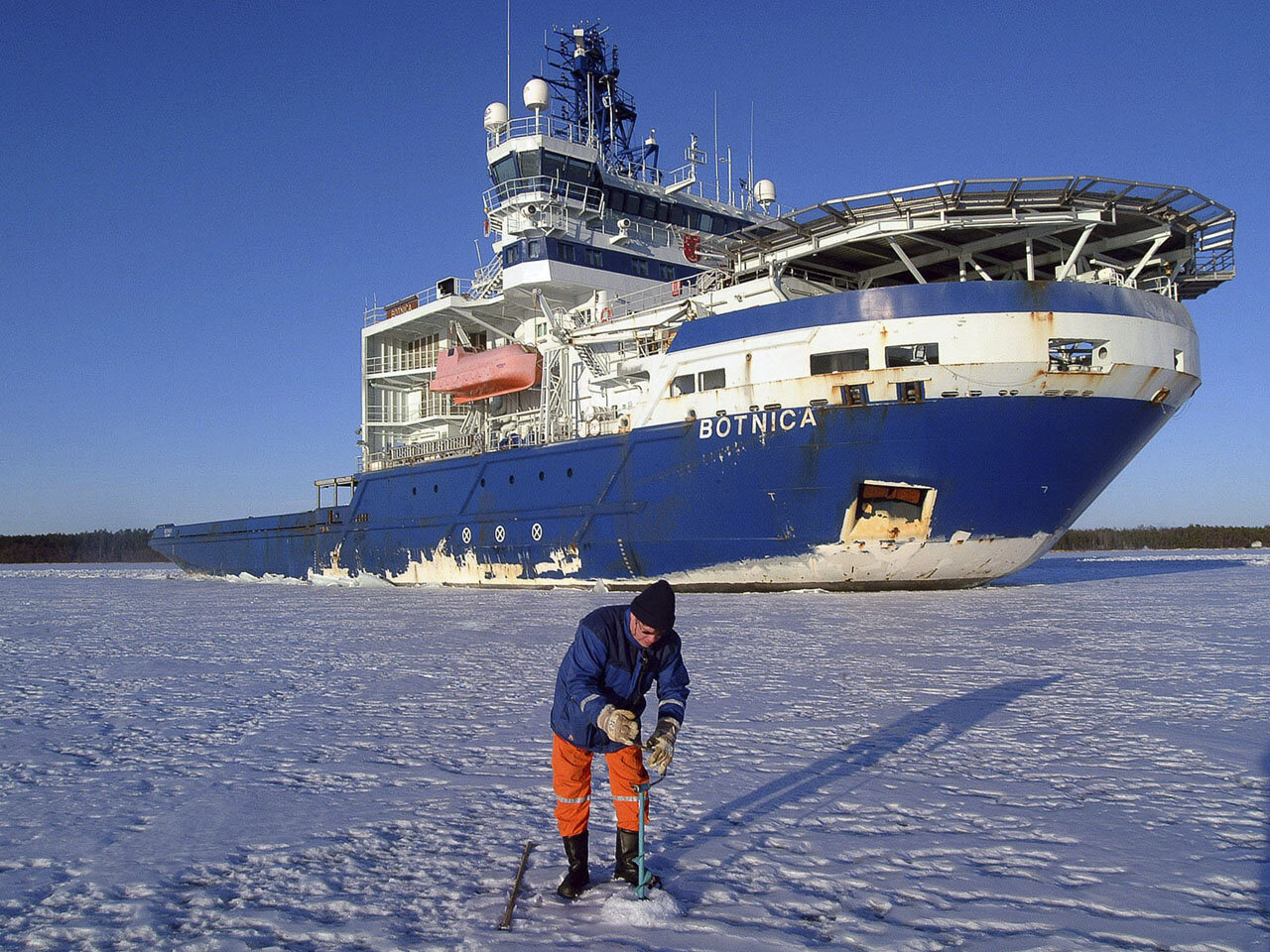
MSV Botnica is a multipurpose offshore support vessel and icebreaker built by Finnyards in Rauma, Finland in 1998. She was the newest and technically most advanced state-owned icebreaker of Finland until 2012, when she was sold to the Port of Tallinn, Estonia for 50 million euro.[4] Botnica is used as an escort icebreaker in the Baltic Sea during the winter months and it carries out subsea and offshore construction works worldwide during the open water season.
In the image, a scientific drilling through the ice in the Gulf of Bothnia to measure ice thickness in different areas. Icebreakers help maritime traffic during the winter, but due to rising global temperatures, the ice cover is becoming smaller and weaker each year, impacting ecosystems and wildlife.