FORTRESS EUROPE
Europe of Broken Dreams | Greece Builds the Last Wall of Shame
DOCUMENTARY AND ETHNOGRAPHIC RESEARCH, 2003-2018
September, Greece, 2011
From Europe, we sold them the false image of a dream they could achieve, a chimera of prosperity projected through screens. Far from that truth, sheltered by that chimera, thousands left their homes with nothing but the clothes on their backs. They travel for days, weeks, and months through Asia and Africa with the sole hope of a better life, but in that adventure toward a lost paradise, hundreds have been lost along the way, drowned trying to cross the Evros River that separates Turkey from Greece and the European Union.
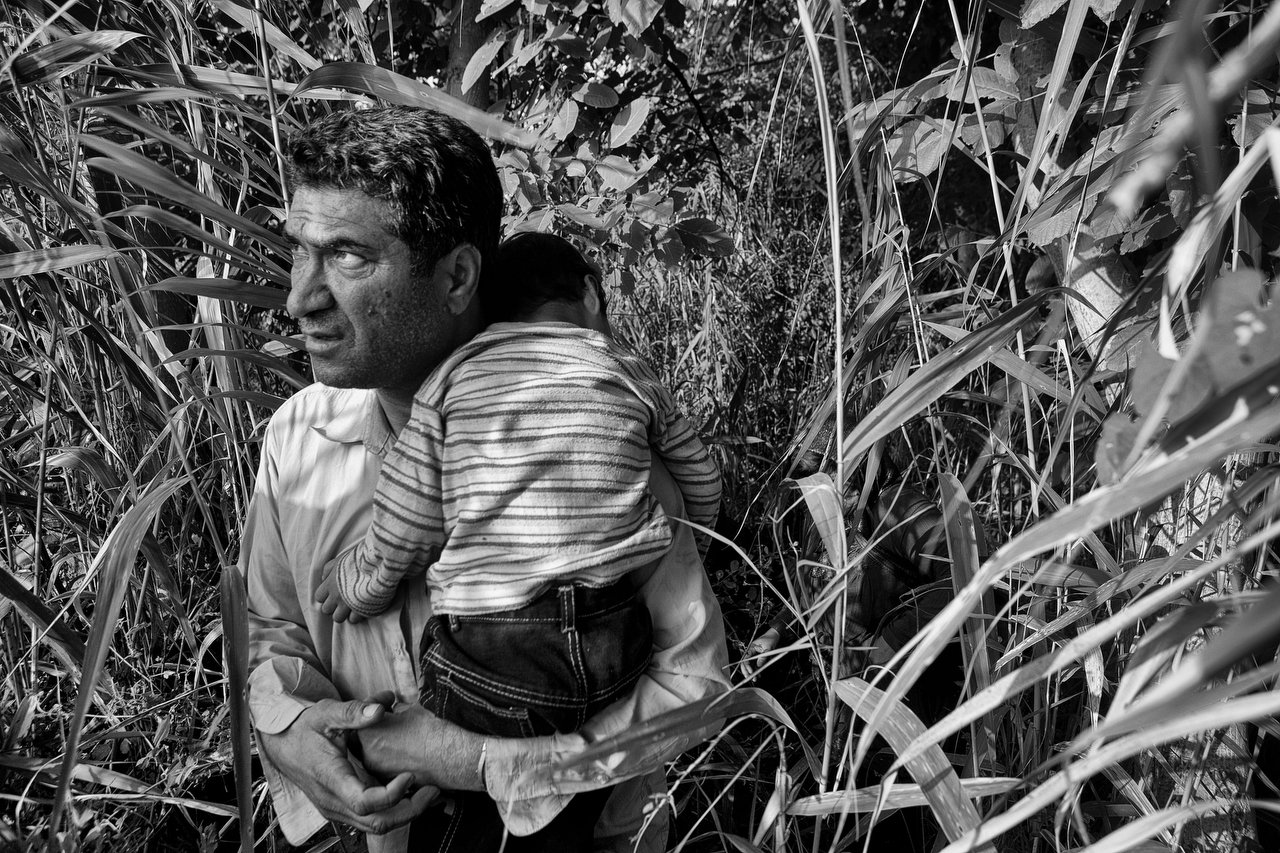
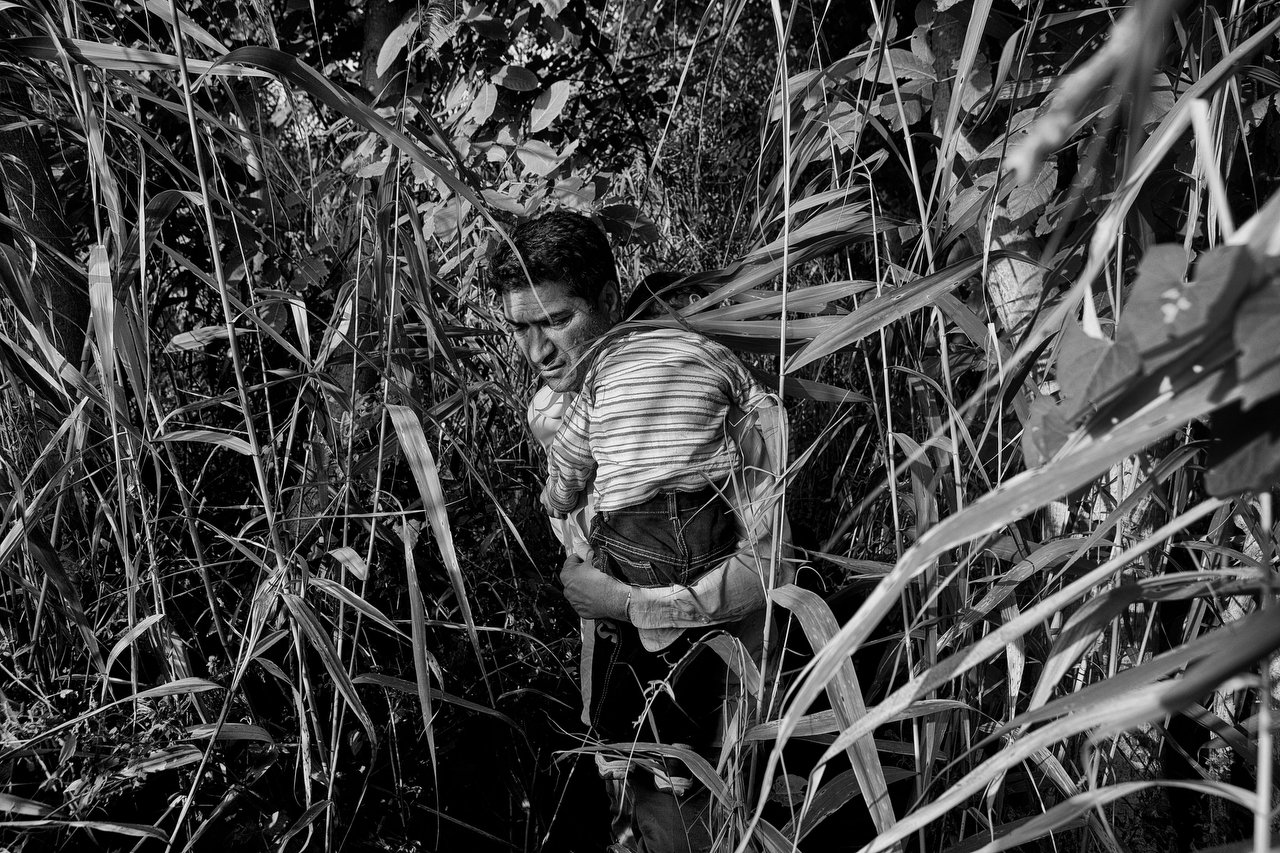
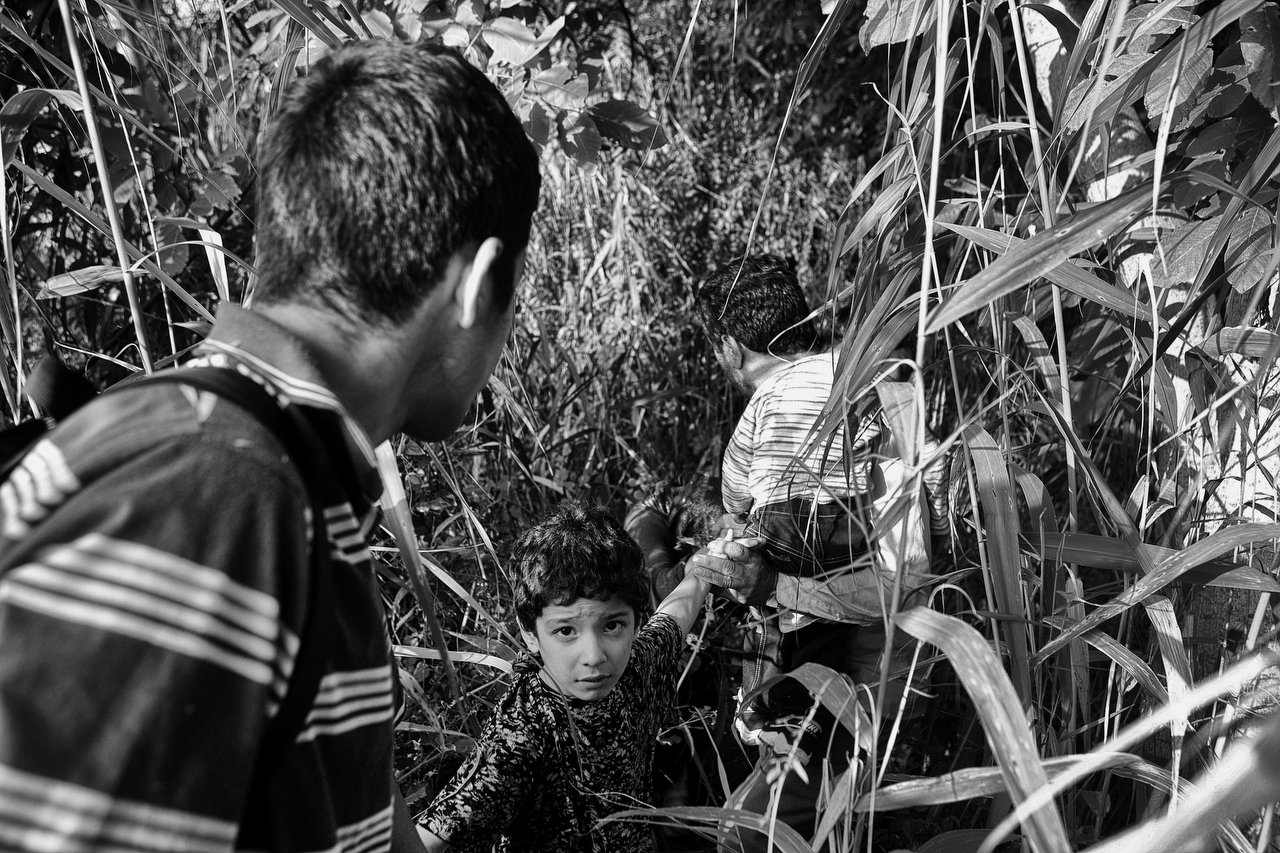
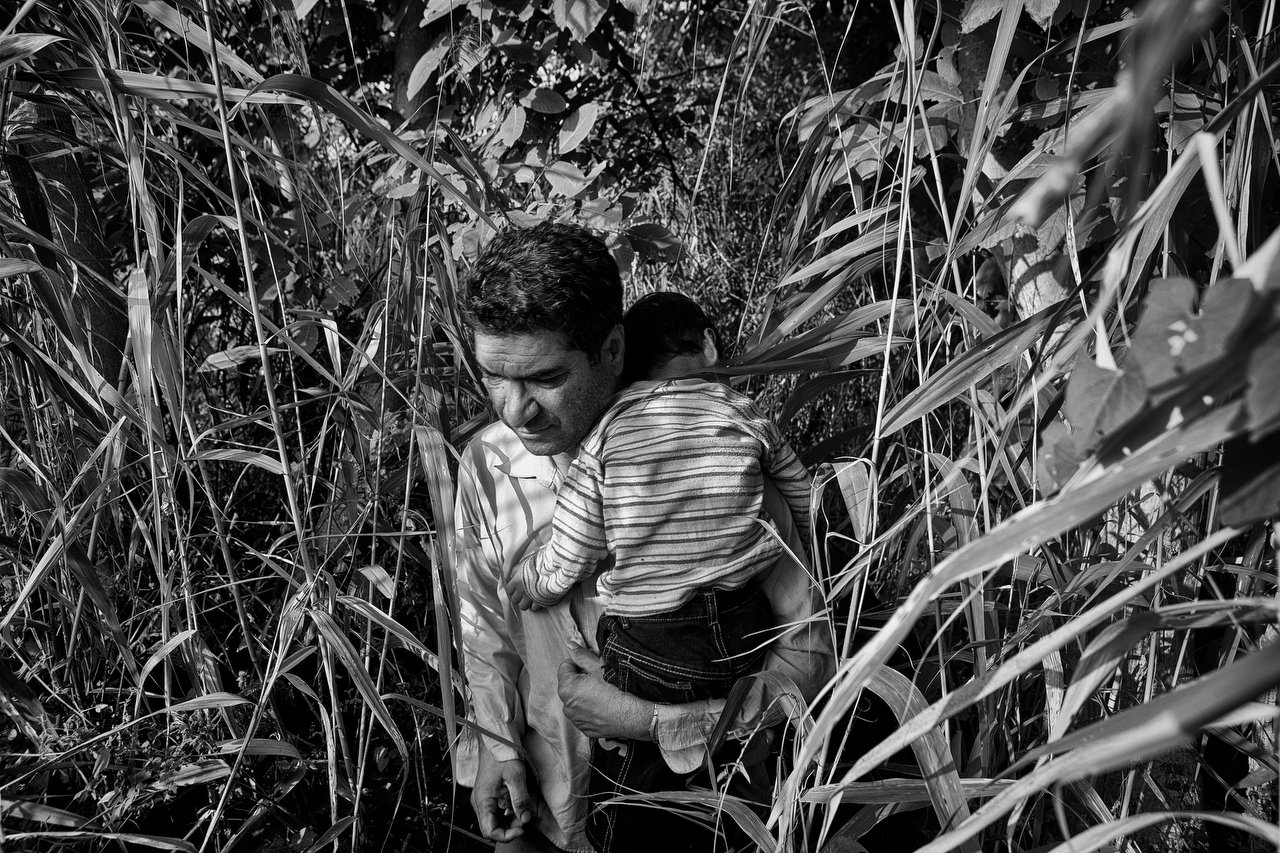
Vietnamese people coming out from the corn camps after crossing the river Evros. Nea Vyssa, Greece. 2011
Why do we use the term "Fortress Europe" in relation to immigration? Fortress Europe is the echo of an old iron wall that today is clad in technology. It was born in the last century as Nazi Germany's military defense to close the continent off from the world, but time has transformed it into an invisible border of laws and radar.
Today, that "fortress" is a metaphor for a Europe retreating into itself, erecting fences where it once sought bridges and hardening its borders to filter who has the right to knock on its door. It is the name of a continent trying to protect its peace by turning its borders into an unattainable refuge.
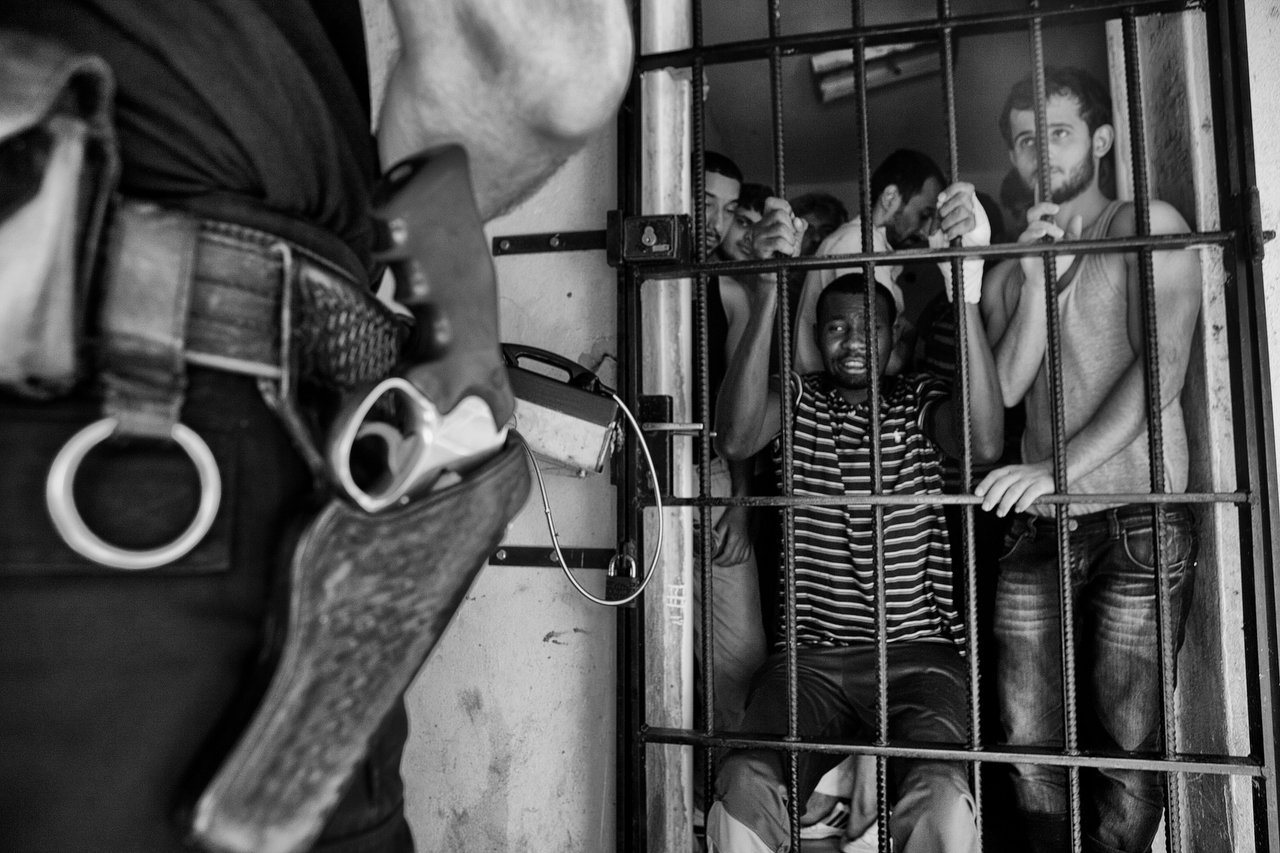
We Europeans—emigrants in other worlds in the past—have served as their trap. Faced with the threat to our comfort, we have built a fence and a moat around Fort Europe to destroy their dreams. We accept that they live in subhuman and miserable conditions in police stations they call detention camps, without sanitation, in situations so undignified that we would be ashamed to call ourselves human beings while we watch from our comfortable sofas of pseudo-modernity. Ruthless and unscrupulous people build that imaginary fence on the impossibility of crossing borders while fleeing their countries, driven by hunger, war, religious conflicts, or threats to their ideologies in any way. And then there's the physical fence, like those in Melilla, with barbed wire where people lose their lives.
It's a system similar to the fortifications of medieval castles; a wall so high that, due to its scale and cruelty, it seems to transcend the fiction of Game of Thrones. From a distance, we say it's an inhumane situation, but the wall keeps growing, financed by our own indifference.
A 21st-century Greek tragedy?
One day, someone read too much of a book and, in their overindulgence, had the unfortunate idea that to prevent thousands of immigrants from continuing to enter Europe, the best thing would be to build a high fence and a moat so deep and wide that it would block access to the fortress. It was a military officer who, somehow, told this to the scholars at a nearby university in Thessaloniki. The military officers told the politicians, and they saw the project as a lucrative business opportunity. They joined forces to build the latest wall of shame in Europe, stretching 37.5 kilometers, and it is expected to reach 100 to 200 kilometers.
Have we forgotten the recent past?
Meanwhile, more than 200 of the 48,000 migrants who crossed in 2010 have drowned in the Evros River, and the Germans—who tore down their wall in 1989—remain silent. The rest of us simply don't know what's happening.
Istanbul-Edirne: Crossing on Foot
The border between Edirne and Kastanie can be crossed by car or on foot; Wiktor and I opted for the latter. In the two kilometers we covered, we found cartons of cigarettes scattered along the shoulder of a dirty, poorly paved road, and a Swiss man who had been walking in the opposite direction toward Istanbul for months. Upon setting foot on Greek soil, two soldiers at attention welcomed us: "Welcome to Europe!" I'm sure they said it sarcastically, but I didn't look back. I showed them my passport and asked how to get to Orestiada. "You can call a taxi or walk straight to the square; there are buses there," the policeman replied.
We were thirsty after the walk, and our supplies were gone. At a shop, a man sold us a bottle of cold water and wished us luck. When we arrived at the square, the heat had completely numb the locals on a bar terrace, practically in a deep REM sleep. The coffee was no longer working.
"Is there a bus to Orestiada?" I asked those who were awake.
"There might be one at seven," an old man answered from a small newsstand.
It was seven o'clock, and there was no sign of the vehicle. A young woman was eyeing us suspiciously; apparently, seeing us with our backpacks, she thought we'd come from far away. That distance was quite noticeable among the newcomers. The lack of punctuality reminded me of my days documenting the felling of trees in ancient forests in Skouries to gut the land and search for gold. Ierissos and Megali Panagia: after a dinner of promises and shots, at eight in the morning there was nobody in the cafeteria. It was closed. The guesthouse where we... I had rented a room; breakfast was promised, but at that hour there wasn't a trace of anyone, not even a coffee maker to prepare a morning espresso, the kind some of us like to start the day with.
An older woman, a former immigrant, who saw me from a window quickly dispelled my doubts and my naiveté in perfect English: "Life is different here, everything moves more slowly, no one is important to anyone, you live for today without worrying about what might happen tomorrow," she assured me.
Waiting and Cynicism: From Kastanie to Edirne
It was 7:15 p.m. and there was still no sign of the vehicle. A disheveled-looking man, reeking of alcohol and clearly having had a wild night out, told me to ask at the gas station; "friend, they were selling tickets for Orestiada there last week." While I waited, a small motorcycle pulled up to the gas pump: the driver, dressed in camouflage, had a double-barreled shotgun slung over his shoulder. A curious sight that I tried to photograph, though the image didn't quite convince me. Shortly after, a woman dressed in somber black joined the wait. Now there were more of us.
Finally, after more than an hour, the bus arrived. The driver and a friend were laughing and chatting nonstop; the driver was driving while simultaneously watching and talking to his friend, who was standing on the right. He drove well, looking like he'd done the route hundreds of times, confident with every curve, downshifting, double-clutching, and the bus, like its owner's trusty steed, moved with the confidence of someone who knows the road by heart. Orestiada turned out to be short, just a transfer to the bus to Alexandroupolis, another four hours of winding roads and confinement. On the bus television, they were showing a modern version of Sherlock Holmes, but it wasn't working properly, so I took the opportunity to reread Pérez-Reverte's *Territorio Comanche*. The hotel we'd booked online on the outskirts of town welcomed us with dinner by the pool, among German and Nordic retirees, their faces and bodies like sunburned shrimp. Another group was in front of the television in the lobby watching the news. In a moment of carelessness, I tripped and broke the glass of a candle-lamp. After a buffet dinner—acceptable in taste, excessively expensive—I collapsed onto a double bed where I tore my soul apart dreaming of something I can't remember.
In the morning, CNN confirmed the figures: 90% of the immigrants entering Europe do so through Greece. A route that mafias and traffickers exploit to make money off so many dreamers. Over the phone, a Greek journalist in Brussels summed up the institutional apathy for me: "The European Union isn't worried." It's like the war in Yugoslavia; here, the dead don't count, they're of no interest. People drowning in rivers and on beaches has become "normal."
While the crisis ravages this vain European community, migrants continue to sleep in ditches and among the cornfields of Nea Vyssa. In contrast, the Governor of Edirne, Turkey, greeted us with perfectly manicured nails and a tie knot worthy of a head of state. From his luxurious office, in a soft, cynical voice, he confessed that the "undesirables" crossing his territory only concern him because of the bad image they project.
"We'd like to photograph the current detention camp," I said optimistically.
"Impossible, it's forbidden," he replied with a radical smile. "But I'll order that you be accompanied to see the new building we're finishing with European Union funds."
The Fence: The Business of Fear
To try to tackle the problem, the Greek government insisted on erecting a 10.3-kilometer metal fence. A six-million-euro expenditure in the midst of an economic crisis, when the country wasn't even guaranteed to pay October salaries. The project, conceived by Lieutenant General Frangoulis Frango and endorsed by professors at Aristotle University of Thessaloniki, aspires to become a replica of the border between Mexico and the United States: a 130-kilometer-long scar, with a ditch seven meters deep and thirty meters wide.
"And what's the point of all this?" asks a resident of Nea Vyssa.
His question isn't rhetorical; it carries the weight of someone who has paid with his freedom for expressing his opinion. He was arrested and imprisoned simply for giving an interview to a Greek television station in the very place where they were planning to build the wall. "The police arrived while they were filming me." “I wasn’t doing anything wrong, I was just giving my opinion, and they threw me in jail,” he explains, his voice trembling with fear. He went through a trial without charges, a legal charade to intimidate the local population. “I never plan to go back to that place again,” he asserts, asking me to withhold his real name for fear of reprisals.
On the Evros border, the wall isn’t just built with steel and concrete; it’s built by silencing anyone who dares to question whether that fortress of so many…Millions of euros can do more than bury Europe's conscience.
The Salamagkas Wall
The office smelled of reheated coffee and half-spoken truths. Behind a desk that resembled a bunker, Georgios Salamagkas, the police chief, guarded the silence of the border with an impeccably combed white mustache, his only hint of vanity amidst that military austerity. We had permission from Athens, but in Orestiada, Athens was a distant echo that never crossed his threshold.
Beside him, like a hunting dog that doesn't need to bark to bite, stood Georgios Petropoulos. His gaze wasn't searching for our press credentials; it was searching for our intentions, trying to read deep within our retinas what we knew about the river. "Ah, you bastards!" he seemed to say with his eyes before uttering the line they had rehearsed for journalists: "Did you think we were going to let you get to the river?"
Salamagkas launched into an unbearable monologue, a spiel of statistics and police successes that clashed head-on with the reality of the bodies the Evros River spat out each week. He didn't want cameras, he didn't want photos, not even of his own face, the one he had proudly displayed on YouTube months before, and which now, aware that the dead weigh more than medals, he preferred to hide.
"Don't even think about entering the military zone," he declared, and for a moment his mustache ceased to be an old man's adornment and became a jailer's barrier. "You will be arrested and imprisoned." It was then that I understood. Salamagkas wasn't a monster, he was something worse: a man with a family, children, and friends who had decided that his peace of mind was worth more than the truth. That sheep in wolf's clothing just wanted to get home with a clean mustache, even if it meant turning the river into a black hole where humanity drowned without anyone being able to photograph it.
Days earlier, a Turkish blog published a story that the press had ignored: Frontex had shot and killed an illegal migrant on the banks of the Evros River with an MP5. Salamagkas asserted that neither they nor Frontex were responsible, and further confirmed that Turkish forces also frequently fired shots. In short, he meant that the Turks are neither charitable nor do they appear to be.
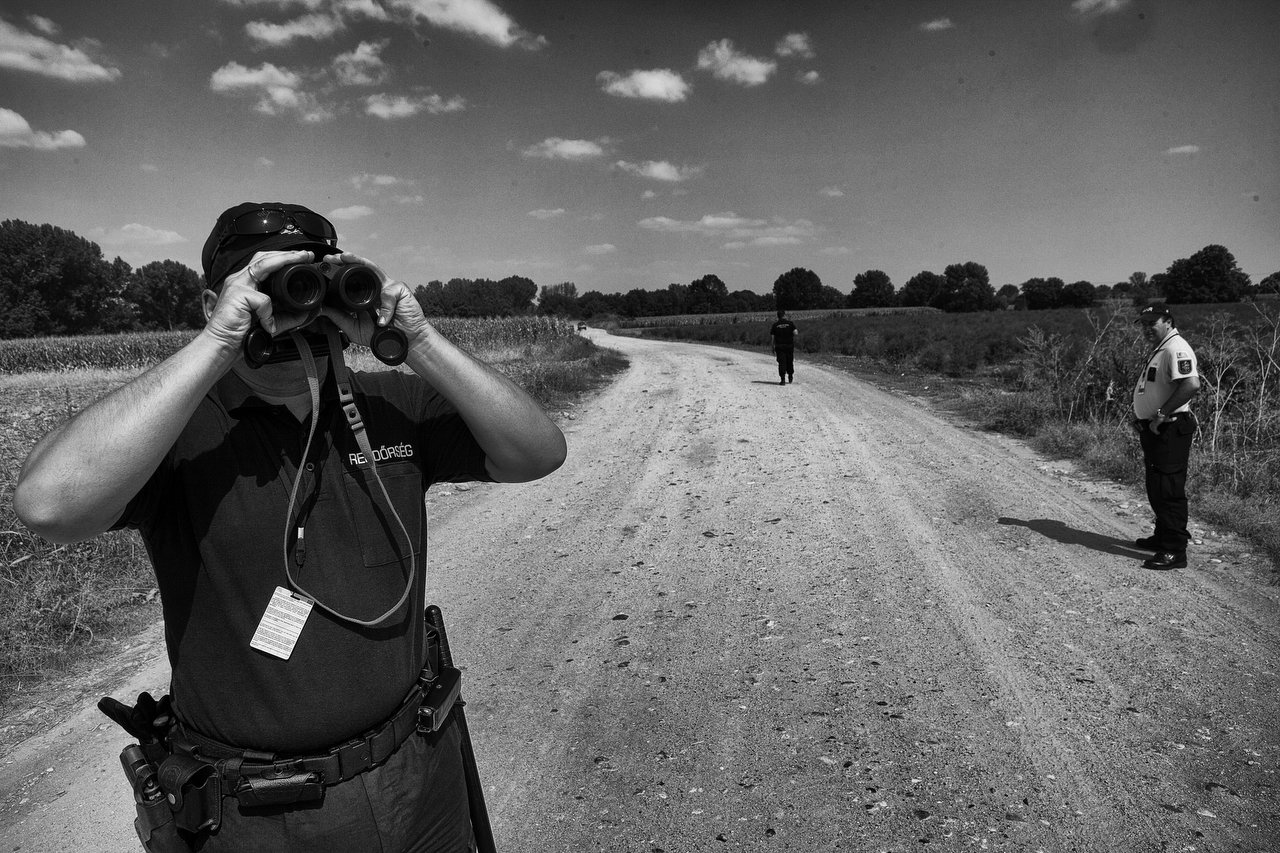
Under Georgios Salamagkas's command, the Evros border in 2011 was a territory shielded from scrutiny. The police chief imposed a complete media blackout, using the threat of imprisonment for "espionage" to silence the press. His objective was clear: to ensure that the inhumane treatment on the riverbank remained hidden, far from any photographic lens.
For his part, the governor of Edirne, whose jurisdiction the incident falls under, said that the case is being investigated, although it is quite common for Greeks to fire shots on their side of the river. “This time, someone was killed by gunfire. Nobody knows anything; nobody knows the name of the deceased, or at least they don't want to say.”
The Cornfields of Nea Vyssa
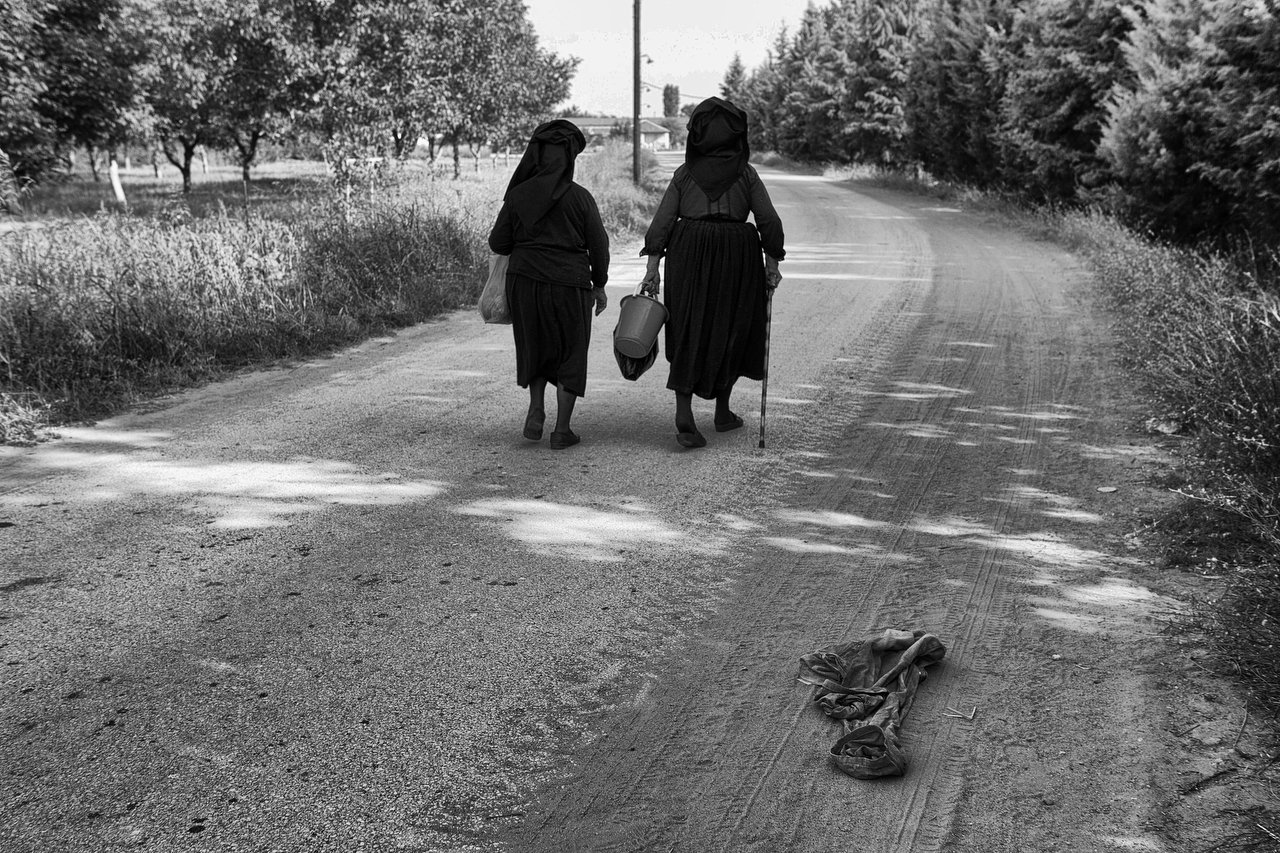
Nea Vyssa stretches out among cornfields, a village of calloused hands and backs bent by the earth, surviving just a stone's throw from Turkey. Here, people still greet you if you raise your hand, although, as Nikos, our fixer, says, this is a place of lonely men. “It's a village of bachelors and old men; the young people long ago fled the harshness of agriculture for the bright lights of Athens and Thessaloniki.”
In the square, under a merciless sun, people gather around the café tables. They are friendly, yes, but beneath that rural courtesy lies an implacable scrutiny. By the time you sit down, they've already dissected and categorized you with the precision of someone who has nothing new to report but the newcomer.
"Kalimera, parakaló," I blurt out, trying to break the ice.
I order an espresso with saccharin, and time seems to stand still for a second. Eyes meet, someone's mustache curls with curiosity, and the existential question arises, pulling them out of their routine: "What's this saccharin thing?" In a place where coffee is drunk strong and life is measured in harvests, my sweetener is the first sign that I come from a world they, from their cornfield border, regard with a mixture of suspicion and hospitality.
The Shadows of Corn
In Nea Vyssa, life is measured in cups of Turkish coffee and endless frappes; everything else is secondary. They are tolerant people, the kind who give you fruit without knowing you, just for having shared a moment of conversation. They enjoy the spectacle of the street, watching life go by and, with it, the hundreds of migrants who arrive every day. It's a routine they don't care about, but that also tugs at their hearts, which must be beating at 60 beats per minute. Someone breaks the silence regarding the new arrivals.
"I've given water and food to many who arrived almost dead," the owner of one of the bars, the uncle of our fixer, confides in us. "They fill me with immense pity." "Someone should tell them we're worse off here than anywhere else."
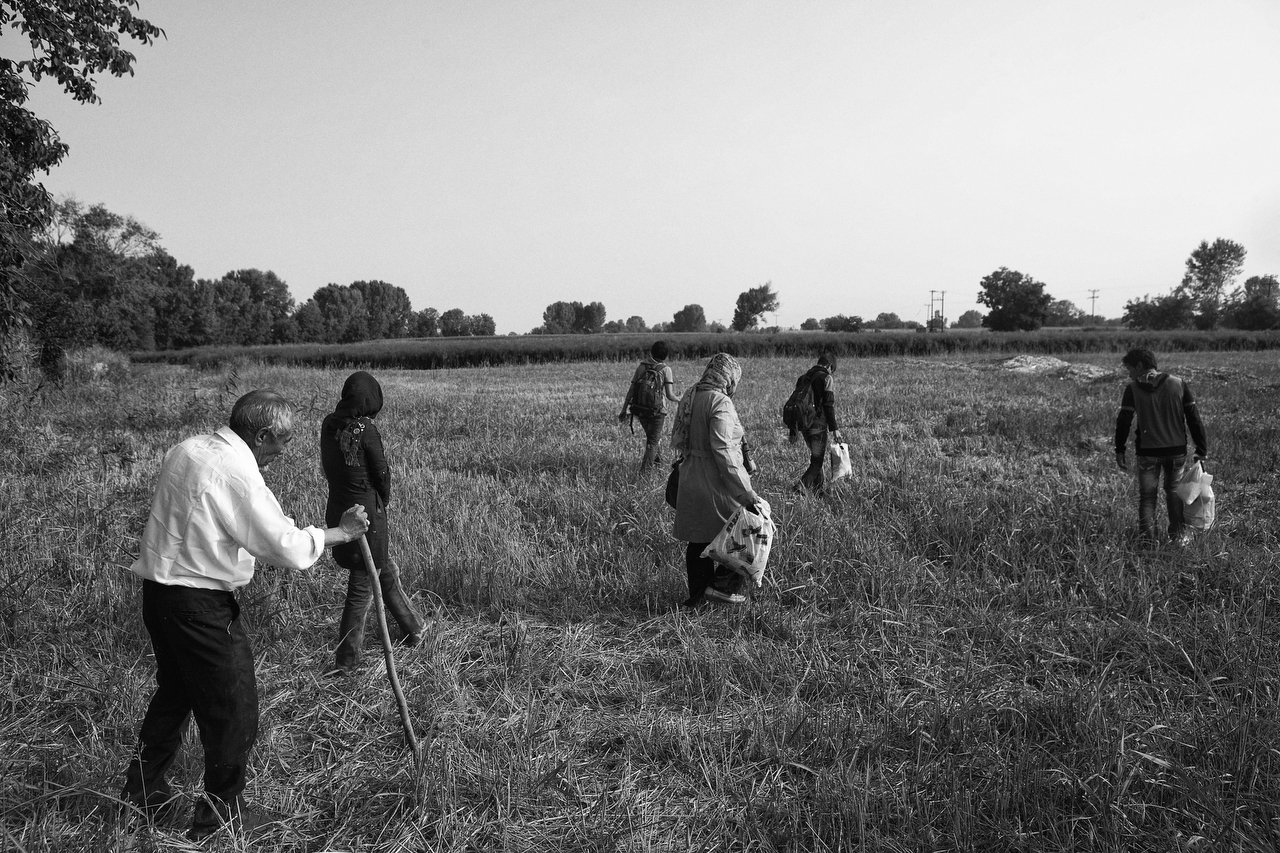
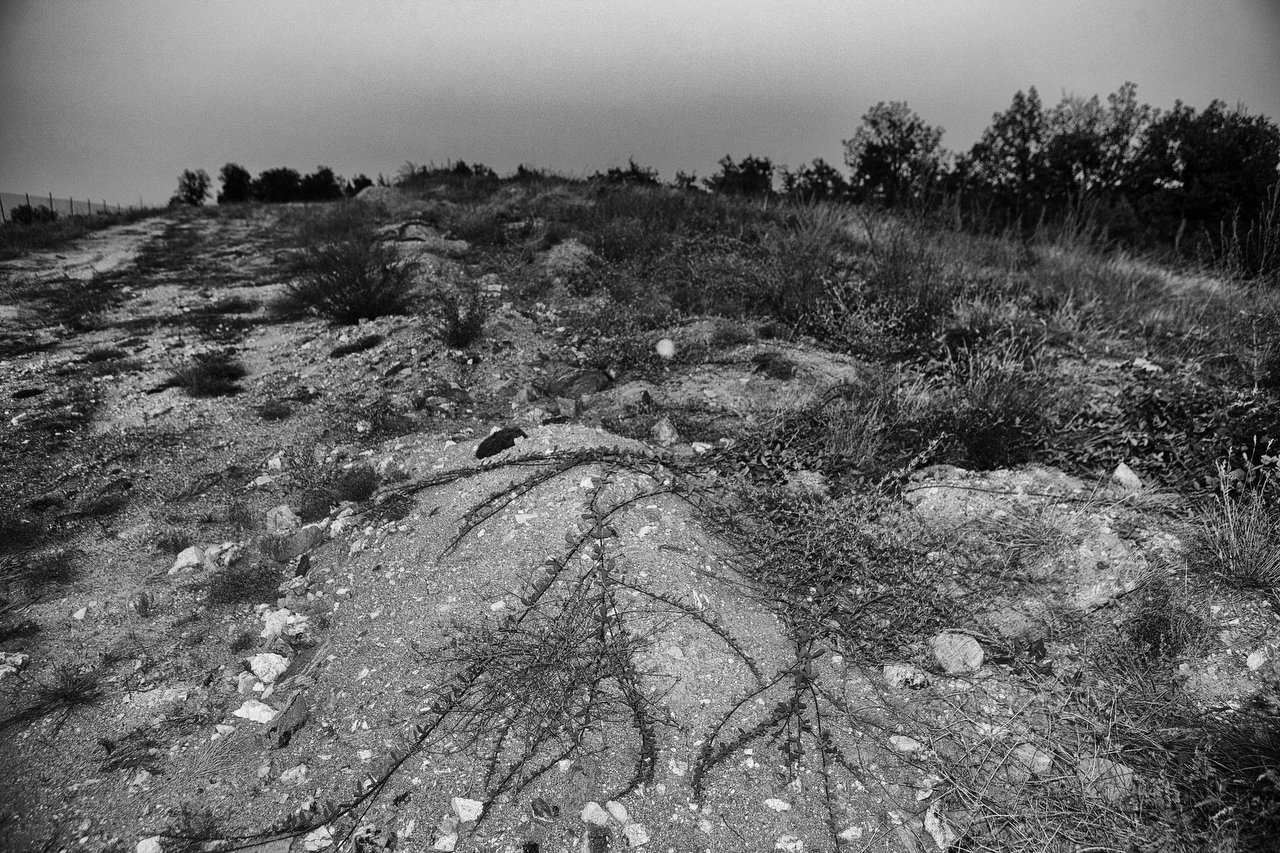
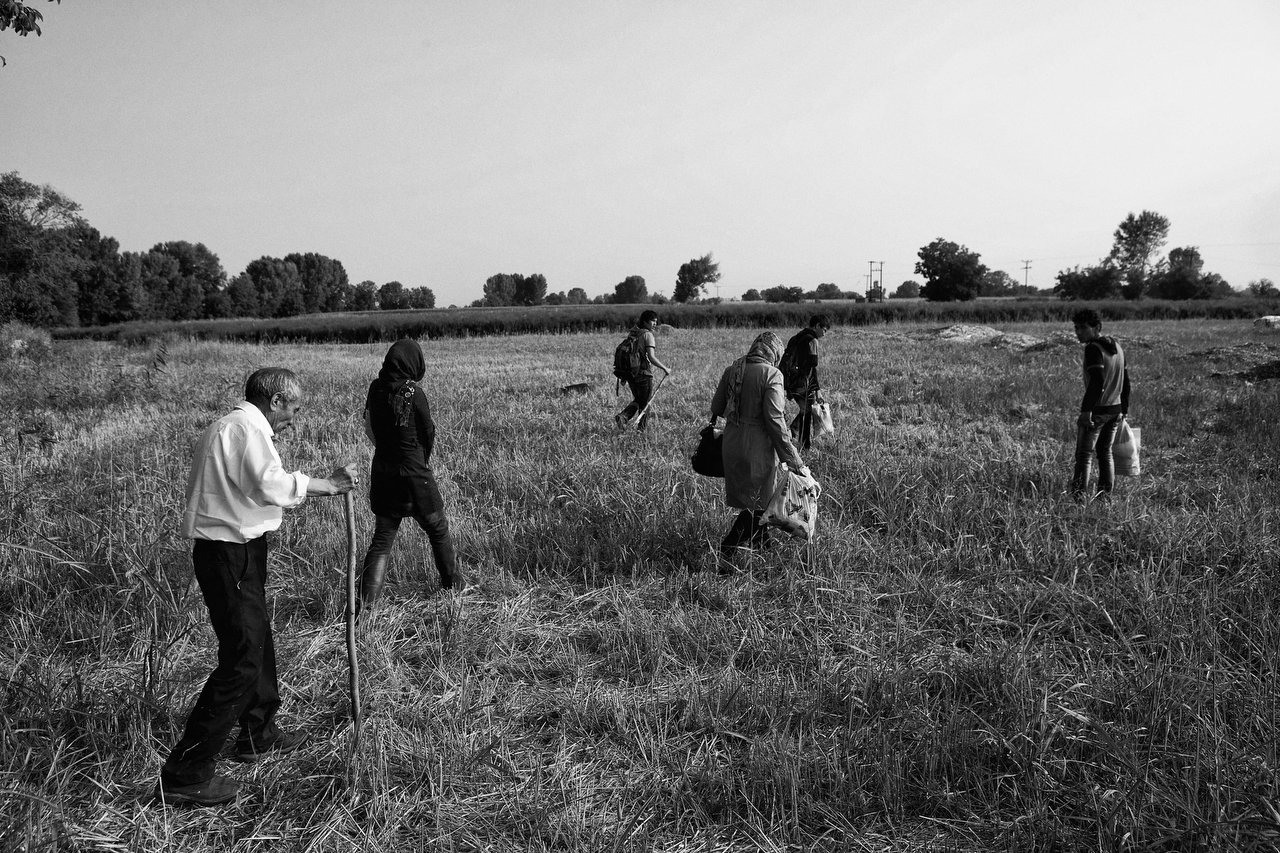
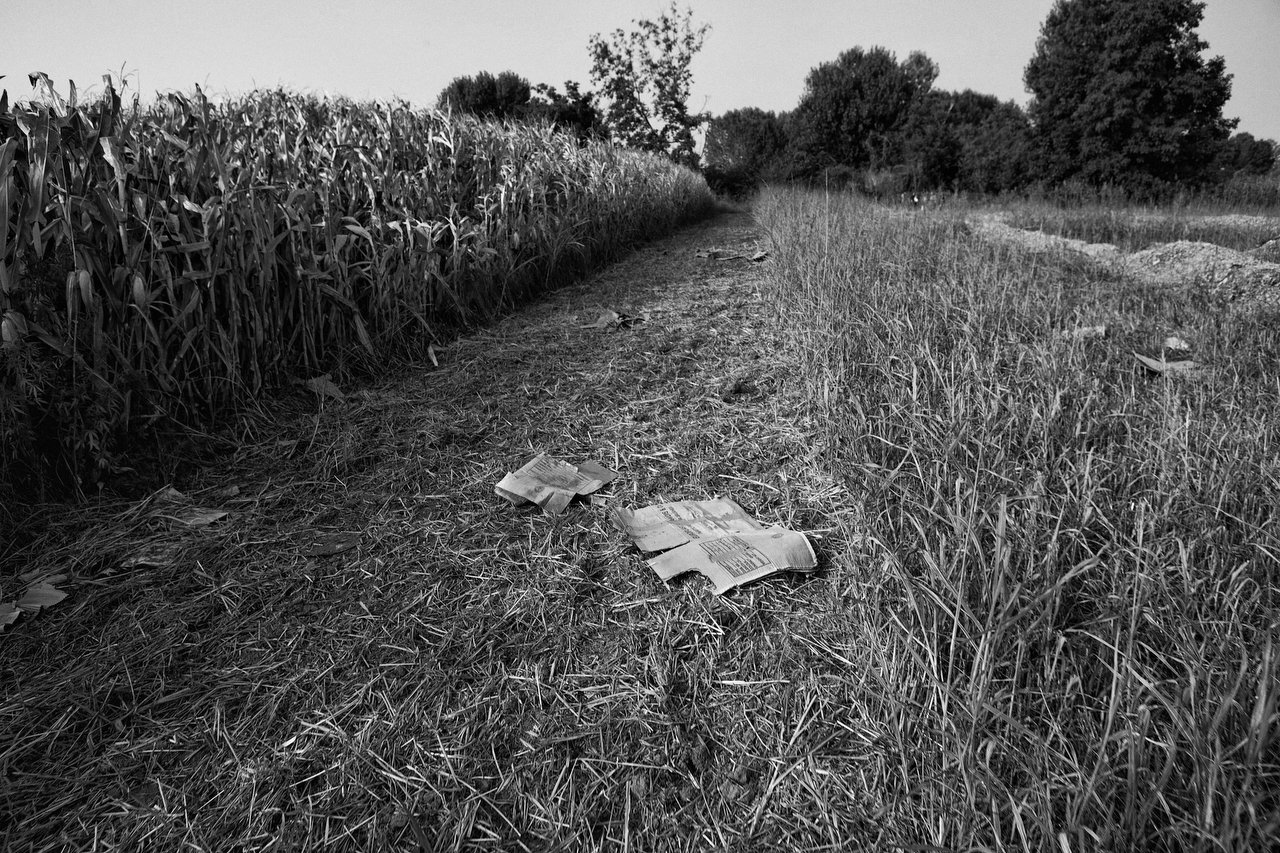
But no one says a word. Why get involved? Those who manage to cross the river still have miles of uncertainty ahead of them. They navigate by the silhouettes of two towering antennas and the church tower; these are their beacons in the middle of nowhere. Exhausted, they collapse among the cornfields when their bodies can't take any more.
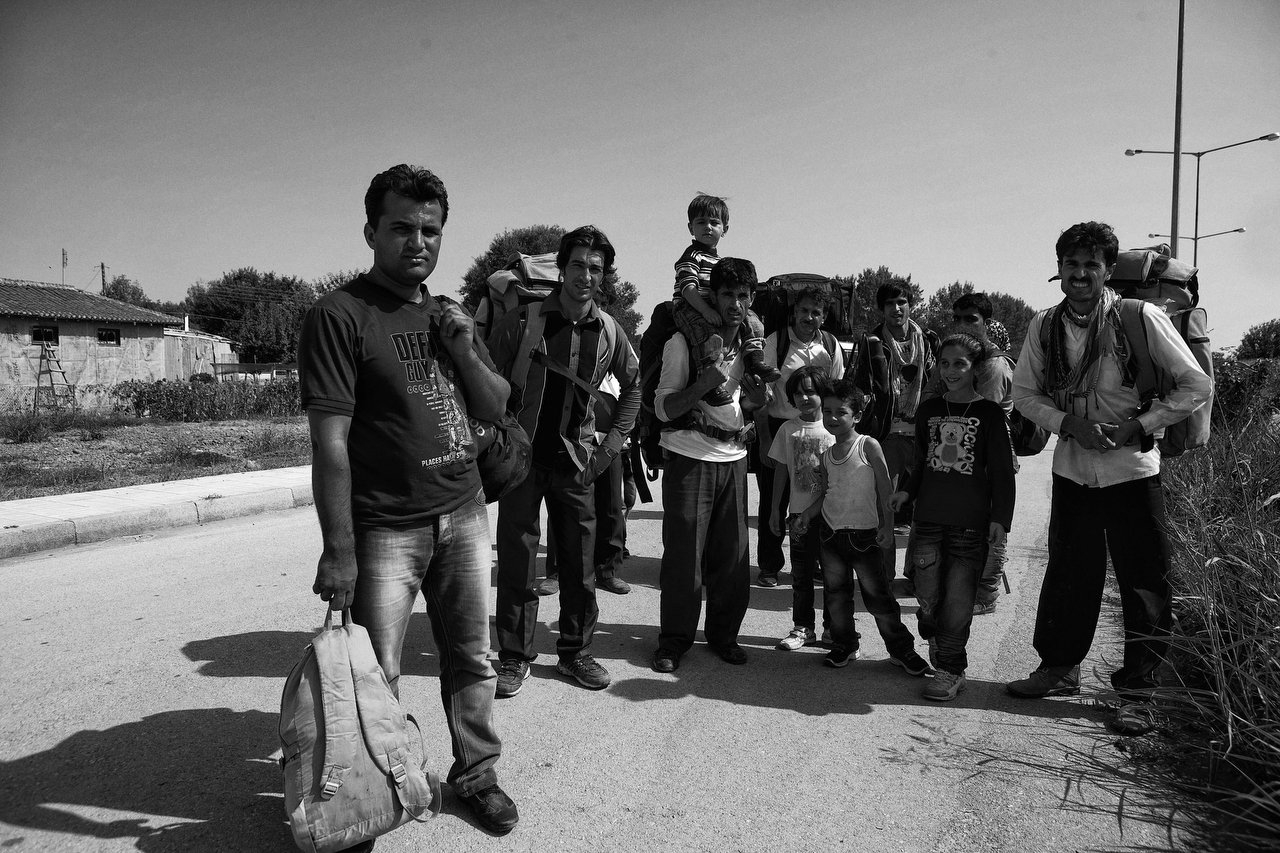
In just two days, we came across several families hidden among the corn stalks. They emerge from the stalks with children in their arms, silently; elderly people walk with difficulty, leaning on canes; while a farmer leans against his truck, searching for scraps of food between his teeth as he watches them pass.
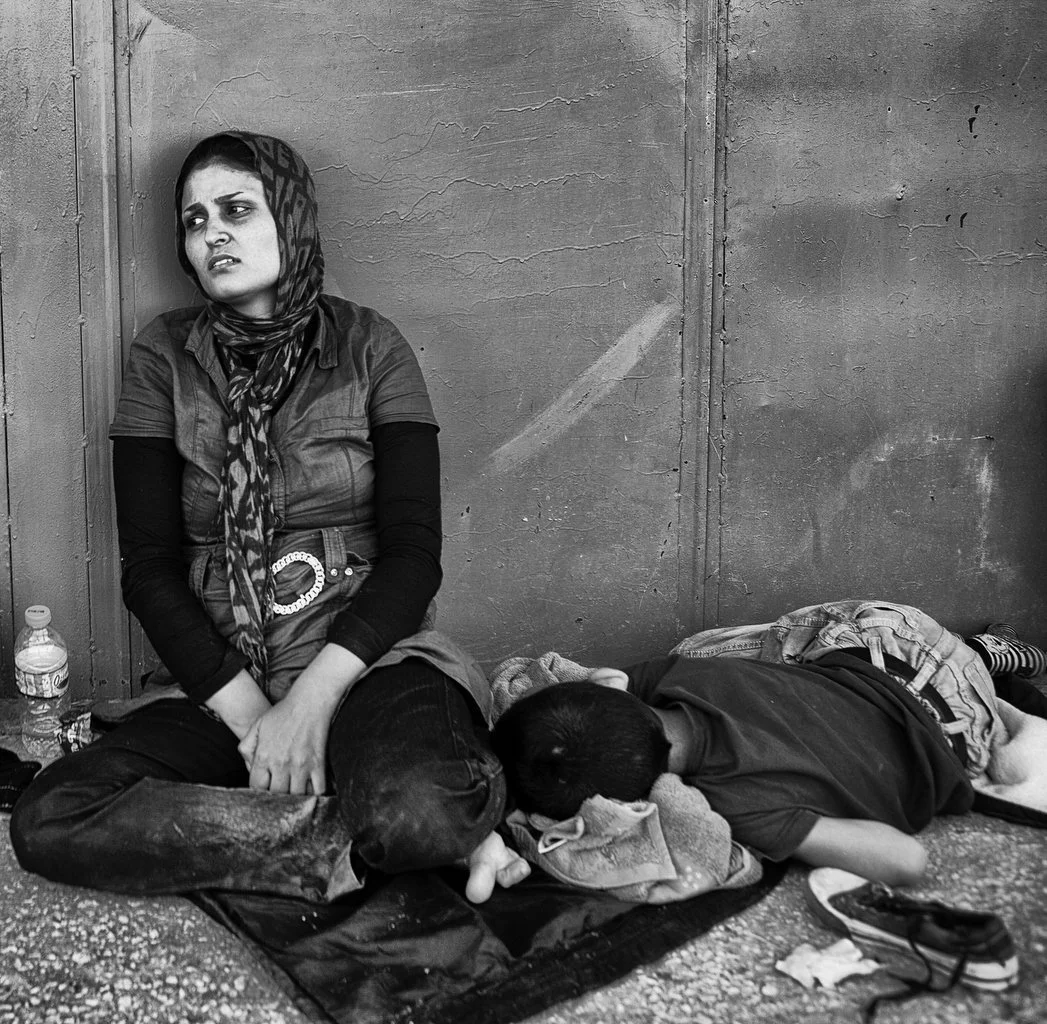
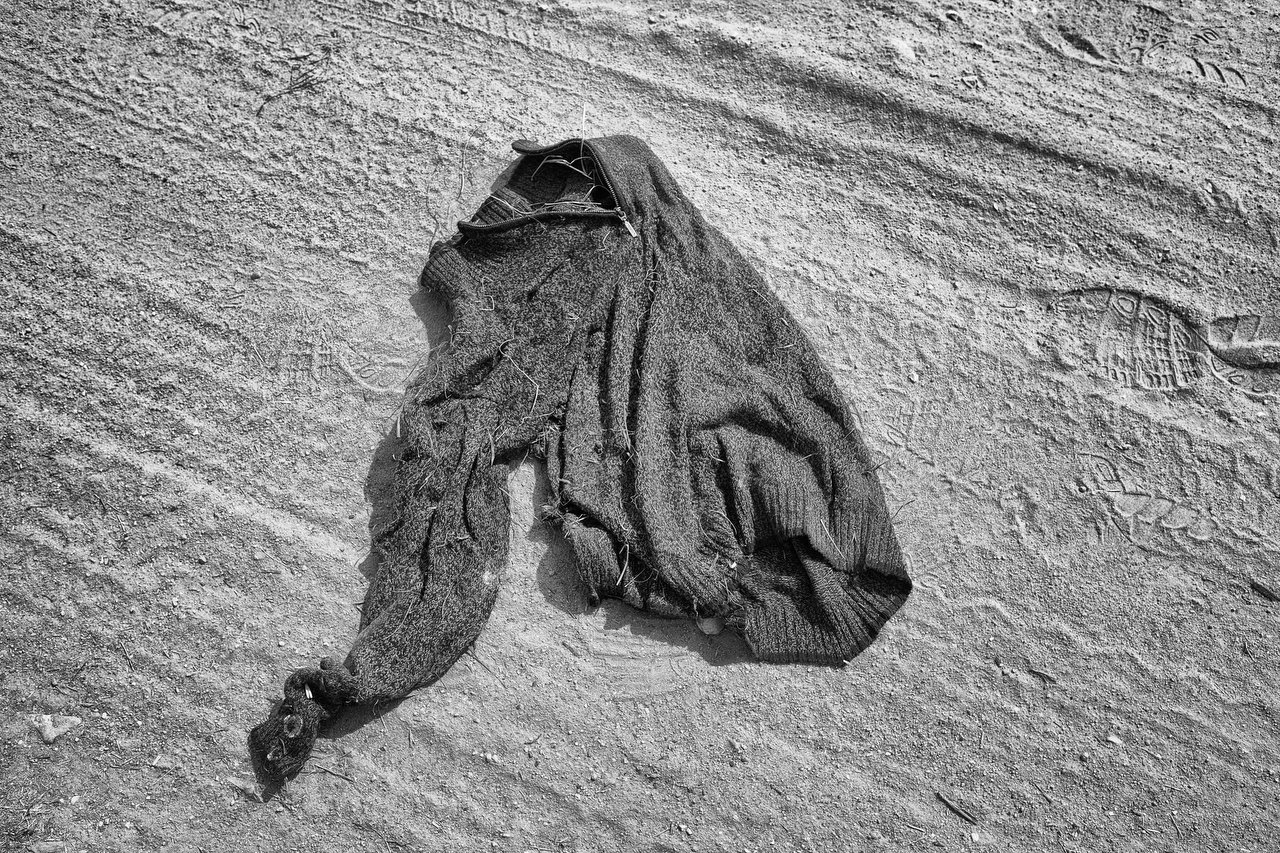
I see large eyes filled with fear, a father with his young son in his arms, who can't be more than three years old. They are terrified of being arrested and mistreated by racist police. They don't speak English, they have no water, and somewhere along the way, they destroyed their passports to become invisible to the bureaucracy. Almost all of them claim to be Afghan, a refugee identity, though their features tell stories of farther lands.
"We have effective methods for knowing who they really are," a policeman told me smugly.
Meanwhile, in the village, other families rested in the shade of a warehouse, waiting for a future that, for the moment, was only a patch of shade and the distant echo of the church bells in Nea Vyssa.
The Hour of Indolence
It was two in the afternoon, and the Evros heat weighed like lead. In Nea Vyssa, time had stopped. Under the relentless sun, an Afghan family—parents, grandparents, and a handful of tired-eyed children—wandered through the empty streets like specters, seeking their own arrest. They were looking for the police station, the only place in the world where someone, even if it was to lock them up in a detention camp, would admit they existed.
But the police, that day, were blind.
From the closed windows of the houses, the silence of the sacred siesta filtered into the deserted streets. What happened outside mattered little; at that hour, the Greek world folds in on itself, letting the heat and the stray cats be the sole masters of the sidewalks.
I had one last bottle of water left in my backpack. I offered it to the children, who drank with an urgency that broke my heart. They were the only living beings who seemed to be in a hurry in a town that slept peacefully, unaware that, just a few meters from their beds, despair walked barefoot, searching for a cell that would at least give them a roof over their heads to wait under.
The Promise of the Union
One of the supposed Afghans I meet speaks English and carries an enormous backpack. I ask him why he came to Europe with his whole family: “We’re looking for a better life. There’s nothing left in Afghanistan, it’s all misery; the war has destroyed what little we had, and we decided that here we’ll look for a better life for my family,” he confides.
Encouraged by what they see on television about a new opportunity in the European Union, thousands of Afghans, Somalis, Iranians, and Iraqis travel for days, weeks, and months to Istanbul. There, they make contact with mafias and organized crime, who take them to a warehouse somewhere in the city and, at night, transport them in trucks to the border. Others decide to make the journey on their own by bus to Edirne or some other town and wait hidden until nightfall to cross through the fields.
However, almost no one escapes having to pay smugglers between 200 and 2,000 euros to cross into Greece, the first country in the European Union.
A man with several children and his wife rest near a building. They have no water or food and ask me, almost as a desperate favor, to call the police so they can come and get them: "We saw several police cars, but they ignored us," they tell me resignedly.
Meanwhile, in his office, the head of the Orestiada police station, Georgios Salamagkas, holds a cigarette in one hand and the phone in the other while shifting responsibility to the other side of the border. He accuses the Turks of doing nothing to solve the problem: "As long as people continue to arrive in Istanbul legally as tourists, this problem won't stop; the Turks have to start requiring visas for citizens of many countries, and that will gradually alleviate this tide of migrants," he asserts.
Salamagkas, somewhat annoyed, justifies the inaction denounced by the families: “The police can’t do more than they already are. We arrest the migrants and take them to the Fylakio detention center, but there’s no more room there. That’s why they’re allowed to spend one or two nights to rest and then released. They’ll have to go to Athens and wait to be notified about their refugee or asylum application.” An officer next to him reinforces the official position.
ial: “We do the best we can and what’s within our power, but don’t expect miracles.”
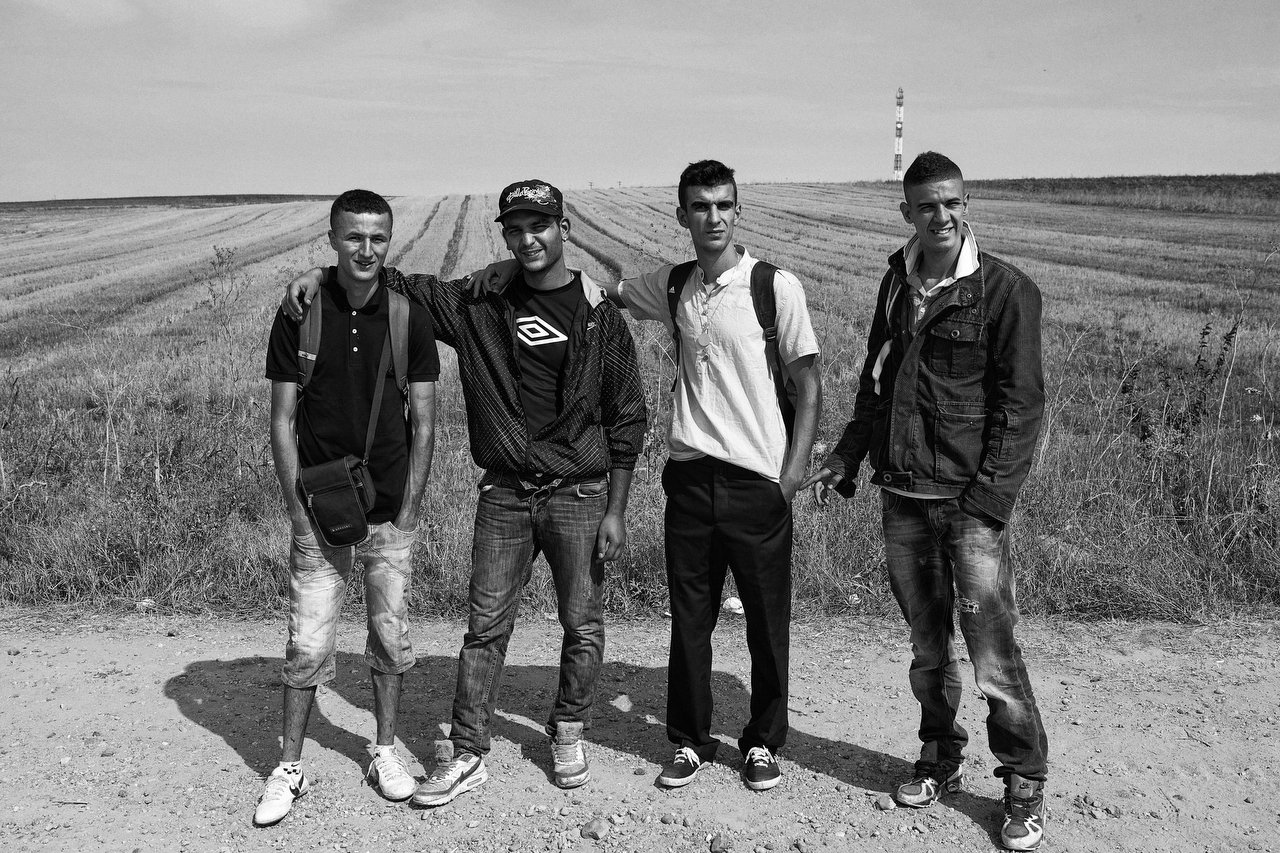
On the third day of patrolling dusty roads, stopping farmers and talking to people, I came across a group of young men who claimed to be from Tunisia. I spoke with them and took their picture. They told me that they too had tried to stop the police to get arrested, but it was impossible. With no other option, they decided to walk along the road, trying to reach Athens in search of a bus.
Interestingly, on the third day, no one crossed the river, and nothing happened the following morning either. Faced with this sudden silence, I asked several border guards if there was any connection between the Turkish mafia and anyone in Greece, but no one wanted to answer. The border guards are well-trained to deal with questions from the press; They always hide behind the same phrase: "I'm not authorized to answer that question."
Frontex and Thermal Imaging
Aleksejs Petrovs, a first lieutenant in the Latvian border guard, is one of the five agents deployed on the Greek border alongside his colleague, Major Anatolijs Vecelis. Their mission: to monitor the river using thermal imaging equipment. "Personally, I'm satisfied with the accommodation and food in Greece; we don't have any serious problems during our night shifts. Any problem can be resolved by the Greek authorities," Aleksejs assures us with the detachedness of someone who only sees heat pixels on a screen.
But the reality beneath the surface is more thorny. The presence of Frontex arouses suspicion; some Greek agents express their unease, criticizing the fact that they don't need others to come and tell them how to protect their borders. In this atmosphere of internal tension, the press is unwelcome because it makes the authorities uncomfortable, unlike ordinary people, who respond to everything as best they can.
The Portuguese Silence
Amid this secrecy, a Portuguese police officer who volunteered for Frontex confesses his utter disappointment. “I never want to come back here again, I can’t wait to leave,” he declares. When asked why, he clams up, but admits to having seen “too many things he didn’t like and disagreed with.”
His words made me question the protocols applied on the Evros. What did that officer see that made him never want to return to this land? He said no more; he spoke his mind because he knew, with absolute certainty, that he would be punished by his superiors if he crossed the line of silence.
Nikos and the River of Broken Dreams
Nikos, a fisherman and farmer in Nea Vyssa, knows the Evros River like the back of his hand. He knows it is a deadly trap of wild currents and unforgiving whirlpools. In winter, the water flows icy cold from the mountains; Those who try to cross it are soaked and die from freezing or cardiac arrest long before reaching the shore. The Evros is merciless: it is the executioner of hundreds of dreamers.
Nikos has rescued many. He pulls them from the water and hands them over to the authorities, fulfilling his part in a chain that ends on the hill of the Muslim village of Sidero, in northeastern Greece. There they are received by Mehmet, who takes care of his gas station, his flock of faithful, and, with silent devotion, the dead.
The Graves of Sidero
Mehmet keeps an exact count of the tragedy. From his house, one can see the top of the hill where between 150 and 200 Muslims and a few Christians already rest. But Mehmet is angry with the press. He bitterly recalls the day a Greek journalist told the world that there was a mass grave in Sidero.
"A lie, she only told one big lie," he states firmly. I certify that each person is buried individually and not in a mass grave.
For him, dignity is non-negotiable. Every body the river spits out and Nikos recovers, Mehmet lays in the earth, with or without a name, but always with its own grave. On that hill, the tally of those who didn't reach Europe continues to grow under the watchful eye of the man who best understands the weight of the border.
We can attest that Mehmet tells the truth. We jump over the fence of the compound where all the bodies Mehmet collects and prepares for burial are laid to rest.
Mehmet's Last Bath
Mehmet doesn't just dig a grave; he acts as the final guardian of these souls. When Nikos or the police hand him a body, Mehmet begins the Ghusl, the ritual washing that every Muslim must undergo before returning to the earth. With infinite patience, he washes the body three times with clean water, always starting with the right side and the parts washed during prayer, removing any trace of mud and salt from the Evros.
For Mehmet, this act is a responsibility before God (Fard Kifaya). Once clean, he wraps the body in the Kafan, a simple, seamless white shroud, ensuring that the poverty in which he died...may it not be the one that accompanies them to the afterlife.
On Sidero Hill, Mehmet oversees that each grave is oriented so that the deceased rests on their right side, face toward Mecca. There are no luxurious coffins or ostentatious tombstones, only the red earth and the respect of a man who refuses to let these "dreamers" be treated as mere numbers. Even if they are strangers, for Mehmet each one is a brother who deserves to enter eternity purified and with a name before the Creator.
Checkpoint Kipi: The Market of Broken Dreams
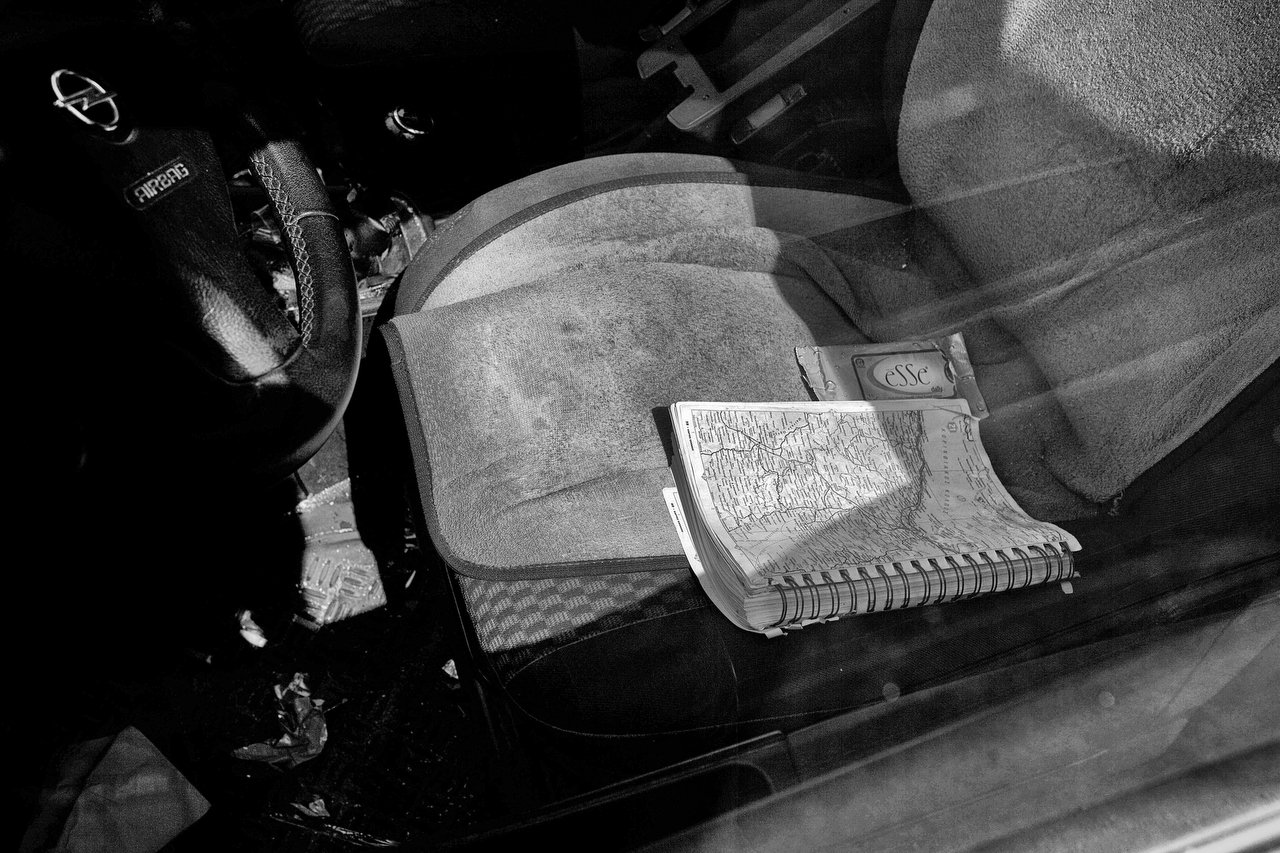
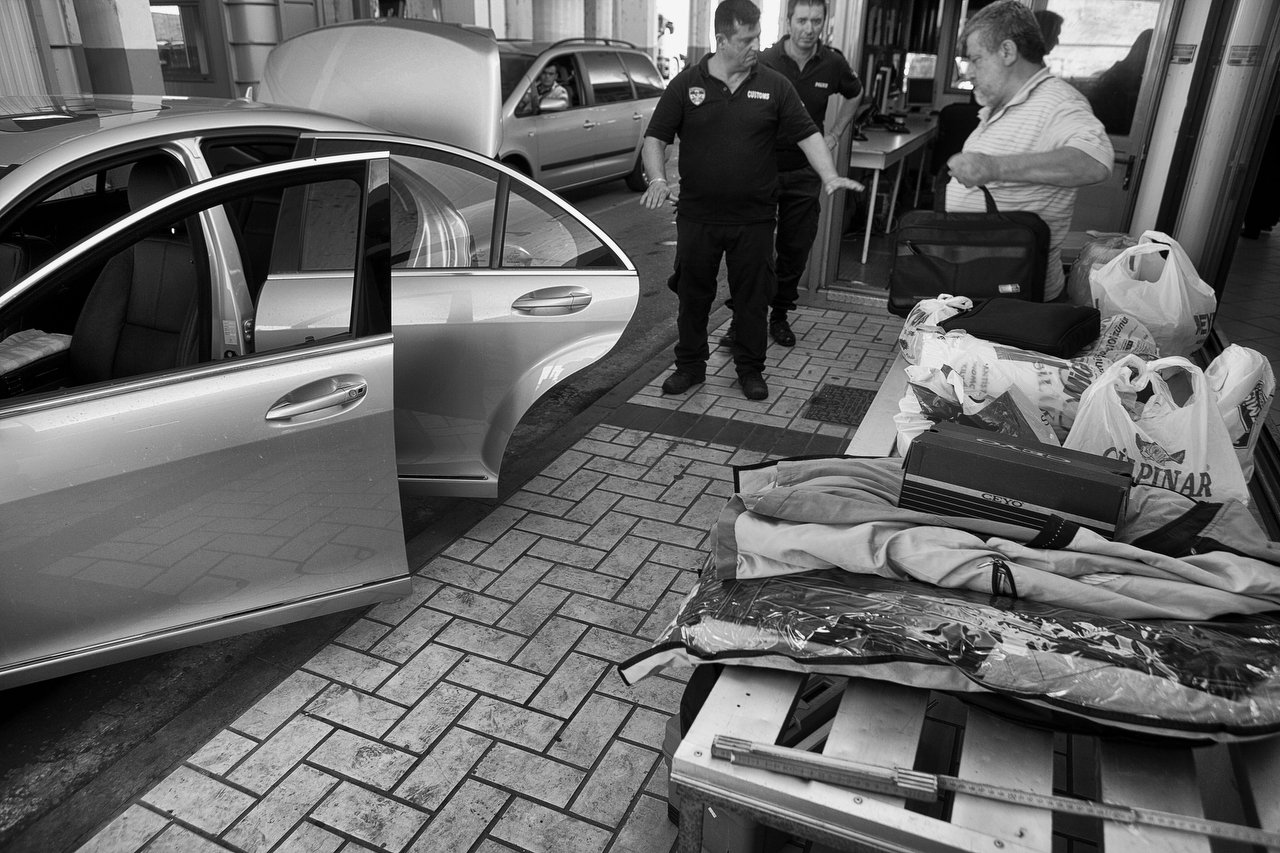
The Kipi border post is a hotbed where organized crime tries to slip in its riskiest bets. The officers show us, with almost museum-like pride, the trophies seized from the smuggling rings: buses from Georgia with fuel tanks modified to create airtight compartments where migrants travel suffocating, or roofs with false bottoms that conceal people as if they were inert cargo.
In one of the parking lots, high-end cars destined for the Asian market are piled up; a graveyard of stolen luxury vehicles. Meanwhile, Agent Anthony and his dog Spike are tracking a Turkish trailer. "Heroin and hashish are the usual suspects," Anthony remarks as he rewards Spike for his infallible nose.
But the tension never dissipates. Suddenly, a shout behind me cuts through the air:
"I don't want you to take my picture!"
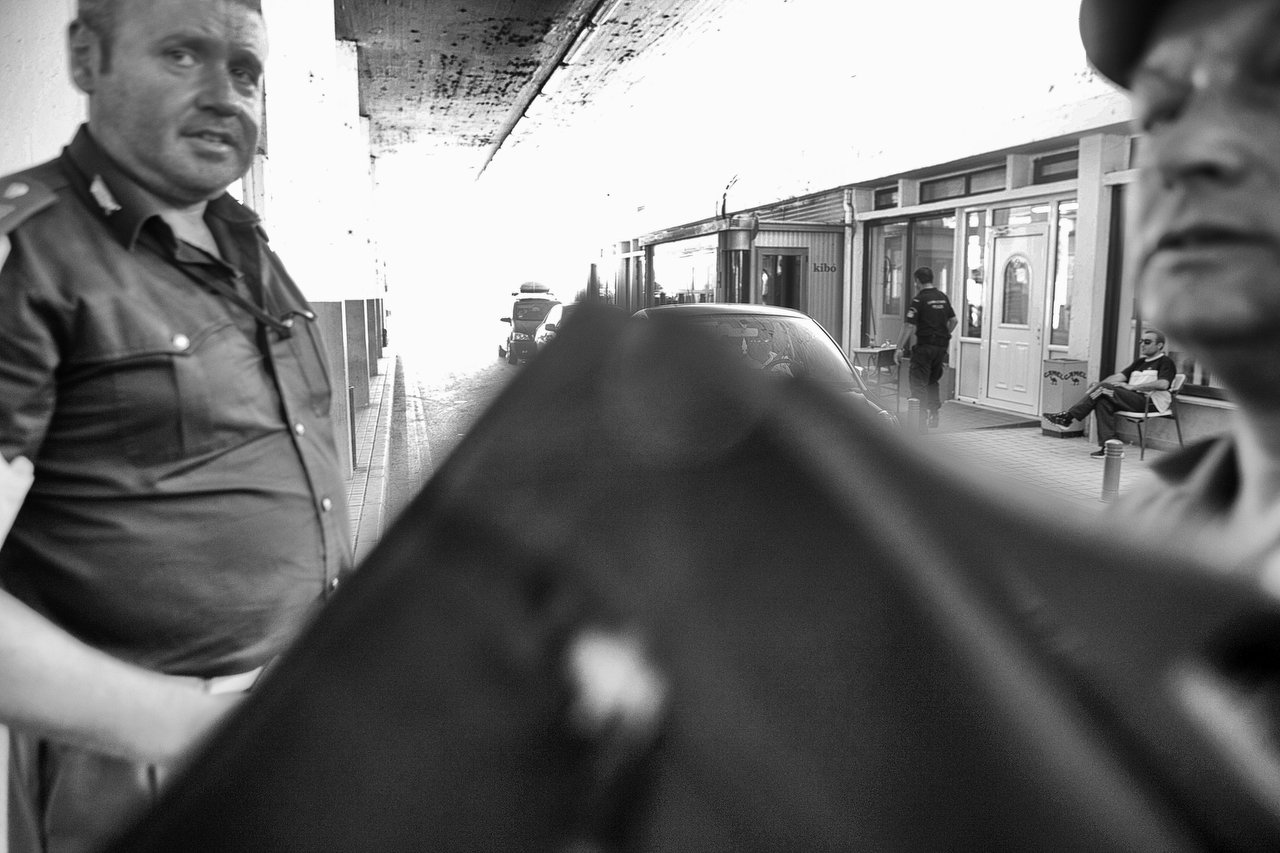
A Frontex agent tries to cover my lens with his wallet to protect an Italian officer. Although the permit from Warsaw clears up the "misunderstanding," the hostility remains. For a second, seeing his cap with the word "Polizei" (Police) on it, I felt a chill that transported me back to pre-1989 East Germany. It was a moment of real fear, a reminder that on this border, the press is not a guest, but a nuisance that shatters the hermeticism of a system that prefers not to be portrayed.
The Fylakio Uprising
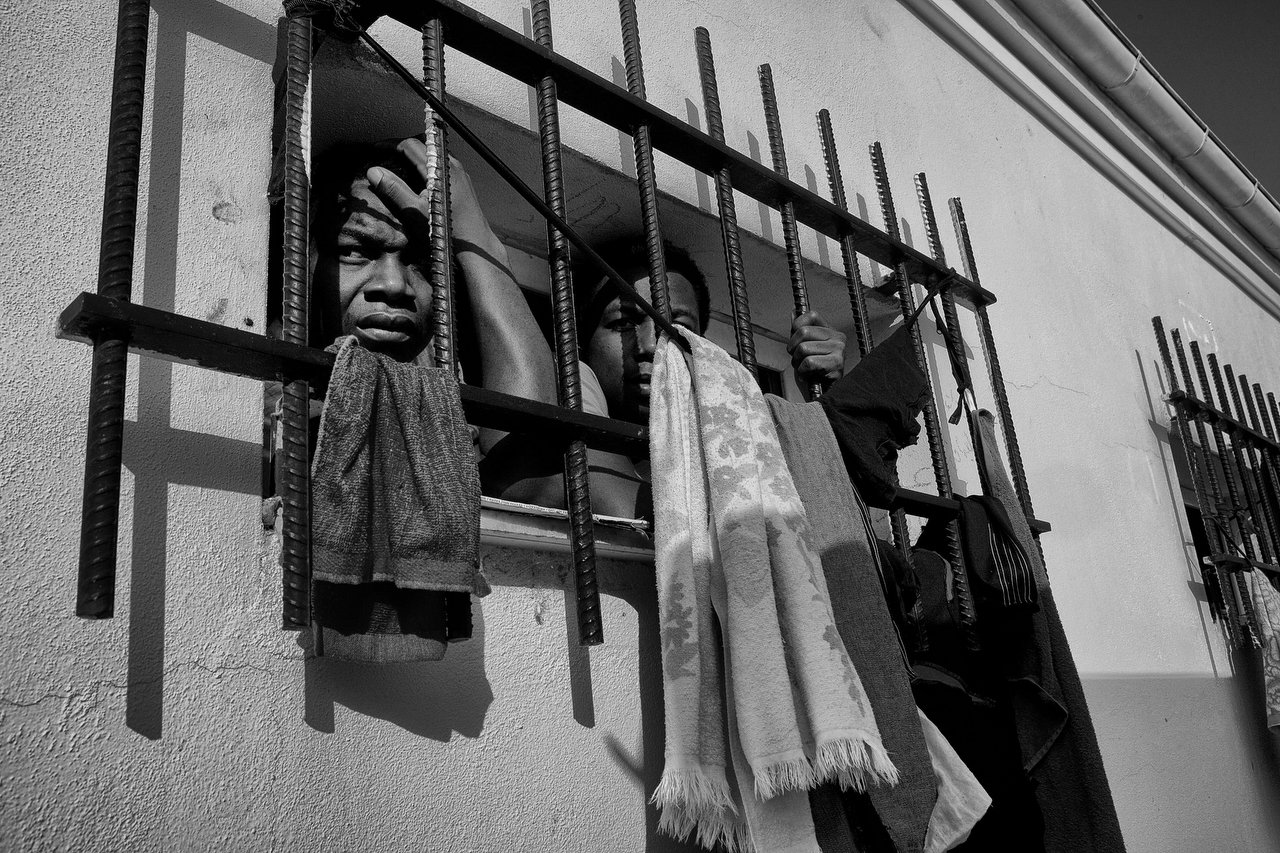
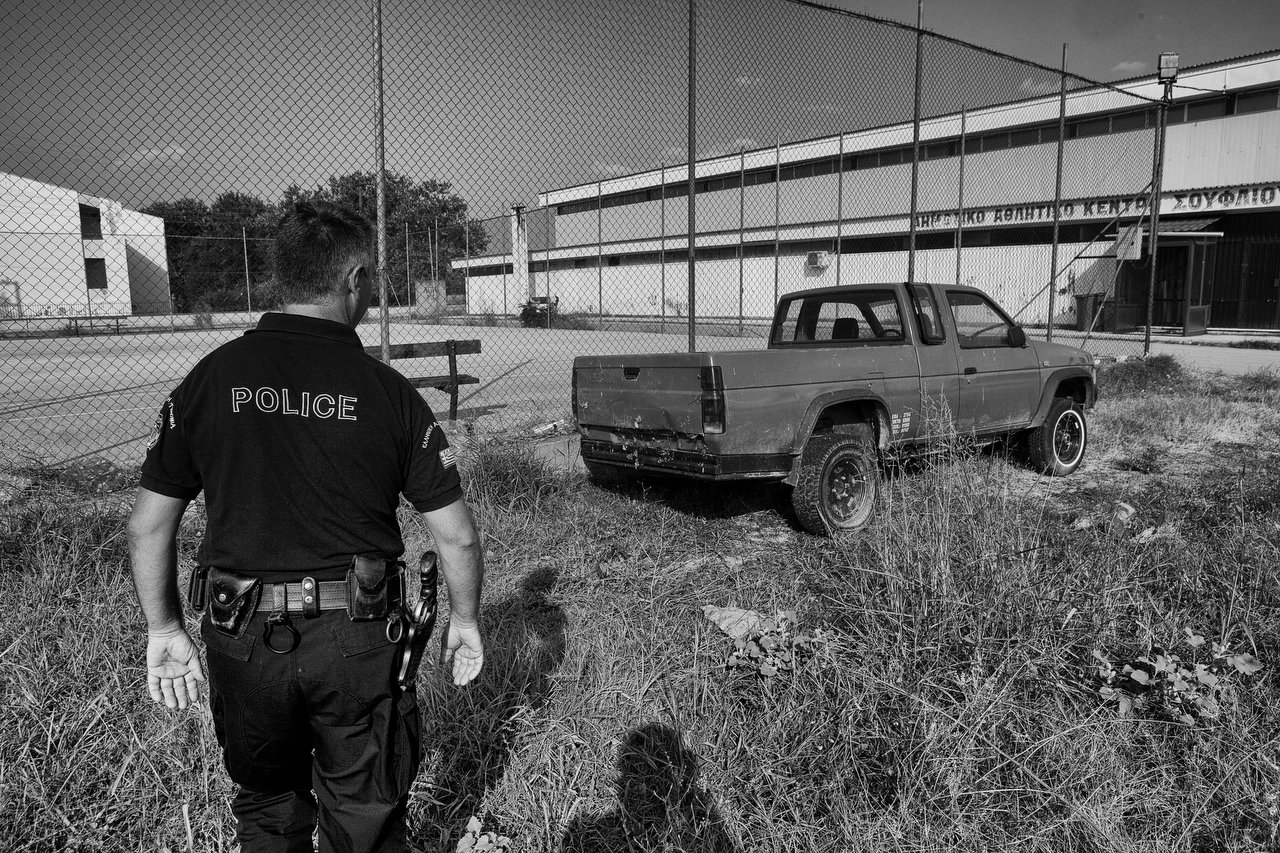
On September 4, 2011, the Fylakio detention center in northern Greece erupted into a smoke-filled inferno. The detainees, desperate due to the inhumane conditions, rioted and set fire to their mattresses. When I arrived, the tension was still palpable. As I was taking photographs from the fence, a policeman confronted me, nervous about my presence.
"Come on, finish your work as soon as possible; you're stirring things up," he snapped impatiently.
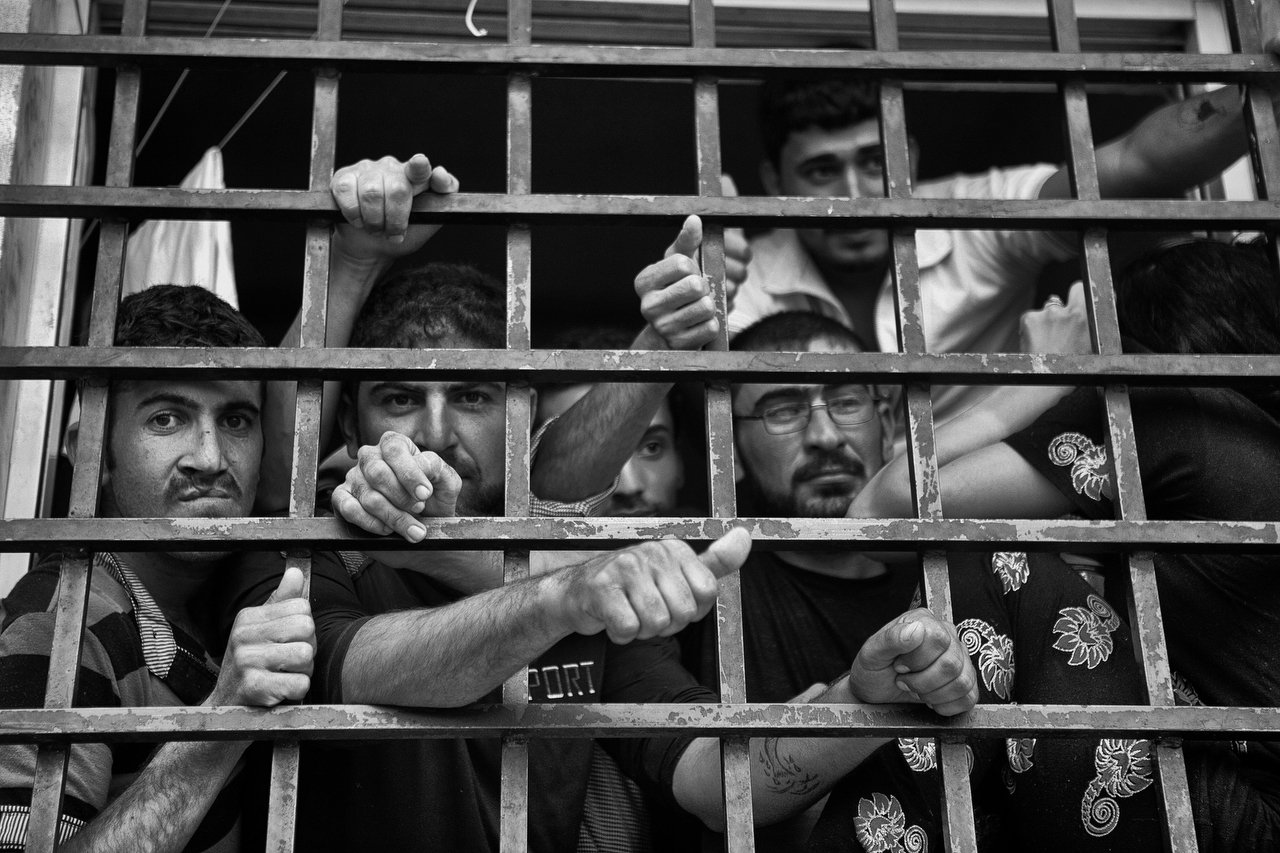
From a small window, the detainees were shouting for freedom. They held up pieces of bread and raised their fingers in the victory sign: “We’ve been here for six months and the conditions are inhuman,” they cried. When I told the officer I had a permit from Athens, I only got a dirty look; for them, my camera was the spark that could reignite the fire.
The other side in Soufli and Tychero
In Soufli, the atmosphere was different. The officers knew nothing about my permit, but Greek hospitality prevailed. They offered me coffee while they finished their frappes. After several calls, I managed to negotiate getting closer to the detainees. Some approached to talk: they had been there for months in subhuman conditions, although they acknowledged that the police were doing what they could.
“We do the best we can, without resources,” confessed one officer. “We understand that these people have the right to dream of a better world, but Athens doesn’t listen, or doesn’t want to listen.”
In Tychero, the story was the same. The permit from Athens seemed worthless at the border. “Wait a moment, we’re going to make some calls,” said the commanding officer, leaving me once again in that bureaucratic border waiting room, where reality is managed by phone calls and mistrust.
Tychero: From Pigsty to Shelter
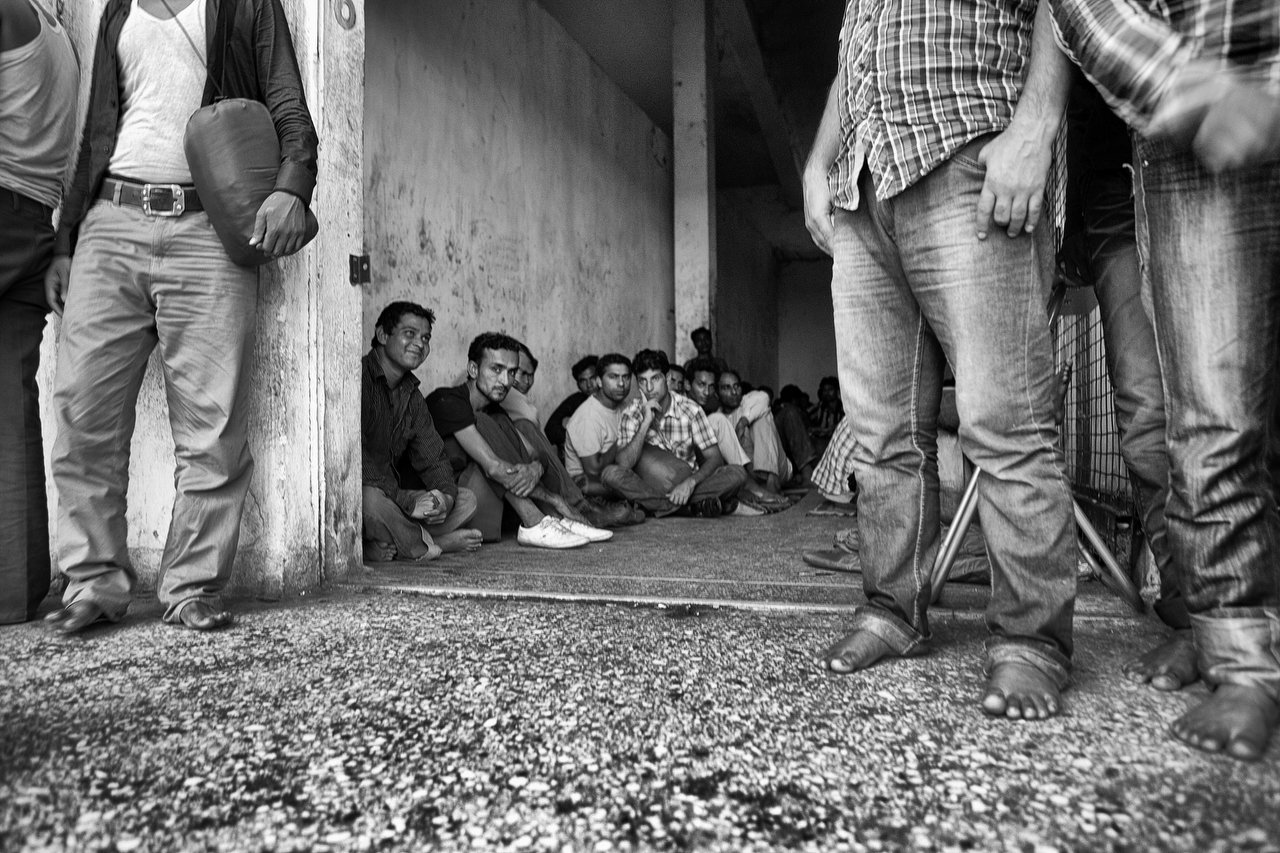
In Tychero, the wait was short. Soon I was allowed to photograph at my leisure the facade of a place that exuded a grim past: the detention center was once a pig farm destined for slaughter. Today, instead of animals, it houses men who have been waiting for months within walls that still seem to bear the traces of their former function. The conditions are terrible; from the outside, you can see how they live crammed together, sharing a space where dignity is lost. To relieve themselves, they are let loose and urinate wherever they can, in full view of everyone. An MSF member distributes sleeping bags, and although he assures me that the food is good, the surroundings belie any trace of well-being.
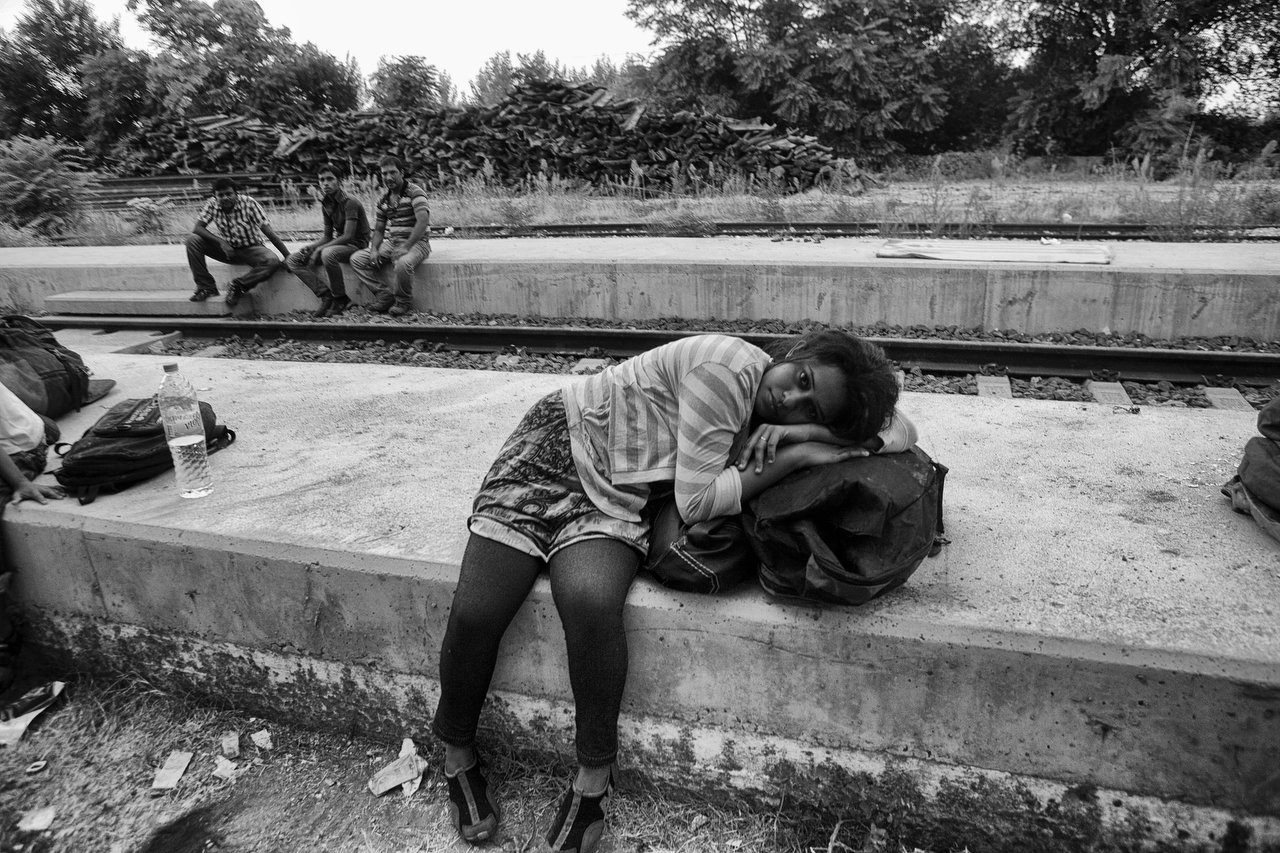
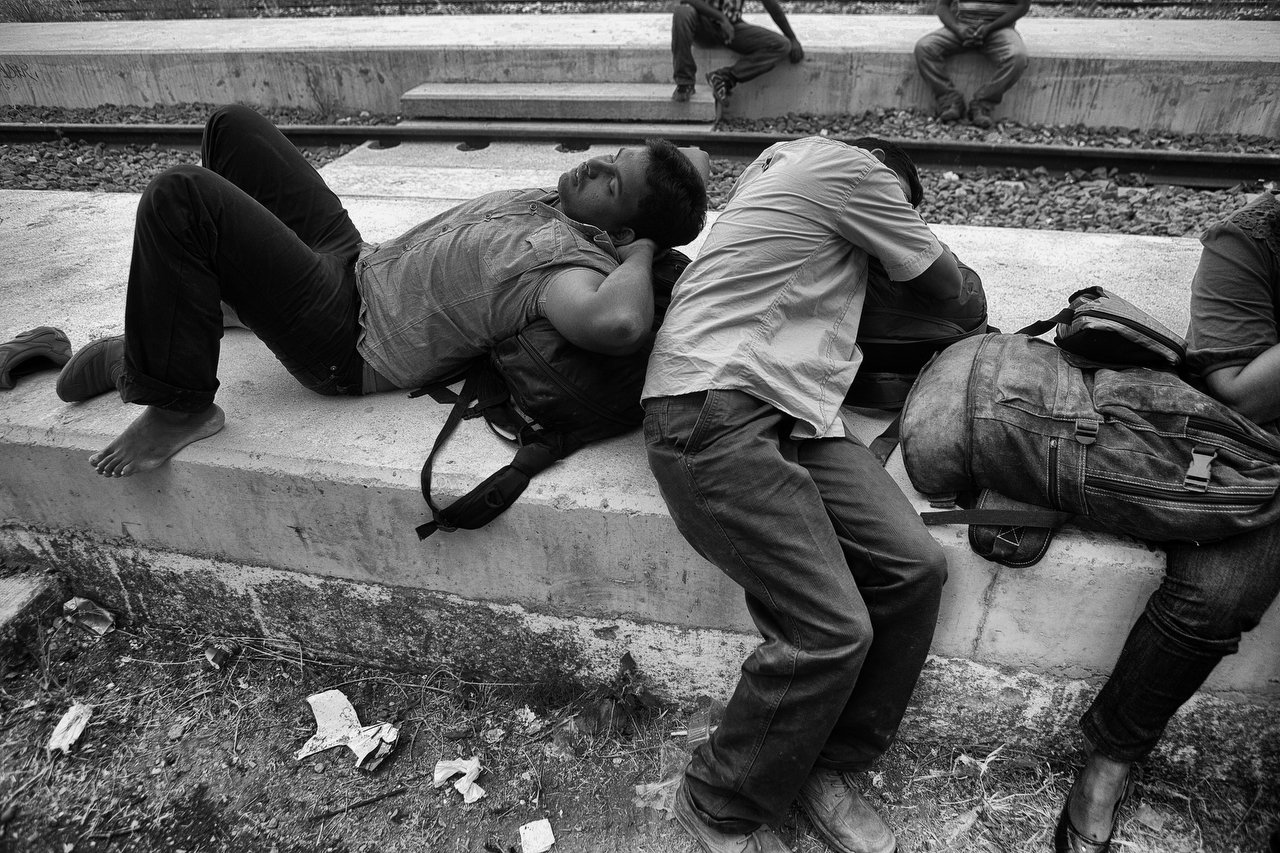
Just a few meters away, at the train station, exhaustion is palpable. A dozen migrants sleep soundly on blankets, waiting for a train to take them away from the border. The police officers from Tychero, unlike those from Fylakio, don't bother me. They are worn out, broken by a situation that, as human beings, is agonizing for them. It pains them to see families, women, and children suffering for a piece of paper that never arrives.
The Somali swimmer and John's fountain
Among those waiting on the platform, a young Somali man smiles, holding a piece of paper. He has obtained his temporary freedom after two days.
Waiting at the station. “I swam across the river with my friend; in Somalia we have rivers and we know how to swim well. We didn’t pay anyone,” he tells me proudly. His dream is both humble and immense: to study medicine in Europe so he can return to his country and help his people.
But not everyone is so lucky. A few kilometers away, the landscape holds the lament of John, a Kenyan citizen. He isn’t waiting for a train, but rather tending to a fountain he built with his own hands to honor the memory of his wife. She didn’t make it across; she died at the hands of criminal gangs in Turkey while trying to reach him. Her remains now rest on the hill of Sidero, beneath the red earth and the quiet care of kind Mehmet. With the echo of footsteps at Tychero station, this stage ends. Athens is the next act in this story, another link in a project that will take me to Sicily, Spain, and Turkey to document the cracks in this Fortress Europe.
Farewell to Evros
At the edge of town, a sculpture stands as a silent tribute to the dead, to all those who never made it beyond these lands of corn and mud. It is the final reminder that the border is not just a political boundary, but a graveyard of hopes.
Wiktor revved the Citroën C4 and we headed down the road towards Thessaloniki. The sun was setting with an intense red, tinging the clouds with the same dramatic hue that had marked our days at the border. I opened the window, looking for some air, and stuck my hand out, but a swarm of kamikaze mosquitoes immediately attacked it. I slammed it shut. In the end, I realized that there are two things I can't stand: mosquitoes and inhuman beings.
We left behind Salamagkas's mustache, Mehmet's hill, and the echo of those waiting at the station, as the C4 devoured kilometers toward the next stage of this journey through the cracks of Europe.
"The ancient Greeks said that Orpheus's lyre floated down these waters, singing an eternal lament that not even death could silence. Today, the Evros still carries broken songs; no longer golden lyres, but the voices of those who, like the Somali man or John's wife, entrusted their lives to a river that calls itself 'the one that springs forth,' but which for Mehmet is only the river that delivers bodies to his hill."