Himba: struggle for survival
Visual anthropology and ethnographic project. Namibia 2009.
Filmed with Sony Z1.
Photographed with digital camera.
FIELDWORK
*Area covered: Opuwo to the Epupa Falls. The names of small villages (kraal) are omitted due to the disruption this would cause to their daily lives. Areas or zones are unidentified and not disclosed for their natural protection*.
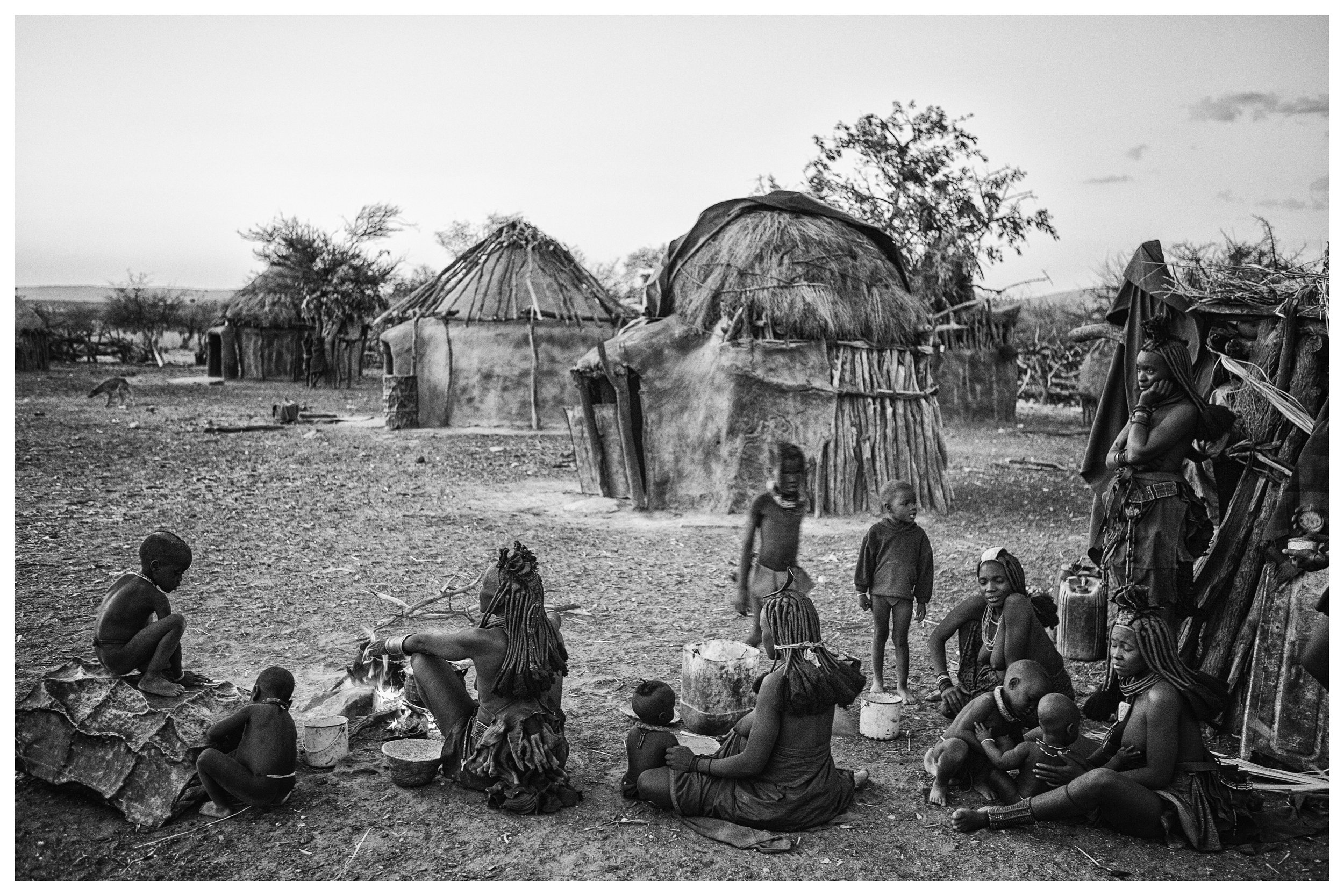
Scene of daily life in a Himba village. Western Namibia. 2009
OPUWO/WALBIS BAY.
Idealized by tourists, members of Namibia’s Himba tribe struggle to maintain control of their lives and their land. This beautiful African tribe is now threatened by ongoing projects from the government of Namibia and also by the invasion of Western tourists who put in danger their identity. In 1980 the lifestyle of the Himba seemed about to finish when a drought wiped out 90% of them. In the village of Opuwo, living was even more difficult. Located close to the border with Angola, many Himba have been victims of kidnapping during the civil war in Angola.
The Himba are monotheistic; they believe in one god called Mukuru. Each family has its ancestral fire, which is kept alive by a firekeeper. The firekeeper, every seven or eight days, communicates with the ancestors on behalf of the family. There are now also schools where children learn English and Himba and conservancies that give Himba control of wildlife and tourism on their lands. Vengapi Tijvinda, a grandmother in her 50s, lived through this rebirth. In the 1980s, she was making baskets for tourists. Now she has started goat farming and is also raising cattle. She says that "life is still the same, but the children can read and write. I am a member of a conservancy, and we have tasted game meat again.” (from National Geographic Magazine). Anthropologist David Crandall, who is an expert on the Himba in Namibia, has recovered ancient dances of the tribes that are already disappearing along with the isolation that previously gave them security.
For the Himba, a visit to the regional main city of Opuwo is also an education on the uses of electricity. But with the advantages of having electricity come new challenges, creating desire for electric goods such as a refrigerator to chill the beer. People who are thinking about cold beer are no longer thinking about their cattle. Concerns that the Himba society is being influenced by the temptations of Western clothing and more severe alcohol are driving fears among the largest of the tribes, who say, "We will not have another generation like us again” (Mutambo). “We do not like the Western clothing; we want to preserve our traditions. We want to be who we are. We are suffering. We are happy with us" (Kapikas).
It was October 2009 when I arrived in Windhoek. I spent one day looking for the permits at the Namibia Film Commission and Home Affairs Ministry. If someone wishes to film around the country, they will need two permits, one for filming the wildlife, Himba, or wherever they go. The other one is a work permit; yes, I say, a work permit, not a joke. Without those papers, forget going ahead with a documentary. I had a discussion with Mr. Ricardo, the manager of the NFC, about these "fees," but anyway, Namibians are in their country, and you are nothing, just a "white."
In Walvis Bay I finished a documentary book with one Galician friend. Spend one week writing and putting in order the texts. In that week I got a cough, a very naughty virus in the stomach that my host passed to me. It was a very malevolent virus that put me in the bed for more than six days. It was painful, and I couldn't even drive. Bye-bye, Himbas, I thought, because the work permits are only for the time of your passport visa. It means that I spent most of the time in bed fighting with the crazy virus (a public virus, not me alone!) and only had one week before departing Riga again. Also, it was an imprudence to arrive there with a virus to a village where their genetics and immunoprotection are different from ours. I waited and lost a week. I ran out of filming time granted by the Namibia Film Commission and my plane ticket.
Helped by my friend, I departed alone to the Himba area, Kaokoland, in northwestern Namibia, driving a Toyota Land Cruiser more than 1000 kms with a fever and a lot of power inside me to find the Himbas again. Gravel roads, like driving in Latvia in winter, flying sometimes in the air. Awesome trails. Once I arrived at Opuwo, the car was broken. A spare part would arrive in two days, and mechanics were sure that they would fix the issue well within the Toyota. In Opuwo, you have to be prepared physically and psychologically, because distances are enormous and roads dangerous. It's better that the fixer drives, because he knows the stones that rip the tires. They are lajas en punta that are very hot from the sun. This is one of the biggest dangers. Predators are not the problem; due to climate change, many species have disappeared, since water and hunting are necessary, and Namibia is not exactly a place where it rains a lot. The villages that have moved toward the Skeleton Coast in the desert are harder to reach, I'd say impossible, except in expeditions with very professional people who know the desert. Any situation is unpredictable, and ambulances or helicopters don't reach there. First, you need to know a bit of first aid, stings, and hydration, which is the most complicated since there is no water.
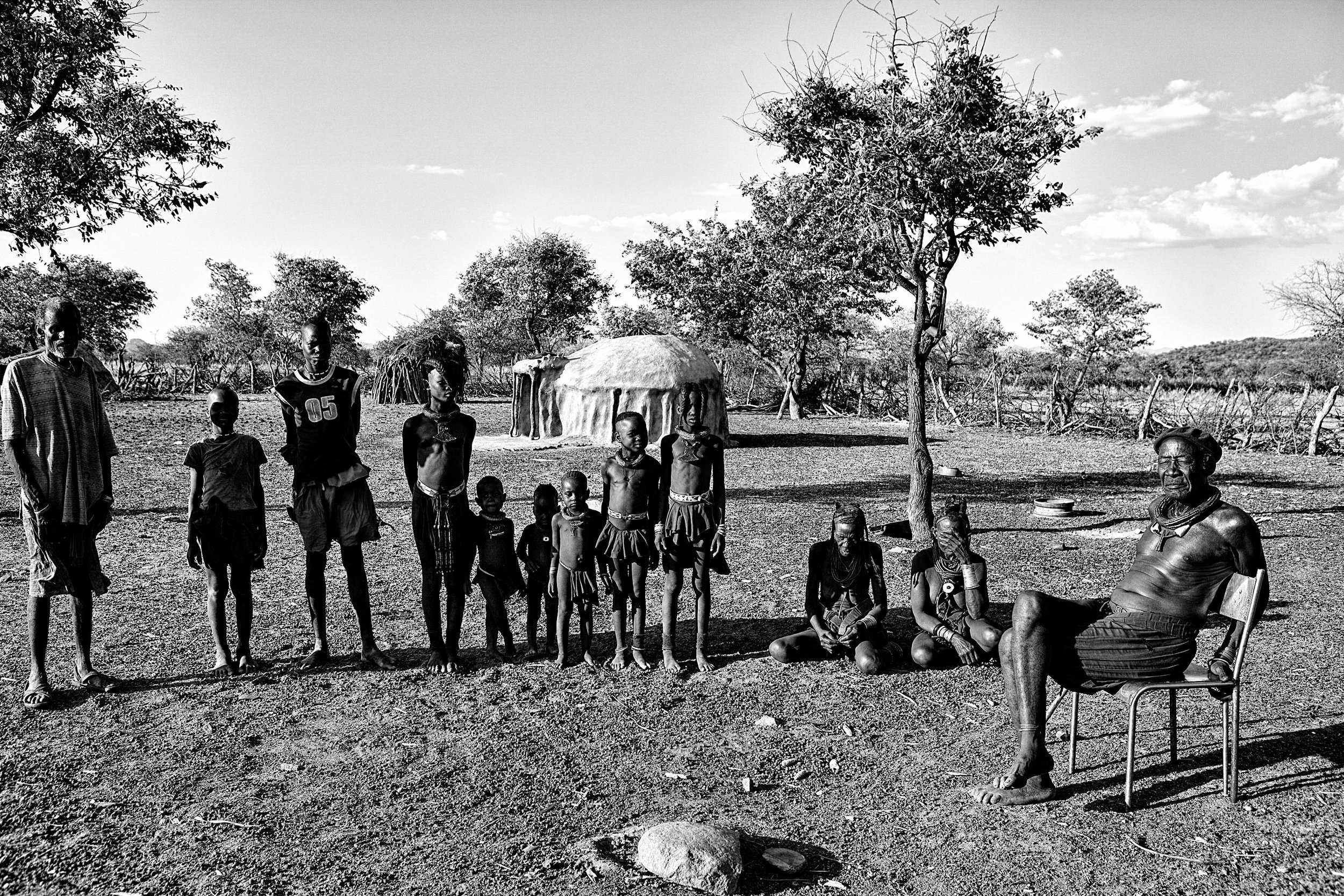
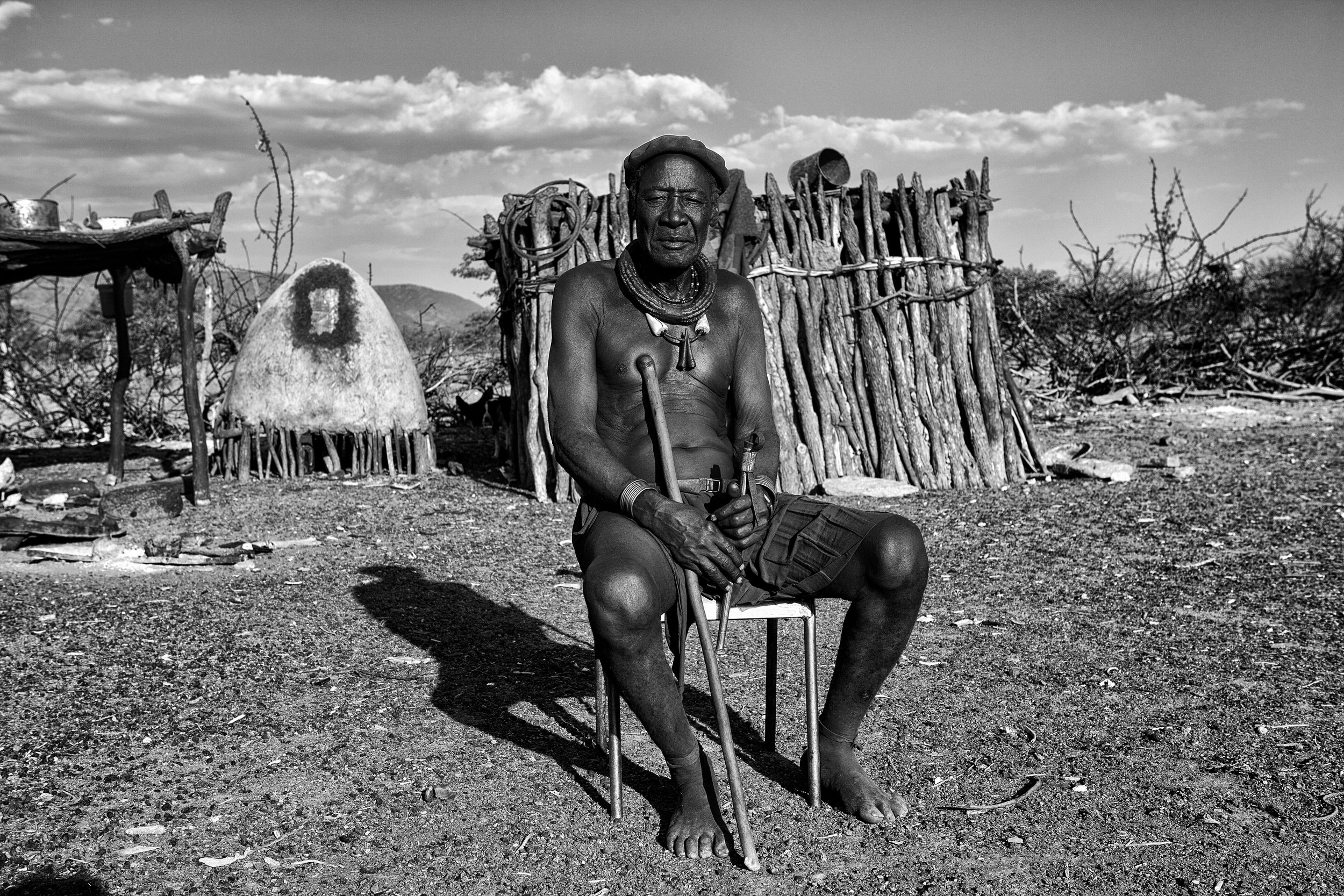
Omuni wonganda: This literally means "owner of the house" or "settlement leader." Since a traditional village (kraal) is usually an extended family settlement, the eldest male leader is given this title. Namibia. 2009.
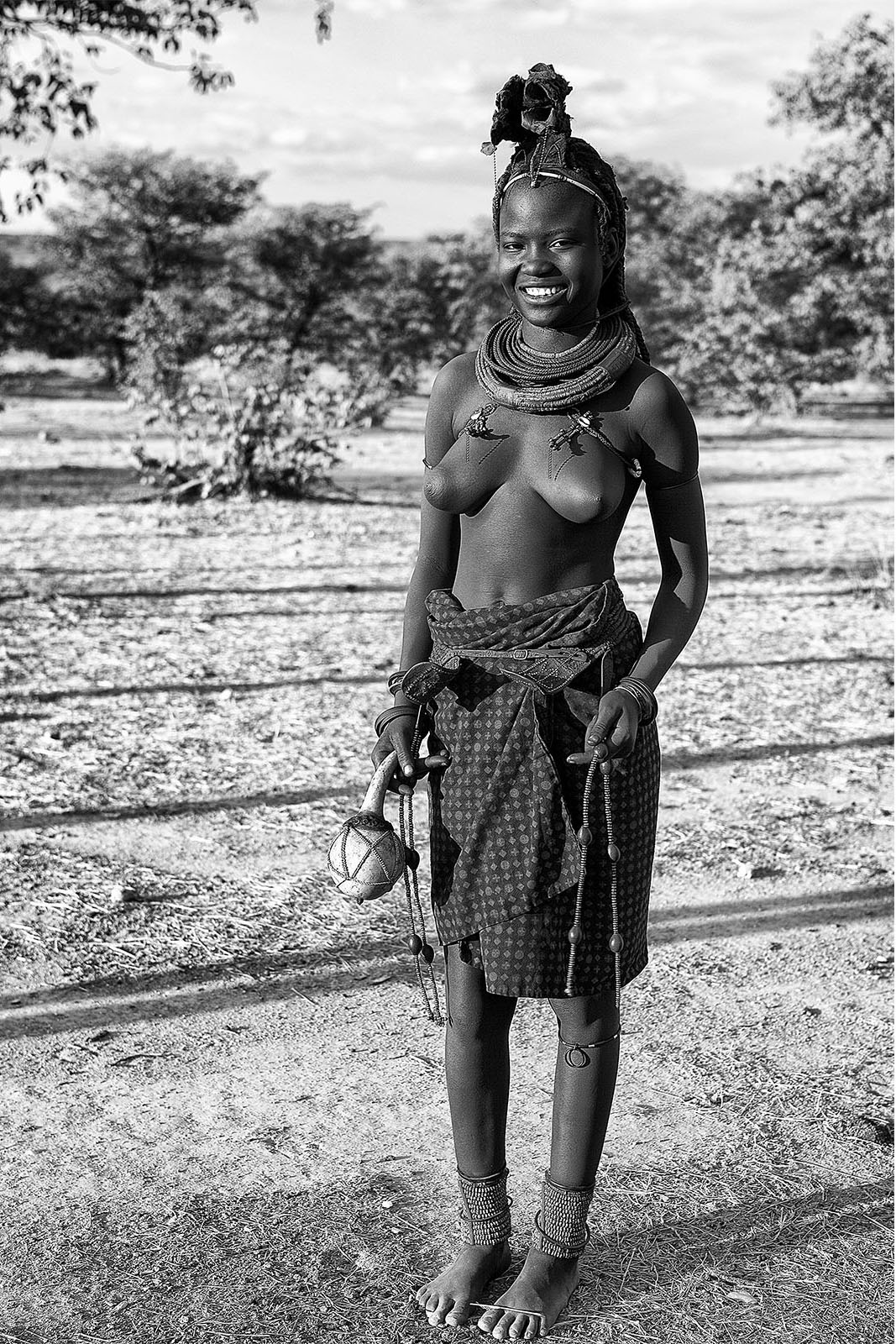
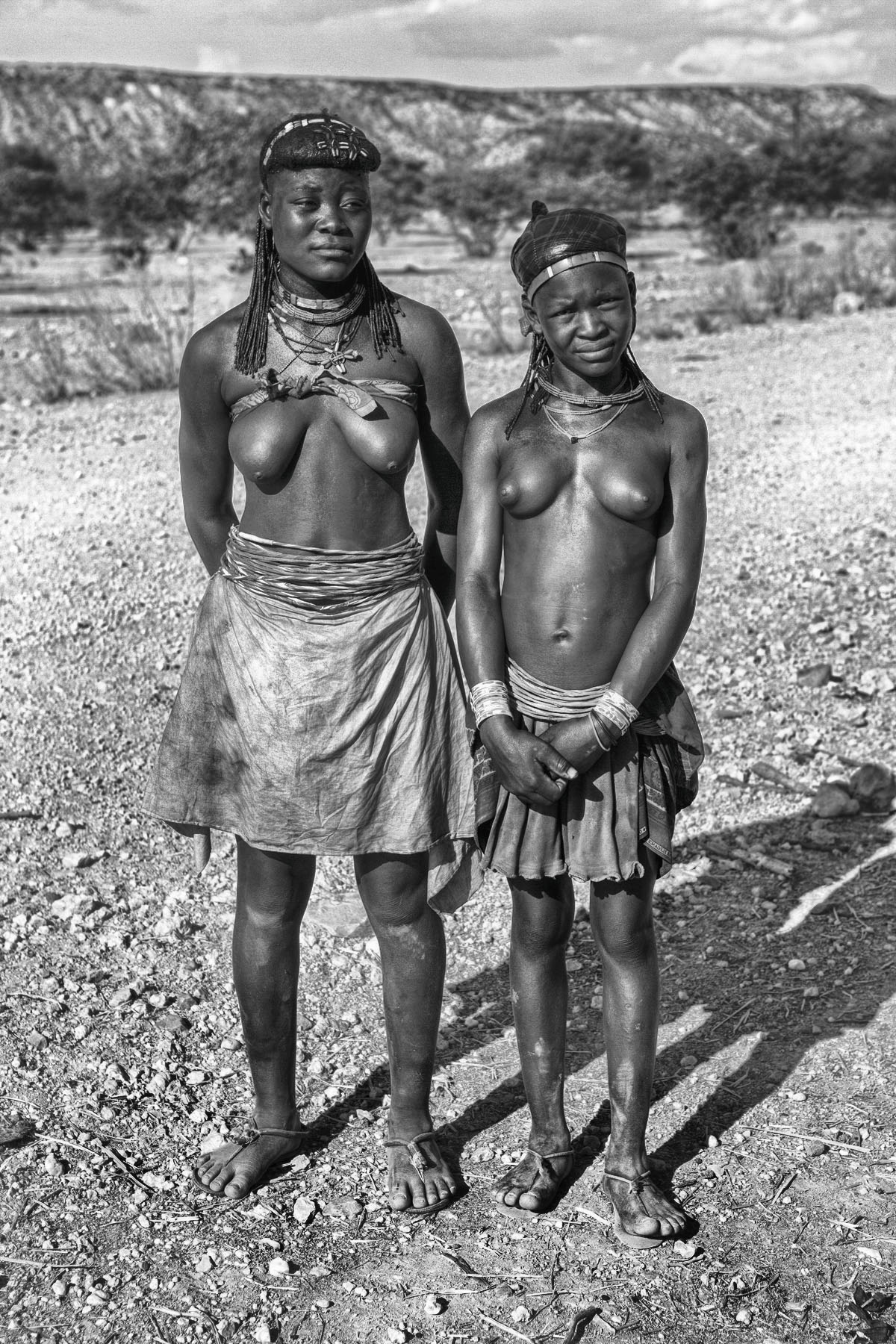
Meanwhile, I contacted volunteers working in the field with people in the villages because they are so far from Opuwo and only a good fixer can drive there. So, I knew Jimmy Elia Tolu, from mother Himba, an expert in assisting film crews. For arriving at the villages, the fixer puts you to the test. The first visit is the cemetery; it's in a flat place, looks like a páramo, and there is absolutely nothing, barely any trees. The fixer gets to know you, doesn't ask questions, but carefully studies how you interact with him and the space. For example, we stopped at a place where there was a sort of isolated bar. At the site, there were some Himba girls who approached to ask if we were going in a specific direction. They were naked from the waist up, their breasts were strong and erect, typical in girls of puberty or adolescence. To me, it didn't bother me at all; I adore the human body as it is, and Jimmy noted in his memory my way of seeing or acting. That was important. Jimmy told them no, that we were going in another direction, but invited them to fresh bottled water, which they rejected. In all those acts, the fixer sees how you act, if you are rude, bad people, and only want to reach the secret and hidden places to photograph or film women who exhibit their bodies with total naturalness. From that border, Jimmy can tell you to go left, to the right, or return to Opuwo.
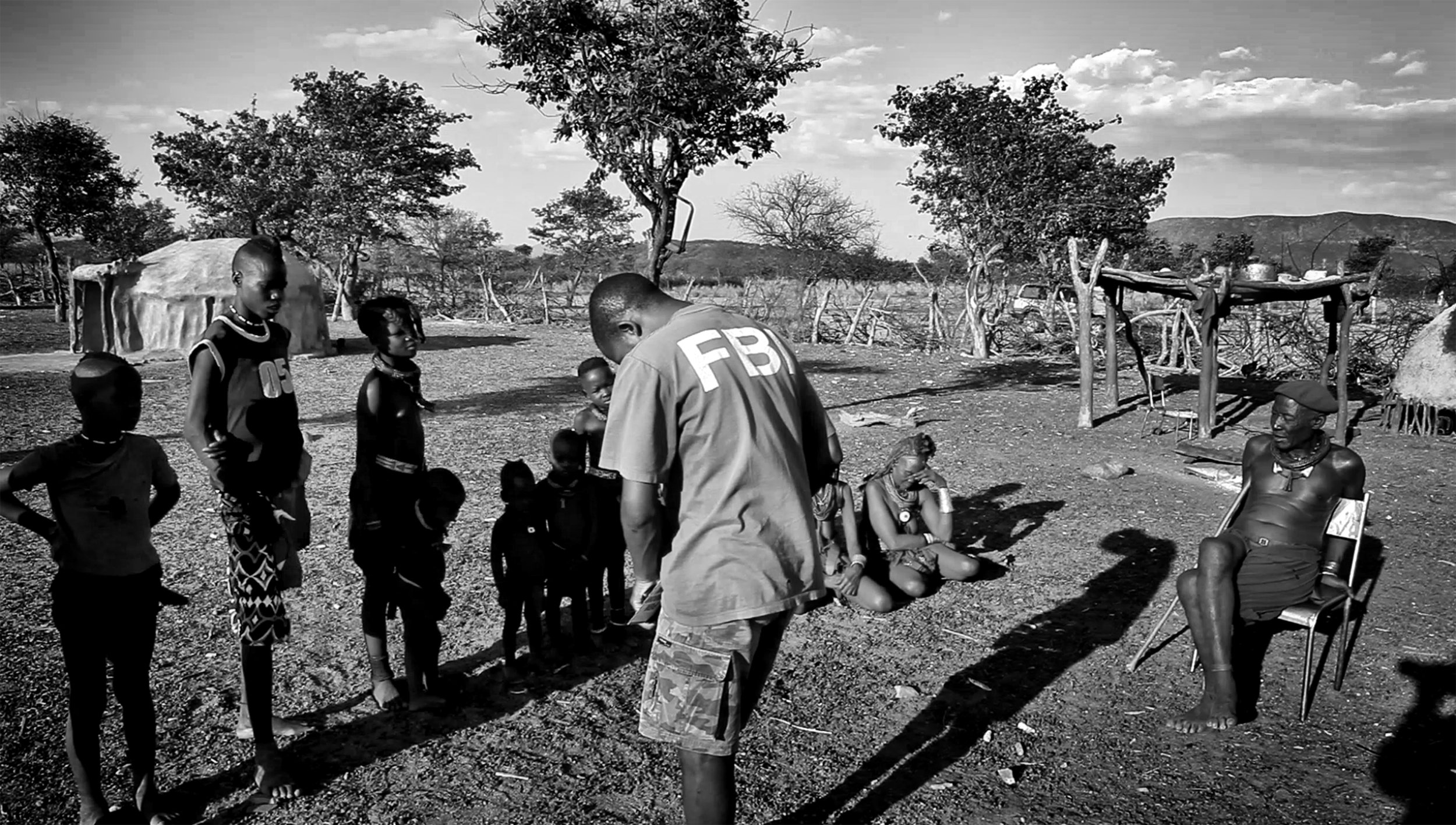
We went to the left, and after getting into places that I myself would be unable to get into or find, we arrived at the first village. It made me laugh because Jimmy was wearing a brown t-shirt and behind it, in big white letters: FBI. What a contrast! I took a photo of him because it seemed sarcastic to me. He spoke first with the chief of the village, who remained seated, without rising. They don't shake hands. He returned and told me we could enter, and all the presents were put at his feet. Jimmy asked if they were enough, and the chief said yes. Then we obtained permission to talk to the women, film, etc. He didn't put any restriction; I was free to film everything I wanted, but I was more interested in the opinion of the women as mothers and wives taking care of their children.
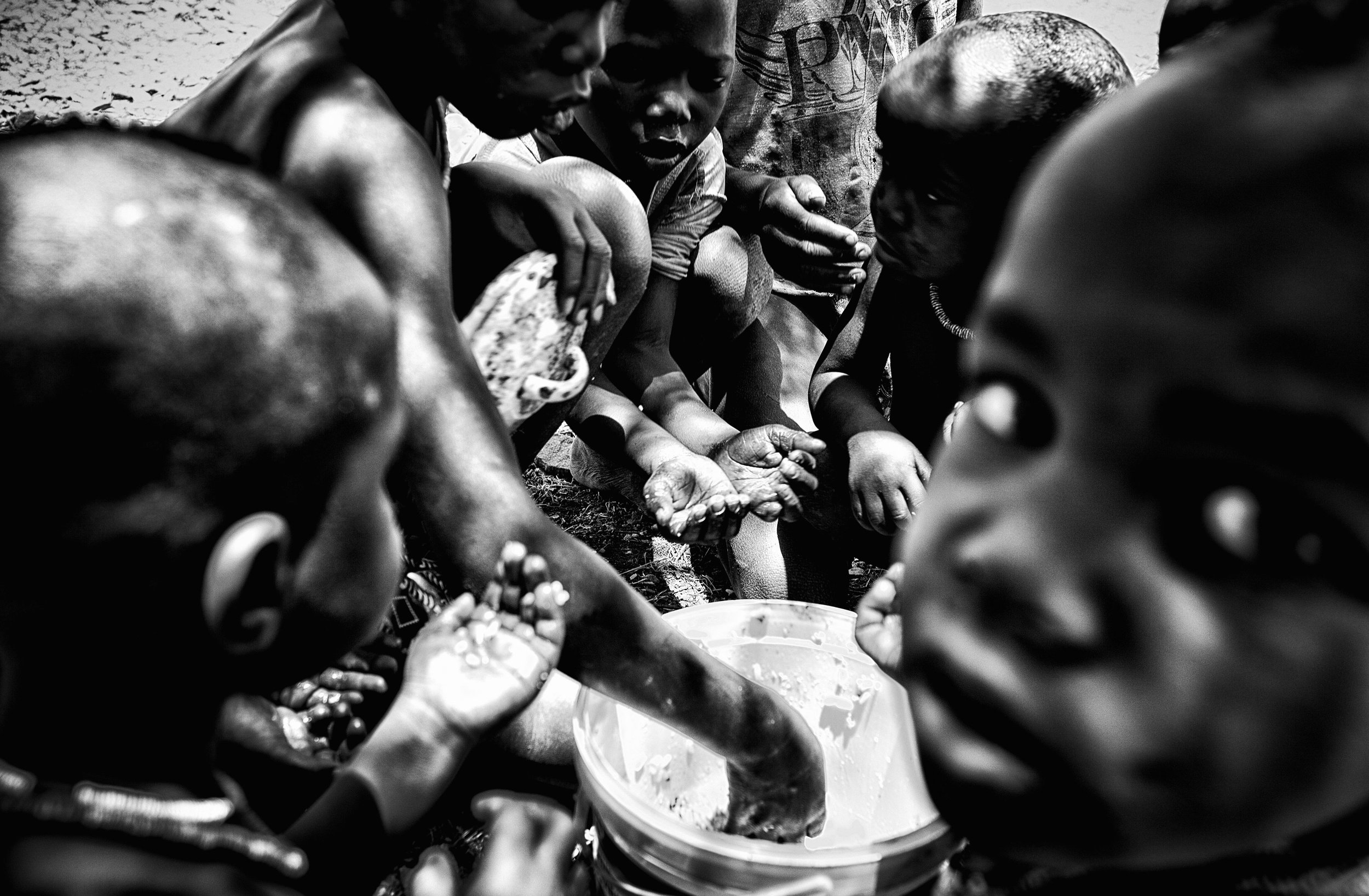
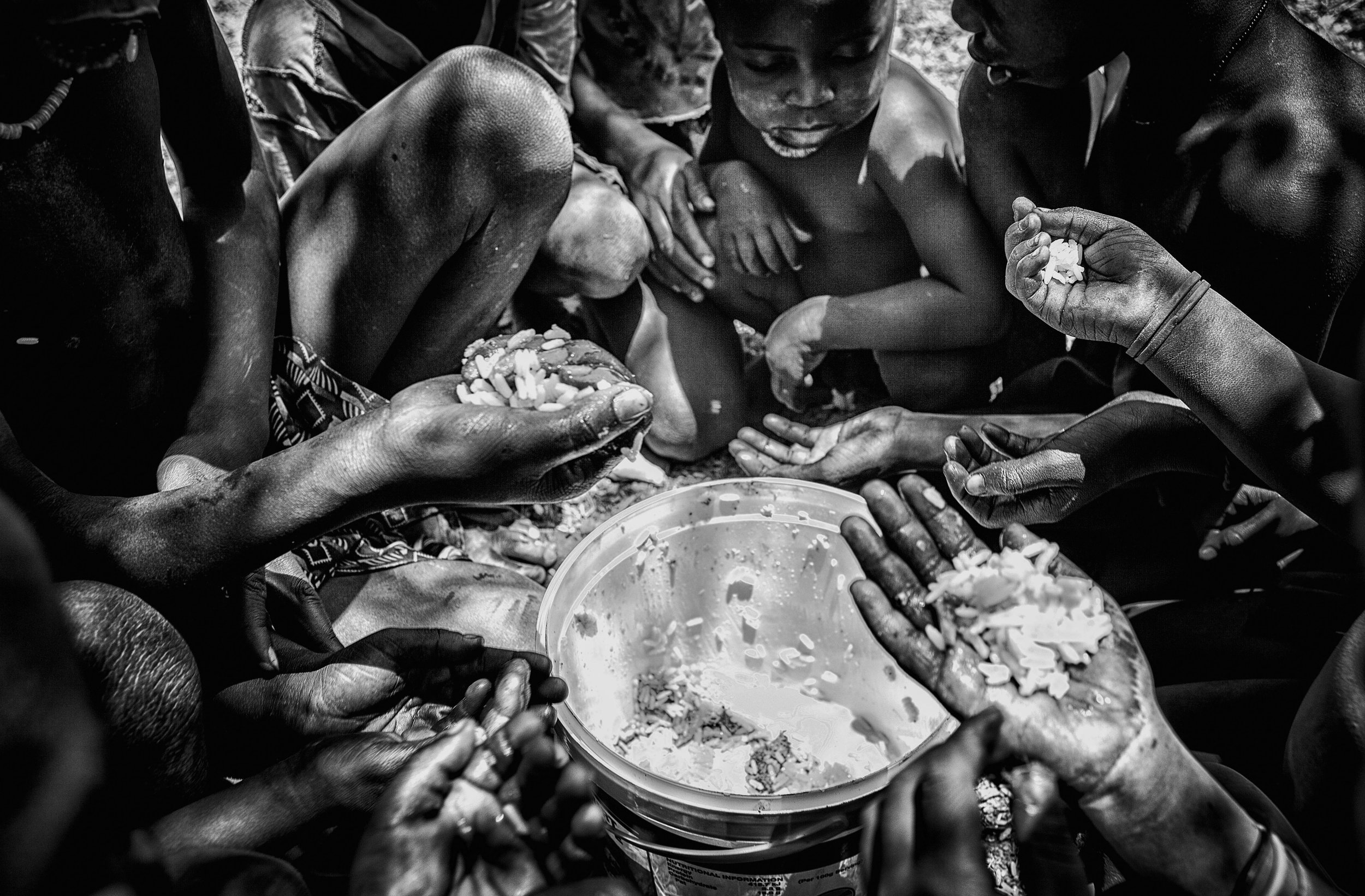
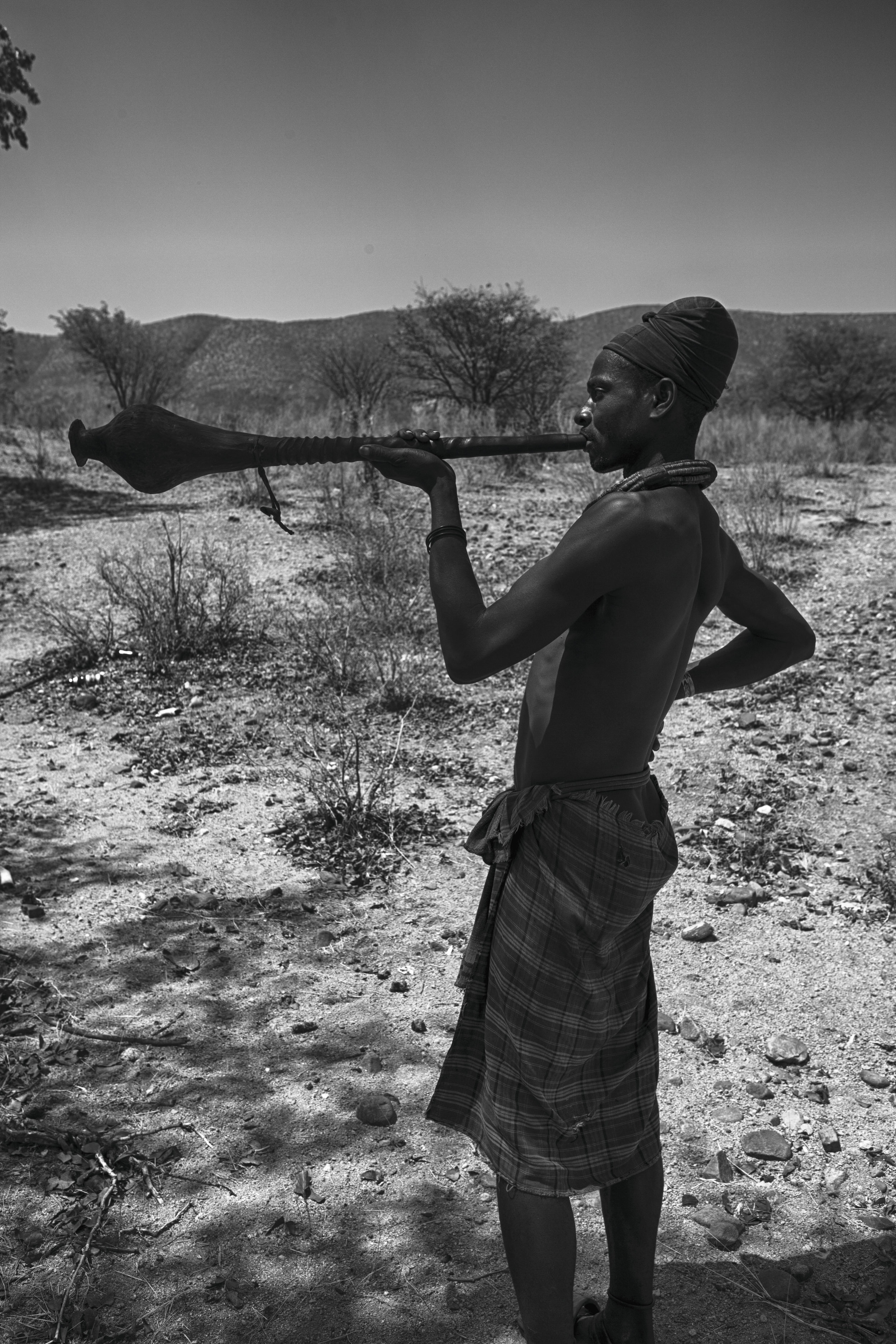
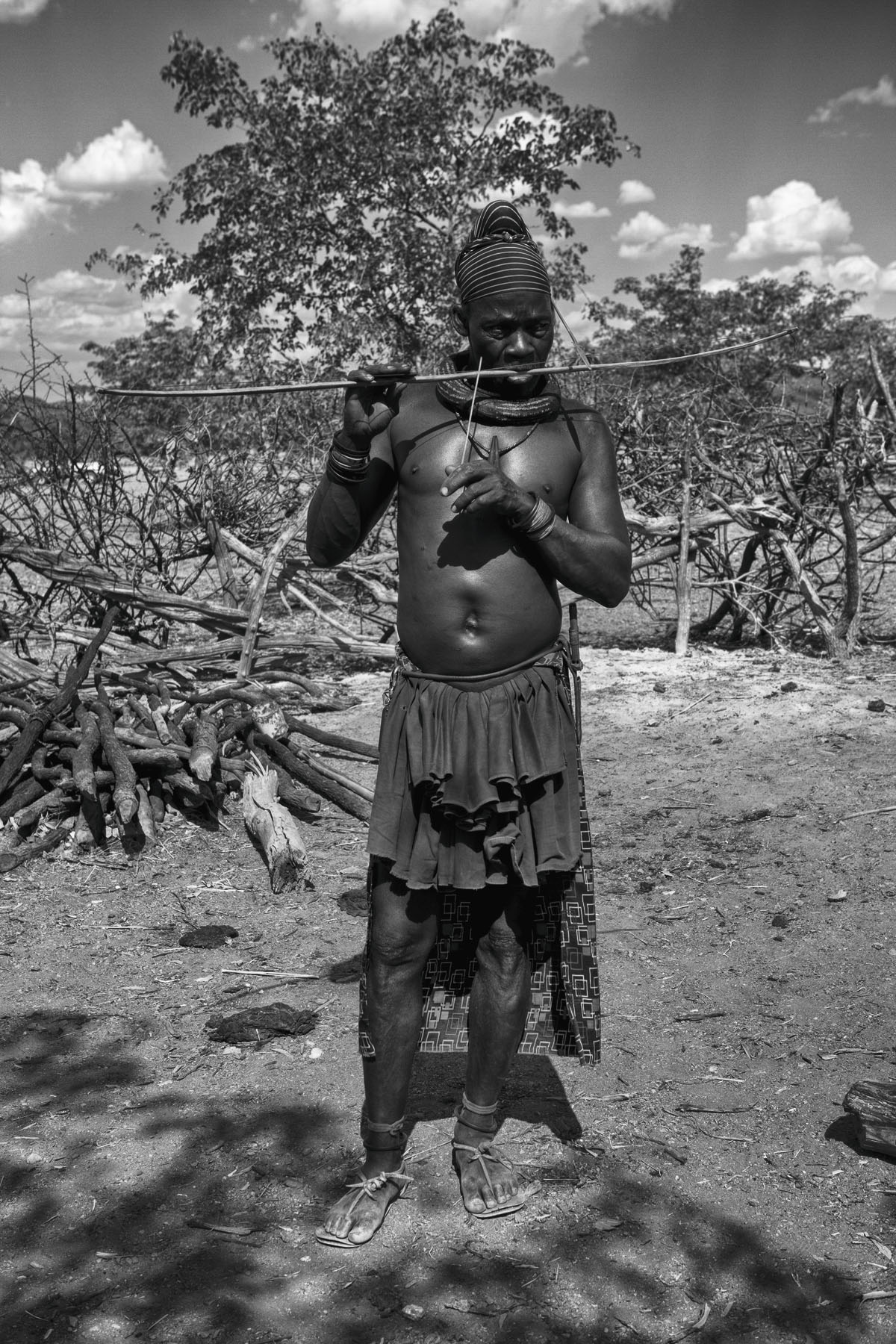
It went for five intensive days, driving by the Himba area, without GPS or any other assistance, just following indications and by intuition. Jimmy also asked me not to provide coordinates or names of the villages to protect their peace and tourism. We spent days looking for villages and people and bringing them rice, maize (corn), fruit, tobacco for sniffing, sugar, and a few other food items. Jimmy put me up to date on how they work in the Himba villages. He is the son of a Himba and preserves the traditions, but he is against changing the sense of things; that is, they are in a chronological age close to the Stone Age, and they keep crushing seeds for the basic breakfast while the man plays the string of a sort of bow with his teeth. It's important not to arrive empty-handed. Therefore, seeds, rice, or any product that is not what they are used to eating and on which they don't have to depend when it ends is important. No batteries for the radio, no matches, no lighters, no pipe tobacco. No t-shirts with sports brand names like Nike or Adidas; that's not natural. The Himba must follow their biological and natural clock in their process as a people, and nobody should interrupt or divert it.
The villages are built with branches to prevent the cattle from leaving and predators from entering. At night, it closes with a fence, and there are no guards. There is a constant fire in the middle of the village, and everyone goes to sleep after the sun goes down. There is a small dinner but nothing more. Breakfast is important with proteins. I didn't see meat used for food, but yes, milk, maize, seeds, and ground flours were mixed with cow grease. The man is when he goes to any of his wives for sex. The children are present sleeping, and they get used to that being normal; they don't consider it something private. Hence, there are no taboos like in our "civilized" societies.
Jimmy is very proud of being Himba and fights for them; he is a very calm and patient person. I learned a lot from him. He is not imposing, jealous, or critical; he doesn't ask for money, only for his daily work, which is totally logical as a fixer. In Opuwo, I saw situations where the white hand was noticeable. Entire buses arrived at a village and photographed the Himba as if it were a zoo. Some of the Himba in some streets of Opuwo were alcoholized. A big threat became the white man with the AIDS/HIV virus.
We went to visit another village. The "we went" can be understood as several days passing between leaving one place to arrive at another. It's not that all villages are together. And plus, in many villages, the people are missing because they are with the cattle pasturing and don't return until after days. What do they take to eat? They don't have pan, but they take foods that sustain them, always proteinic, water, and nothing more. The milk they obtain, which is basic, they obtain from the animals.
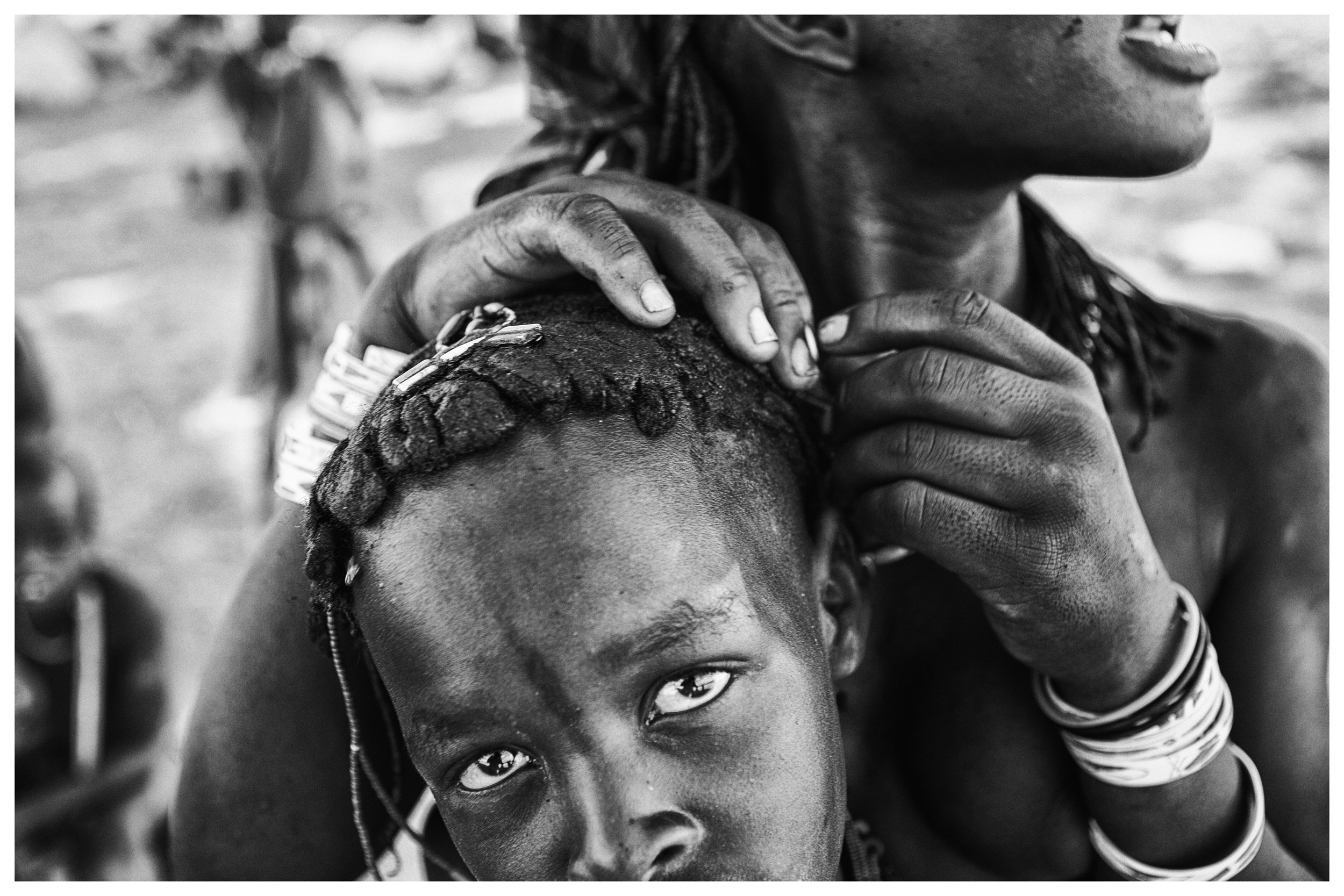
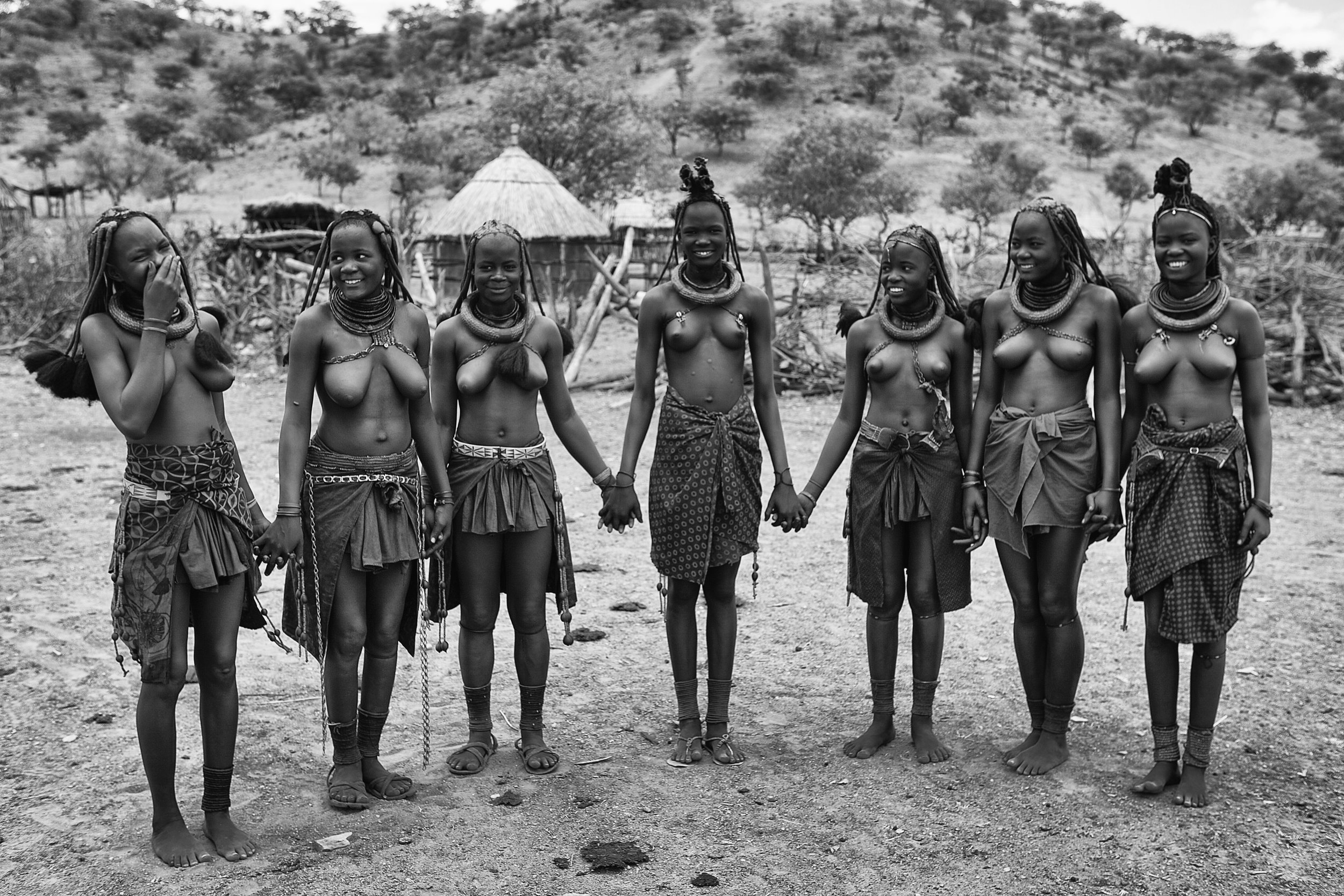
We arrived at this other village. This time there were many young girls preparing a sort of ritual to wash their parts since, according to what they told me, they were going to have their first experience in sex. The contact with the young Himba girls in puberty for sex is something very normal. Just the fact that they are with their breasts bare already says a lot about the way of thinking. When you are with them and the interpreter, you can talk about everything, including how relationships are with other youth. Virginity is not a taboo; what nonsense. The Himba spend days alone in the mountains, without coming home, and that is not seen as something illogical, dirty, or ugly. It's our society that is sick. For that reason, what's important is that they develop in their primitive state, making fire, looking for water, and putting ochre on their hair. People say it's cow dung, but it's not true, and they don't smell. It's a special clay they find in concrete caves, secret for them, with which they protect themselves from the sun and mosquitoes.
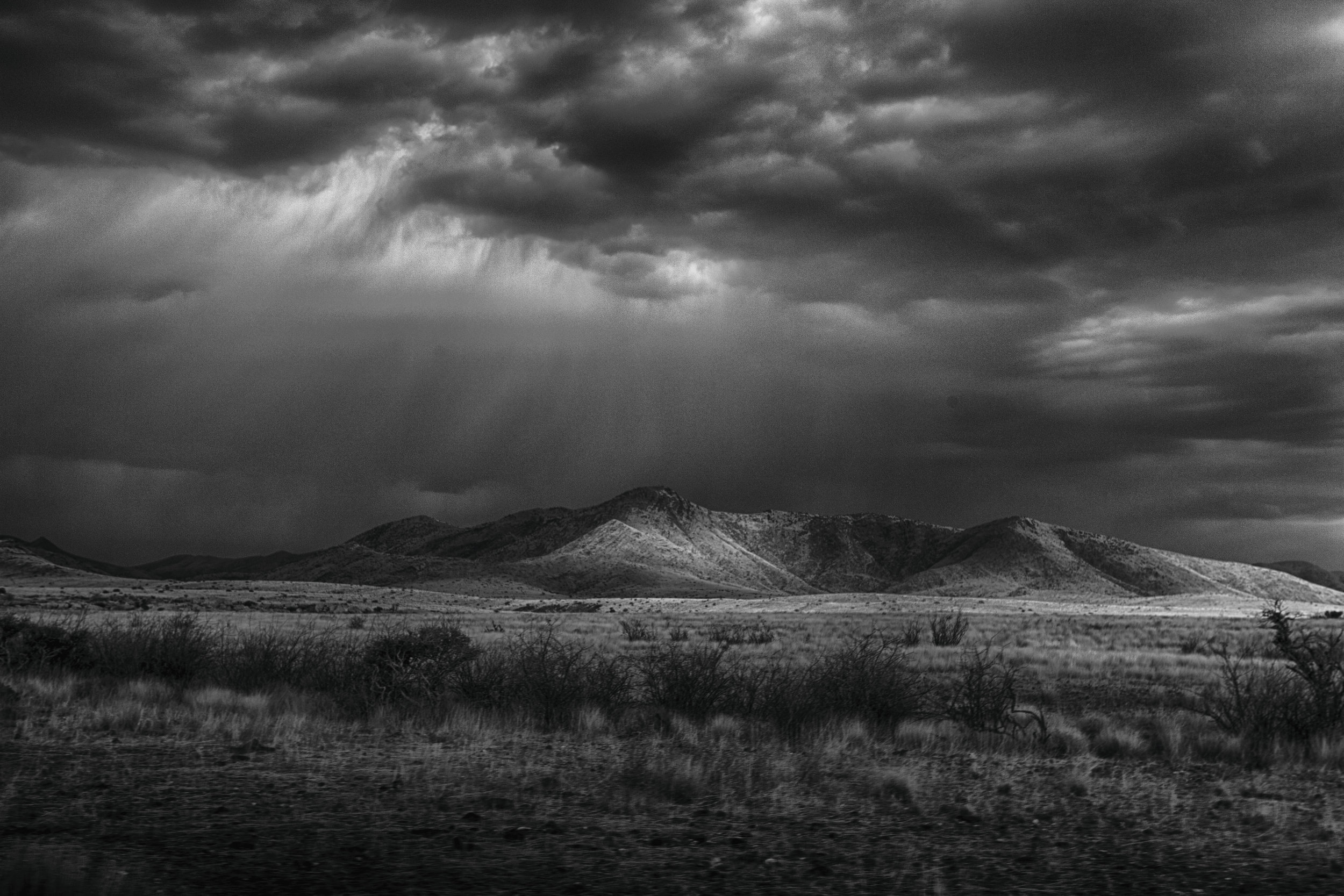
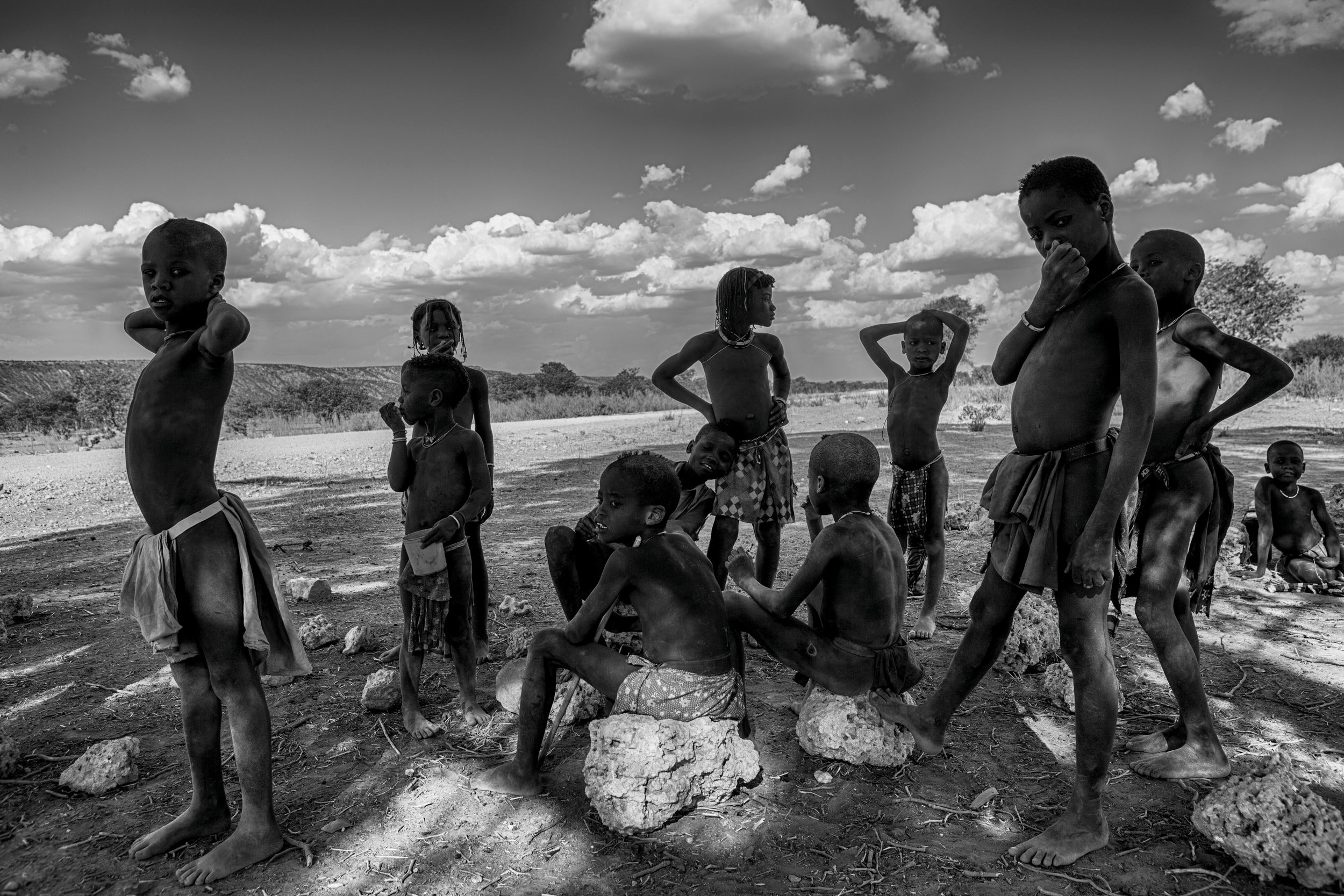
Landscape with storm. but not rainfall in Namibia. 2009
The clouds over the mountains of Namibia that threaten rain but do not release water are mainly due to the lack of moisture in the air and the phenomenon known as the Föhn effect.
The severe drought in northern Namibia between 2024 and 2025, exacerbated by El Niño, left hundreds of thousands of people facing acute food insecurity. The worst-affected regions included Omusati, Ohangwena, Kunene, and the Kavango area, where rainfall deficits devastated agriculture and livestock farming.
Food crisis: Around 776,000 people across the country (25% of the population) faced a critical hunger crisis by mid-2025.
Water scarcity: Drought reduced the availability of water for human consumption and crops to record lows.
Extreme measures: To alleviate pressure on water resources, the Namibian government authorized the culling and sale of more than 700 wild animals, including elephants and hippos.
International aid: Organizations such as the International Federation of Red Cross and Red Crescent Societies (IFRC) and the World Food Programme (WFP) launched emergency operations to assist communities affected by widespread crop failures.
The hygiene of the private parts of a woman: I assisted and filmed the process. All the young girls of the same age gather and sit in the cabin. In the center, they put some stones and inside some herbs they have previously collected and put to dry. They make fire with a stick and a base of another vegetable—I don't know the names—and move the stick with their hands until they get fire. They put more herbs and wait for a time, since the process is to stand over that smoke produced by the herbs, which have qualities of disinfection and smell. It's ancestral, inherited from mothers to daughters. Each one stands over the small bonfire, which really is only smoke, and they remain in that position for a few minutes, and so on until the last one.
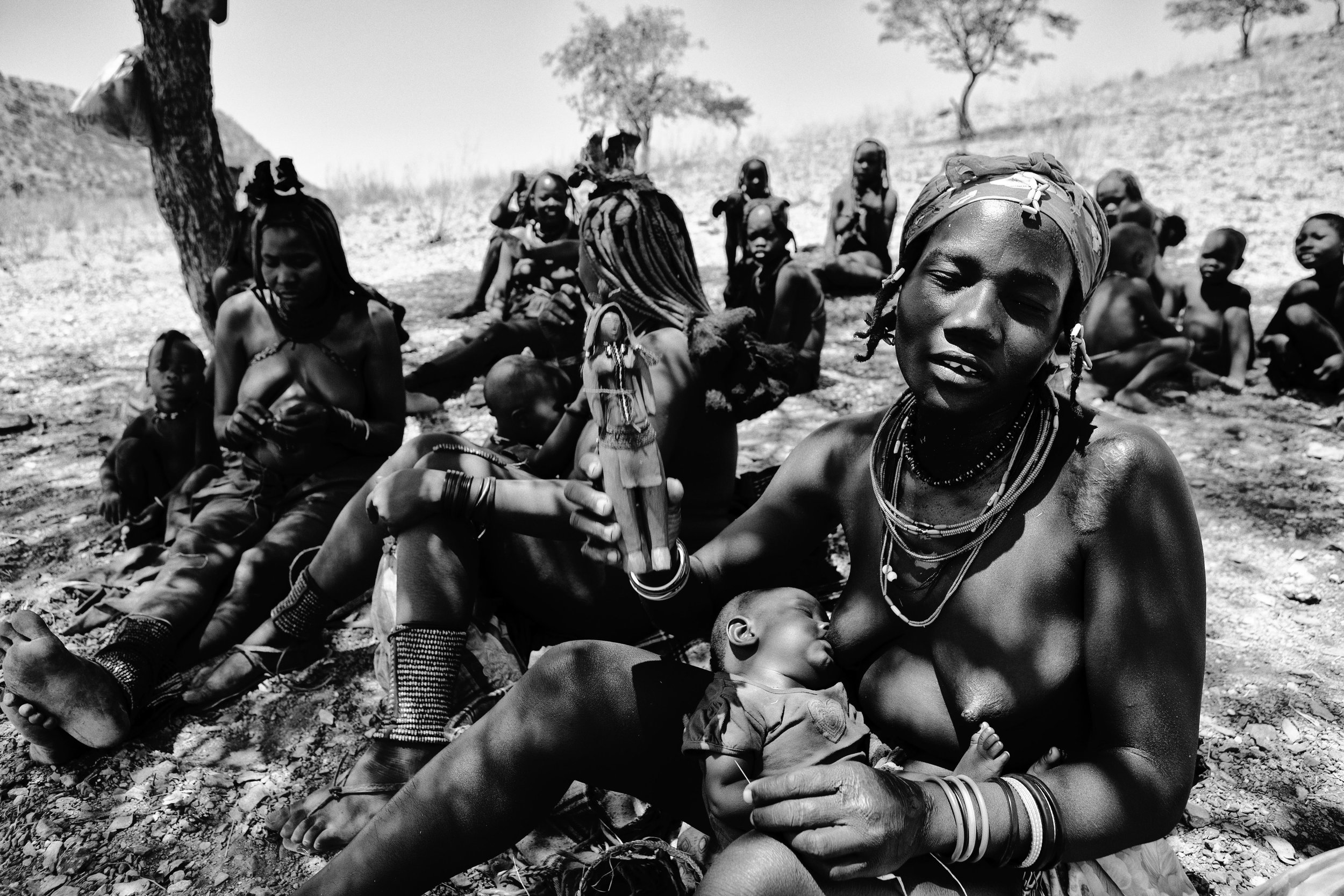
The Himba woman is very direct; she knows how to say things with naturalness and, if necessary, give a touch of warning to the male. But I noticed they are very ironic; it's a sort of game between them in their native language, which turns it into a tira y afloja between man and woman. Maybe it's the love game or knowing where each one goes or how they think. In any case, education is not monoparental; the father and the mother are always parents of the children. The wives take care of their own children and, if necessary, of those of others, but in this I observed an important distance regarding territoriality and marking distances. There are no fights; everyone dresses the same; everyone helps each other; they are a clan; they build with the help of everyone, etc.
Additionally, I left the camera to Jimmy so he could take photos, and then I sent them to him. In Opuwo they have internet. But there are NGOs that screw up a lot. Very bad people, and especially youth whose only thought is to spend time as volunteers but live, eat, drink, and sleep like kings. I asked for permission to make my own house with branches, and they gave it to me because I wanted to have my own house that I would later cede to the village. That is crucial, living your own life like them. Only that the men warned me that living alone, it doesn't matter if you are white, brown, or yellow; the women are going to visit you! And if you don't respond, bad thing, since they take you for a greedy man and not much of a gentleman. It is so by nature; the female is attracted by the male. Imagine that I were gay, which I am not; how can I explain to a woman who visits me at night that I don't like women? I didn't see the antecedents of JEALOUSY.
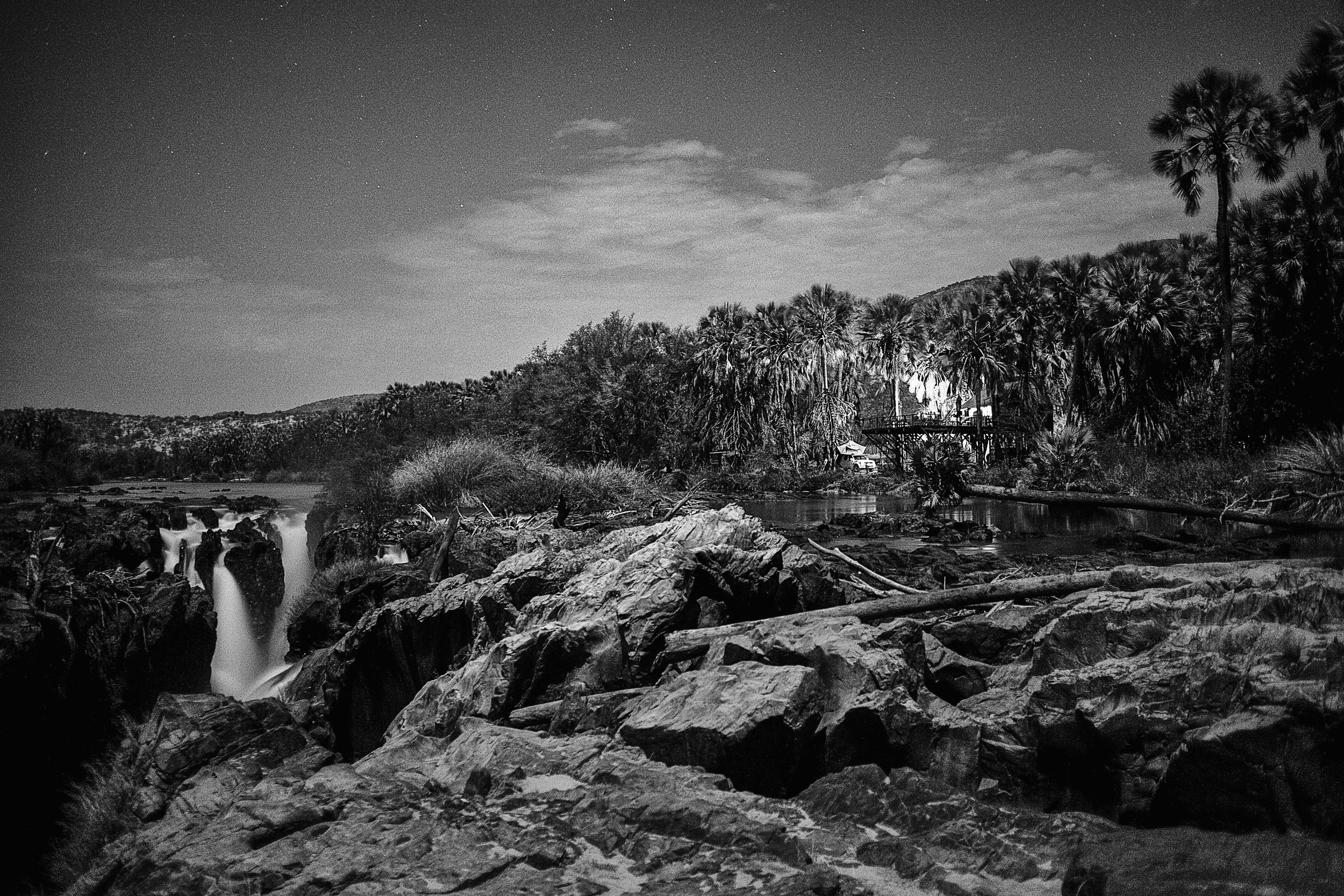
One of the places that I did fall in love with was Epupa Falls. We shot pictures with a long exposure and helped by the moonlight. It was like coming back to paradise, to the Stone Age, with the symphony of thousands of soprano frogs singing in the peaceful and starry night. Not words to describe the feelings. There is a camp for tourism, but you sleep in a sort of bed with parihuelas and in hammocks hung at a height from the ground so rats, snakes, or other kinds of alimañas don't bite. At night the symphony of the frogs is amazing. There are thousands of them that agree to sing at the same time and don't stop all night. Regarding the dangers of stings, well, the typical mosquitoes, which in Tanzania put the malaria into me, left me several days without knowing where I was. In front of the Epupa Falls camp are the waterfalls, which carry a lot of water; the noise is impressive. On the other side is Angola, which you cannot reach. Higher up from Epupa, there are also quite a few villages that take advantage of the water to live.
My days were ending. Jimmy took the Toyota; he is a good driver, although the majority don't have a license. We said goodbye, and I still had many hours until reaching Walvis Bay, exactly more than 8 hours. You leave at night around 6 in the morning to take advantage of the sun (it's not recommended to drive in full night). We are in the Tropic of Capricorn, with equal days and very fast sunrises and sunsets. On the way I saw a herd of sheep on the right, and just when I passed at their height, one jumped, and I hit it with the fender. It's mandatory to stop since the police look for you if they catch the license plate and you go straight to jail. I stopped; the sheep was not dead, but the owner was sad. In those cases you offer money and they usually accept it, but never abandon the place just asking for forgiveness; that would be something very imprudent.
Upon reaching Walvis Bay after a good run through broken stone roads, without GPS, just following indications and by intuition, since there are places on the road where it is almost mandatory to stop to drink something, the rest of the road transpires normally. On this occasion I drove on the C35; sometimes I went on the C34, which goes by the coast and twists near Torra Bay. It's a very interesting trip due to the coastal vegetation, but you have to go very attentively since a slip at a crossroad can make you take a huge turn. And in Namibia you cannot improvise much going alone; the shortwave radio is almost mandatory or the satellite phone. For me, the most dangerous are the zones on the road that are dry from the passing of a creek. That kind of pothole in the road is not warned of with a sign, and suddenly you fall into a small vaguada and go flying. Knowing the terrain and being intuitive is a gift in Africa.
The project is unfinished due to the party with co-production deciding not to follow because of the change in the government of Galicia in 2009. Project co-produced with TVG (Televisión de Galicia) for television (2009). Unedited and raw.
IN-DEPTH ETHNOGRAPHIC MONOGRAPH: DYNASTIC ALLIANCES, REPRODUCTIVE AUTONOMY, AND DUAL GOVERNANCE IN THE OVAHIMBA SOCIETY
"The social architecture of the OvaHimba people in the Kunene region of Namibia challenges the linear categories of classical Western anthropology, particularly regarding gender dynamics, kinship, and bodily governance. To the ethnocentric observer, the coexistence of rigidly arranged marriages alongside absolute female sexual freedom may seem an irresolvable contradiction. However, within the rationality of this nomadic pastoralist people, both institutions complement each other coherently to guarantee both the geopolitical stability of the clan and the economic and emotional well-being of its members."
Patrilineal arranged marriage: The pact ofOnganda
The initial formal mating process among the OvaHimba responds to a mechanism of interclan strategic alliances controlled by patrilineal lineage (oruzo). It is the young woman's father, in agreement with the elders of the settlement, who holds the traditional authority to assign his daughter's first husband, a pact that is frequently pre-established early on during the woman's childhood or puberty. This apparent deprivation of individual freedom of choice should not be interpreted as submission but as a strictly political and diplomatic transaction. In an extreme subsistence economy regulated by livestock, formal marriage is an institutional treaty between two settlements (builders) designed to consolidate neighborhood alliances, secure shared rights over critical water wells and seasonal grazing routes, and formalize the transfer of the bride price (lobola) in cattle. The first marriage is not based on romantic affection but on biological reproduction, the legitimization of social offspring, and the patrimonial protection of the clan.
Female relational sovereignty and the deconstruction of infidelity
The true anthropological paradox emerges once this structural alliance is consolidated. Once the OvaHimba woman has fulfilled the social imperative of arranged marriage and established her residence in the In contrast to her husband, the traditional system grants her a degree of autonomy and relational sovereignty radically superior to that of Western monogamous societies. Men and women are systematically raised on the premise of not possessing the other gender, either physically or mentally. The wife's body is not considered property belonging to the husband, and the Semitic concept of exclusive fidelity has no equivalent in their worldview.
Under the cultural institution of Omoka, OvaHimba women exercise autonomous and direct decision-making power to enter into parallel affective and sexual relationships with other men, whether or not they belong to their own lineage. These parallel unions do not operate as furtive affairs, nor are they coded under the stigma of destructive infidelity, since the social fabric is structured to neutralize possessive jealousy or paranoia about betrayal. Longitudinal demographic research in contemporary anthropology (Scelza, UCLA) reveals that up to 70% of formal marriages with offspring include at least one biological child conceived outside the marital union.
This concurrent behavior does not fracture social cohesion due to the strict dissociation between biological and social parenthood. A child born within the perimeter of the For all legal, ritual, and emotional purposes, he is the legitimate son of his formal husband, regardless of his genetic background. OvaHimba men assume the care, maintenance, and affection of all the offspring of their wives without resorting to punitive violence. Women's relational freedom functions, in fact, as a sophisticated strategy for food security and mutual support: during periods of pastoral dispersal due to drought or prolonged marital separation, women weave stable emotional networks with secondary partners to diversify economic resources, guarantee the group's sustenance, and ensure mutual protection, demonstrating a relational symmetry based on scrupulous respect for the independence of both genders.
Legal mechanisms for dissolution and traditional divorce
The exercise of individual female sovereignty in OvaHimba society extends equally to the customary right of marital dissolution. Divorce is a fully recognized legal process, accessible by either party, although it is women who most frequently initiate it, ending the initial marriages arranged by their paternal lineage once they reach full psychosocial maturity. The cessation of marital cohabitation does not require a punitive process, but rather an economic negotiation regulated by the councils of elders of the affected families, the central focus of which is the restitution or retention of the original dowry.
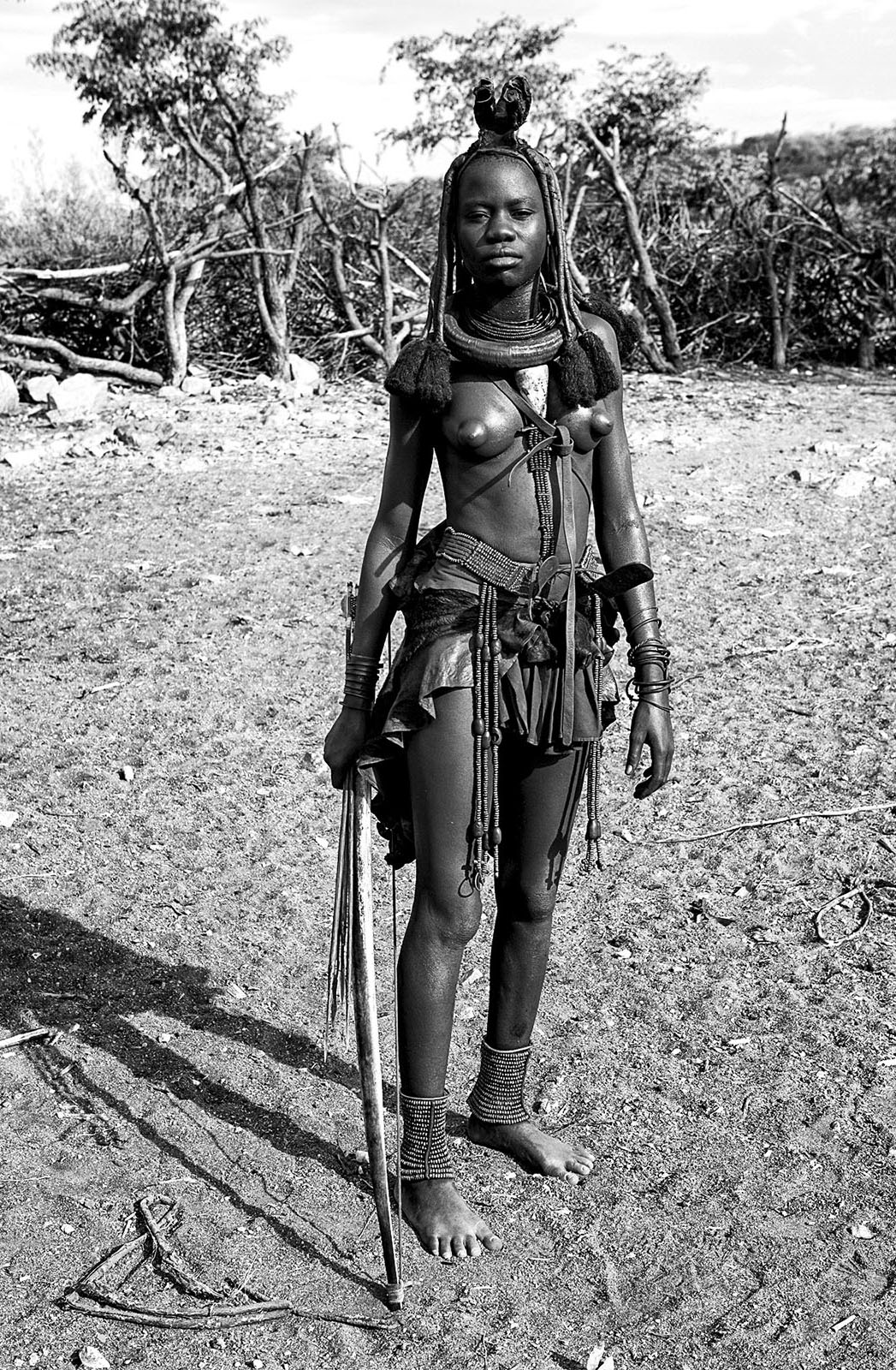
A Himba hunter with a bow. The goatskin ornamentation she wears on her head indicates that she has already been a mother. Namibia. 2009
If the dissolution is requested by the wife due to the husband's abandonment of his maintenance duties, physical abuse (conduct severely penalized and marginalized by the clan), or infertility, customary law protects the woman by allowing her to return to the fold of her maternal lineage (anda) without her family being obliged to return the livestock from the original dowry. Conversely, if the separation is due to a unilateral decision by the woman to establish a new alliance with a partner of her choosing, the new suitor or the wife's family must reimburse the affected husband the exact equivalent of the livestock transferred in the primary marriage.
A determining legal factor in resolving a divorce is the affiliation of offspring. Due to the bilateral kinship system, children conceived during the formal marriage remain linked to the status and patrilineal lineage of the original husband (oruzo), who retains ritual custody and the right to integrate them into the pastoral activities of his settlement. However, the flexibility of the system allows for co-parenting arrangements where the mother maintains physical custody of infants or young children in her new home, ensuring that the separation process does not leave the offspring destitute or break the community support networks that sustain the very structure of the clan in the desert.
Matriarchalism, avunculate, and the Law of the Uncle: The mirror of the Ashanti of Ghana
From a strictly theoretical perspective, OvaHimba society cannot be categorized as a formal matriarchy, given that the structures of external political representation, the final word in the councils of elders, and the custody of the sacred fire have been called responsibilities that formally fall to the older men. However, defining this community under the simplistic label of patriarchy would constitute a profound methodological error. We are dealing with a dual society characterized by a high degree of matriarchy, where real power is distributed through a sophisticated dynamic gender balance regulated by its system of bilateral double descent.
In this framework, the true economic muscle of the community lies in matrilineage (anda). While spiritual inheritance and residential status come from the father (oruzoIn the Kunene region, the patrimonial wealth—represented exclusively by livestock—is inalienably transmitted through the maternal line. The patrimony does not descend from parents to children but from maternal uncles to nephews. This phenomenon of inheritance and legal guardianship through the maternal line, formally known in classical anthropology as avunculate descent, is not unique to the Kunene region. Other prominent cultures on the African continent apply this same structural principle, where the biological father takes a secondary role and the education, guardianship, and inheritance of children are ceded to other direct relatives. The most paradigmatic example, and one studied in social science departments, is that of the Ashanti of Ghana. In the traditional Ashanti structure, the mother's brother is the true legal pillar of the lineage: he assumes the responsibility of financing education, conducting rites of passage, and transferring all his assets to his nephews. The logic that unites the Ashanti of Ghana with the OvaHimba of Namibia is identical in its structural pragmatism: a man may harbor reasonable doubts about the biological paternity of his wives' children due to the group's loose relationships, but he will never doubt that the children of his own biological sister share his family's genetic makeup, having been guaranteed to have come from the same womb. In this way, both cultures safeguard the stability of family inheritance and the royal bloodline through the maternal line. Since the woman is the only valid vector for channeling the clan's legitimate consanguinity, her figure enjoys absolute civil immunity and a status of sacred respect both within and outside the community. when.
Space sovereignty and executive leadership in the desert
This protection of heritage is complemented by spatial sovereignty. The OvaHimba woman is the architect and absolute manager of her own mud-brick hut; in the village's domestic code, the man is a guest within his wife's dwelling. This residential autonomy transforms into a shadow executive leadership during the recurring and prolonged seasonal absences of the men due to long-distance herding. During the months of dispersal caused by climate change in Kaokoland, the women assume total governance of the settlement, centralizing daily decision-making, the administration of subsistence resources, and political control over the outside world. In the chief's absence, the first wife assumes the legal representation of the kraal. The OvaHimba thus establish a dual governance model where men manage the liturgical and diplomatic facade, while women sovereignly govern the economy, habitat, reproductive flexibility, and biological daily life in the desert.
The rise of polymers: Evolutionary rupture and loss of technological sovereignty
Within the processes of material acculturation that fracture the everyday life of the people, the gradual replacement of traditional containers with industrial plastic drums constitutes a profound ontological disruption that superficial analyses tend to overlook. From a strictly ethnographic perspective, the adoption of the synthetic drum represents an inorganic evolutionary break toward an alien civilizational matrix, drastically undermining the technological sovereignty of the livestock-raising people.
Historically, the OvaHimba have solved the transport and storage of water resources by making full use of their arid environment and their livestock, resorting to dehydrated gourds (news) and, in a more mystical way, to the bladders and stomachs of sacrificed animals (ondjupa). These viscera, meticulously cured with sand and botanical resins, act as highly efficient flexible canteens that, through organic porosity, thermally regulate the water temperature in the desert.
The introduction of the polyethylene drum—derived from industrial waste containers of globalized white society, a petroleum-based material whose manufacture is completely foreign and inaccessible to them—represents an abrupt break in the transmission of village knowledge. By incorporating a synthetic object, the community internalizes an unprecedented material dependency. Plastic not only devalues the time and artisanal skill required to process animal tissues but also introduces an invisible vector of biological toxicity. Subjected to the extreme temperatures of Kaokoland's relentless sun, these drums undergo severe thermolysis and photodegradation, massively releasing plastic microparticles and harmful leached compounds directly into the drinking water and milk. Upon entering the human bloodstream, these exogenous contaminants disrupt the endocrine system and the health of a population whose cellular genetic memory developed in a hydrocarbon-free ecosystem. The fossil residue thus irreversibly alters the desert ecology: in contrast to the cyclical biodegradability of Ondjupa, "The drum symbolizes the most subtle and destructive colonization of Kaokoland: the replacement of biological wisdom with the toxic waste of modernity."
Permit to enter in the kraal (village)
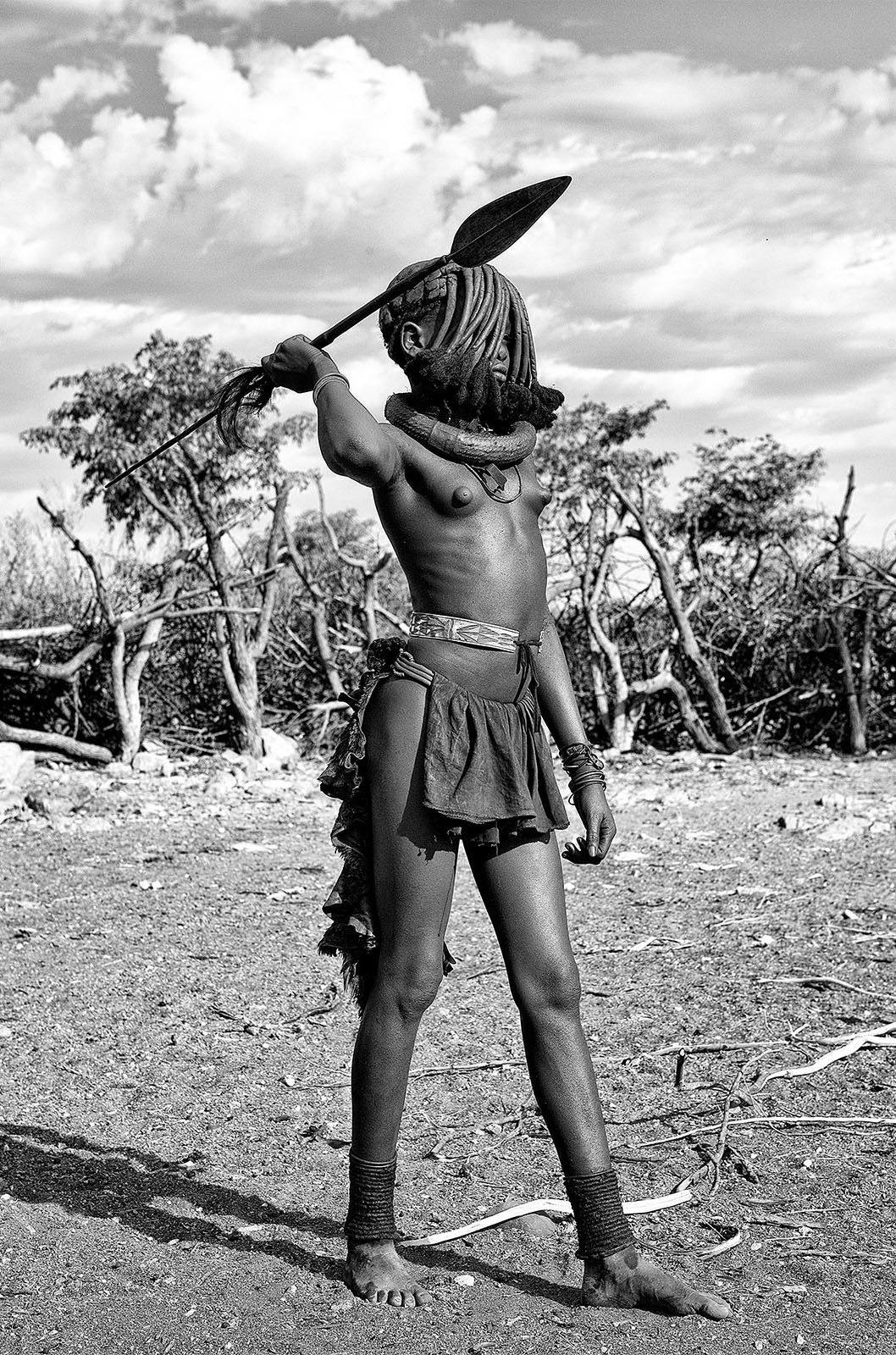
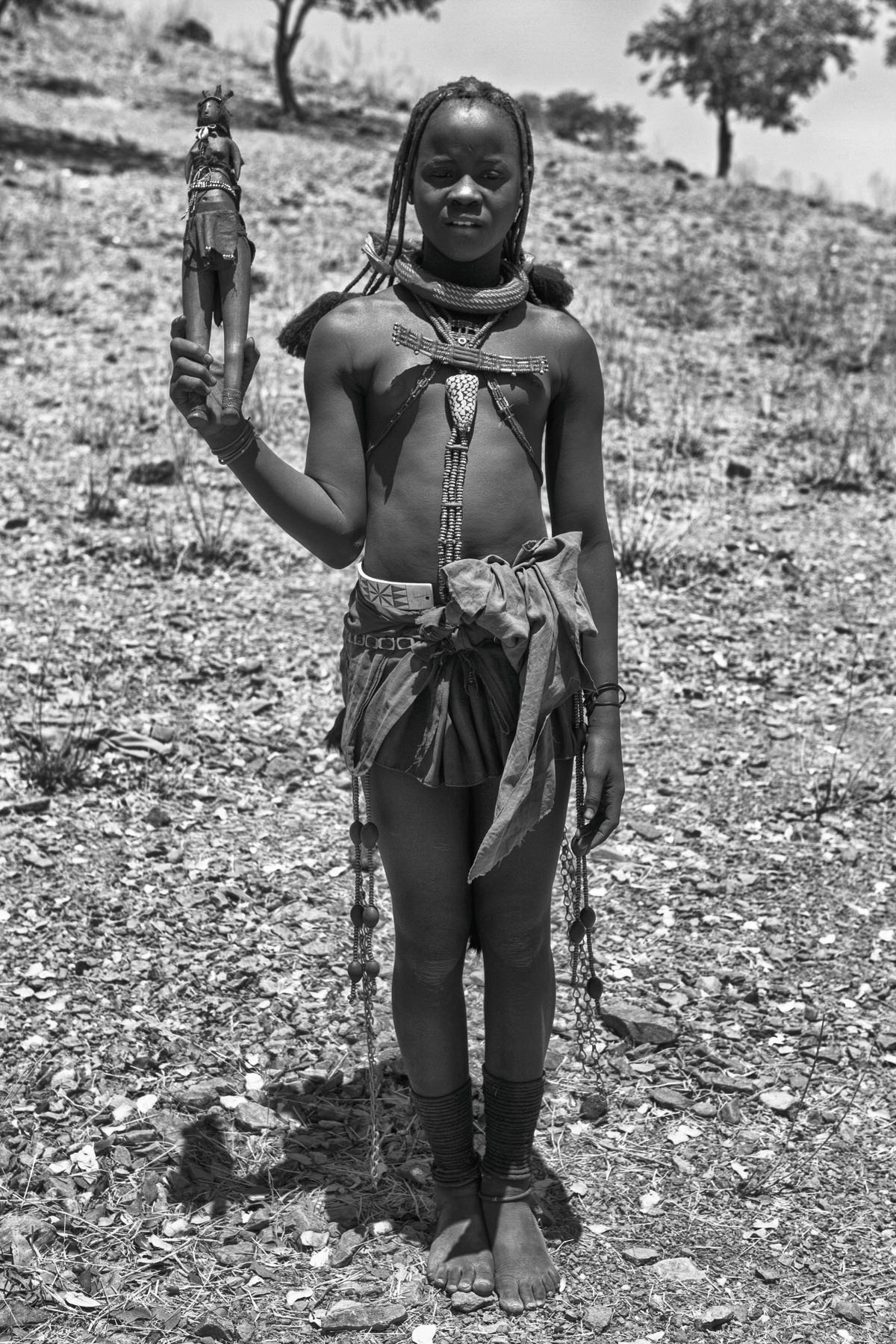
Himba girl hunter. Western Namibia. 2009
Semi-Nomadic Pastoralism (Main Activity): The foundation of Himba life is pastoralism, especially the raising of goats and cattle, which provides them with milk and meat. They live in small villages of circular structures made of branches, mud, and dung.
Adaptation and Hunting/Gathering: Although they are pastoralists, hunting and gathering supplement their diet. Historically, in the 19th century, they were forced to rely more on hunting and gathering after conflicts caused them to lose a large part of their herds.
Origins and Culture: They are considered distant cousins of the Herero and are often known as the "red people" because of the otjize paste (fat, herbs, and iron oxide) that the women use to cover their skin and hair, protecting themselves from the sun.
Religion and Tradition: They maintain monotheistic beliefs, worshipping their god Mukuru and their ancestors, keeping a sacred fire (okuruwo) burning in their villages to communicate with them.
Current Situation: Today, their population is estimated at around 50,000 people, maintaining a traditional way of life in the Kunene region (formerly Kaokoland).
With Jimmy, the best one-fixer and good friend that I knew before, I have good chats. We talked a lot during the long trips. We knew each other in five days better than any other person. Himba people like to talk and talk and communicate. Open mind.
One of the rules before entry in the small villages is to talk first with the chief, who usually is the oldest in the tribe. Is needed to bring presents like maiz (corn) that they use as main food in the diet, fruit, tobacco for sniffing, and sugar, and that's all. Once the introduction of my person, Himbas, like jokes. “Be ready," told me Jimmy, “you will enjoy and laugh as never in your life."
Once inside the village, we can see the individual hut or conical house, built with a structure of sticks and branches covered with a mixture of mud and cow dung, is called "Ozondjuwo" in the plural (or "Ejuwo" in the singular).
Certainly, when a filmmaker or journalist needs to talk in depth to know more about the ethnography and costumes of the Himba, you feel good. For example, Himba tribes are mostly women and very beautiful. I asked Jimmy to ask the girls and women to explain about the color of the skin. I filmed the entire process of a beauty session of seven girls. First, they put over the skin the ochre color that they found in a cave and, with a special grass, covered the whole body. It will be a protection against the sun and mosquitoes or other insects. A girl uses a special kind of herb to burn and use the smoke to perfume her sex parts. It is a daily session, and the effect is to attract men and go ahead to make a family. Sex is not a taboo in the Himba tribe. Men can marry a woman and can have nine or more wives. I asked men how they manage with so many wives. “Easy. One night or two with each one." Each family can have many children, and this is the best. Children and children.
I had never been before in a situation like after making a documentary fall involved in creating an NGO or a project. In this case, Jimmy, when we finished the work, he told me very clearly that I needed to come back and spread the idea to help Himba people, the most beautiful on the planet.
Curiously, they are threatened not by the wildlife where they live but by tourism. Concern situation. Himbas are in need of help to develop themselves and their children, find the water to survive, and follow how they chose to live in harmony with nature.
Documentary and ethnography
The aim, goal, and mission of this project are to get funds to set up a small place in Opuwo as an NGO or other org managed by local young people. They need help to have computers for workshops. There are a few NGOs working in the area, but it is not enough.
"Himbas: Struggle for Survival" is a documentary film project and photo essay, staying with several of the Himba tribes and filming for two or three weeks, depending on permission granted so far.
It is the goal of this project to create a place in Opuwo where local young people can learn computers and other skills to manage the tourism as a progressive community. It will be managed locally by Jimmy Elia Tolu, a concerned young person working with Himba people, wildlife, and the environment.
Himbas: Struggle for Survival is a documentary film project and essay.
Stay with several of the Himba tribes filming on the day for two or three weeks, depending on permission granted so far.
Realization: In our winter, spring on them at the time of drought and rainfall.
Permit rights for filming from the Namibia Film Commission.
The project is unfinished due to the party with co-production deciding not to follow because of the change in the government of Galicia in 2009. Filmed in several locations. Unedited and raw.
An Anthropological Study: The Himba: Ethnography of a Pastoral Culture of Angola and Namibia (Sciences of Man Collection) (Spanish Edition) - 1990. Francisco Giner Abati.
ISBN: 84-86368-66-9
Project co-produced with TVG television (2009)