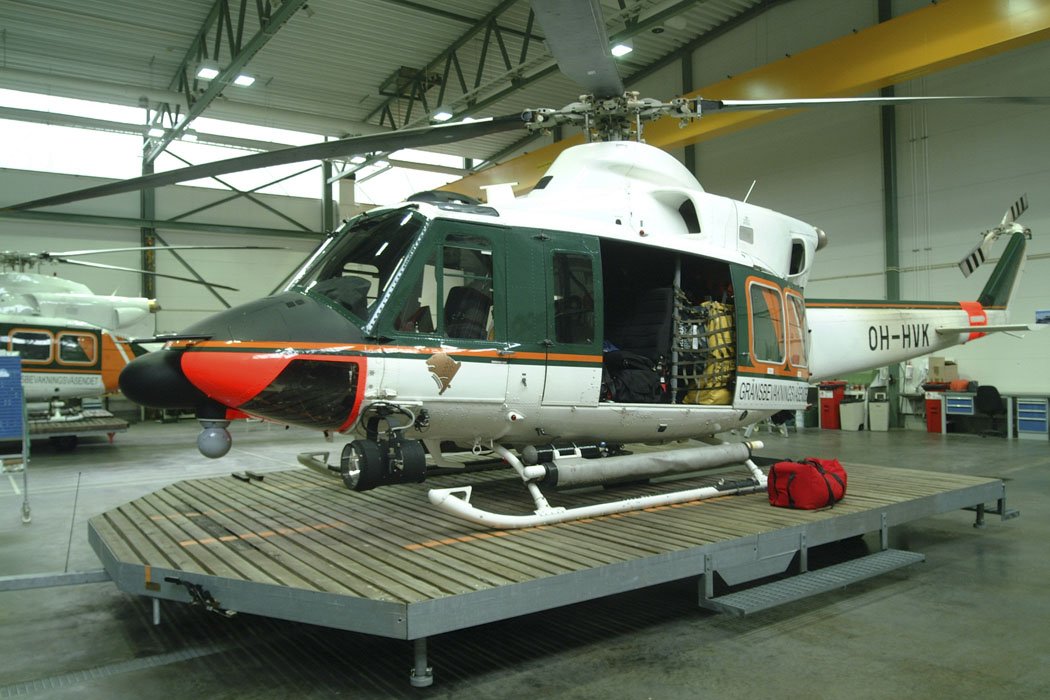
Finnish Air Patrol Surveillance
Fligh&Fight against the marine contamination
by Delmi Alvarez
Helsinki, september 2004
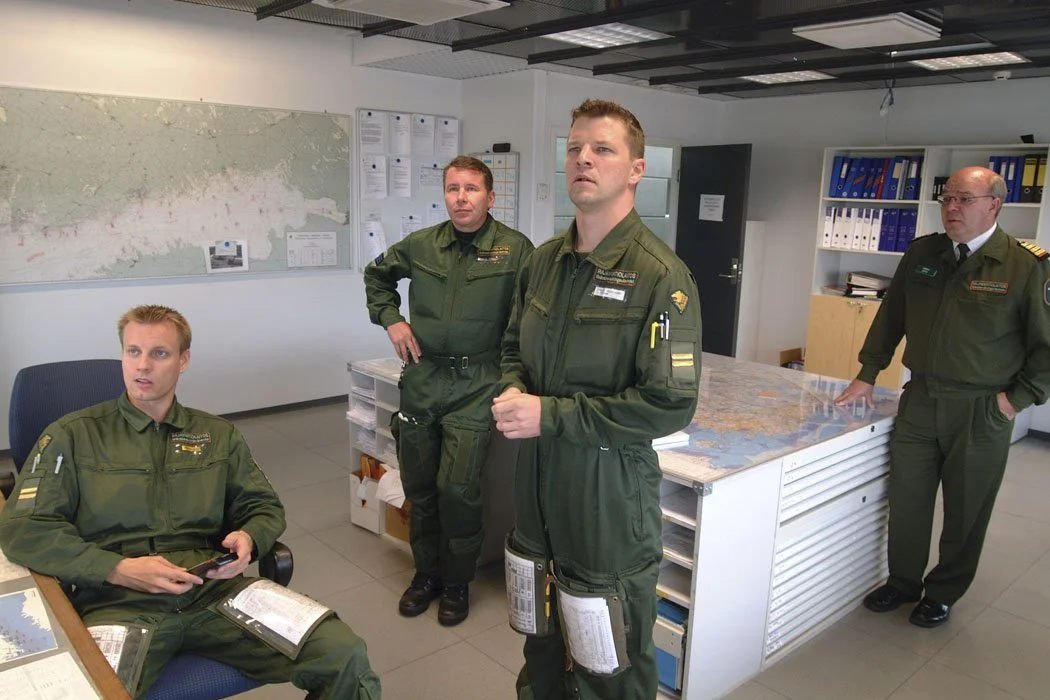
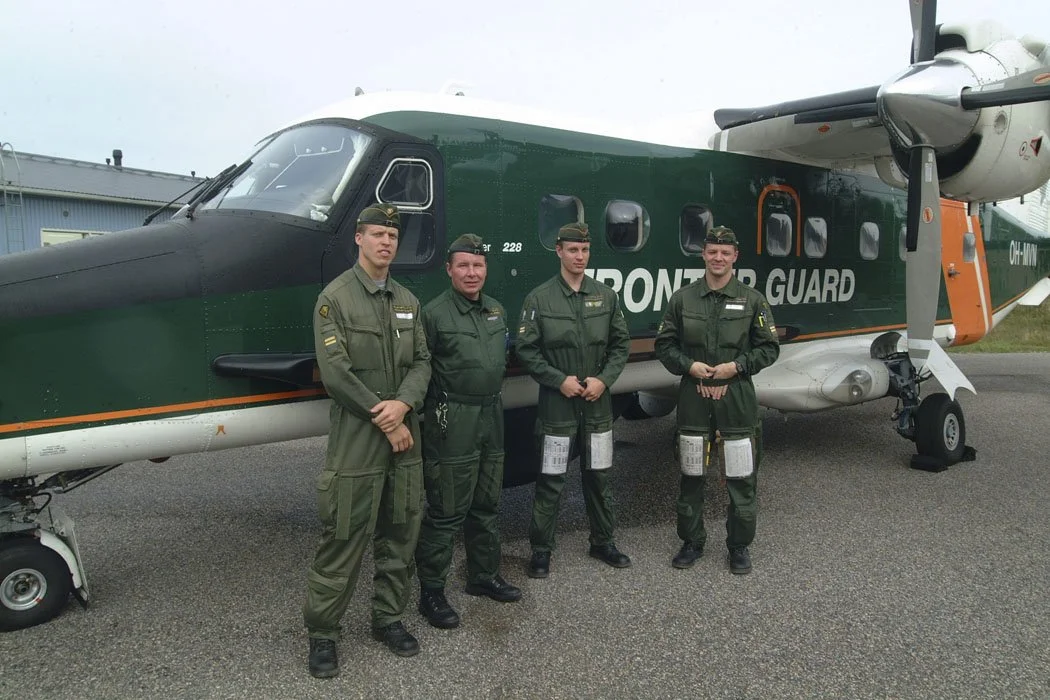
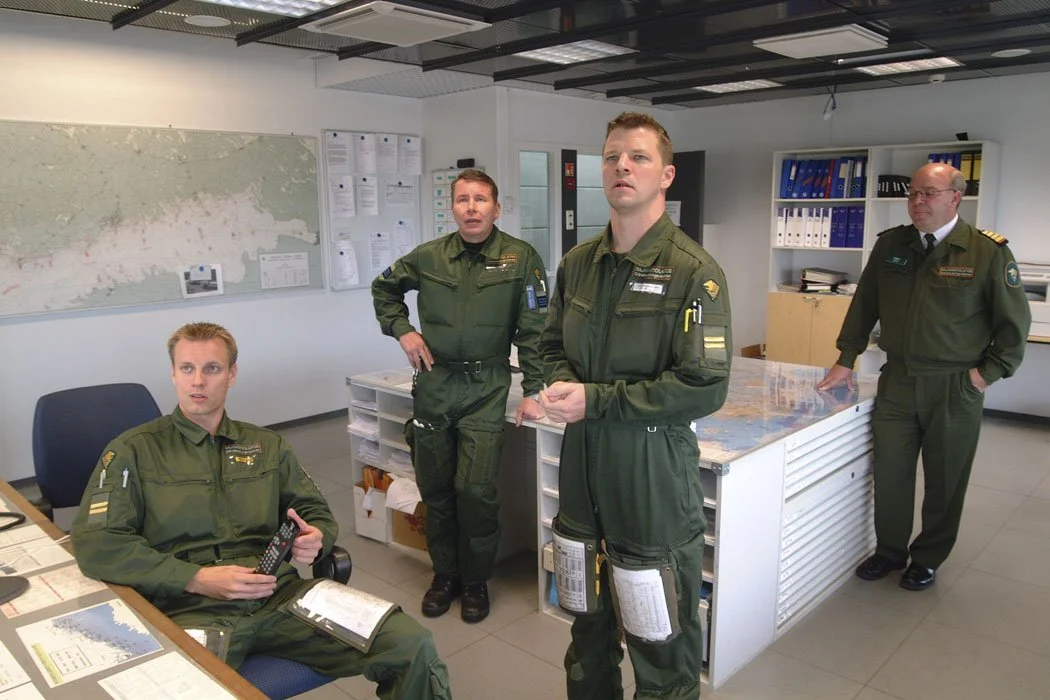
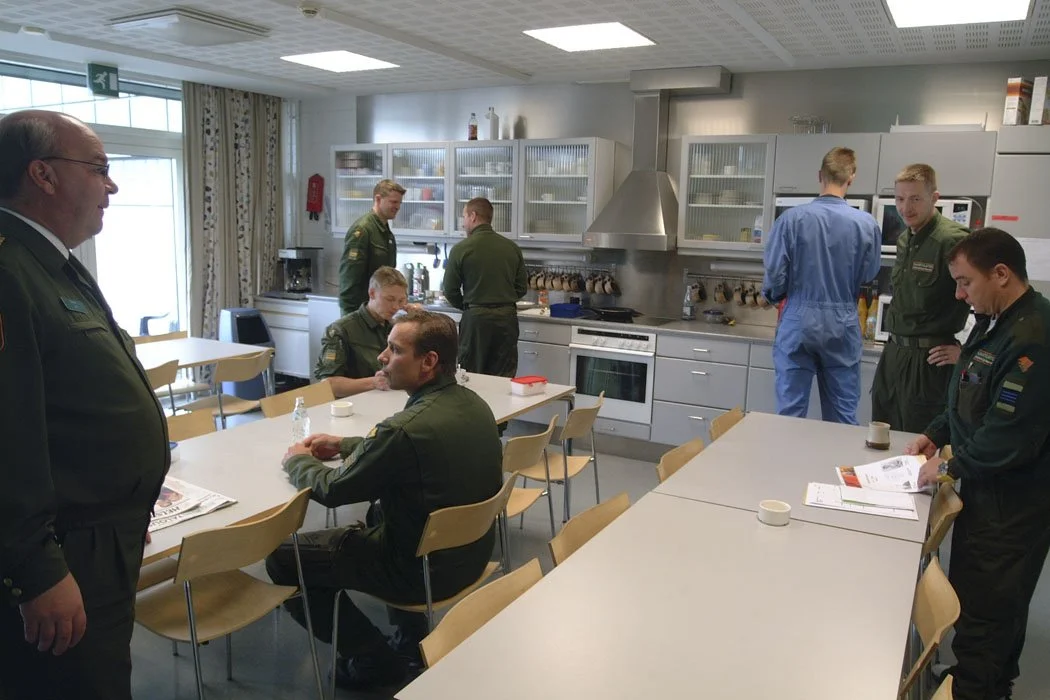
Air Patrol Finland crew checking the news in a briefing prior to the flight. 2004
The Finnish government maintains a service of aerial monitoring that protects its waters and coasts from any dangerous spill of ships in transit. Next, the 19th of November will mark two years since the catastrophe of the Prestige, and Galicia still does not have an aerial plan for prevention and monitoring of this type, which has already been working and successfully in the Baltic Sea for years. Finland is one of the members of the European Union in the defense of nature until the last consequences, and proof of it is the Air Patrol Squadron of the Finnish Frontier Guard that maintains, from the air, a fight day and night against the illegal spills that take place within their Response Region.
The Finnish Ministry of Environment assures that the efforts of aerial monitoring on the part of the coastal states of the Baltic Sea have detected 400 to 800 illegal spillings. Nevertheless, this number does not represent the number of real spillings, because all the states of the Baltic Sea still do not have in their airplanes specially equipped for the spilling of the oil that it supervises, and even those that do cannot lead to duties of 24 hours of monitoring.
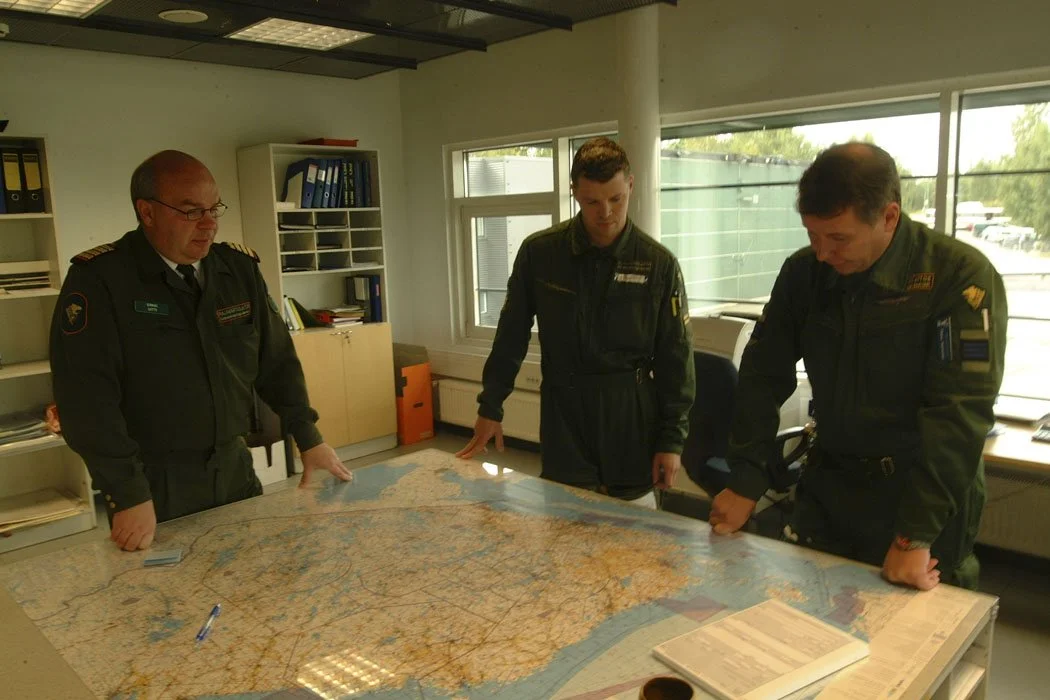
The marine space of the Baltic Sea is one of the busier zones of Northern Europe for ships that sail every day, transporting dangerous and polluting merchandise. With those premises and raising a flag in defense of the marine average, the Finnish Frontier Guard handles an annual budget to send to the sea the Coast Guard Patrol Vessel together with Finnish Navy Oil Recovery Vessels. These maritime units are supported by the Finnish Frontier Guard Air Patrol Squadron, a special body that covers the aerial surveillance for maritime pollution together with its main duty—border control and surveillance of Finnish territorial waters. "It is not easy to catch the ships that spill substances contaminating to the sea," it assures Erkki Uitti, Commander of the Air Patrol Squadron, while he explains the organization of the Finnish Frontier Guard through a projection of slides and continues telling, "That is impossible to follow vessel by vessel from the air; we would need hundreds of aircraft."
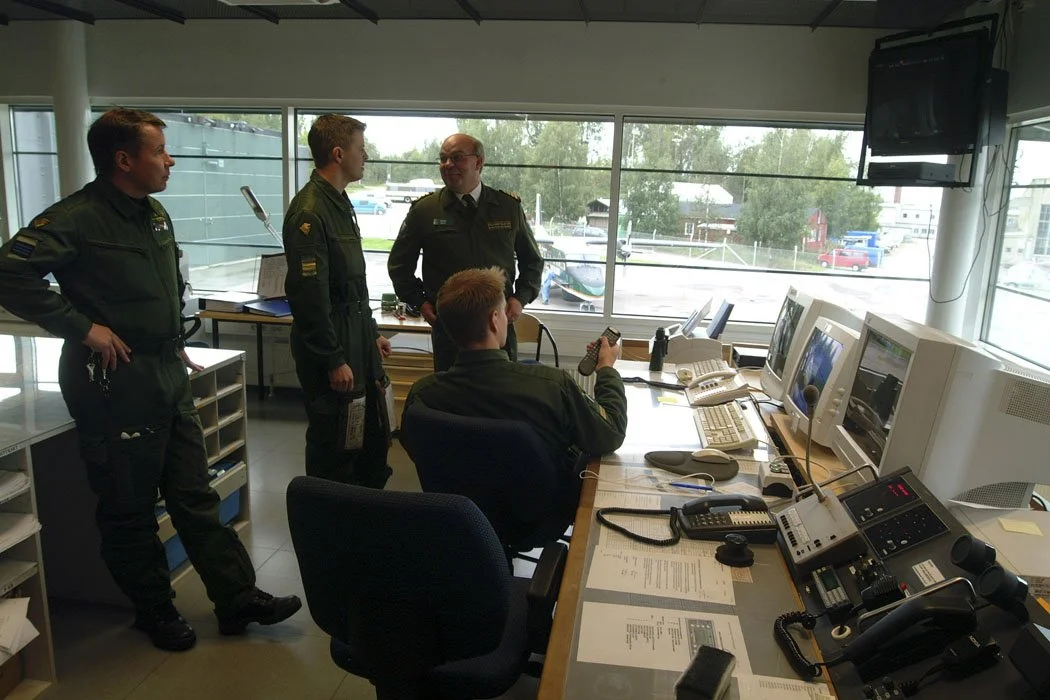
When an infraction is detected, the operative puts it into action and, from ground bases, sends an advisory warning to the Air Patrol so that it watches the assigned ship. Of course, they must exist as forceful tests to denounce each case. Only in the year 2003 were 900 hours flown, and there were surveillance aircraft available for these kinds of special missions. "Each year the spills have diminished, perhaps because of the new legislation, and maybe the captains of the ships knew of our existence and that we have equipment and systems to observe and analyze spills in our waters.
With IR/UV scanners that take the two Dorniers, the graphical and density tests, with certainty, determine the possibility of an illegal spill," assures Erkki to me, while the crew pays attention to his words. Every year, the aerial monitoring in Finland detects between 40 and 70 cases of spillings. Nevertheless, this number does not represent the reality, since there are many more due to the distances and the insufficient number of airships available at this moment to take an exhaustive control of the zone. Also, Latvia and Estonia make flights of the control of the environment, but without the special equipment.
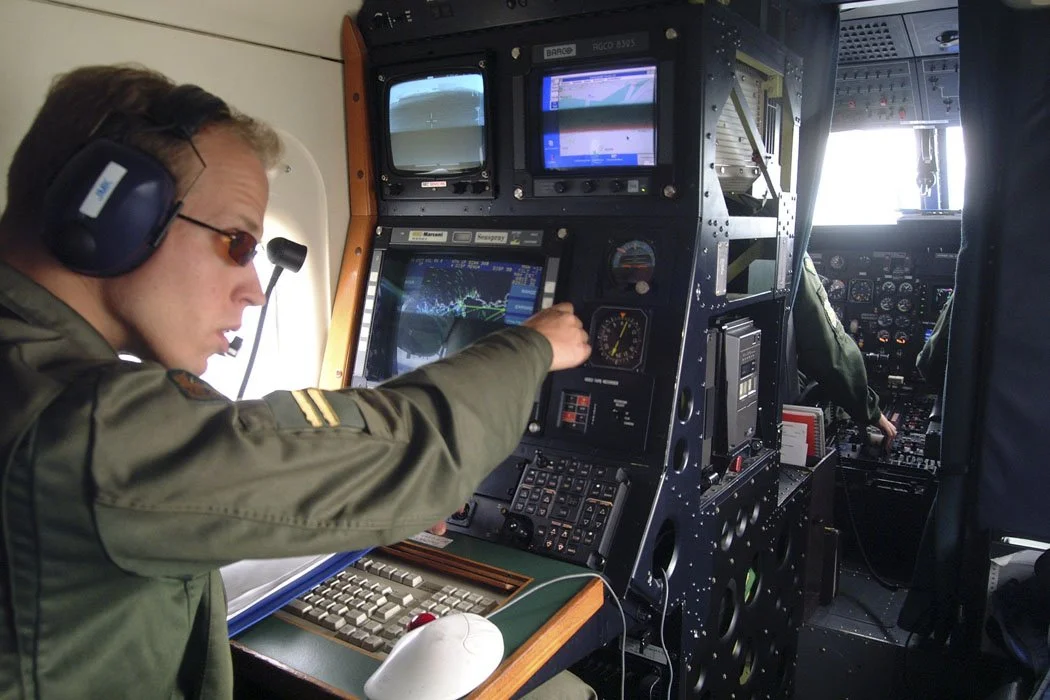
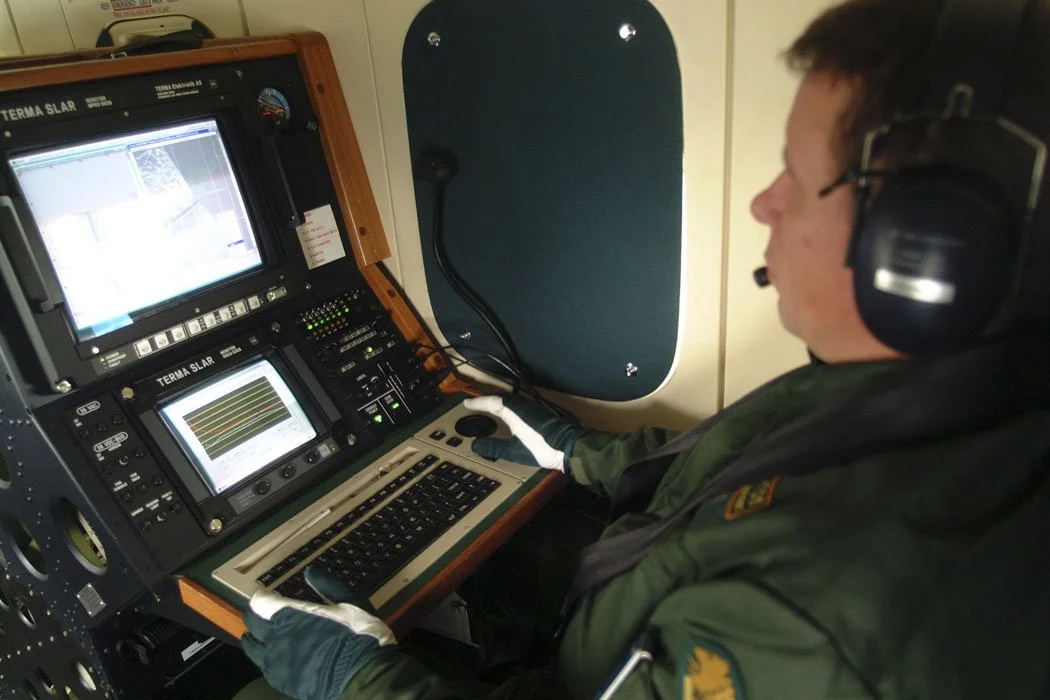
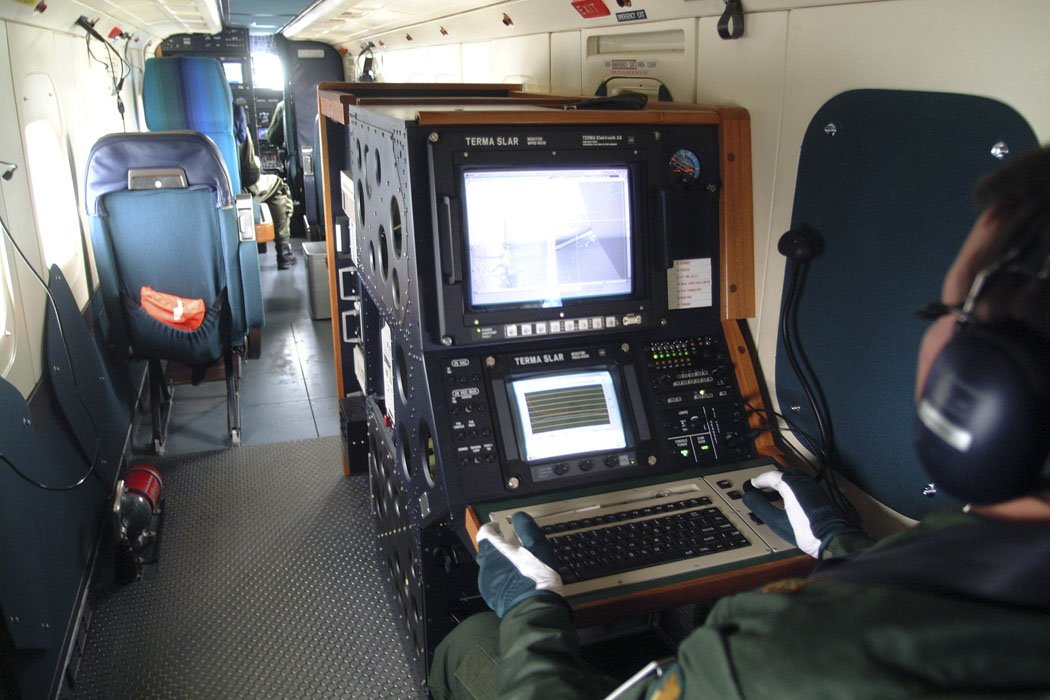
Most important of these devices of the control is the side-looking airborne radar (SLAR) that can detect spillings of the oil at great distances of 20 to 40 nautical miles. According to a recommendation given by the Helsinki Commission (HELCOM), the member states must let their airplanes control twice a week on fairways more important, especially those that lead to the ports, and once per week on other areas of the sea.
Flight hours
On the Gulf of Finland, the Northern Baltic, and the Gulf of Botnia, there operate two Dornier 228 surveillance aircraft in the service of aerial monitoring of the Finnish Frontier Guard, watching and observing the movement of dozens of ships that transport merchandise [petroleum and very dangerous chemical substances that, when making contact with enemy sea catastrophes, generate as the Prestige]. This covering group safeguards the marine-terrestrial borders towards the Russian Federation, Estonia, and Sweden and counts on boats and sophisticated human land equipment that can detect possible spills while patrolling in the sea area daily.
With more than 5000 flight hours (including helicopters) annually, the patrols composed of a pilot, copilot, engineer, and rescuer/operator have detected, in the year 2003, more than 40 product spills carried out by ships that sail between parallel 60, bordering the Russian Federation and Estonia. The sophisticated systems, upon counting each airship, grant the capacity to him to be able to distinguish between 20 and 40 miles from a ship spilling illegal products into the sea, as it is the case of the captains who decide to clean warehouses and wells during the night. "We can make flights nocturnal and detect any infractions. When we receive from our ground base and support, the order of a certain ship can be to clean the warehouses," assures one of the crew of the Dornier.
Flight in mission
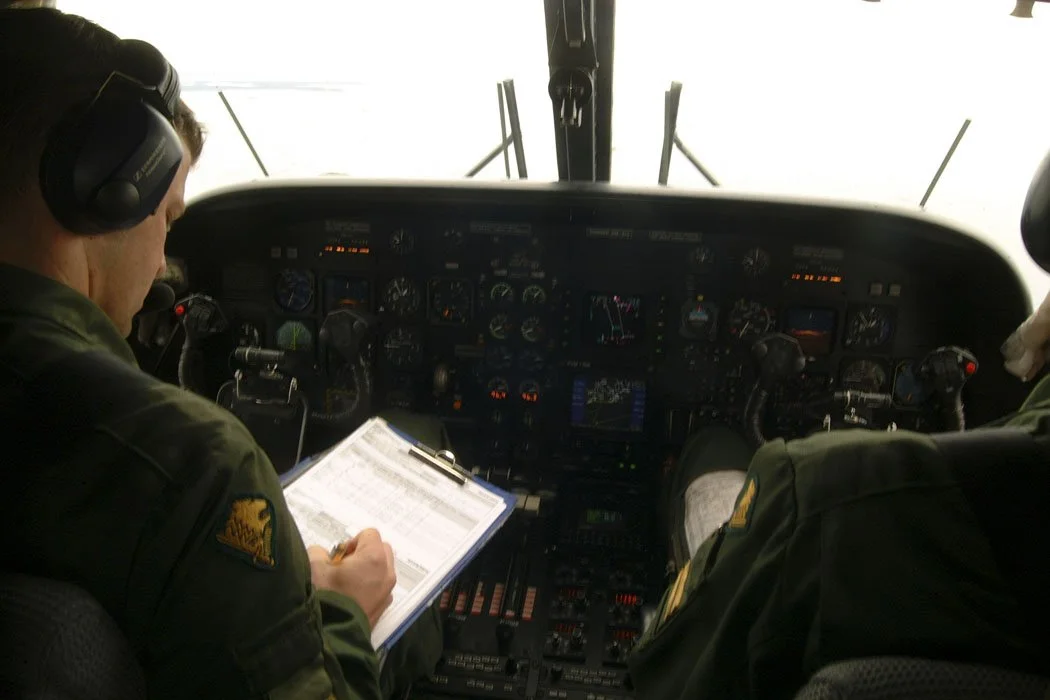
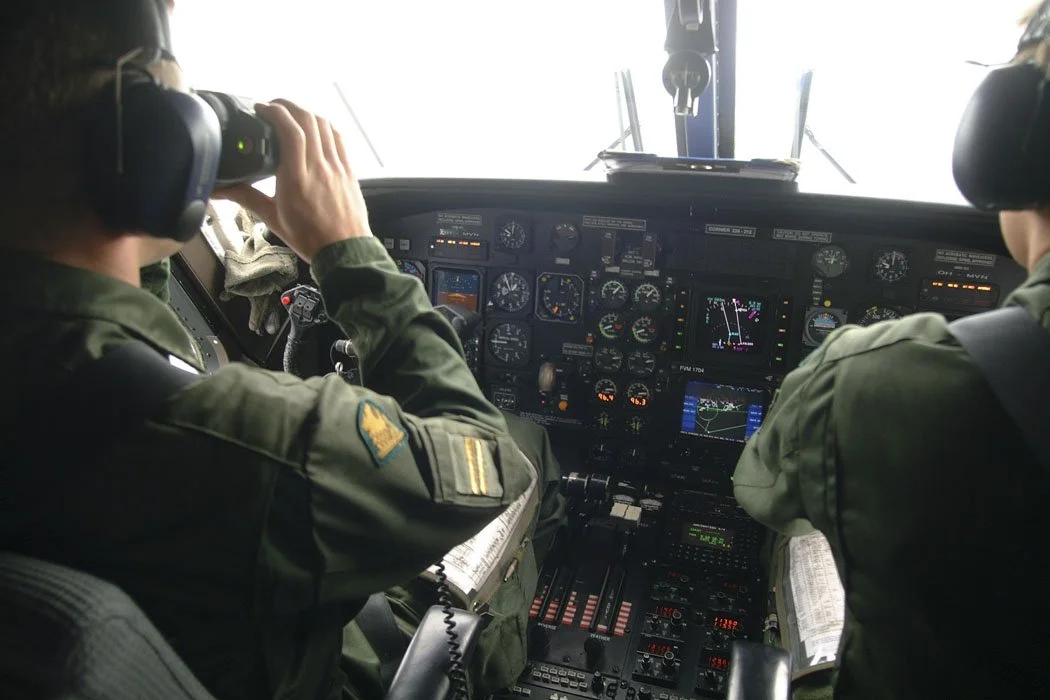
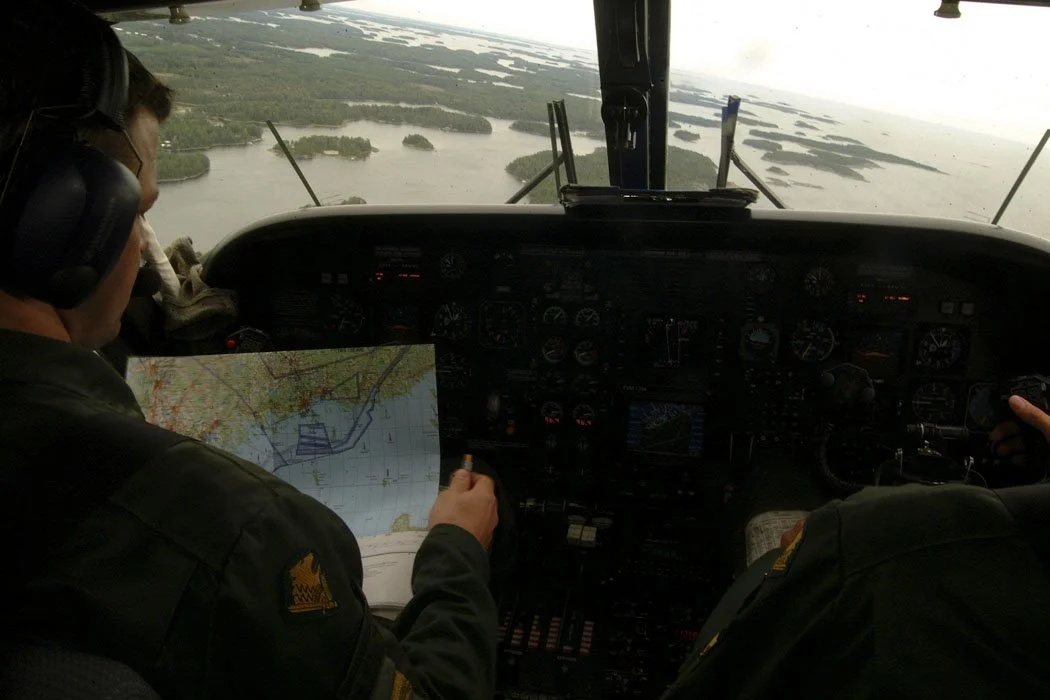
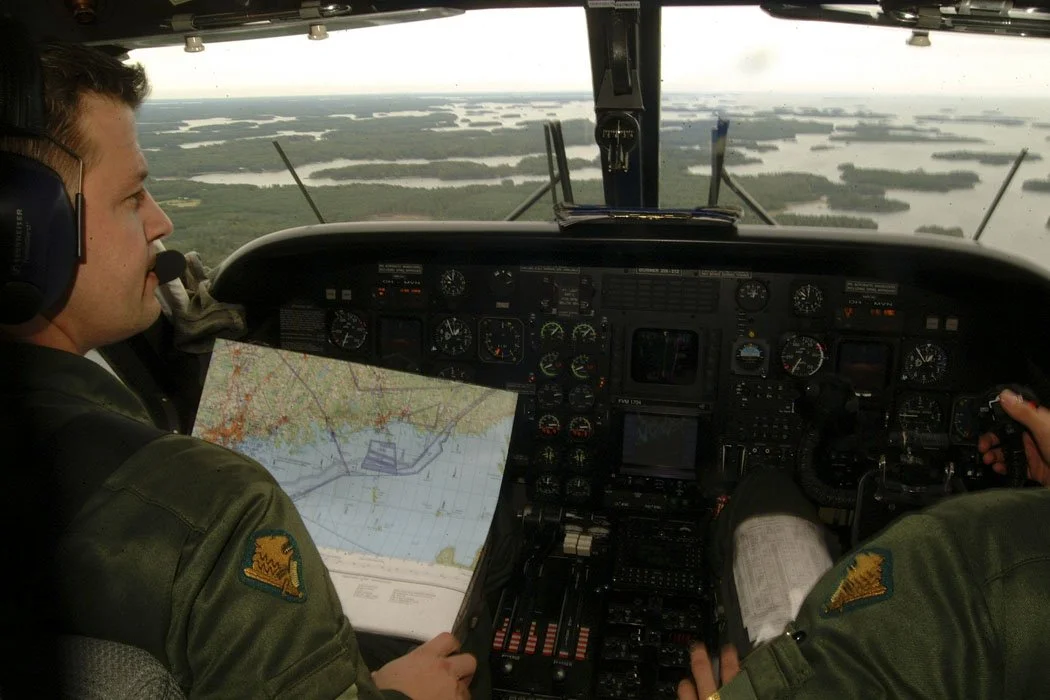
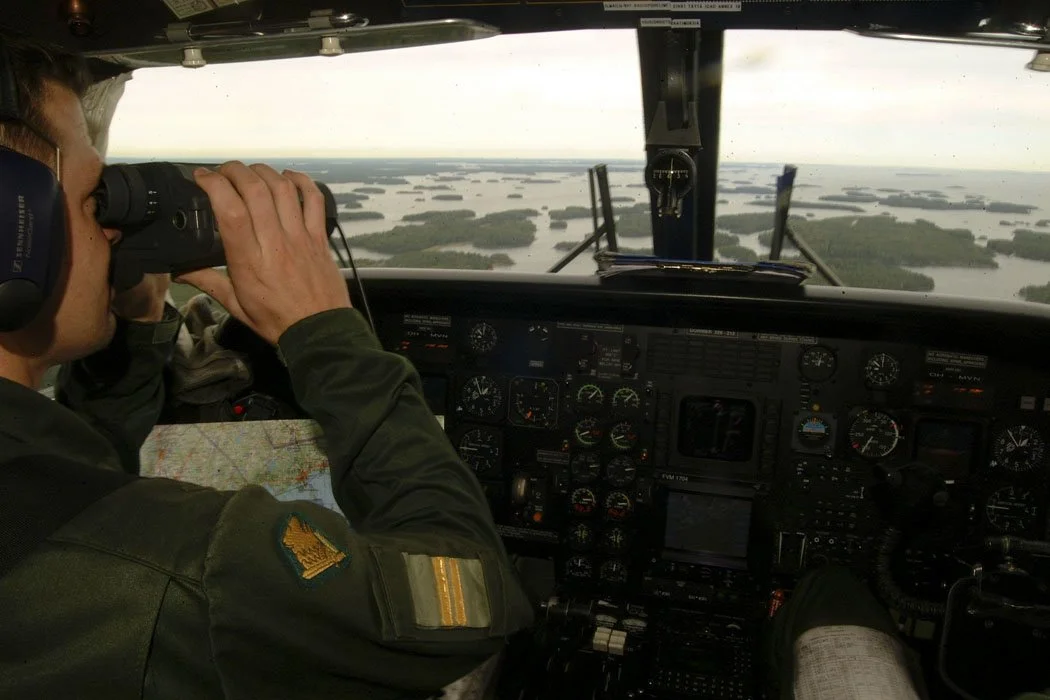
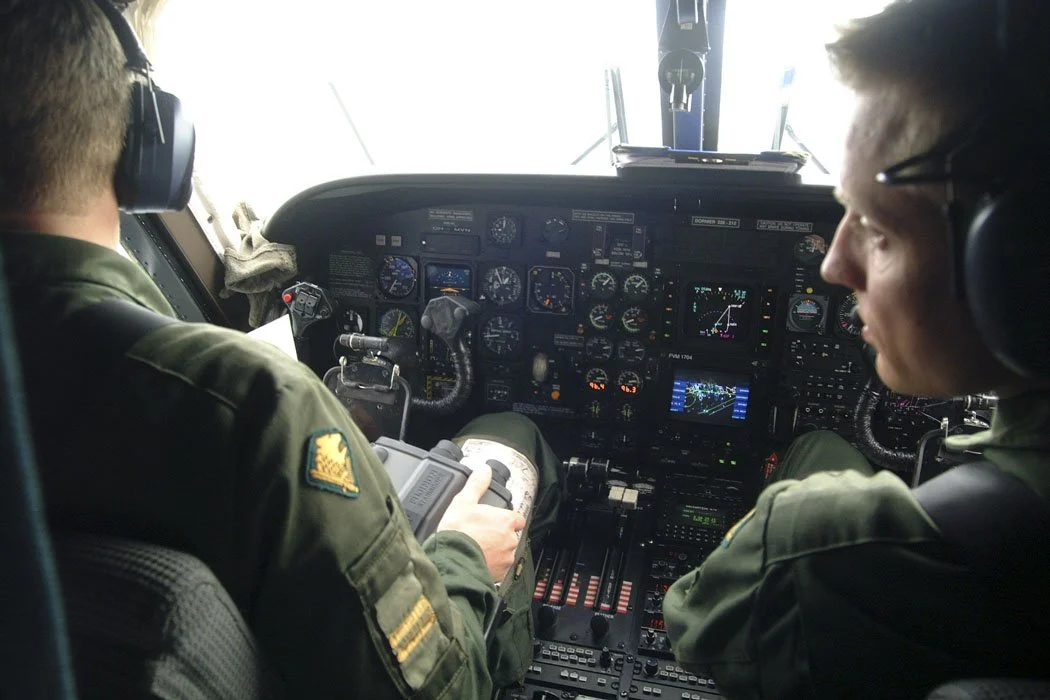
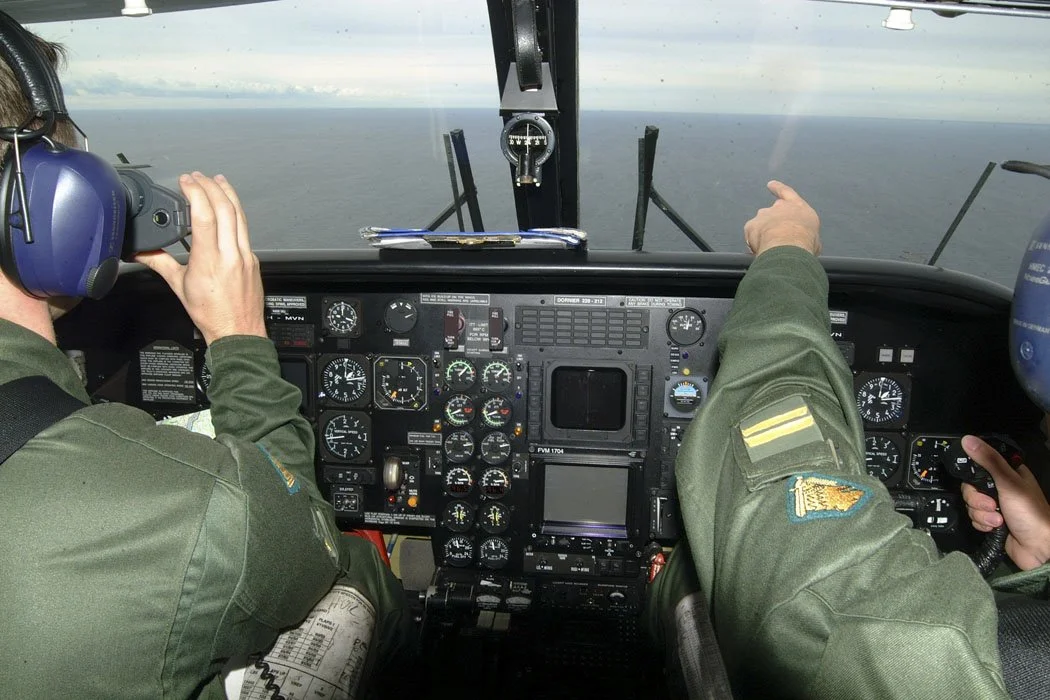
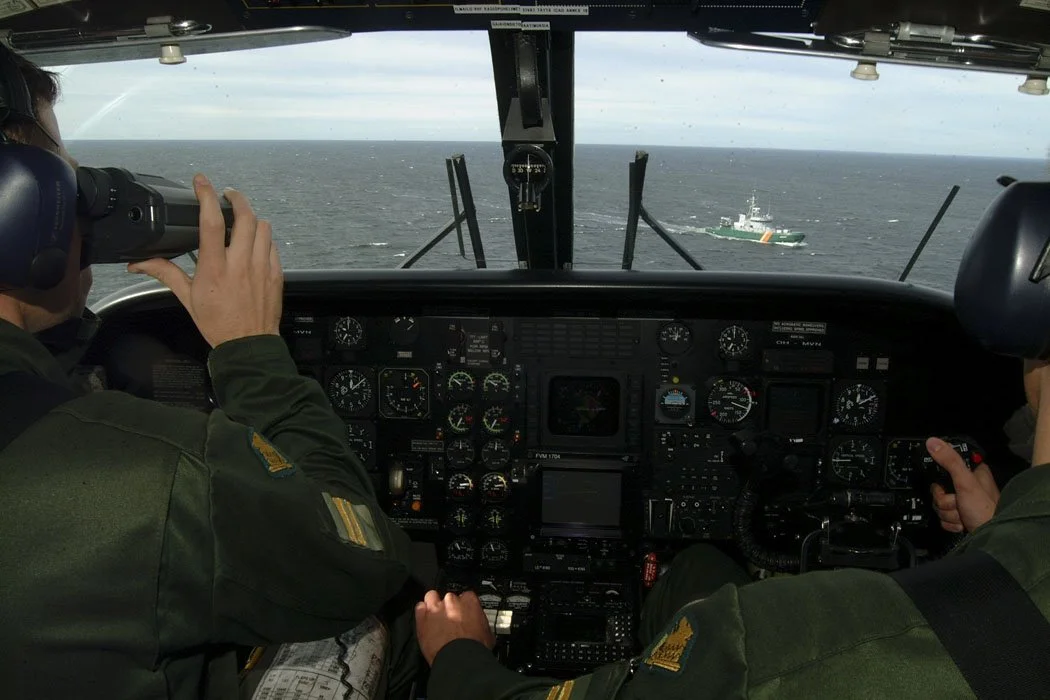
It is Friday, and one of the crews has arrived with the Dornier at the small airport of Malmi, in Helsinki. Short coffee, new briefing, and to fly again. Both Dornier airplanes of German manufacture, which are equipped by the Finnish Guard in cooperation with the Finnish Environment Agency, have good flight distance and "let's take well, without they give too many problems," I heard to mention on a certain occasion, to a veteran pilot, in one of many afternoons, speaking about the aviation world. The crew of Lieutenant Ville Marttila is a team. "We know each other well," he says to me. "That is, like a family. " I ask him, "Yes, we are like a family, because when you fly in these missions, you cannot have failures; there must exist a total mutual understanding and professionalism over all," he assures, while observing with the binoculars the horizon in search of what worries him and returning the glance to a color map with annotations that indicate that we flew over the dividing line between the Russian Federation and Finland. While he asks me not to take any photos over the border, neighboring states. That is against our regulations and guidelines.
To his right side, the copilot and also lieutenant, Jukka Peitsala, handles the clock panels and the controls of the plane, following the route that merchants use to enter and leave the important port of St. Petersburg. "No, always we can see spills," the captain of the ship comments through the headphones. "Generally, we flew every day, and our schedule depended on service, mainly when we had suspicions of ships that could be making an illegal spill, as to clean the wells or an uncontrolled flight by breakdown." The captains of the ships under the protection of the dark knights infringe the law of the sea and nature, but they do not know that the satellites also send images in infrared to the centers of earth monitoring. In these cases, "it is necessary to act quickly, because if the ship leaves territorial waters, we do not have anything to do," says worried Ville, who knows that their limits of action do not allow him to go beyond the Finnish border.
Even so, a ship that spills during the night with a polluting product leaves a wake (the oil or petroleum takes much time to biodegrade in the water) and is easy to detect for the equipment side, which will analyze the course followed until giving the boat. The hope is to pass a message to other colleagues, comprising the Helcom or other treaties for the protection of the average sailor, and that they can recognize the violator. In order to be able to have havforests of the spills, the airships are equipped with modern and sophisticated equipment for tracking that contributes to the evidence necessary to present/display the future sanctions. In April of 1998, a one-second Dornier 228 was equipped with SLAR and IR/UV/VIS systems to scan the waters during the day and the night.
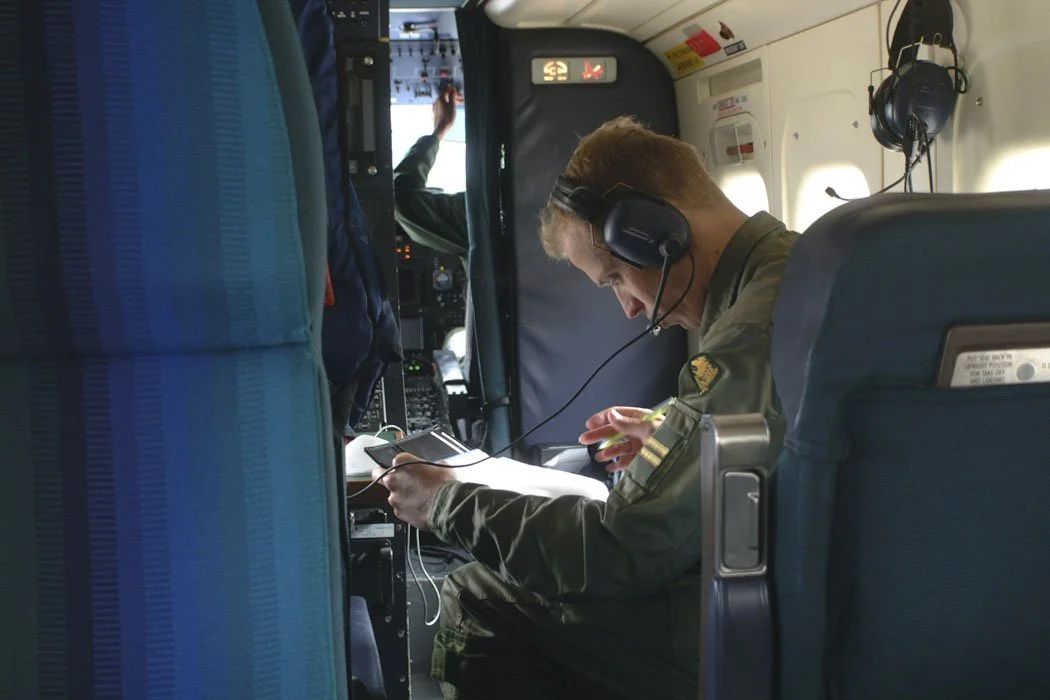
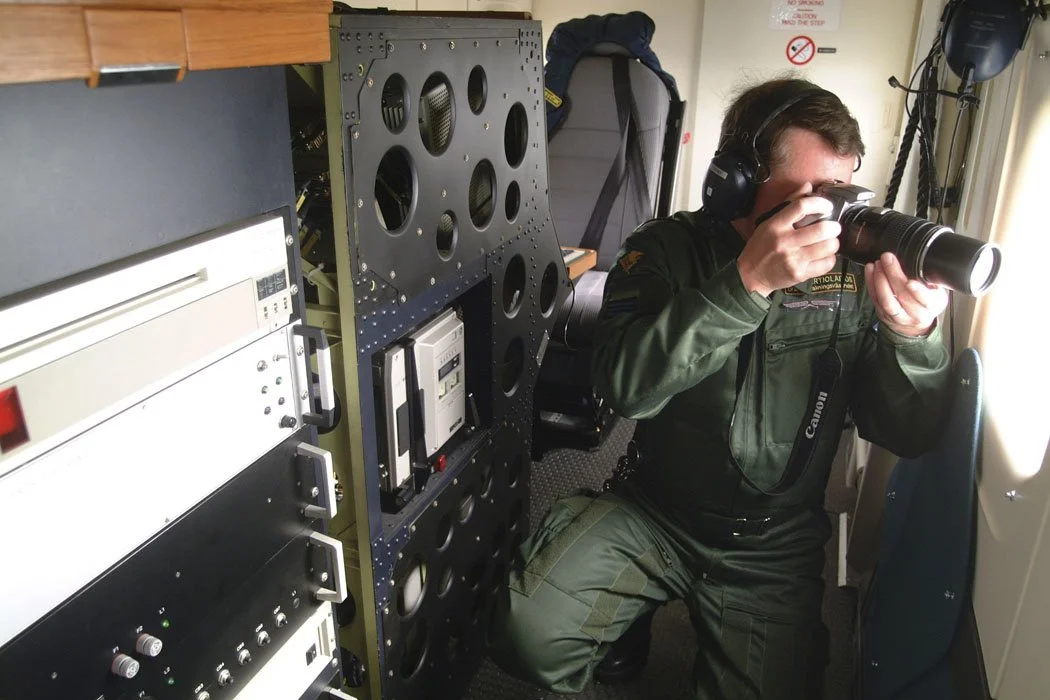
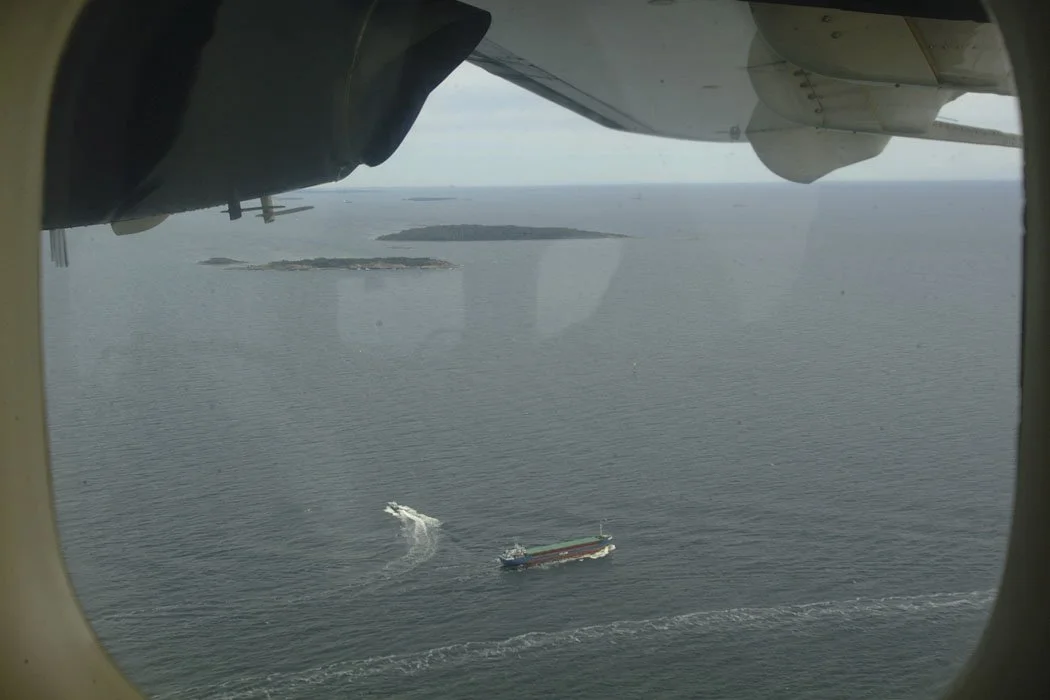
The two airships are at the moment in good condition, working two computers with the Windows NT system; one of them is used to process images, and the other to record in video and to print in real time the activities. During the flight, the observers write down all the ships that find him, including the small Russian sailboat that sailed calmly with little wind towards the Finnish coasts. Miles away, we watched one of the boats of the Frontier Guard sail on a mission. The pilot of the airship, happening to be at a low height for a few minutes, received a call there to fly over on a ship tank that did not signal any evidence. The flight ended in Helsinki, but nearly on time, since the crew followed the mission towards Turku, where their base is. Systems of radar and the sophisticated SLAR system in the Dorniers were built by the Danish company TERMA A/S and take to both flanks of the airship two antennas that can detect suspicious substances in the sea, for example, oil or petroleum, from 10 to 20 nautical miles. The great ships appear on the screen of the radar at a distance of 40 NM. This means that whenever the Dorniers fly on the border line, in the Gulf of Finland, between the Russian Federation and Estonia, they will detect any spill of oil or petroleum.
The Scanner IR/UV/VIS, built by the SAT company, is equipped with ray versatility in infrared, ultraviolet, and visible frequencies of light, which makes it suitable to be able to fly and to look for in the dark, designed to analyze in real time the density and volume of the spill. When the aerial monitoring finalizes, the crews send to ground stations (ground bases) all the recordings, with coordinates, and graphical and photographic material that was gathered during the flight.
By means of ISDN, this analyzed data and, later, much more at great length by another group of experts are sent to all who evaluate the situation.
Interview with Erkki Uitti, Commander of the Air Patrol Squadron of the Ministry of Finnish Interior, captain, with one release from military and professional careers in the Servicio de in the Frontier Guard of Finland.
The 19th of November marks two years since the shipwreck of the Prestige ship in front of the coasts of Galicia. Still, the Galician government does not have to service aerial monitoring like Finland, which, according to the statistics, is very good and effective. I ask you this question to attach in the article that you will read later.
The right service and the duties of the squadron are to preserve and protect the area from any illegal contamination and spills. Please feel free to answer this question.
1. Please tell me about the budget of AIR PATRO SQUADRON (approximated general budget). Do you think that is enough?
Under, we operate with 8 light (206 3/AB and 5 3 AB/B 412) and medium-weight helicopters (AS 332, Super Puma) and with two fixed-wing aircraft (Dornier 228). Our organization consists of a commander and headquarters in Helsinki and three air patrol flights (Helsinki, Turku, and Rovaniemi). We have a total of 113 employees. The yearly budget of Air Patrol Squadron varies normally from 13 to 15 million euros per year. About half of it represents the personnel (staff) costs. From the commander's point of view, our budget is appropriate, and when used with careful planning, it gives our squadron all the possibilities to fulfill our duties. We are always actively following the possibilities to descend it to a lower level because flying is very expensive anyway.
2. How many crews and aircraft do you think would be necessary to make the right service from the corridor of Galicia in the northwest to the corner of Spain?
I am not aware of the situation in the Galician area, but in the territorial waters of Finland, which are about 1250 km long, we are CAPABLE enough with two Dornier 228 surveillance aircraft with three crews (4 persons/one crew).
3. Do you think that is necessary for dwelling pilots and personnel in the AIR PATROL SQUADRON in the struggle against the spills?
You must always remember that our (Air Patrol SQ) main duties are 1) border control missions at the Finnish national borders and 2) maritime search and rescue missions over our SAR areas. In the branch of pollution control, we cooperate with the Finnish Environment Agency, which is the responsible authority in pollution control and recovery operations at sea, together with fire brigades and maritime authorities.
4. In Galicia, the shipwreck of the Prestige on the 19th of November of 2002 caused a big catastrophe for families and ecosystems. Because you have a lot of experience, can you tell me your opinion about the prevention systems so that it never happens again?
I am very sorry, but I am not in a position to make any kind of analysis or guidelines in that area. I think that these kinds of questions belong to maritime authorities, and these matters are strongly national questions. Concerning the oil tanker PRESTIGE accident in Spanish waters, the Finnish Frontier Guard (FFG) sent one of its Dornier surveillance aircraft to France in accordance with the request of French authorities and the EU Commission's Monitoring and Information Center. The Dornier 228 surveillance aircraft operated for eight days (period 30.1. - 7.2.2003) in the Biscay Bay oil area, reporting about observed oil slicks in the sea area to shore-based recovery units for further actions. We operated from the Lann-Bihoue air base in France, and we flew altogether 44 flight hours for that mission. French authorities covered fully all the cost of that mission.
5. In Galicia, there still is not an aerial system of monitoring of spills. Do you think that is important, relevant, or necessary to aerial service? Patrol of this type in a zone where hundreds of ships go every day with dangerous and polluting loads.
Finland has signed the HELCOM convention (Baltic Marine Environment Protection Commission), together with other Baltic Sea States, and "AIRBORNE SURVEILLANCE WITH REMOTE SENSING EQUIPMENT" is one of the HELCOM recommendations for member states. Finland has implemented that recommendation already in 1995. According to our experience, airborne surveillance is one very important instrument when fighting against illegal discharges and polluters at sea.
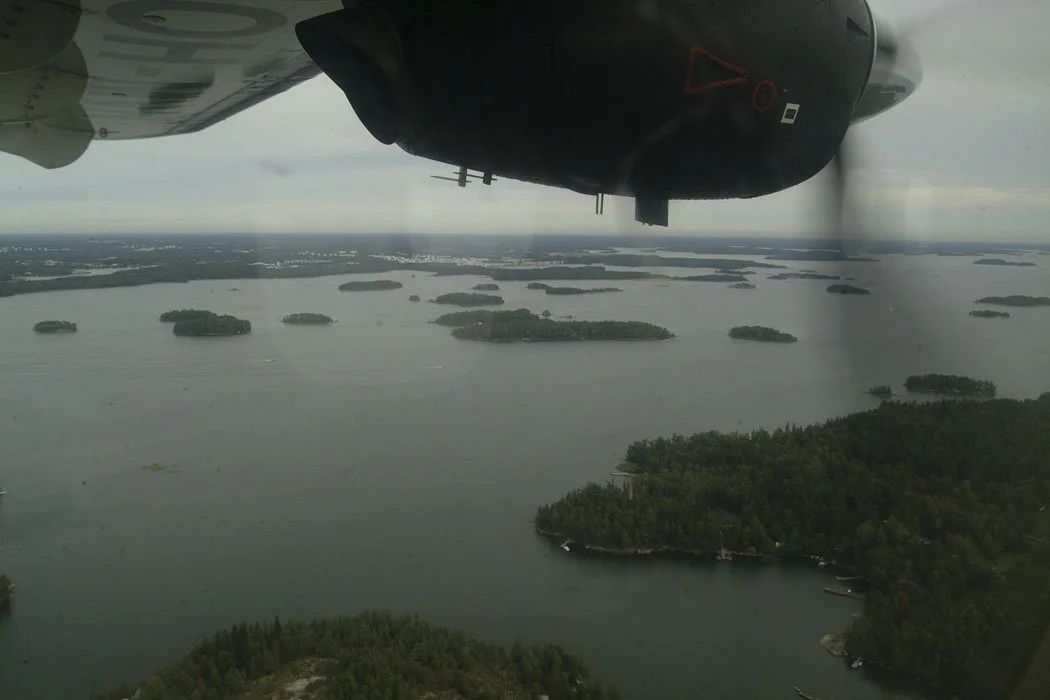
On route toward a spill spot near the Finnish coast. 2004
6. The Air Patrol Squadron participated in the rescue of shipwrecked people in the collapse of the Estonia ship. Please tell me about it, and what was the participation of frontier guards and the aerial patrol squadron?
The capsizing of the ro-ro passenger vessel Estonia on the 28th of September 1994 in the Baltic launched one of the biggest maritime search and rescue operations in the modern world. The 155.4-meter-long vessel was on her scheduled voyage from Tallinn to Stockholm. The wind increased gradually after the departure, and after midnight it blew from the southwest at about 20-25 m/s. The vessel was carrying 803 passengers, 186 crew members, and a load on the car deck consisting of 38 lorries and trailers, 25 trucks, 11 vans, and 26 passenger cars. Because the accident took place within the Maritime Finnish Search and Rescue Region, the MRCC for Turku took the responsibility of managing the rescue operation in cooperation with MRCC Stockholm and Tallinn. In total there were 24 helicopters, 2 fixed-wing aircraft, and 14 passenger and position vessels that participated in the rescue operation. In total, 137 persons were rescued during the operation, and a total of 853 persons lost their lives. The first helicopter unit that arrived on the scene at 03:05 Finnish Time was the standby duty helicopter from FFG Air Patrol Squadron. The crew of this Super Puma helicopter (OH-HVG) flew over nine hours during that day; they were able to rescue 44 persons out of a total of 137 rescued. Super Puma helicopters were assisted by the AB (412 OH-HVD) crew from Helsinki. This crew was able to rescue 7 persons. One important point was the fact that only FFG Air Patrol Able Squadrons helicopters were able to land on the flight decks of the two passenger vessels in the vicinity. With that operation, they could disembark rescued people to the ferry and spare about one hour for rescue work on the scene.
7. Tell me about the training that there are the crews to carry out to provide good service. Our two helicopter pilots are trained on our own training courses.
We operate with civilian-registered aircraft and with civilian pilots' and mechanics' certificates. Our flight training system is approved by the Finnish CAA according to the JAR rules, under which we have our own FTO license for helicopter flight training. If we take one example, in Air Patrol Squadron, the pilots must have about 1500 flight hours of experience to be qualified as Pilot in Command of "Standby Duty Helicopter." This means at least 6 years of active service in flight operations. A major part of the training of Dornier pilots we buy from the Finnish flight academy, but we take care of type rating and special flight training for border guard missions by ourselves. The basic training of aircraft mechanics takes place in the Finnish Air Force Technical School. The Air Patrol Special Squadron takes care of the training for maritime search and rescue missions and border guard missions. Our rescue men are trained fully by us.
8. How many thousands cross the airplanes every day?
FFG Air Patrol Squadron flies annually about 5000 to 5300 flight hours for different flight missions. Most of the flight hours are flown with helicopters. Dornier 228 surveillance aircraft (2) fly about 800–900 flight hours per year, and most of them are in the Sea Area.
9. Is there some perspective to increase the crews in the APS?
As time is passing, we need to train some new pilots, but we have calculated that we need about four crews for Super Pumas in Turku and four crews for AB 412 in Helsinki and Rovaniemi bases. With Dornier, we get along very well with three crews, and that is nearly the present situation.
End