The hangars of Velepromet
Vukovar 2013
Rape is a weapon of war (Silenced women)
Vukovar. May-September 2013
In 1991, at the beginning of the Croatian Civil War, the city of Vukovar was besieged for 87 days. More than 10,000 bombs fell daily, leaving it unrecognizable. It was the city most devastated since World War II. In November 1991, Vukovar surrendered to the Yugoslav army, and Chetnik paramilitaries entered the city, arresting civilians and military personnel and transferring them to various concentration camps. Between November 18 and 21, 200 people were murdered, of whom only 194 were found. The women were taken to a small concentration camp consisting of seven hangars, according to the International Criminal Tribunal for the former Yugoslavia (ICTY), where 1,200 people lived in squalid conditions until it was closed in March 1992. Witnesses from that time saw civilians being beheaded, shot, and tortured. Paramilitaries raped and abused many women; some managed to escape. "Rape as a Weapon of War" is a compilation of the testimonies of thirteen women who decided to speak on camera.
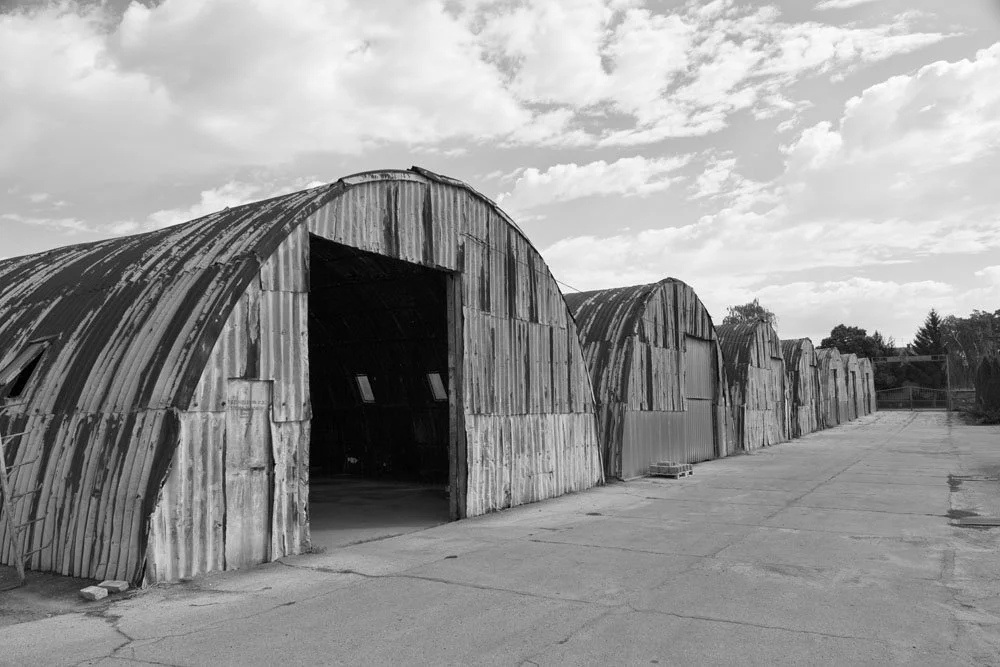
Hangars of Velepromet in the outskirts of Vukovar, Croatia. It was a temporary concentration camp, where rapes were committed against women and children, civilians were shot, and murders were committed. Hangars of Velepromet. Documentary: Rape is a weapon of war. Vukovar (Silenced women). September 2013.
These chilling accounts bring us closer to the most human side of the victims (among hundreds and thousands) whom the current government overlooks, ignores, or has forgotten [in 2013]. These and many other women denounce the incomprehensible situation in which they live; in many cases, they even have to live in the same city as their rapists, to whom the government gave a new house and a war pension. It is living with the enemy. Meanwhile, they resist and seek private therapy to try to alleviate the trauma that will remain in their memories with terrible nightmares of those days. This means they cannot sleep, rest, or truly live.
In May 2013, in co-production with my colleague Wiktor Dabkowski, we traveled to Vukovar to visit Marko Karaula, a former soldier I had met in 1991, to find out how he was doing and to revisit some of the places I had survived.
Many journalists, hardened by countless wars, decided never to cover another one after that terrible conflict. I know some who have returned to Sarajevo (I haven't been able to yet, nor do I wish to) and have described their experience as negative. As far as I know, none of them tried to profit from the photos they had taken; it was more like putting the experience behind them and moving on to something else.
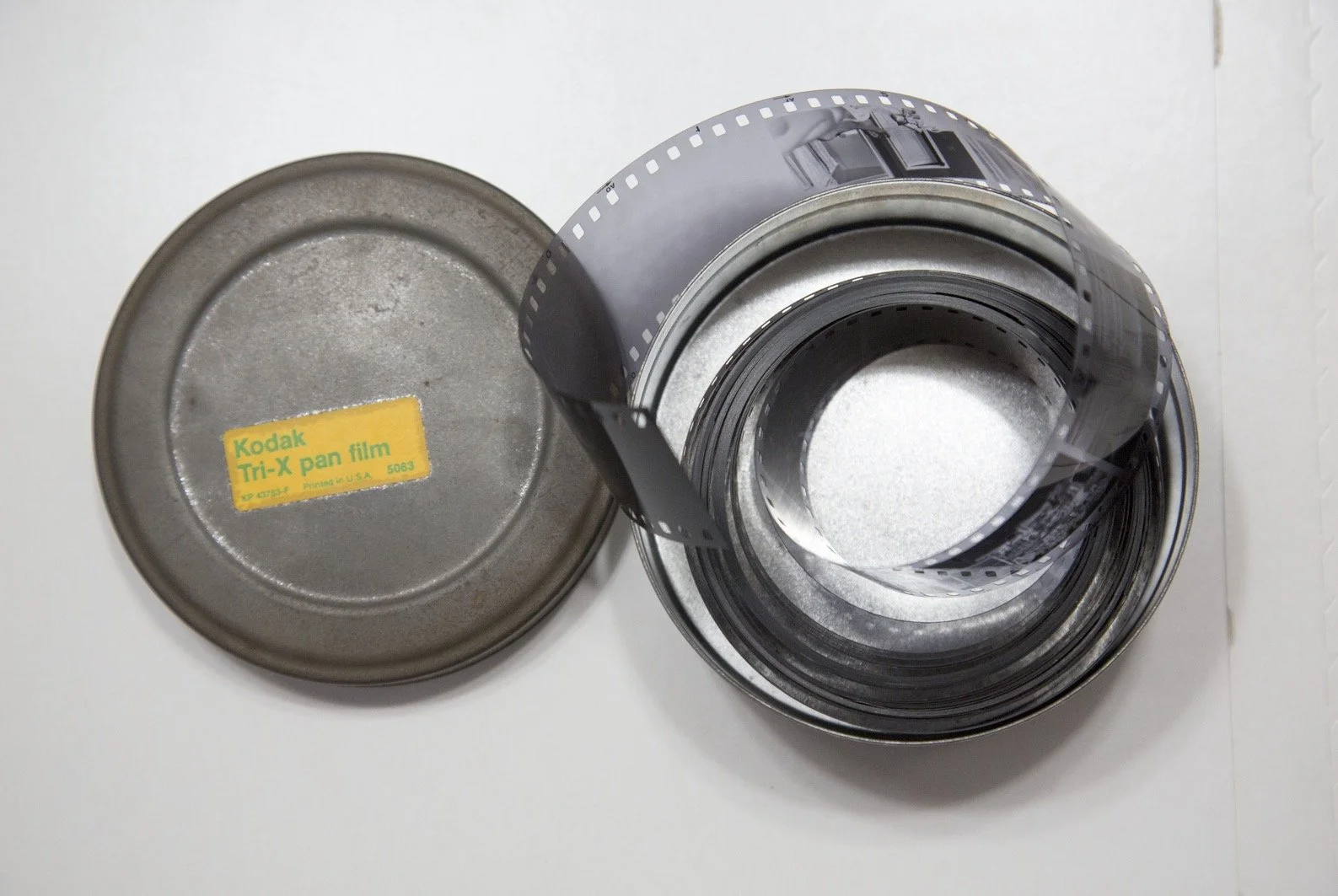
Developed Kodak TRI-X film. Yugoslavia war 1991-95
I searched for the places I had been in 1991 and didn't expect to find many people alive or living in Vukovar, perhaps only in cemeteries or on the lists of the missing. Among the latter is the Croatian soldier Marko Karaula, whom I met in Vukovar during the siege of the city. Marko was young then, about 19 years old, brimming with energy. He was fighting on the front lines to defend his family and his country.
Marko practically took me by the hand to many places, and I was grateful to him. When I returned to Vukovar in September 1991, I looked for him in the hospital. A tank had nearly run him over, but he managed to survive despite his injuries. Marko knew the city would soon fall and walked out of the hospital on his own two feet, still badly wounded. Months later, the city surrendered, and the Chetniks and the Yugoslav army entered with knives to finish off what little remained of Vukovar. In revenge, they took all the wounded from the hospital, women and children, to several nearby concentration camps and carried out rapes, torture, and massacres of civilians.
"Women, and even girls, were raped repeatedly by the soldiers."
Documenting rapes of women during wartime that occurred more than twenty years ago. The Balkan War was the last conflict since World War II in which some of the cruelest and most inhumane crimes against humanity were committed between 1991 and 1995. The dozens of massacres still under investigation make us reflect on the terrible conditions endured by thousands of people, whom the international community turned its back on despite being aware of the atrocities being committed. More than twenty journalists died during the war. They were searching for the truth.
Marjana, one of her sisters, began to recount the atrocities that were committed and that she personally suffered. She spoke of the women raped in the Velepromet concentration camp, and she was among those women. I was intrigued by her chilling testimony, and we contacted a women's association (specifically, 14 women) that had written a small book. The testimonies I could read in the PDF they sent me were utterly inhuman. There were no names, only accounts that seemed to have been taken from a news report. I proposed to the book's author a photographic project and a short documentary about the book, but intermediaries of all kinds appeared, including the police.
Political issues. The women wanted to share their perspectives in the documentary because the government had abandoned them. The idea of carrying out the project was blocked by the influence of people who wanted to stop it. We agreed to make initial contact with them, and over several months we made several trips to Vukovar. Finally, in September 2013, we photographed 13 women. Someone had told or advised them not to speak. We consulted with all of them about the possibility of filming inside one of the camp's seven hangars, specifically number 7, and they gave us their permission. It wasn't easy for them, but they knew that by recounting their suffering, they were convinced that any trauma residing in their souls would be released. For us, as journalists, it wasn't easy either, but we had to do it; the women trusted in our good intentions to reveal what happened in the Velepromet hangars.
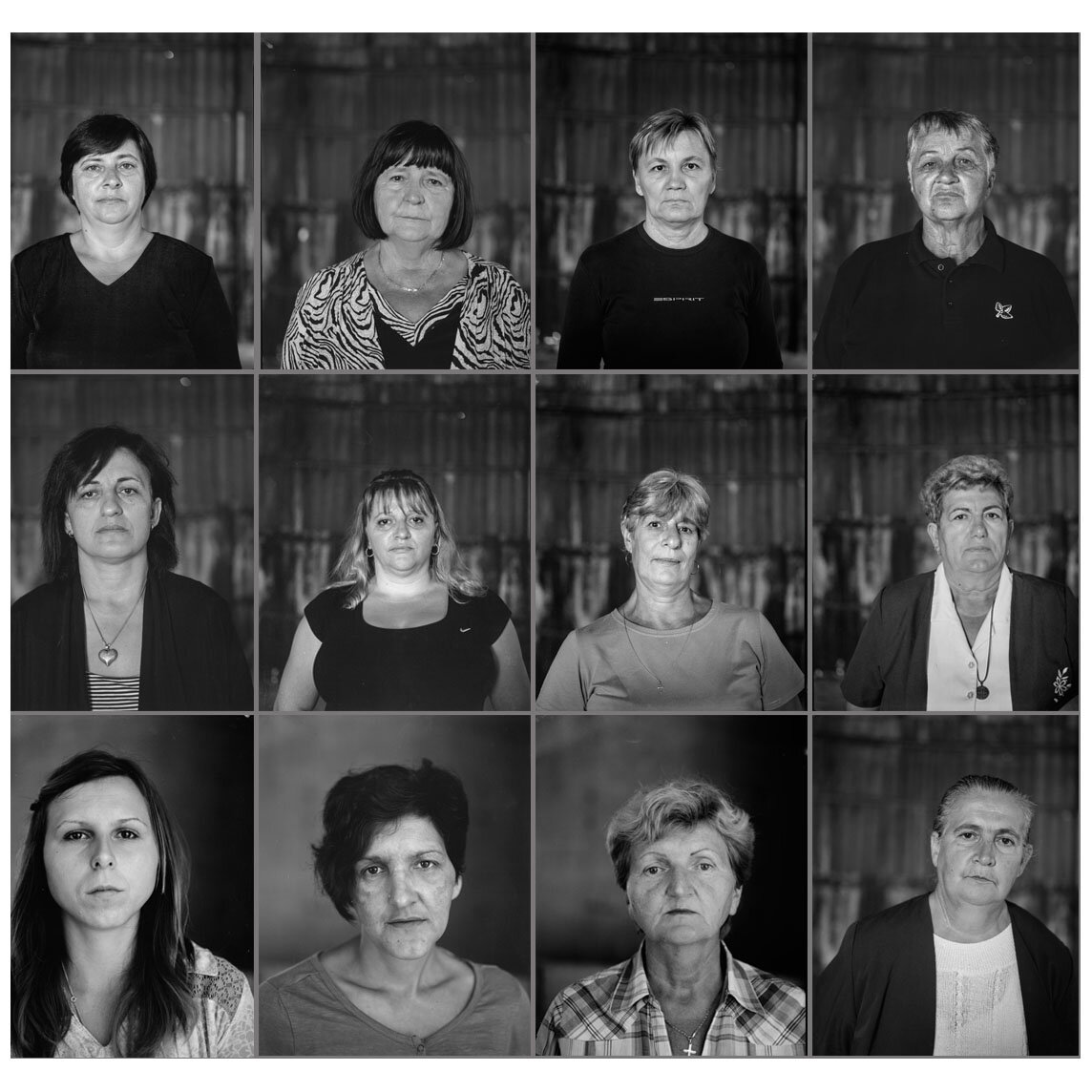
The Silenced Women documentary project. Rape is a weapon of war. September 13, 2013.
Documenting rapes of women during wartime that occurred more than twenty years ago. The Balkan War was the last conflict since World War II in which some of the cruelest and most inhumane crimes against humanity were committed between 1991 and 1995. The dozens of massacres still under investigation make us reflect on the terrible conditions endured by thousands of people, whom the international community ignored despite being aware of the atrocities being committed. More than twenty journalists died during the war. They were searching for the truth.
I had consulted with two psychologists and a psychiatrist specializing in post-traumatic stress disorder (PTSD) about the idea of carrying out this project. The question for the experts was, "Can we ask the women to accompany us to the hangars and film them there, giving their testimonies?" The answer was yes, but with great care. Depending on each case, returning to the site would likely help them externalize their traumas. We asked them if they were willing to recount what had happened to each of them.
They agreed. Even so, the visit was conducted with great care, and one of the women burst into tears upon entering the hangar and suffered an anxiety attack. Another refused to participate, leaving us with a group of 13. We decided to stop everything. But it was they who encouraged us to continue, assuring us that they would overcome it; this was the place, and they had so much to share. For one of them, it was particularly difficult when she recalled seeing her young son there for the last time, a son she never heard from again. Our producer and assistants couldn't bear to hear the victims' pain.
Accounts and studies on the rape of women and children in conflicts are considered weapons of war and crimes against humanity. During Operation Oluja, the Croatian army also raped women and killed Bosnian and Serbian civilians. Hatred and revenge go hand in hand throughout human history. More so in some contexts than others, but harassment and rape occurred on all sides of the conflict.
The Velepromet Hangars
These were pre-war storage hangars. In September 1991, Serbian forces seized part of the town of Sajmište and used it as a concentration camp. Seven hangars were filled with non-Serb people, and Velepromet was guarded by the JNA (Junta de Acción Nacional), territorial defense units, and paramilitary forces.
More than 10,000 people were detained there; it was the largest camp established during the Croatian National War. Later, the prisoners were transferred to the Sremska Mitrovica camp in Serbia. According to the International Criminal Tribunal for the former Yugoslavia, approximately 10,000 people, mostly Croats and non-Serbs, passed through Velepromet. 700 of them are considered missing.
The Hangars: A Deadly Concentration Camp
After the battle for Vukovar, the JNA established a makeshift detention center at Velepromet, holding about 1,000 Croats. The process of registering and distributing the prisoners began with the separation of women and children from the men. Each group was then interrogated, the men were beaten, and cases of rape were reported. According to one witness, she was taken before the court of Republika Srpska Krajina and charged with “genocide against Serbs.” She was sentenced to 15 years and returned to Velepromet. According to another witness, 260 men were detained in a 100-square-meter room. They were taken to the interrogation room and heard gunshots.
Many were forced to perform hard labor, such as repairing the roof or burying the dead in graves. The detainees identified some people as members of Seselj units. The prisoners were organized in the basement, in a small room next to the guardhouse, and in a carpentry workshop. According to the info, according to witnesses, the JNA and the “Chetniks” took eight detainees from the warehouse holding room, tied their hands with wire, then tied them to a wire fence and shot them. In another incident, according to several reports, 25 inmates were shot. The shooting site was about 50 meters from the warehouse, and most of the prisoners reportedly witnessed it. During interrogation, guards beat prisoners on the spine. A Croatian soldier from Vukovar was executed with a chainsaw.
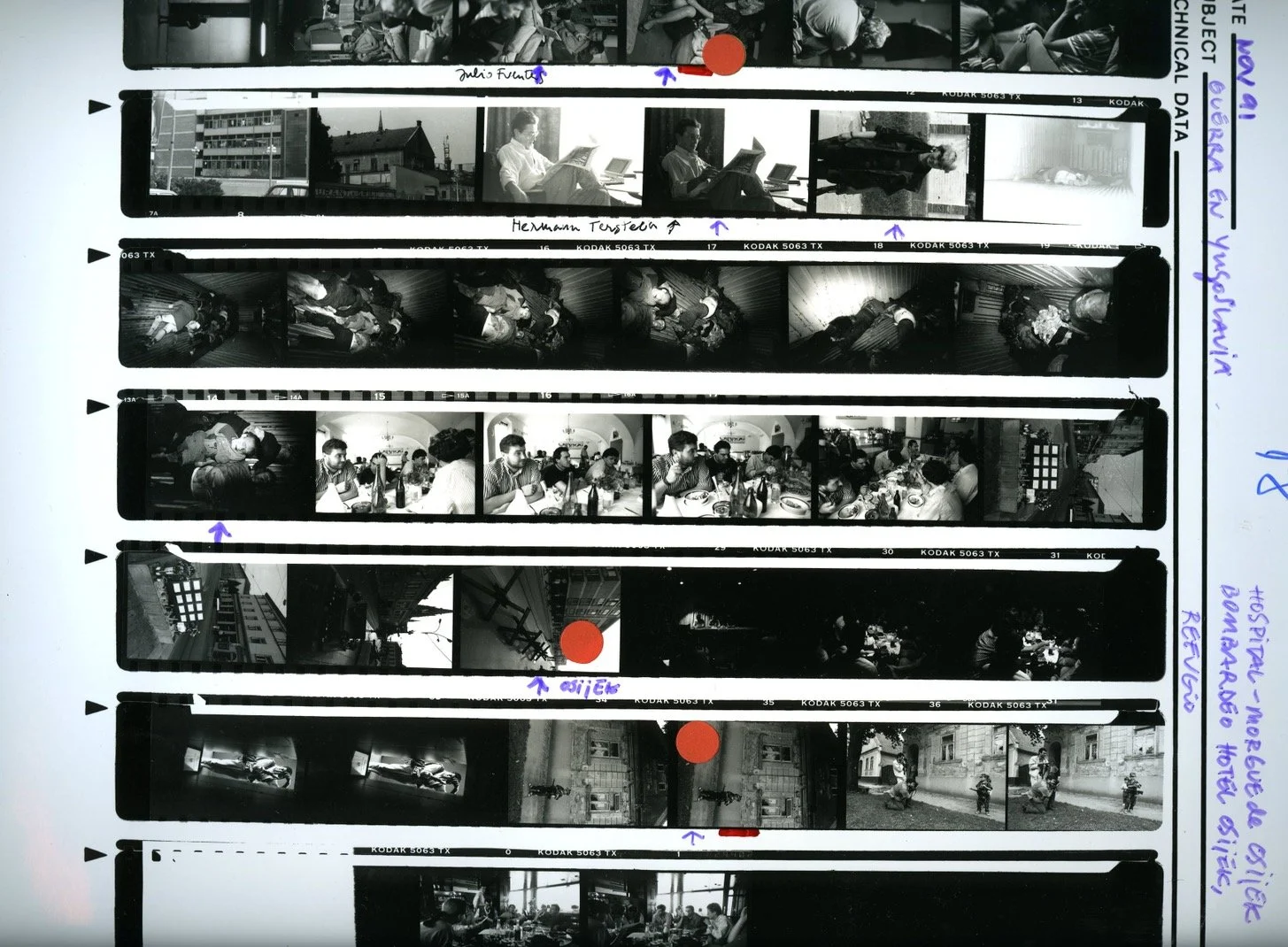
Contact sheet of Vukovar covering . 1991
These are the transcripts made by Croatian journalist Sandra Veić Sukreški—a witness to the siege of Vukovar in the summer of 1991—from the documentary video we made featuring conversations with women who survived the Velepromet hangar concentration camp.
Željka Jurkezi
My name is Željka Jurkezi; I am from Vukovar, and my message is that I want war to end all over the world so that peace may prevail.
Žaklina Giljanović
My name is Žaklina Giljanović. I am originally from Vukovar, but now I live in Petrinja. I am 39 years old. My message is that there should be peace all over the world.
Alisa Giljanović
My name is Alisa Giljanović. I am 28 years old. I am originally from Vukovar, but now I live in Petrinja. And my message is that all people should love each other as brothers and sisters, as God said.
Tera Balen
I am Tera Balen, from Vukovar. I would just like to say briefly and clearly that I want to raise a question about Sljivancanin, whom I saw on the Velepromet, and the responsibility of Marjan Ivanov, who raped me, and... they (the Black Snow) made me remove feces from the toilet. I am happy; I feel very sorry for so many victims and disabled people (war invalids). I am happy that we had so many veterans and civilians who helped in the war, including my son, Tihomir Nikolic. This has to be revealed because there is enough of this suffering. Many years have passed. And I struggle to cope with... and I have nothing more to say...
Tatjana Rapcak
In 1991, I was detained in my village with my two children and my mother. I had a difficult fight with them because... I want peace and for my children to be healthy... and I'm happy that they are alive and that they survived the war in 1991... I was forced... in 1991 to do all sorts of things, to do them. They chased me and beat me, and the children too. So then I was that victim in all of that, just to save the children. And now I thank the dear God, to whom I was praying all that time, to keep me alive. That's it.
Neva Penavić
Okay. So, I'm Neva Penavić. I was born in Berak, I got married in Berak, and I stayed in Berak until the very end (in 1991). I was one of the last people who stayed in Berak. I was arrested in Berak, in the countryside, and I was there until the end (the end of the war). Then the White Eagles arrived when Vukovar fell (to Serbian units). I experienced horrors; I was raped orally; I survived suffocation, and that's all.
Strength of faith! I healed through faith. I gained the strength to endure everything, and I have no hatred for anyone in my heart. I have ten grandchildren. Seventeen of my family members were killed. My husband is no longer with us, but I am. I continued my life normally for the sake of my children. Now, I am deeply troubled by everything that is happening. For example, those I had to sign, stating that I was voluntarily leaving my property, and I had to do it because the liquidation had begun throughout the village. My three godparents were thrown into a well... I was raped that night. And under that duress, we had to sign to voluntarily leave the property, to leave the village alive. I did that too. And today, after so many years, I discovered that the man I signed with is a doctor here in Vukovar. I have two grandchildren who graduated from university, and neither of them has a job. And now here in Vukovar. There have always been Slovaks and Hungarians in this area of ours, and no one is demanding any rights (that is, everyone has lived normally; they didn't ask for two language courses), and because of those who kicked us out of our homes, what we are experiencing now is inconceivable to me. But I still haven't lost hope. I love people; I feel optimistic (about life) because I have my grandchildren. I have never passed on hatred of the nation (she is referring to the Serbian nation) to my children because there are good and bad people in every nation. I've always said that "only man can help man, so don't do that" (hate someone because of their nationality or religion). Your grandmother wouldn't be alive if my Serbian neighbor hadn't helped me. And there you have it, my life's motto for now. Only man can help man, and this is just human stupidity."
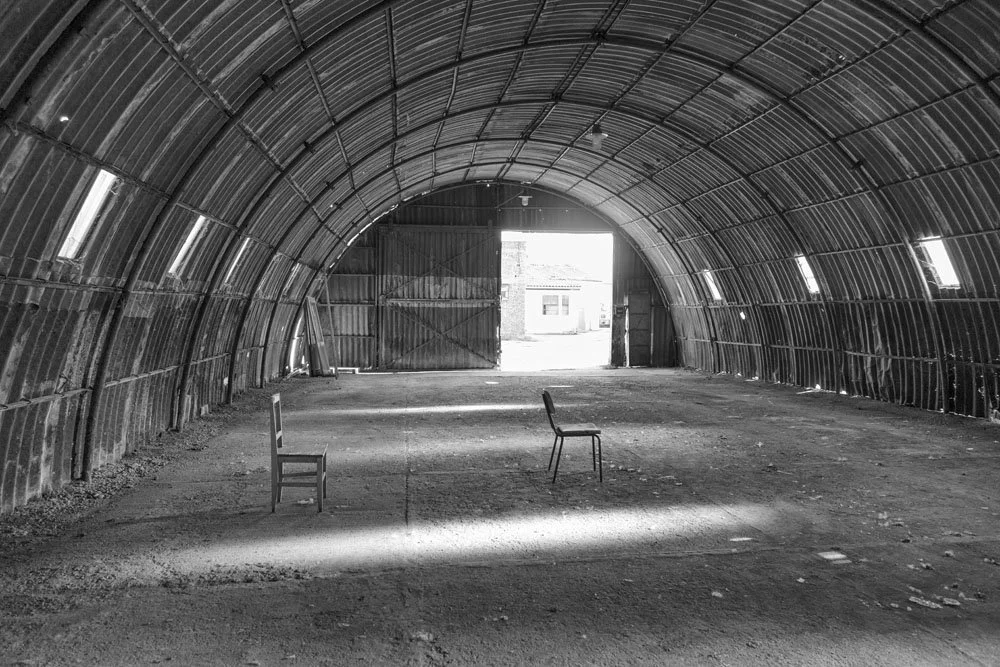
Hangar number 5. Velepromet. Vukovar. September 2013.
That's my opinion. It hurts us victims; it hurts us deeply, what happened... I no longer live in my house. Now I have an apartment. Because it's awful that seventeen members of my family whom I lost in this war are no longer at the table. There's no celebration and nothing else that makes me happy. But I'm happy with my ten grandchildren; I'm happy with this beautiful area (Slavonija) of ours. May they live in it, in peace, and all the men too. That's my message.
[Off-camera saying: "These are the crazy things some people do, and we, the ordinary people."]
Ana Kurmajic
My name is Ana Kurmajić. I'm from Šarengrad. During the war, I was here in Vukovar. And terrible things happened here. It took me a while to heal. But...
I have a wonderful husband and a beautiful daughter, who are my reason for living and support me, so I hope everything will get better. And those who abused me still haven't been found. I hope they are. That's what I would like: for them to answer to me (to face justice). But I personally... I'm happy with my family now; with this situation (forgotten), not so much, but I hope it will get better.
Snježana Cirba
I am Snježana Cirba; I'm from Vukovar, and I don't have much to say. I mean, I want to say... that we went through what we went through; it was bad, and it's bad again because of this incident. The old wounds are reopening, and everything is coming back. I found my husband after eight years, and we buried him, thank God, because there are many people who still haven't found their loved ones (who disappeared). I have two children, and life goes on.
Snježana Maljak
My name is Snježana Maljak. I am from Vukovar and live here. I returned from exile in 1998, and the trial for my rape lasted a full 12 years. It was completed a year ago. The verdict for rape was six years, and both perpetrators received six-year prison sentences, but both are fugitives. This situation in Vukovar is very difficult for me.
A law is being applied for something that makes no sense, at least not yet, and a law to punish rapists that doesn't become obsolete is still not being applied. I have lived in Vukovar since 1998, and I live for my family, which gives my life meaning. Thank you.
Ružica Barbarić
My name is Ružica Barbarić. I live in Vukovar. I suffered a lot in this war. I endured the most severe torture. Rape. I want the criminals punished. My wish is for justice... to receive justice, I simply want to receive... that Stanimirović be punished. But not only him, but all the criminals... He can no longer work in Parliament as he has been doing until now, and show him that he is alone, that this is my city, and that it remains free, regardless of everything else. It hurts me deeply... introducing the Cyrillic alphabet is terribly difficult for me, and it all takes me back to 1991. But I still hold my head high with pride because I am Croatian and Herzegovinian, and I walk proudly through my city. I want us to achieve our status, to receive a decent pension (2013), and to live with dignity. Because I live on a pension of 1,700 kunas, and he earns who knows how much in parliament. I want all the war criminals to be convicted. Thank you very much.
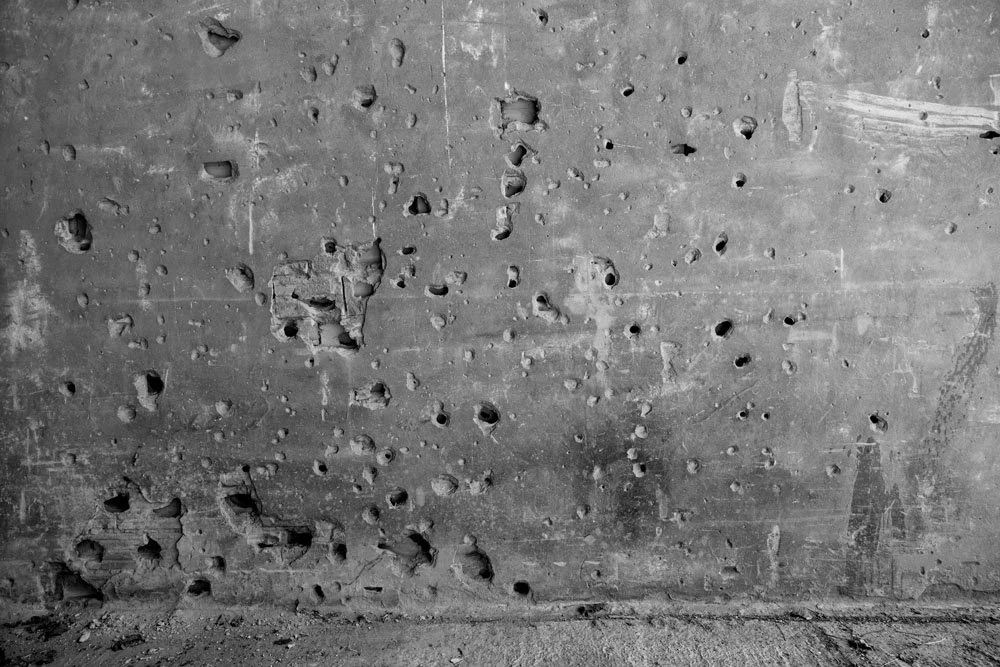
Bullet impacts on one of the walls of the Velepromet hangars where hundreds of people were shot. Vukovar, 05.09.2013
Katica Palijan
I am Katica Palijan, from Lovas. My husband was killed. I was alone (resting when it happened) with my three children. The children were 14, 16, and 11 years old and were detained for six months in Lovas after my husband's death. They (the Serbs) wouldn't let us leave the village. Ljuban Devetak threatened to kill everyone, especially families with sons and everyone else. I also went to court in Belgrade and told them the same thing there, and they told me I was lying. Then I told him that those were the children of someone he had killed in a minefield.
Later (she speaks again about the war), we left; we were expelled from Lovas, and we were exiled to Primošten. We arrived in Zagreb from Primošten sobbing and saying, "I can't take it anymore, and nothing ever happened." I went to Belgrade several times to testify, and we never achieved anything, even after 20 years. The children too... Now they are adults, grown up. They have their own families.
The only thing that brings me joy is that my children survived and that I have five grandchildren. They are the most wonderful thing I have. Our Father and Hail Mary. I was the first to be separated from the unit and taken to this infamous place...
From here, I want to tell Milanović, Bauk, Ostojić, and the entire government that those plaques, those nails with which they nailed the Cyrillic alphabet to our city, they nailed again to my crucified husband. The Chetniks crucified him on a cart and shot him from a tank.
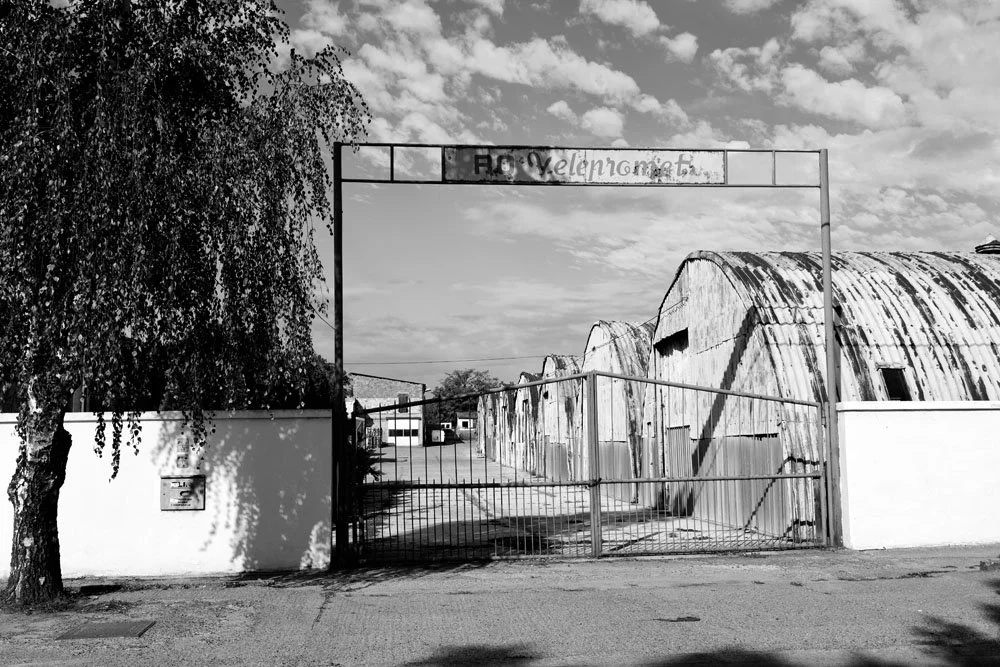
Hangars of Velepromet. September 2013. Vukovar, Croatia.
They killed the youngest victim of V again.
Vukovar, who was only six months old. They killed the oldest member of Vukovar at the time, an 82-year-old man. They massacred the wounded from Ovčara again. Let the gentlemen consider whether their seats are worth it. Let them be ashamed of all the women raped, of every mother who has lost her child. Let them think. If for them there is a case of Lex Perković and for us here there is a case of Lex Cyrillic in Vukovar, let them change the law. I have much to say to them because they are deaf in any case, because they are the ones who did not fight for this Croatia and cannot accept it as their homeland. If they considered it their native land, they would surely act differently.
Who is Stanimirović?
During the Battle of Vukovar in 1991, he was a reserve officer in charge of the JNA medical service. In 1992, Tjhen was appointed director of the Vukovar hospital and entered politics a year later. During the occupation of Vukovar, he also served as mayor of the city and as a minister without portfolio in the Republic of Serbian Krajina, the government in the occupied territory. He was awarded the Radovan Karadžić Order and Special War Merit. During the peaceful reintegration process, he served as chairman of the Transitional Executive Council for Eastern Slavonia, Baranja, and Western Srijem. He was one of the founders of the Independent Serbian Democratic Party in Vukovar in 1997 and has been its chairman since its inception. He was a member of the House of Representatives of the Croatian Parliament from 1997 to 2000, and twice a member of the SDSS and chairman of the SDSS Representatives' Club in the Croatian Parliament between 2003 and 2008. In the fifth session of Parliament, he was a member of the European Integration Committee and the Gender Equality Committee.
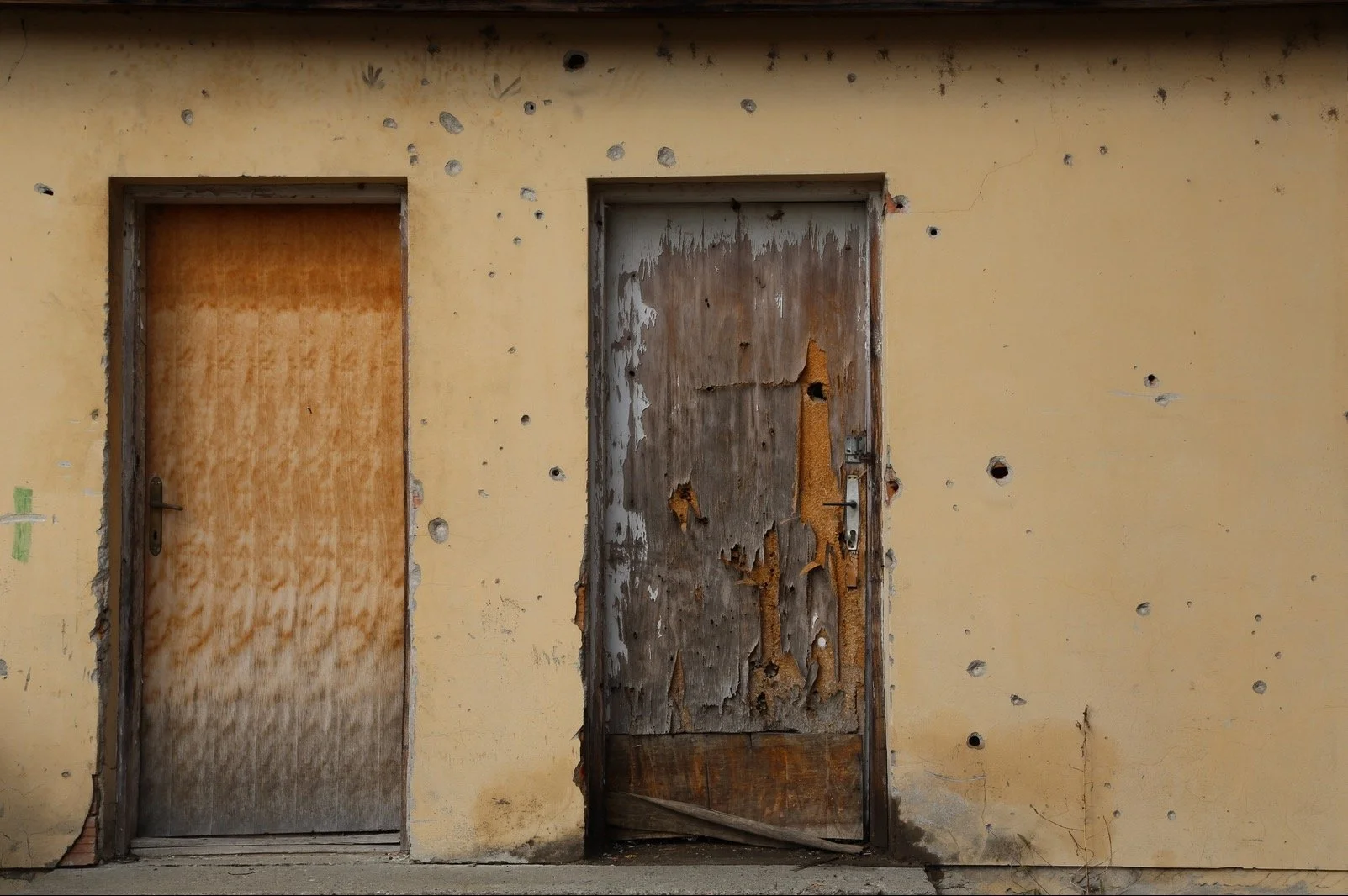
Impacts of war, bullets, and shrapnel on one of the doors of the Velepromet hangars. September 5, 2013
In an article published by Stanimirović in 1993 in the occupation newspaper "Vojska Krajine" ("BK"), issue 7-8, p. 43, entitled "Hospital with the Right Spirit," the first sentence reads: "On November 18, 1991, the last bastion, the last stronghold of the Ustaša authorities in Vukovar, fell: the Vukovar Hospital. With its fall, the city of Vukovar itself was liberated." He signed the article as Prim. Dr. Vojislav Stanimirović, and a photograph of the hospital was published alongside it, captioned "Hospital ‘Sveti Sava.'" Since the Ovcara massacre is linked to the hospital, the claim sparked outrage in the Croatian media after it was published before the 2003 Croatian parliamentary elections. Stanimirović said the claim was embellished by the newspaper's editors.
He was never charged or tried, but due to the mockery of reintegration, he ended up in Parliament as a member of the Croatian Diet (Sabor) or as a member of the SDSS (Serbian Independent Democratic Party).
Impunity
This is not the only place where civilians, women, the elderly, and children have been tortured and murdered. History moves slowly when written from a single perspective, and crimes only come to light when victims have nothing left to lose. Many of them have had to live with their rapists or torturers in the same neighborhood or city. This impunity for criminals is equally incredibly slow.
The media has not been as impartial as it should be; there can be no bias on either side. Crimes are punishable and must be condemned for the sake of humanity's understanding.
*All testimonies are transcriptions from the Croatian language and filmed in September 2013 with their permission to publish for educational purposes. Till today, May 20, 2026, those testimonies of women have never been published.
These cases had previously been made public. We know that they were not only victims of a cruel and merciless war. The International Criminal Tribunal for the former Yugoslavia estimated that between 20,000 and 44,000 women were victims of rape and sexual abuse during the Bosnian War (1992-1995), used as a systematic weapon of ethnic cleansing.
Let us remember with respect all of them, of any ethnicity, country, or genre. All the others who were victims of all the participating armies are also remembered.
Disclaimer: This is a project that does not want to take sides with any country. As journalists, anthropologists, and documentary filmmakers, we show empathy for the victims and condemn any act of violence. We are not funded by anyone; we are independent journalists.