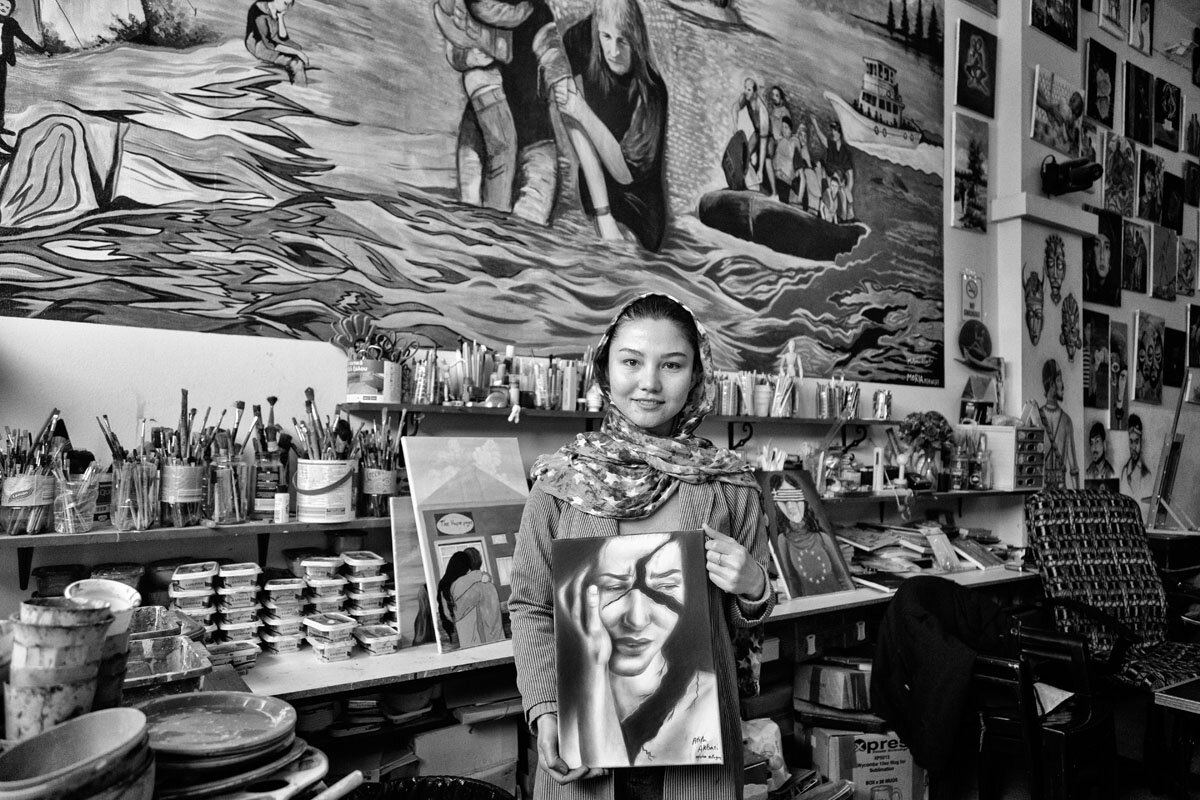
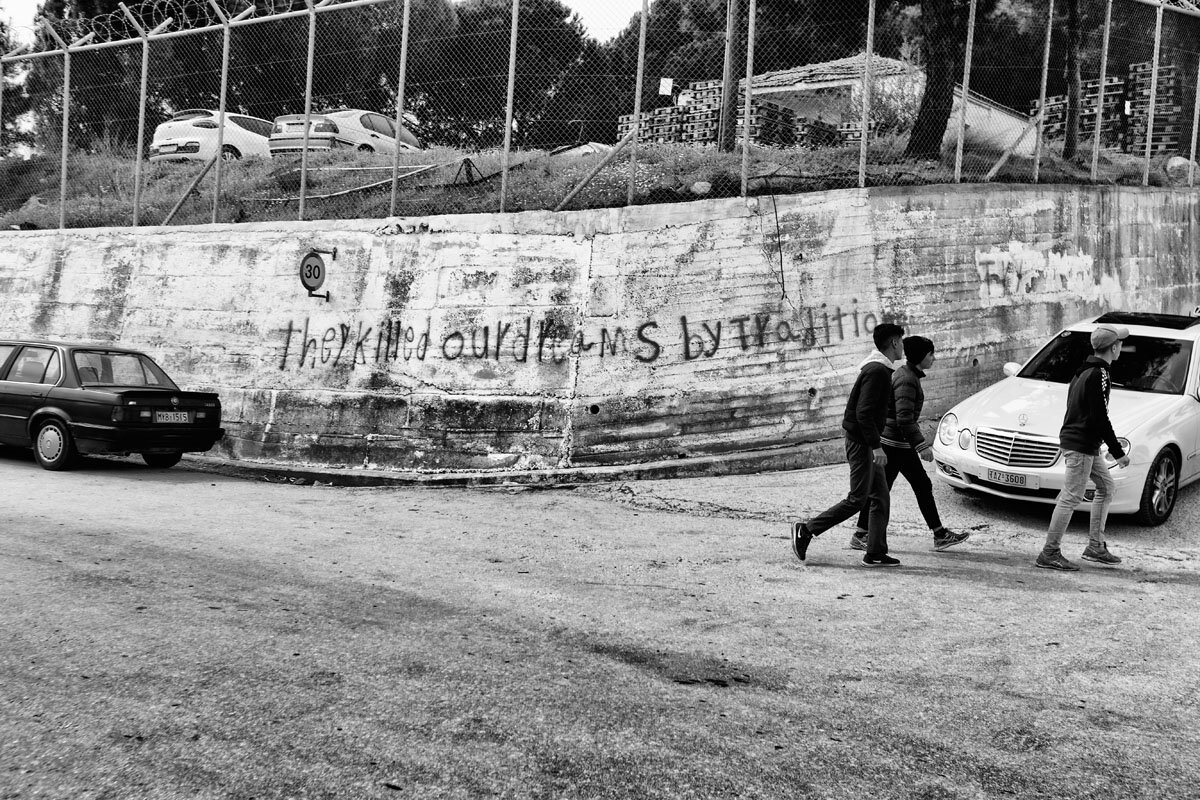
Moria Refugee Camp. Lesbos Island
2020
I arrived in Athens in bad shape, raining and with a headache caused by a broken nose I got many years earlier when I flew with the Martini Patrol in Vigo. The pilot didn't warn me when he abruptly switched from negative to positive G-forces. The floating Canon F-1 camera hit me squarely in the nose, breaking my septum. Although they tried to fix it, it never healed properly and caused me excruciating headaches. I went down to reception and asked if they had paracetamol. "I just gave it to another gentleman," I said, and I went out onto Ronda Street desperately looking for a pharmacy, without success.
I returned to my room and, searching at the bottom of my backpack, I found a half-broken pill that was my temporary salvation.
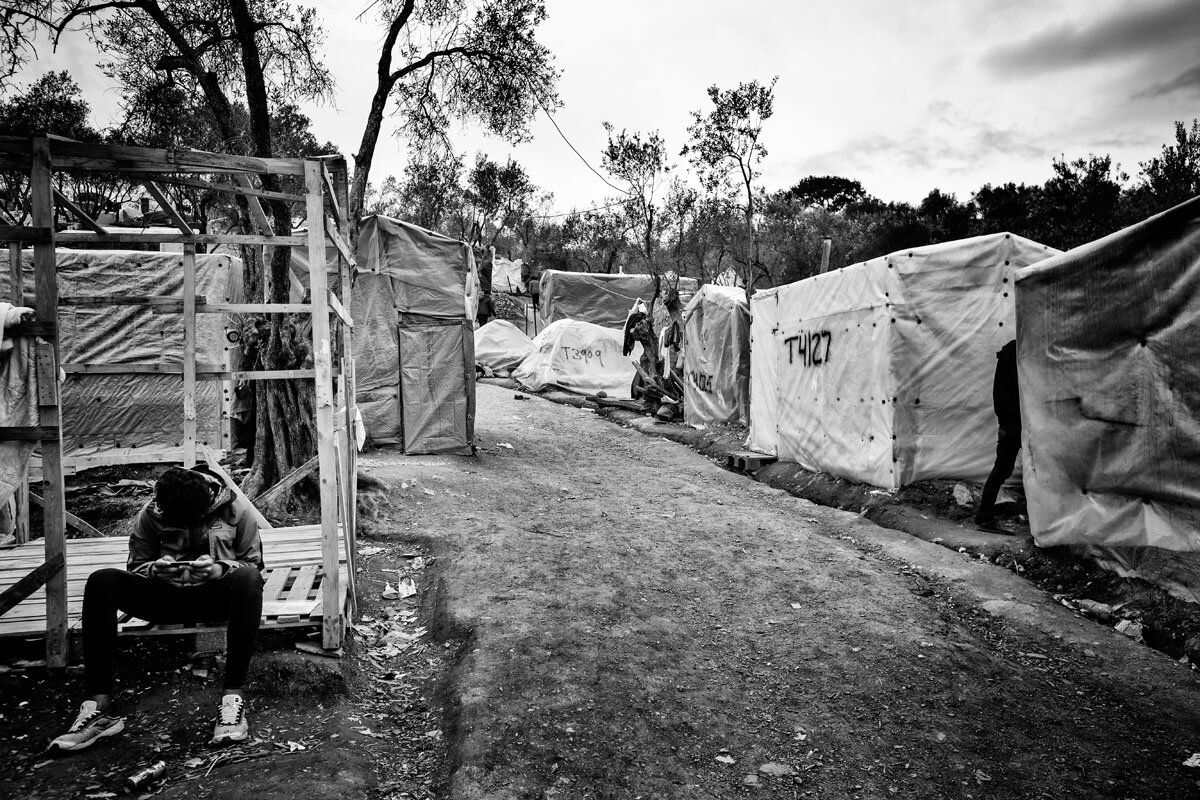
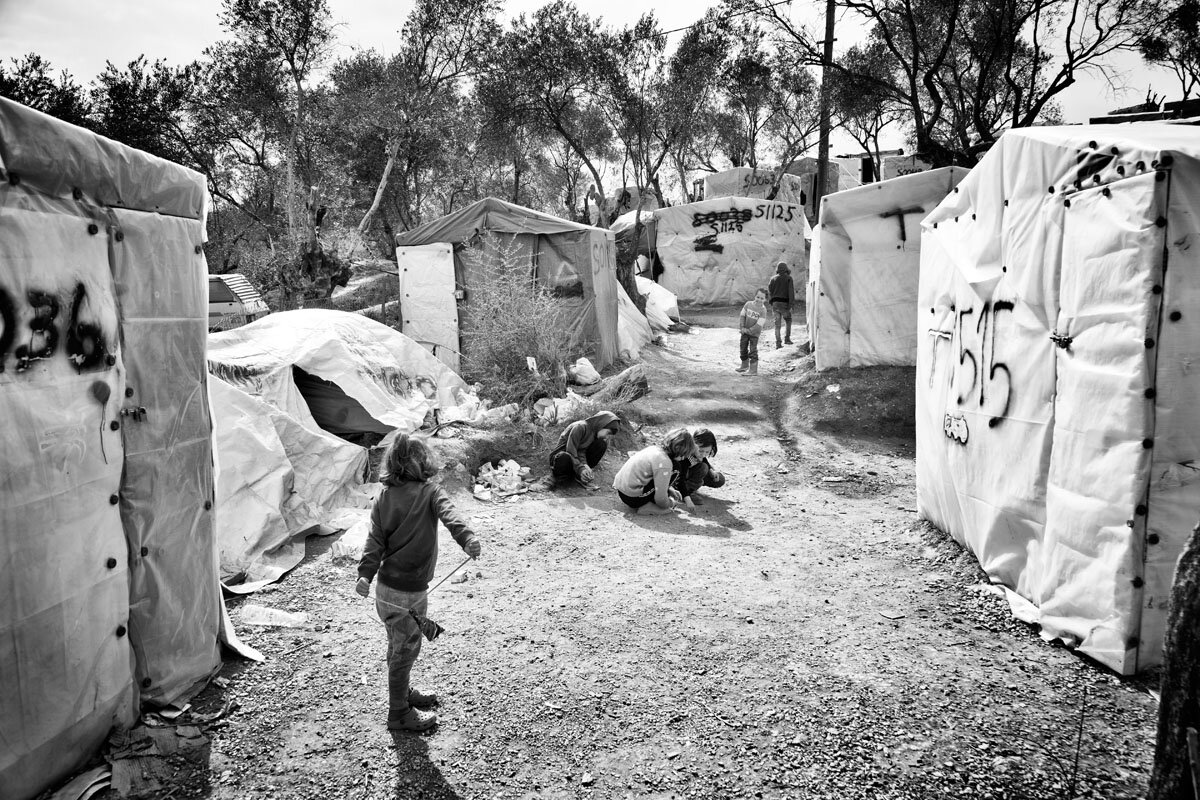
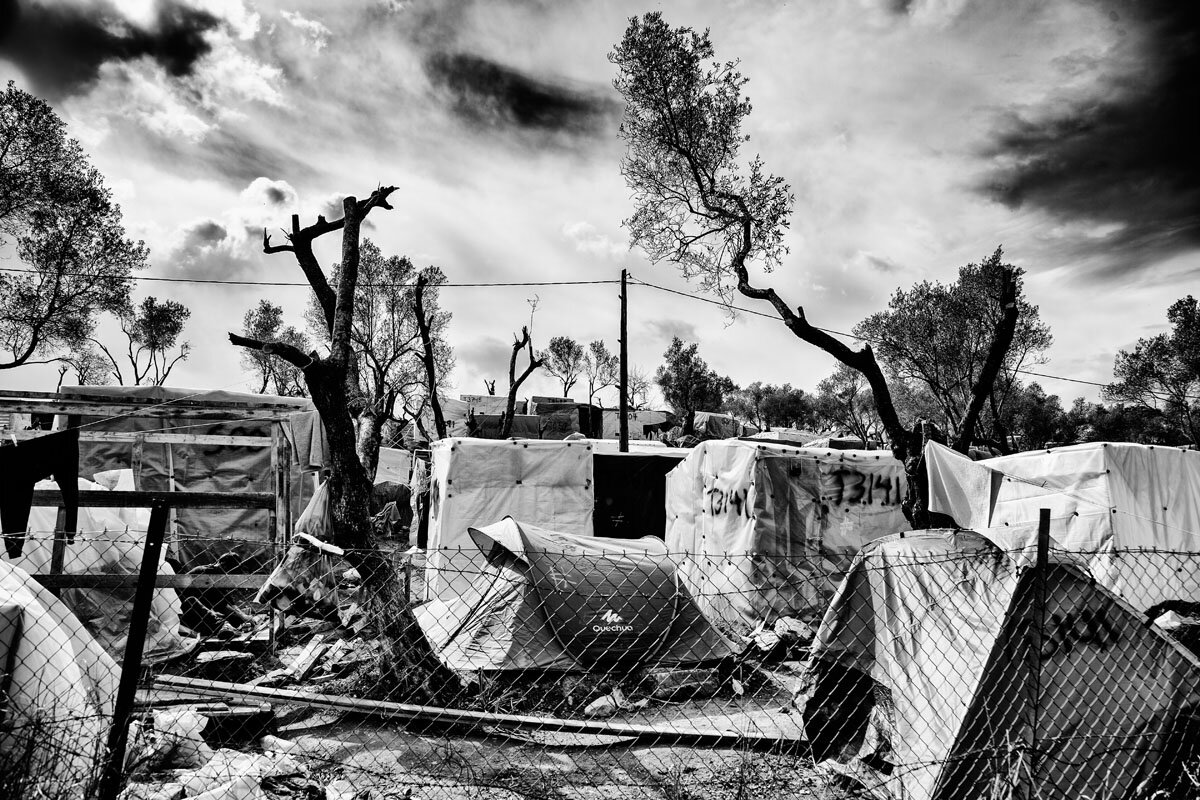
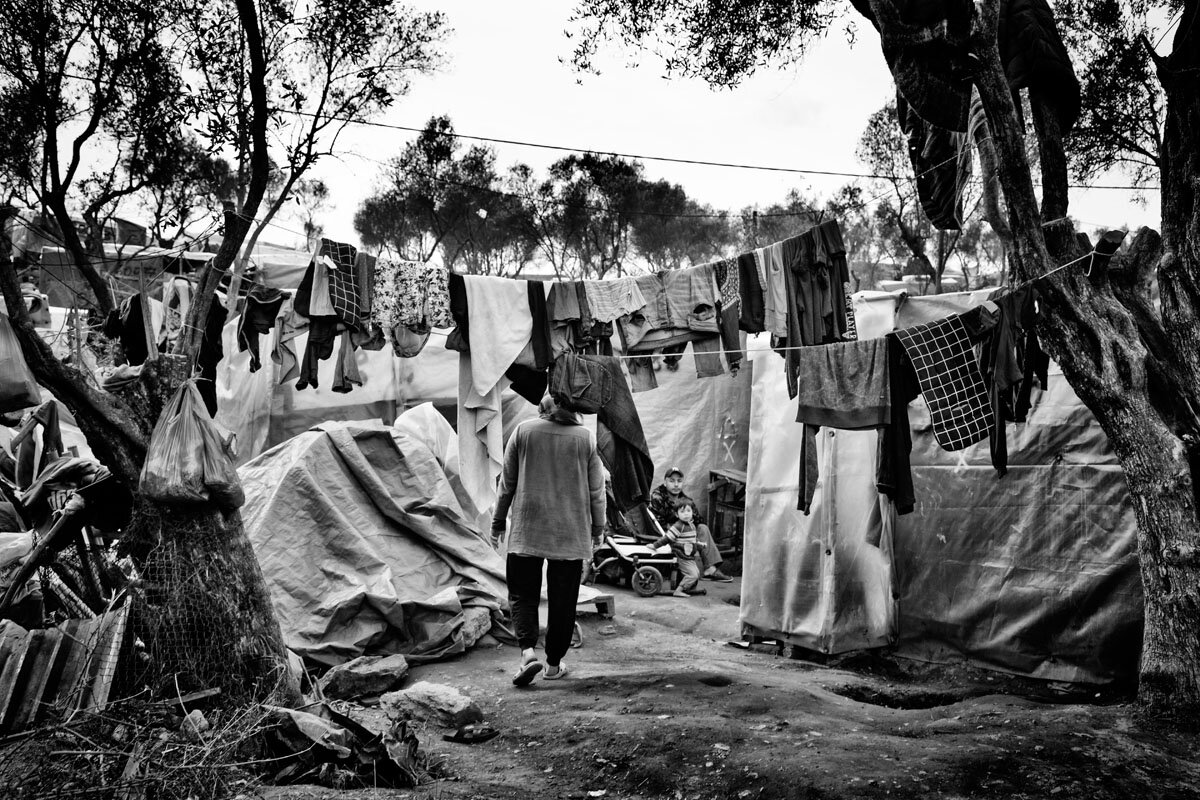
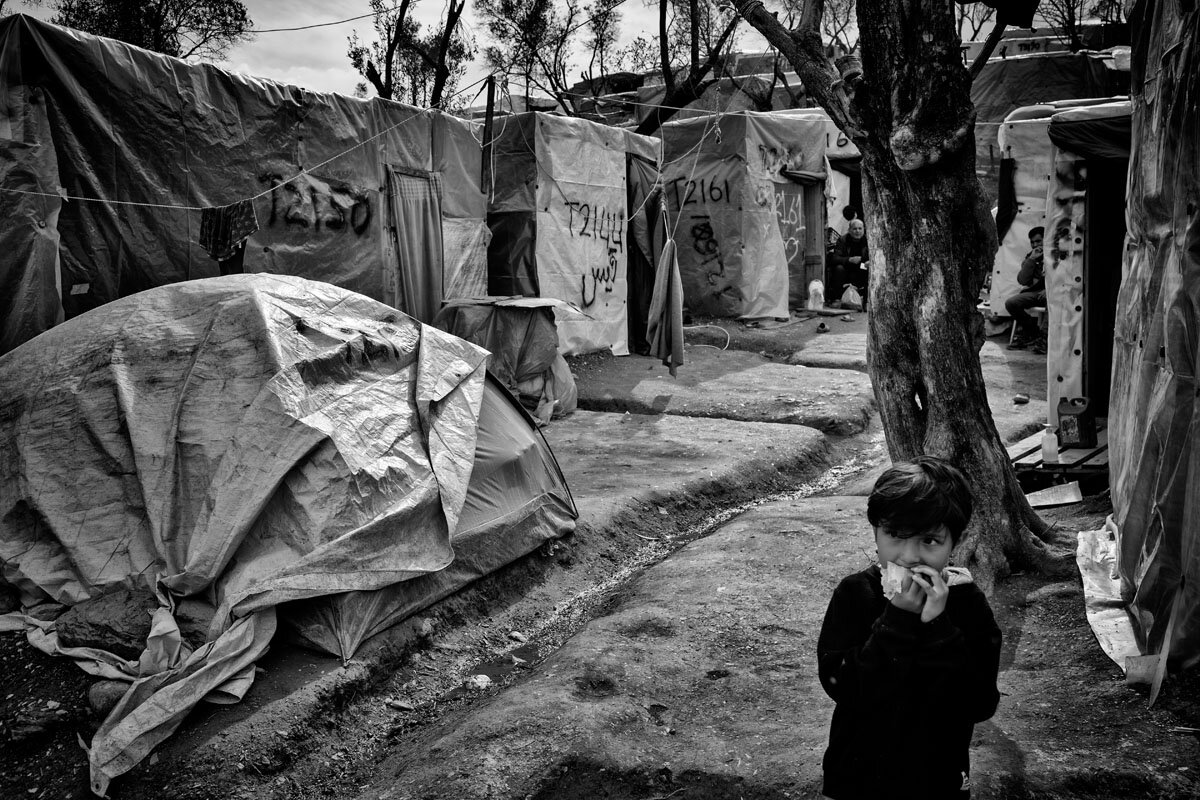
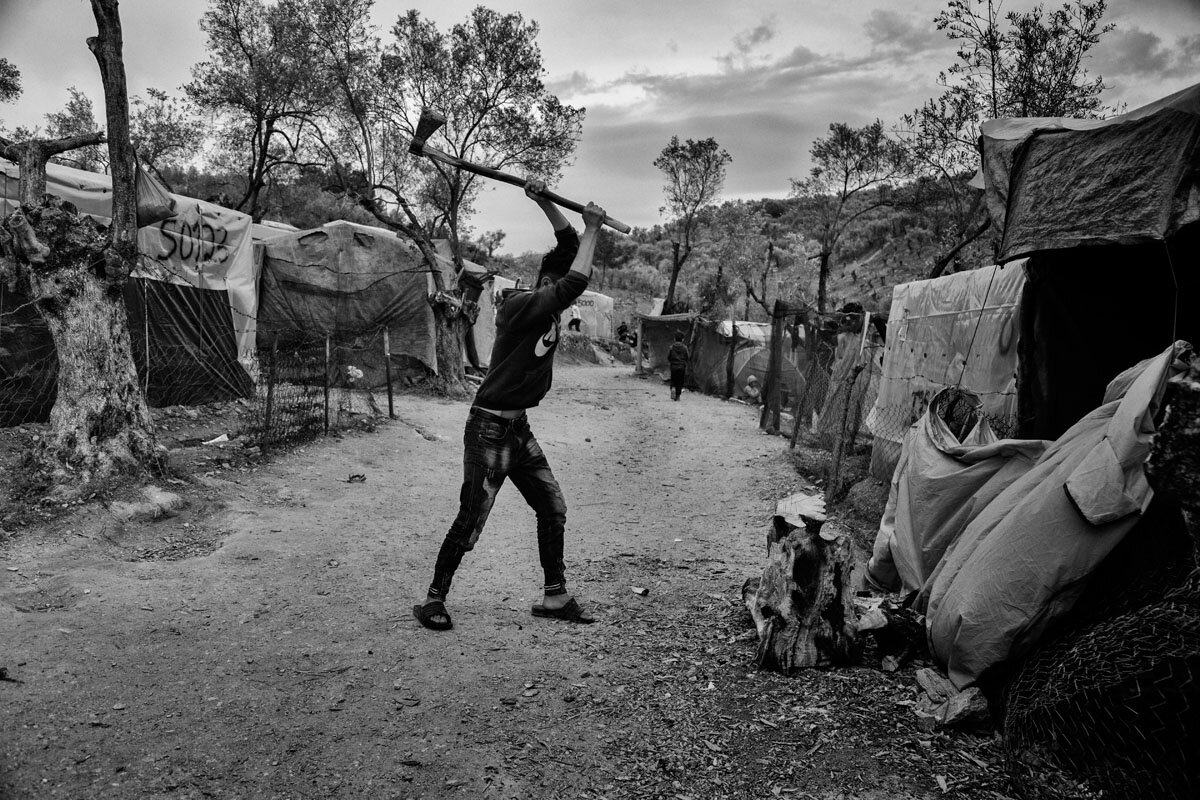
Refugee camp of Moria. Lesvos, Greece. 2020
The flight to Moria and the inability to relieve the pressure in my ears made me feel worse, and I had to take photographs for several days with barely any hearing.
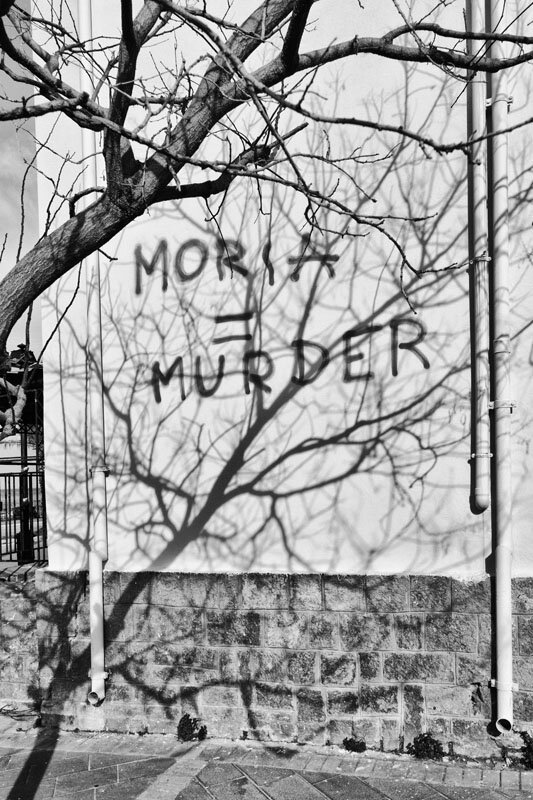
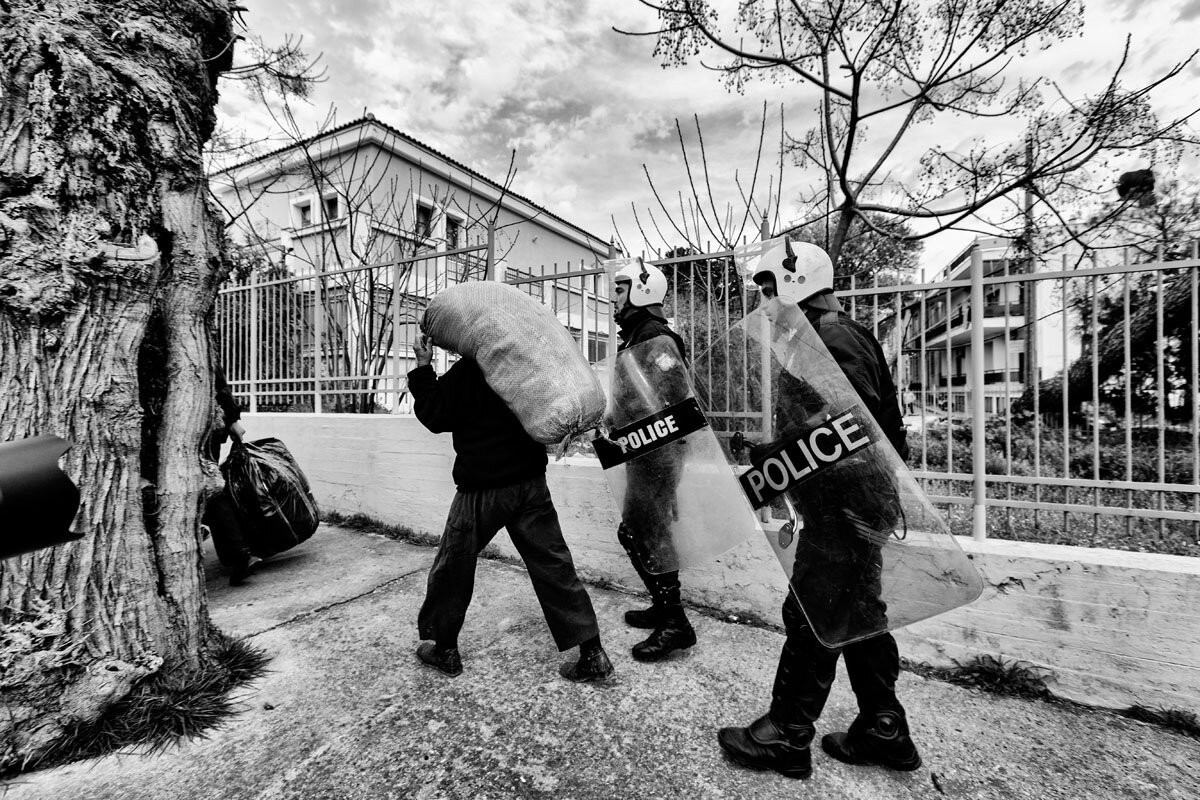
Mytilene was up in arms. Local far-right groups were harassing journalists and immigrants with excessive violence. They used baseball bats in their attacks and didn't ask questions, just smashing car windows and bodywork.
At the airport, it had been very difficult to convince the Hertz employee that the journalists there were tourists. Something slipped through, and he finally gave us the worst car he had on four wheels. Videos and photos of the car, inside, outside, and underneath. Car rental companies in Greece charge you for everything, and if you leave without them signing the return receipt with everything in order, you're screwed. A month later, you'll get a "gift" of 200 euros or more for something you didn't do but that they've made up. Visa cards were a thing of the past; now they demanded gold bars as a deposit or more than 1,000 euros in cash, knowing that they were vandalizing press cars.
On March 4th, the hotels in Mytilene were fully booked, overflowing with journalists. To get to Moria, you had to travel by vehicle.
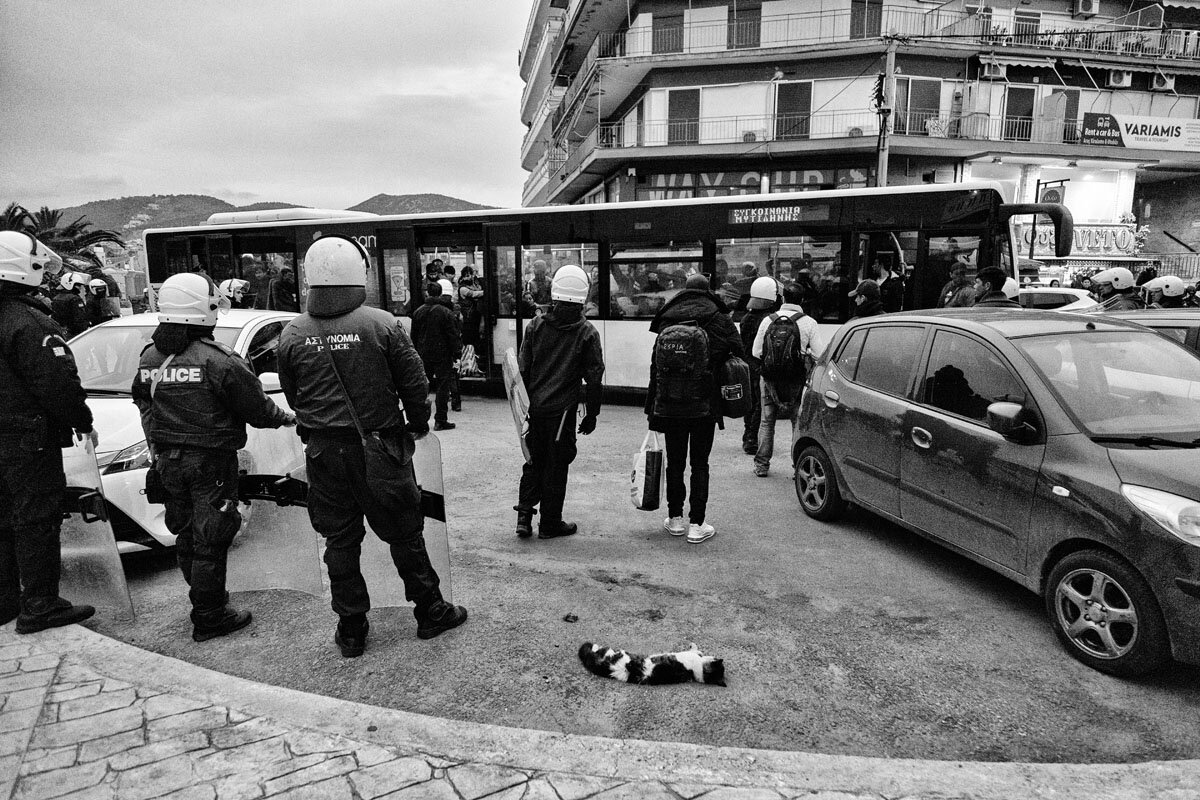
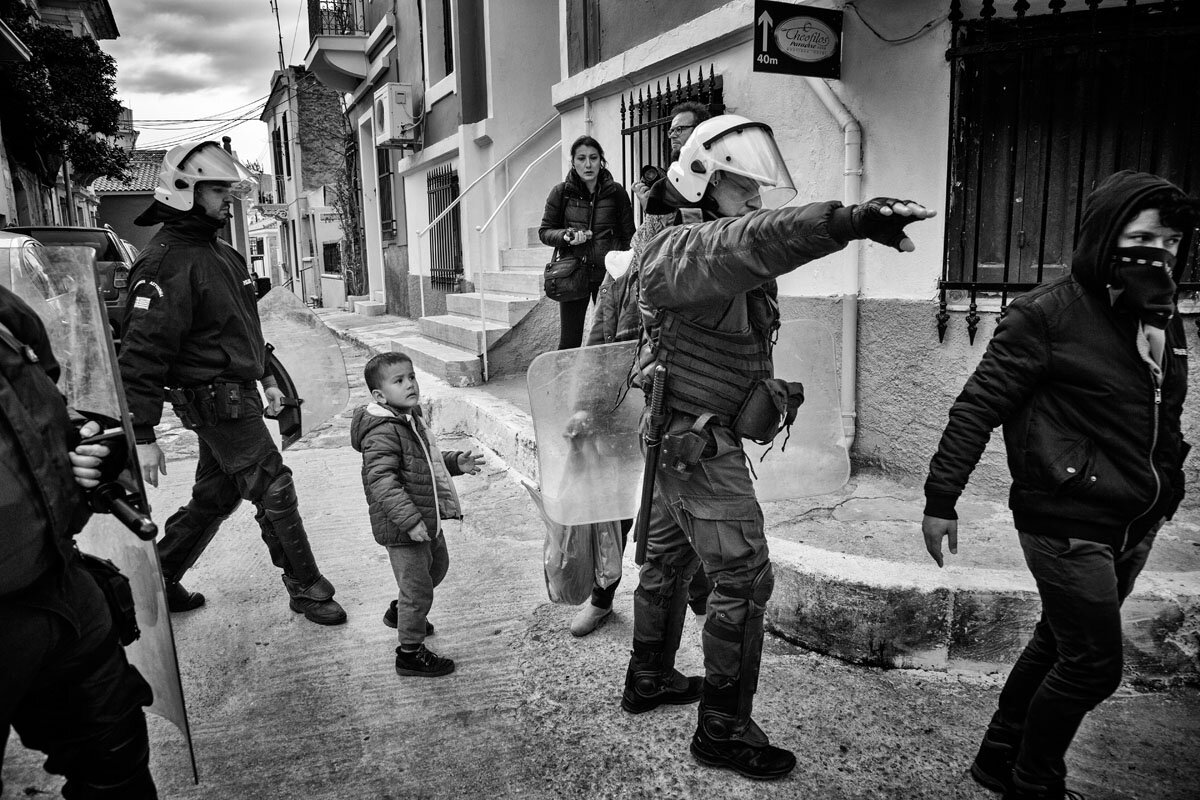
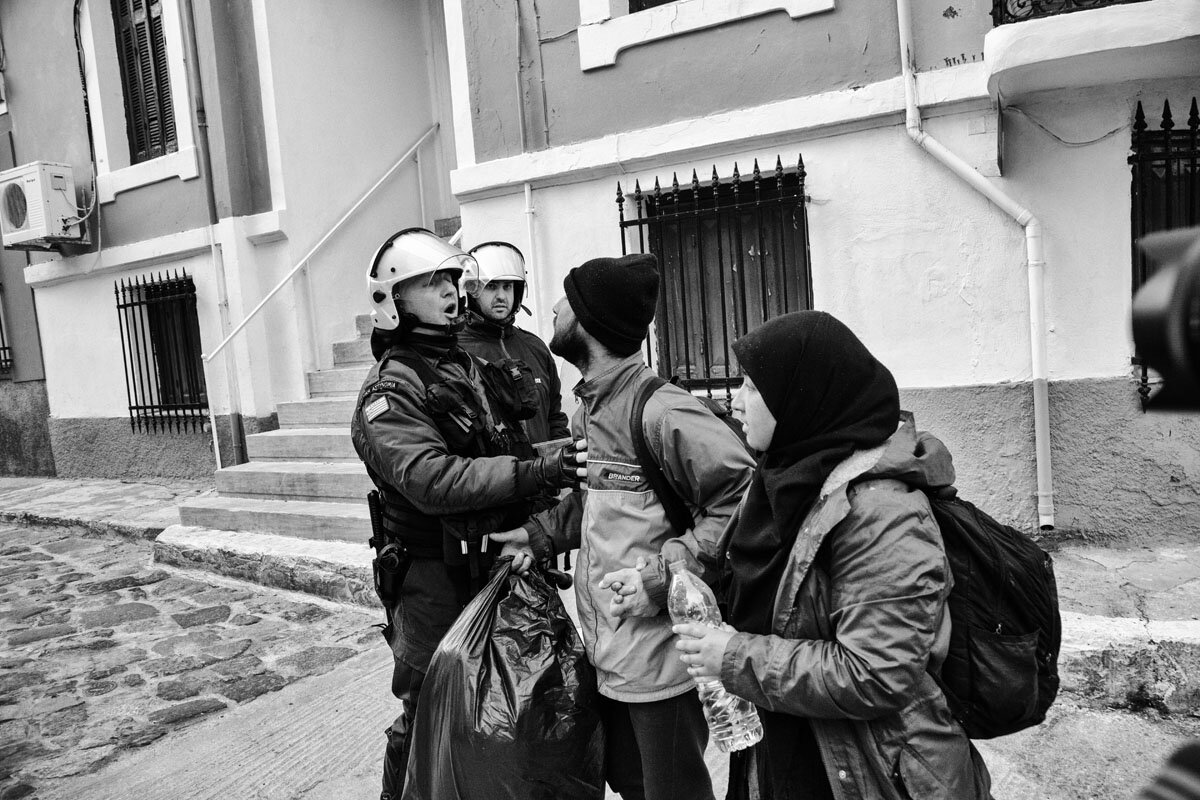
Greek police prevent a refugee protest in Mytilene, on the island of Lesbos, Greece, March 2020.
Hibai Arbide Aza became a resident of the island of Lesbos. A journalist committed to immigration issues, he published "Up to Our Necks in Water" (Capitán Swing, 2025) in 2025 and was a great host, explaining which places to cover, warnings, where to eat, and the people involved. We had our last dinner with a group of journalists, translators, doctors, and NGO staff. It was a typical dinner, the complete opposite of the usual nights in Osijek. No one held sway over anyone else, and it wasn't a tribal setting.
The next morning, I went to the WAY CUP; the sun was already strong, the streets were crowded, and the coffee was so good I ordered another one. The television was showing news from Lesbos, and I overheard some whispers among the customers: "Look, I'm on TV." We drove to Moria, stopping along the way to photograph NGOs that had been threatened the day before and forced to leave.
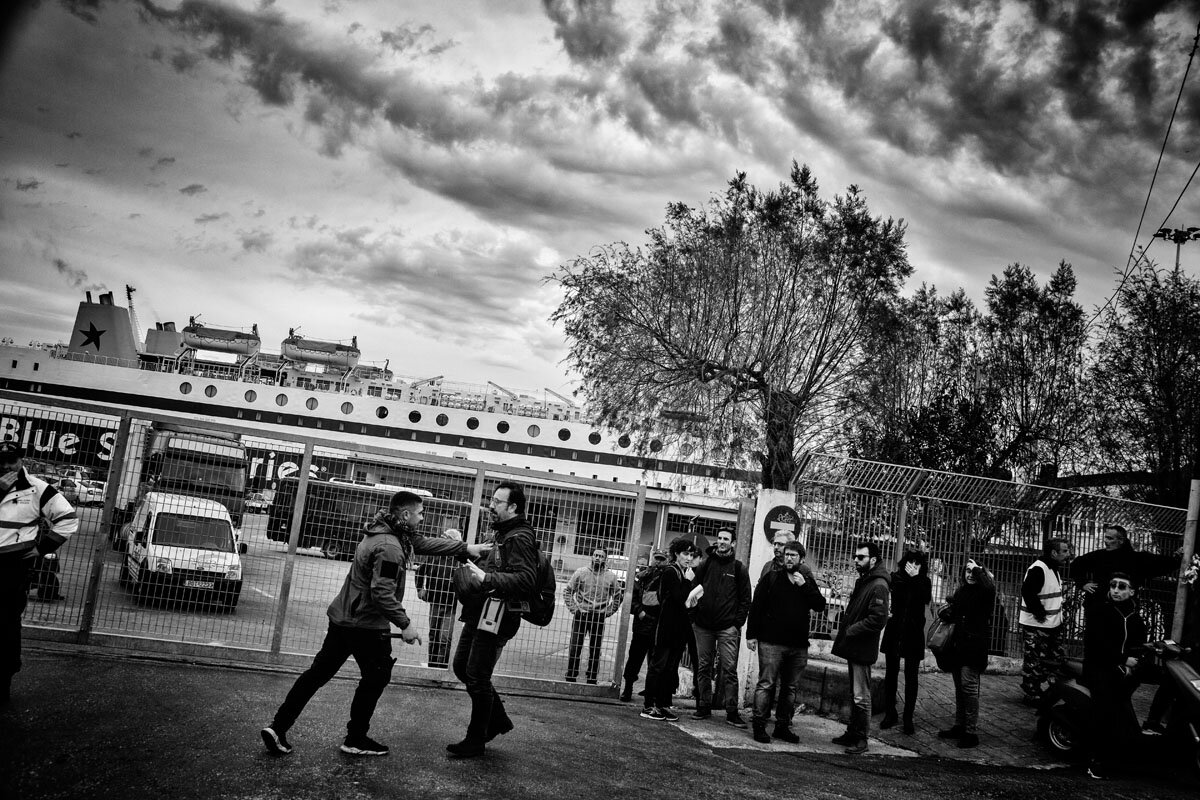
At WAY CUP or Ouzo Veto, they serve exquisite coffee; I need three or four a day, but they don't serve immigrants, which I find appalling. Across the street is where the immigrants used to gather to board the bus to Moria or try to enter the port, hoping to catch "the big ship that takes people to the mainland."
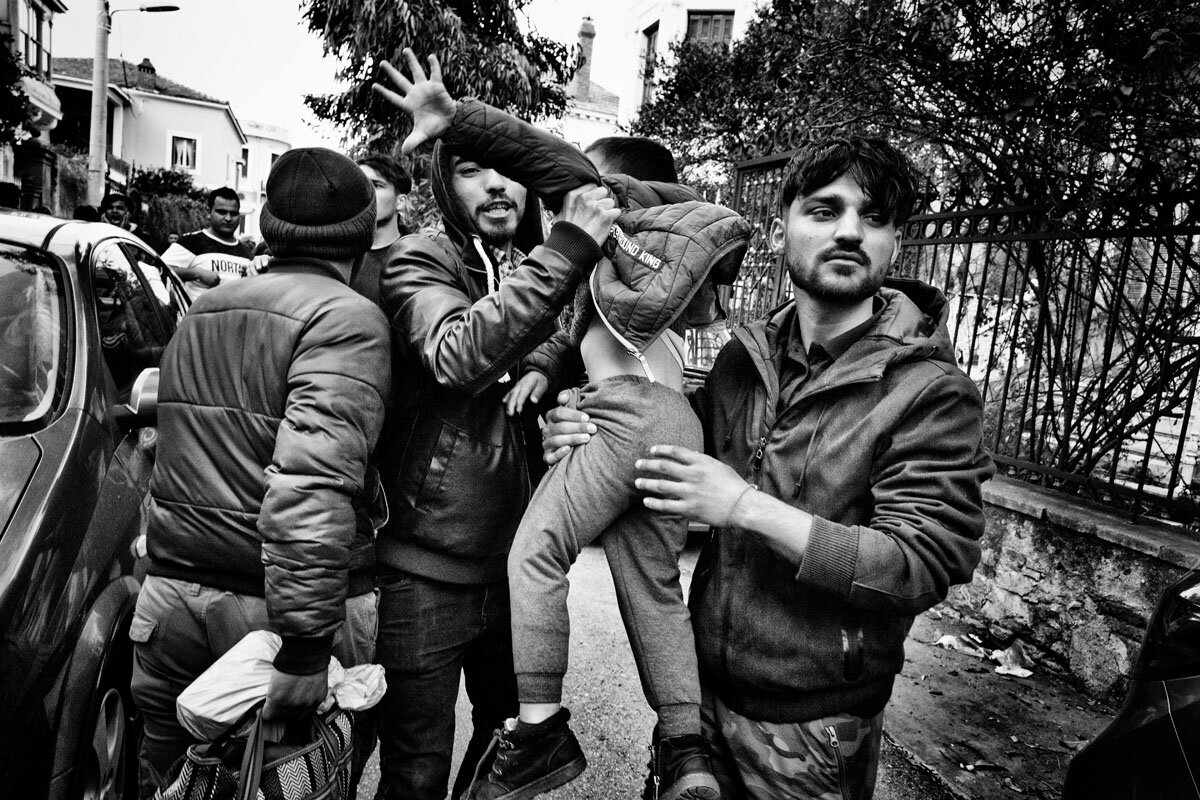
The police were always overworked in the afternoons. Someone would raise the alarm in the refugee camp, claiming that the "big ship" would be taking 100 or more immigrants. From Moria, dozens of people would arrive on foot or by taxi, gather together, and then the police would intervene, telling them they couldn't be there or enter without a ticket.
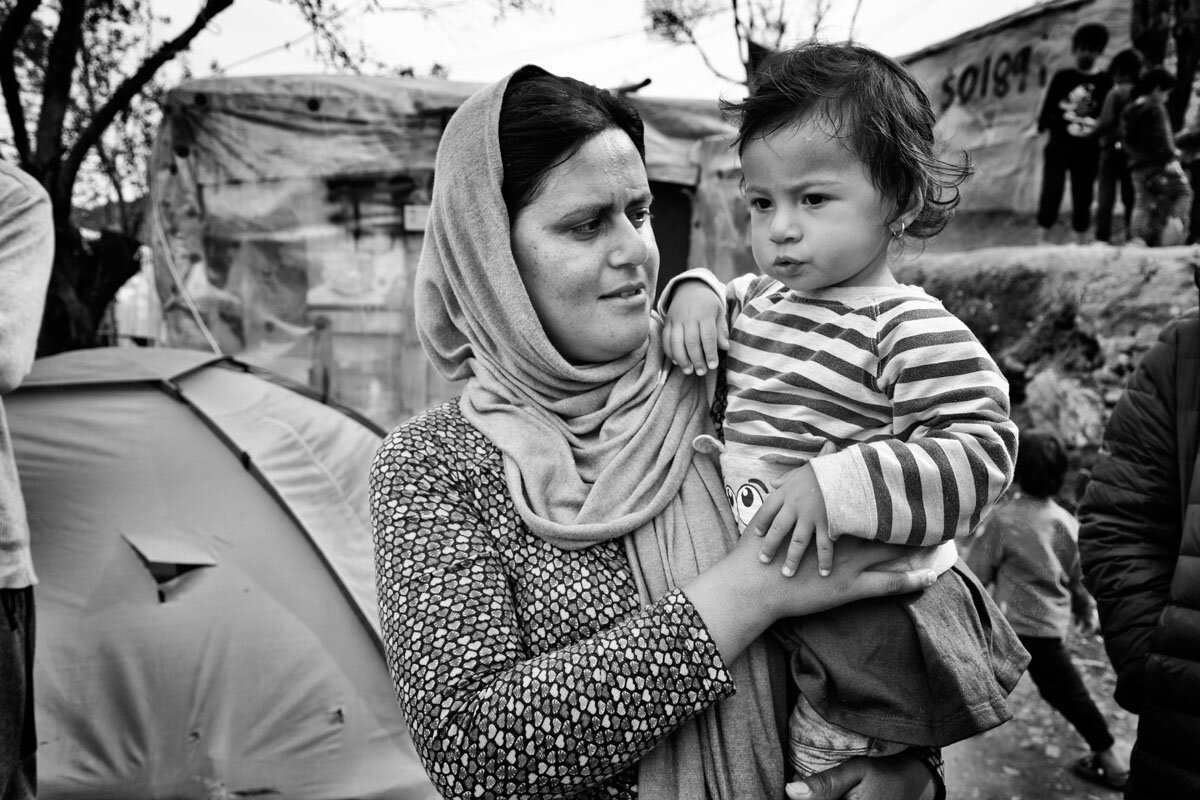
The scenes were inhumane: fathers and mothers with children and elderly people crying desperately to get into the port. For them, it's just another stage in their journey since leaving their countries, fleeing war, death threats, and hunger. This created traumatic situations for all of them, and I wonder what became of their lives, if they found a place where they could try to rebuild their families. There are so many questions that leave no one with even a shred of humanity unmoved.
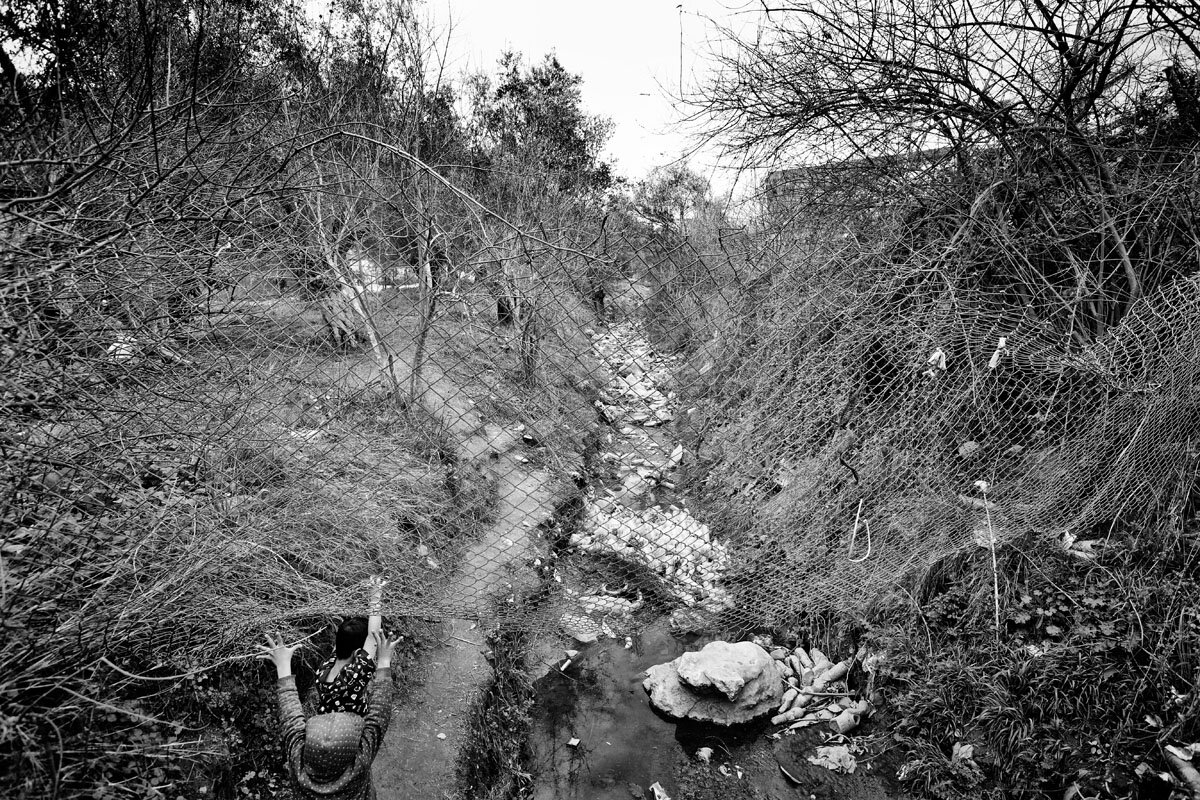
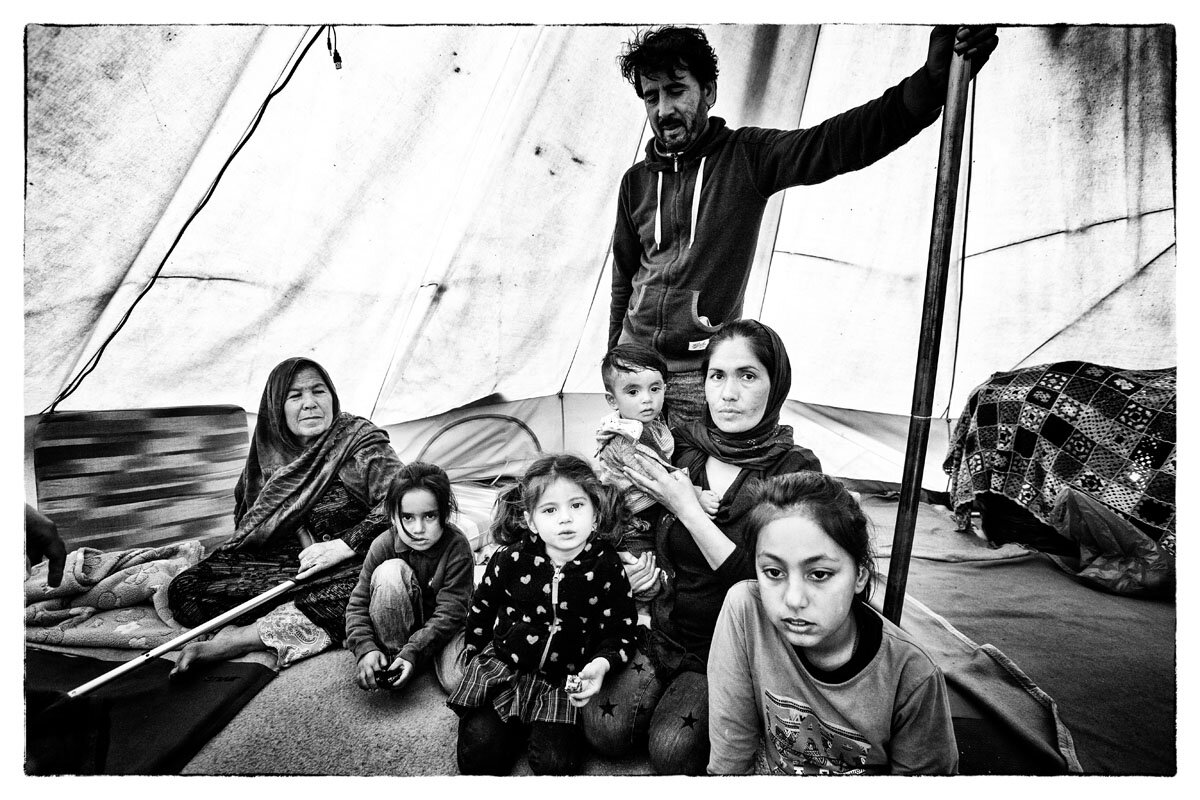
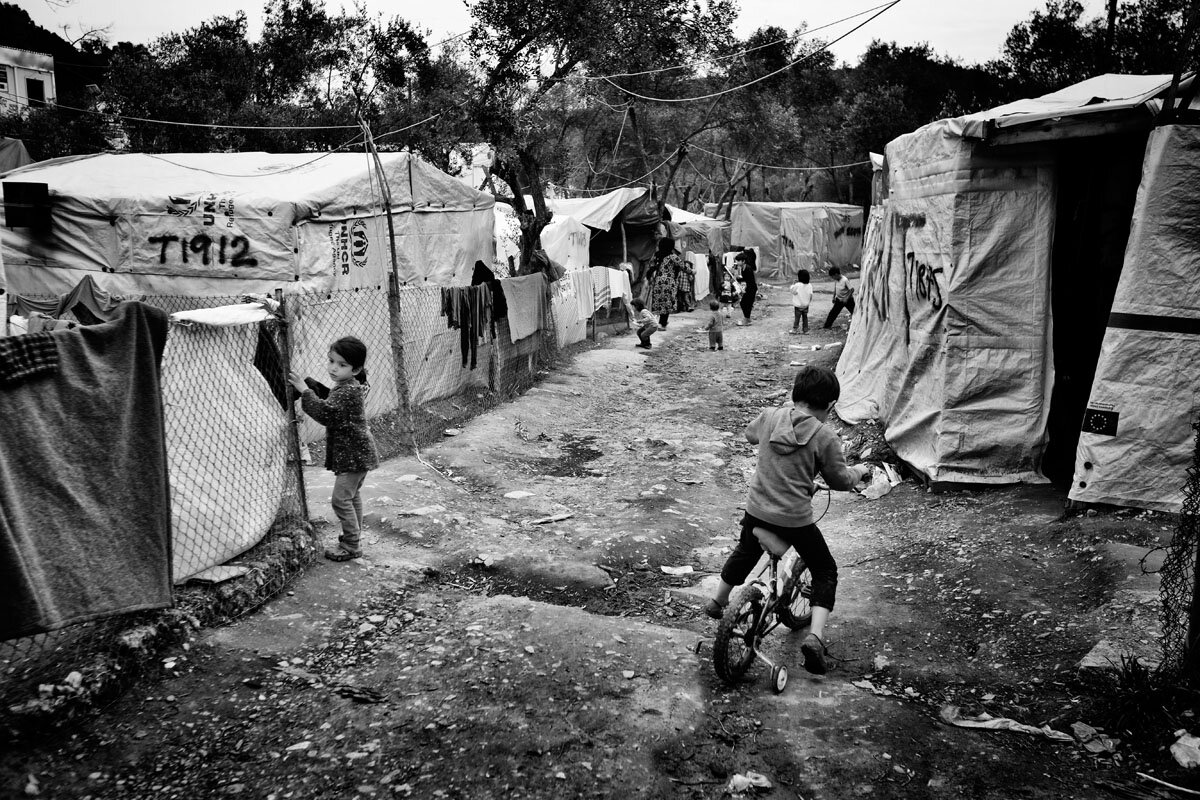
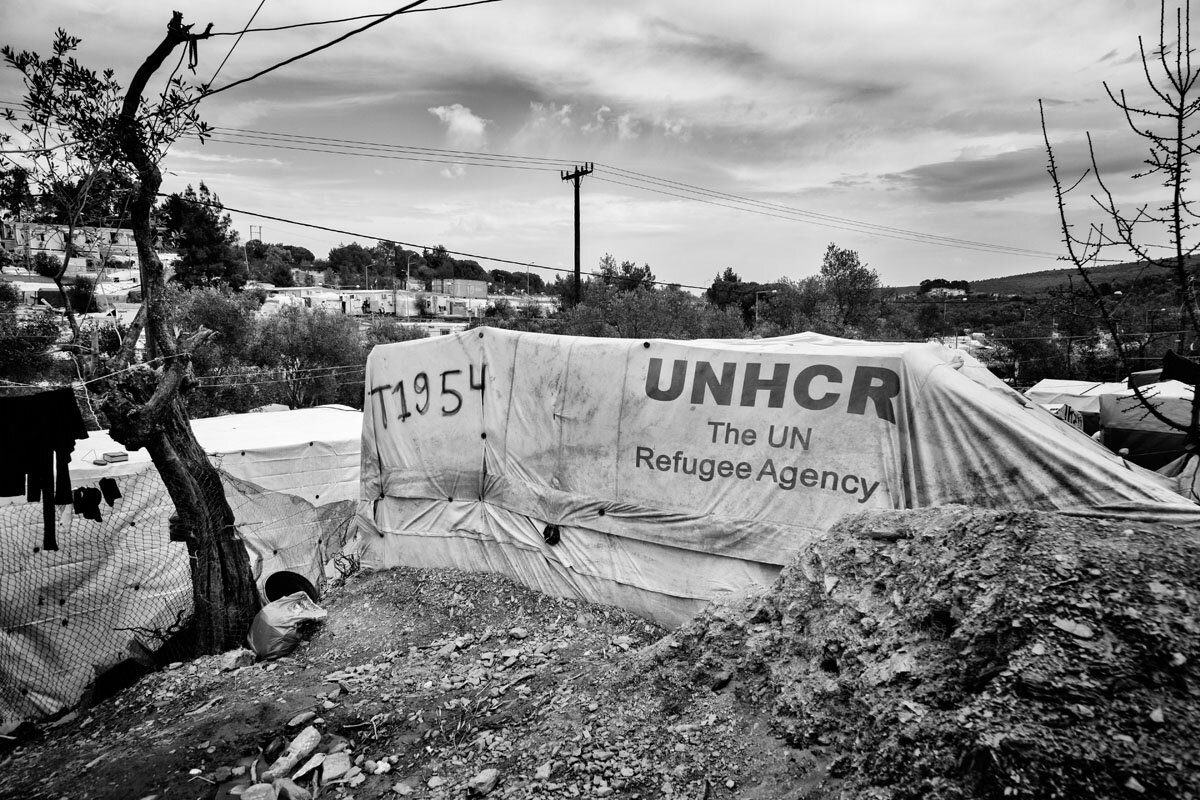
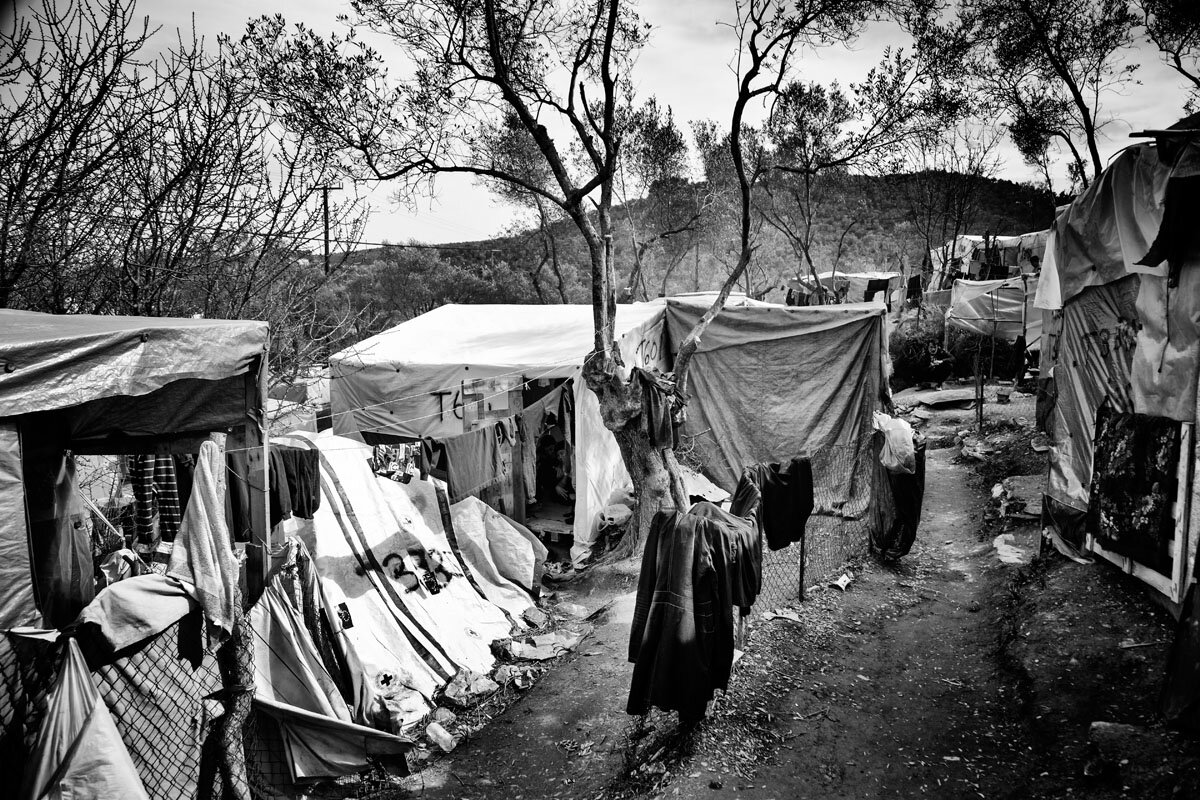
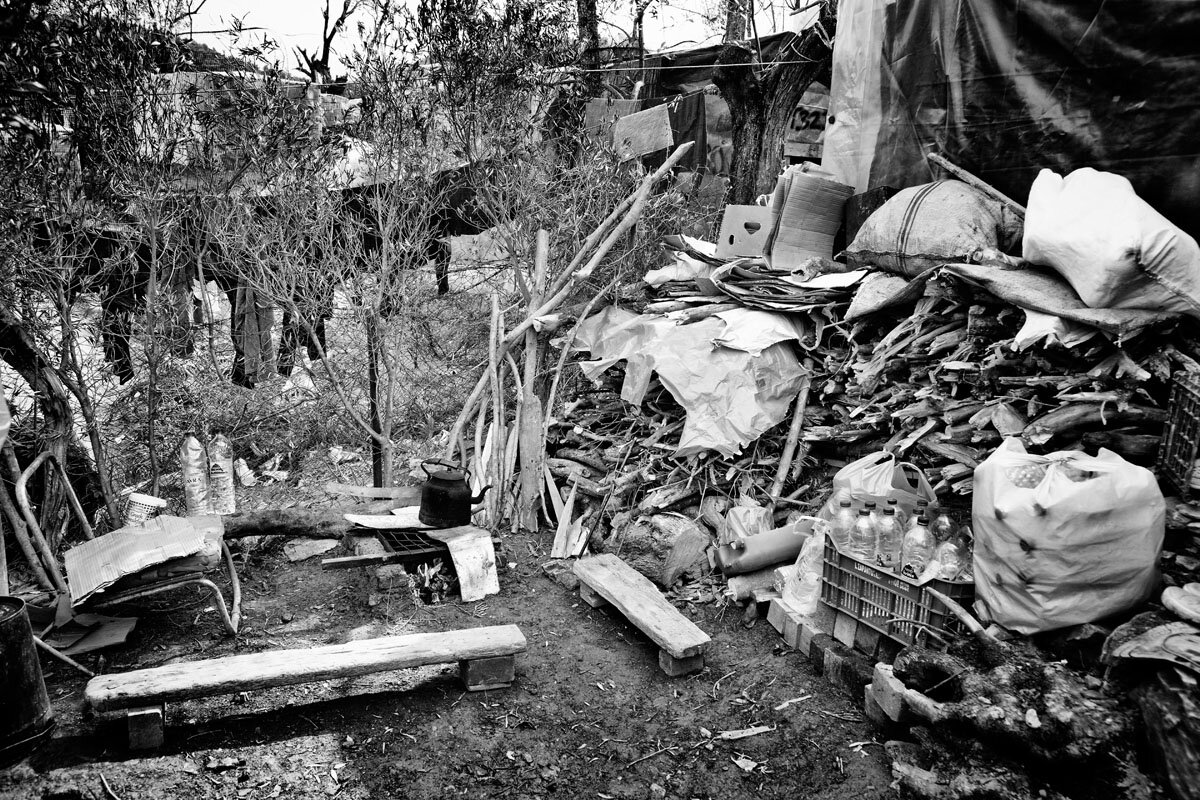
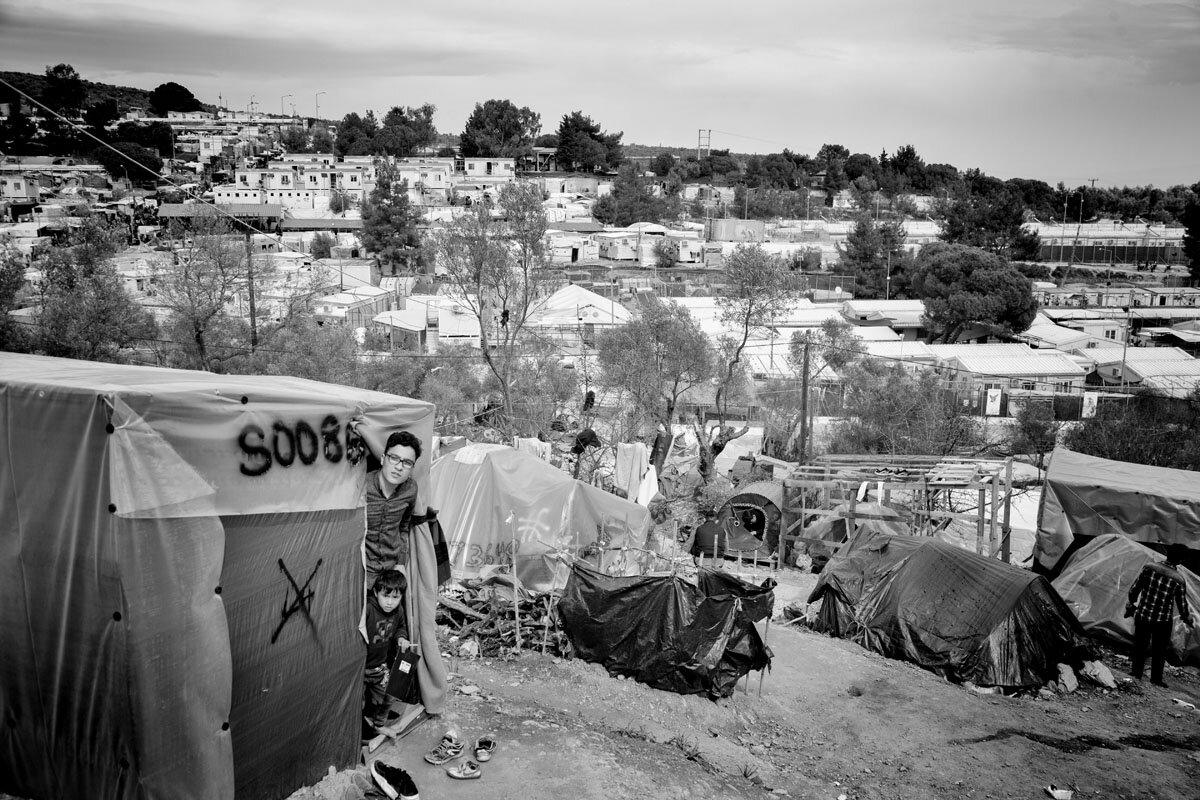
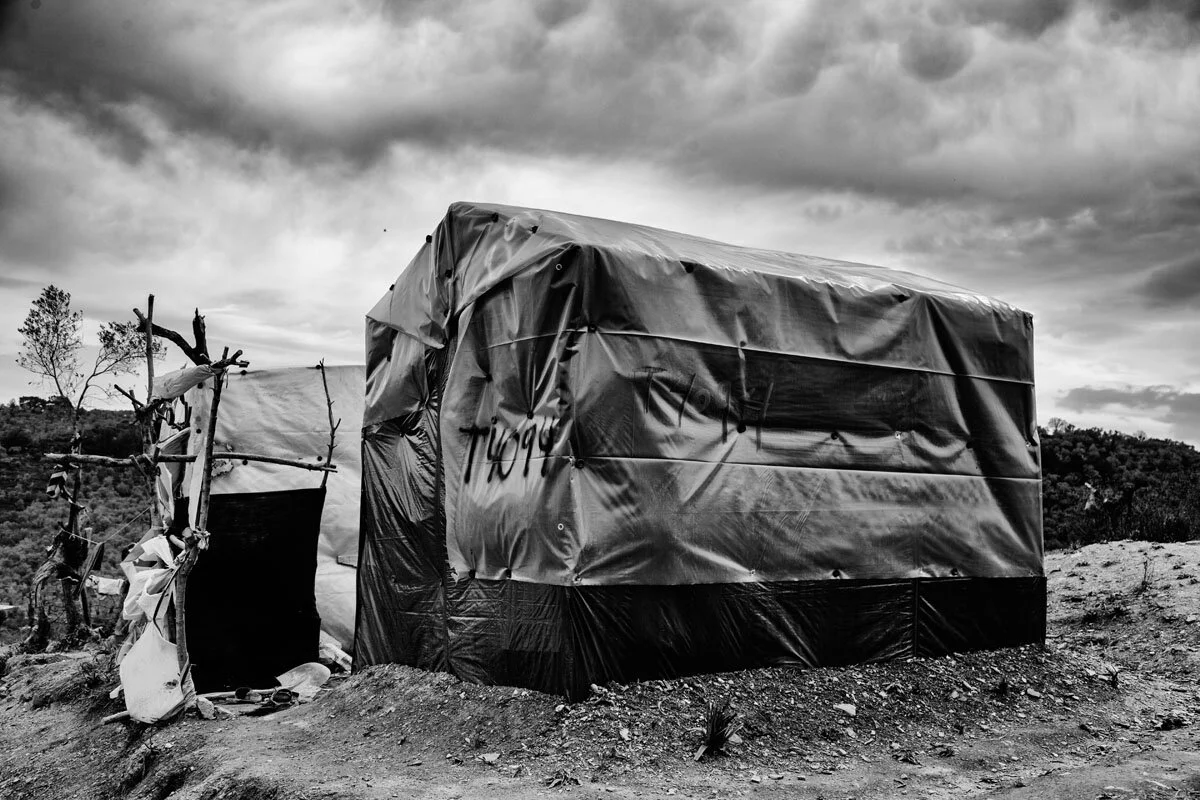
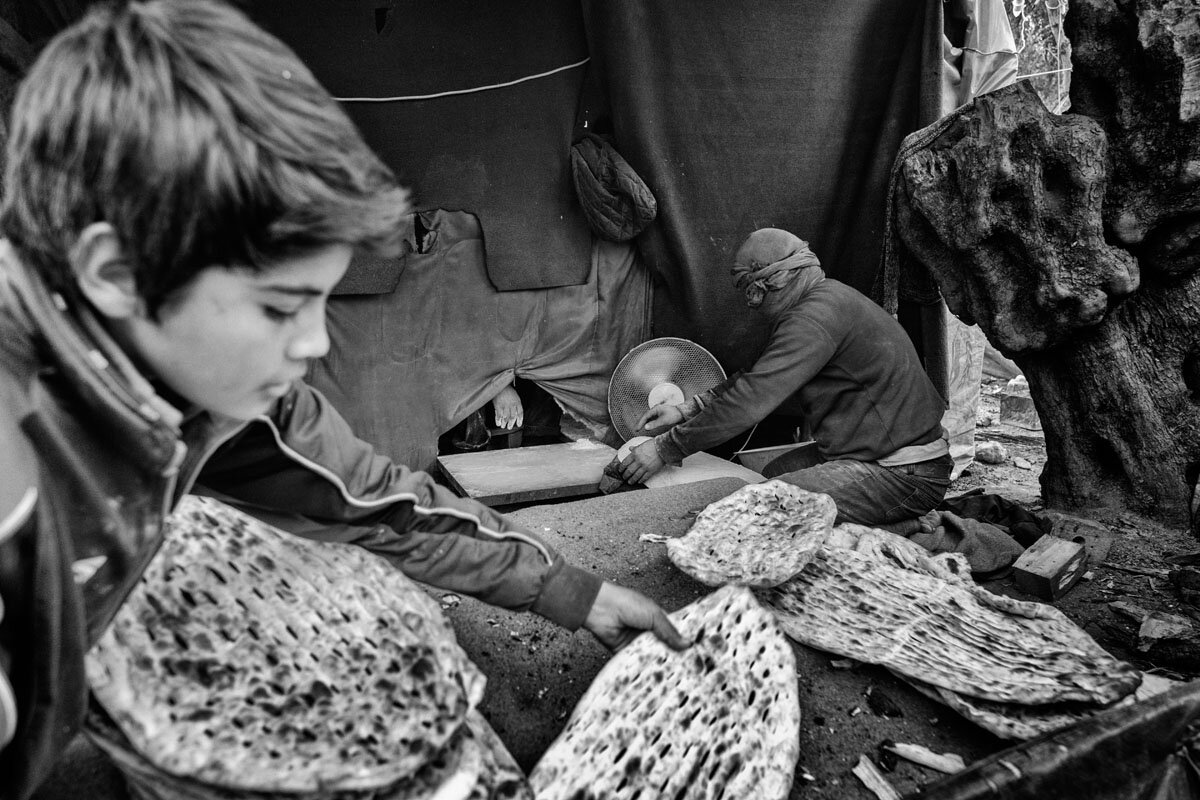
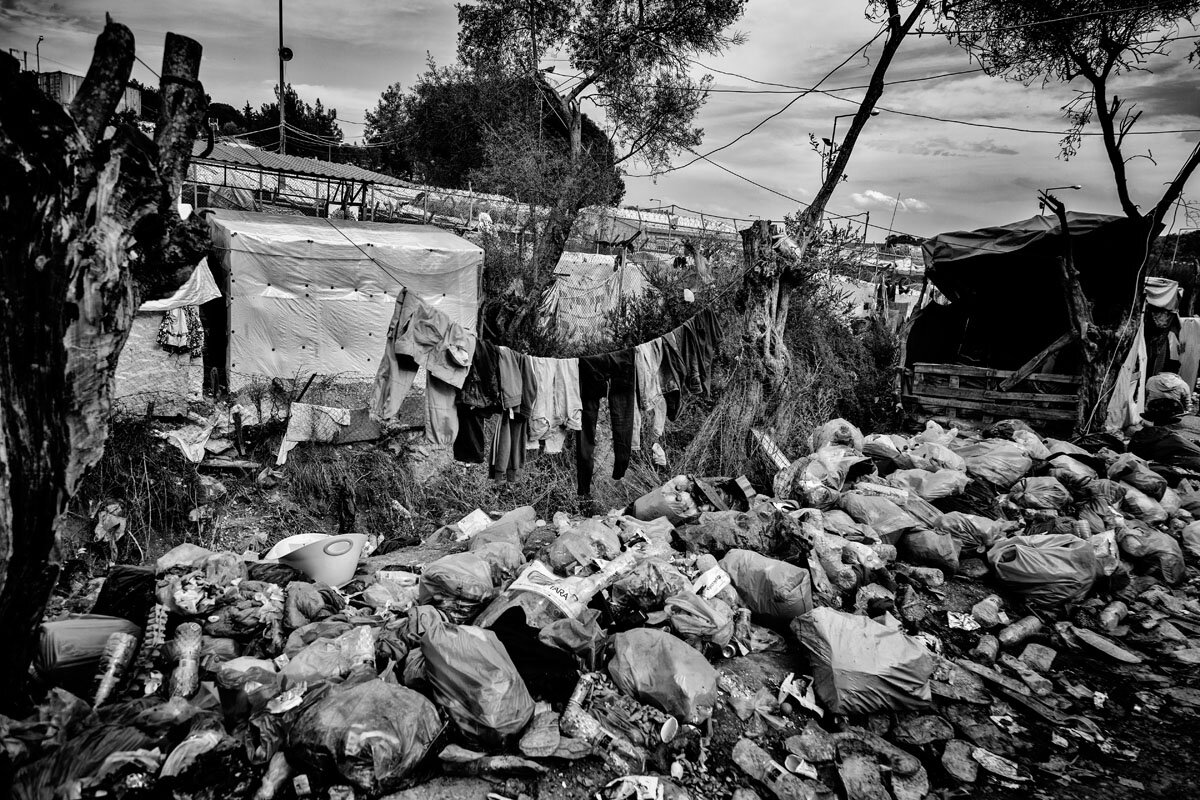
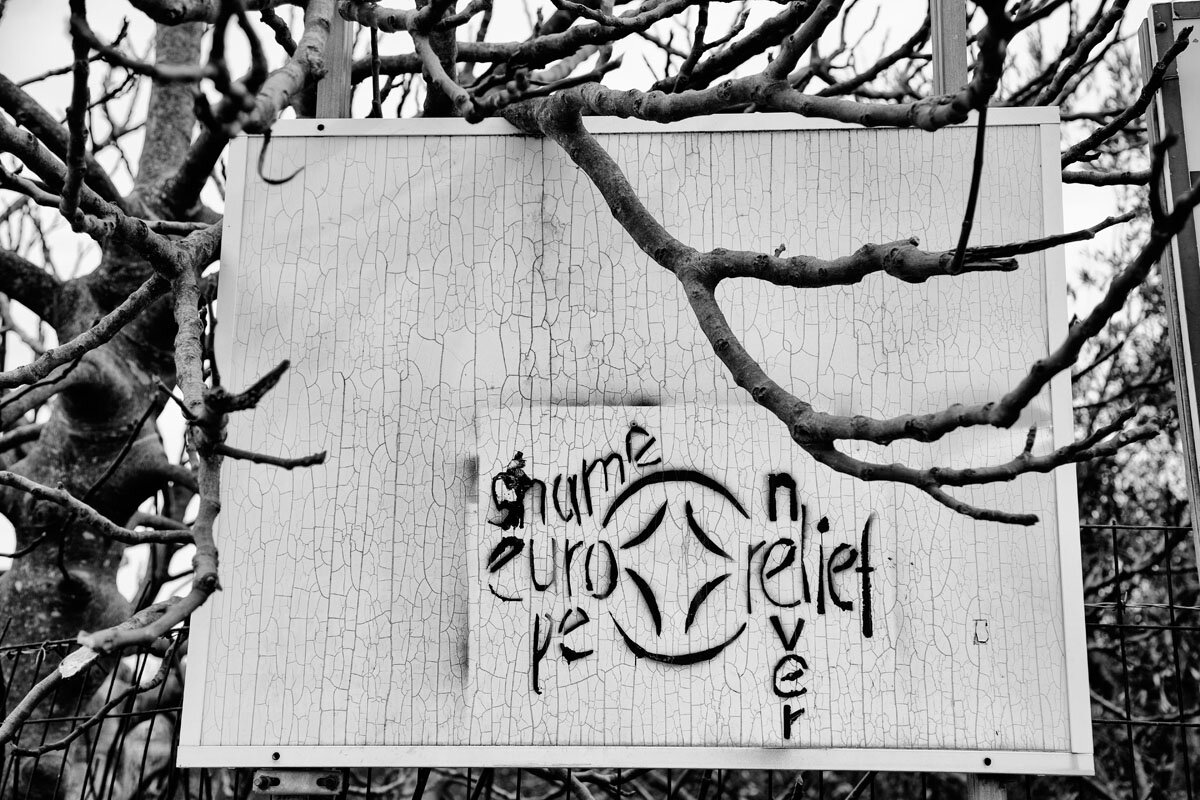
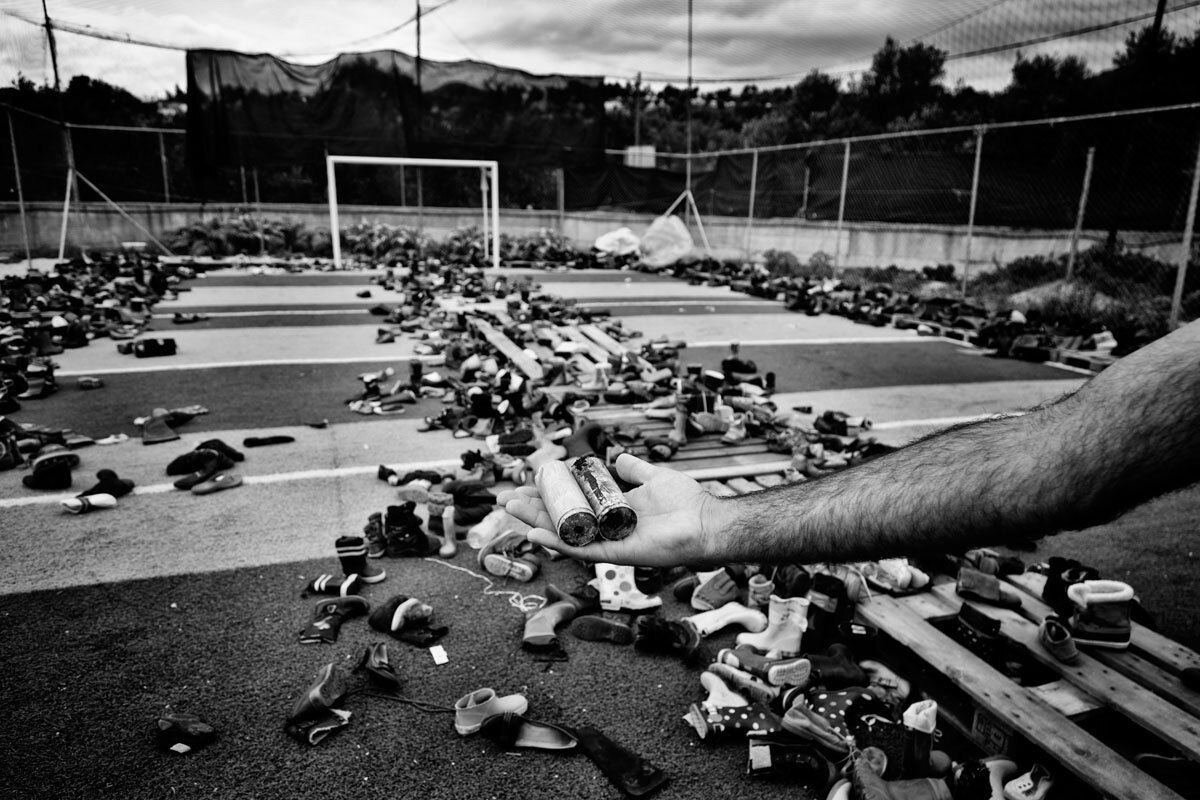
In the refugee camp, it was possible to enter by showing a press pass, but I, like some other colleagues, didn't like being given tours of the entire camp and preferred to go on our own, discovering situations, life stories, and children playing hide-and-seek among the trees. It was clear that the camp itself had its own rules and norms of coexistence. Most of the structures that housed entire families were made of planks, cardboard, and tin. And it felt cramped. From a high vantage point, you could see the vastness of the place, overcrowded, without water or sanitation, forgotten by some god and by Europe.
How wretched can human beings sink, no matter how much journalists like Hibai or Ane Irazabal shout themselves hoarse in their daily reports denouncing the situation of helplessness and inhuman abandonment? I think of the families who opened the doors of their humble homes to me.