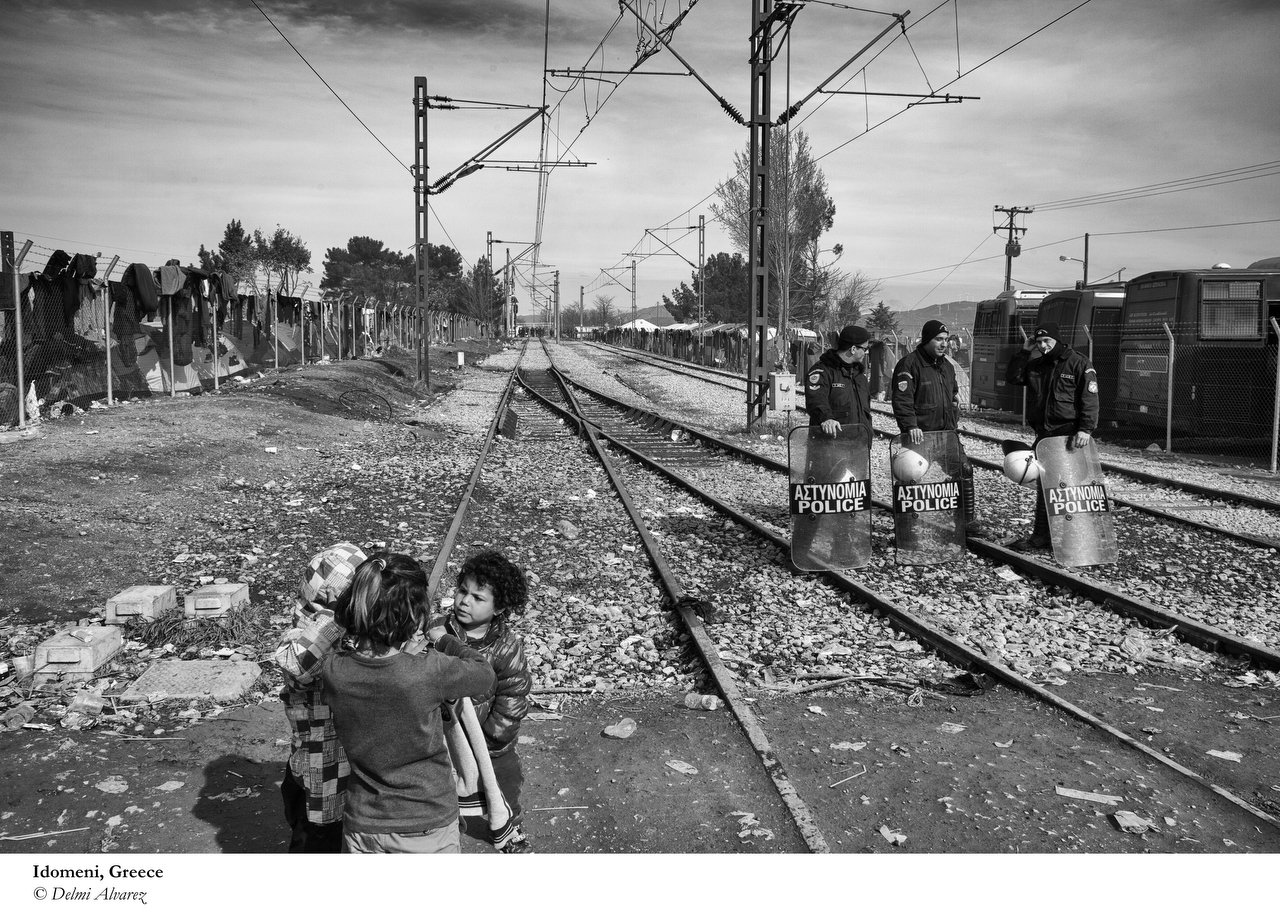
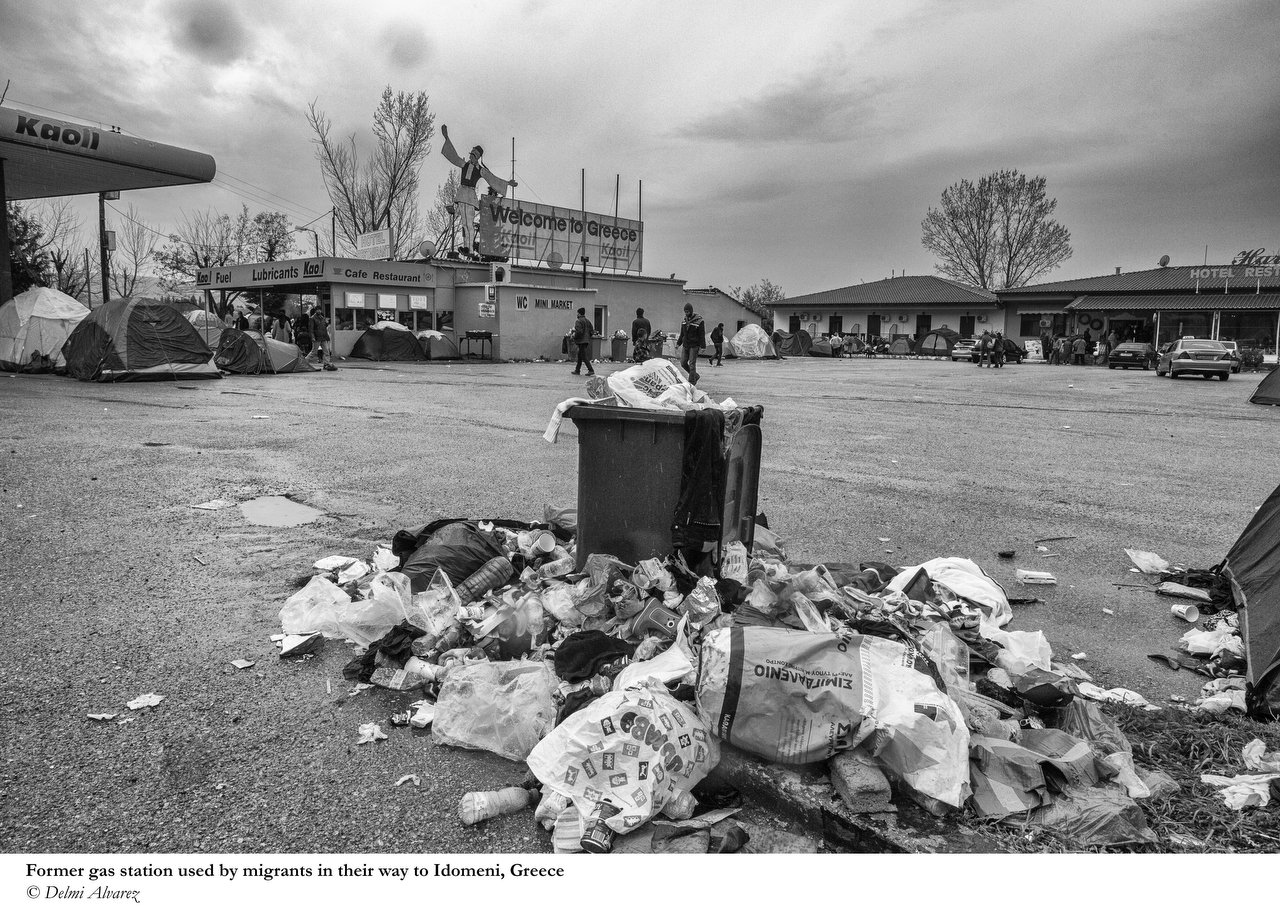
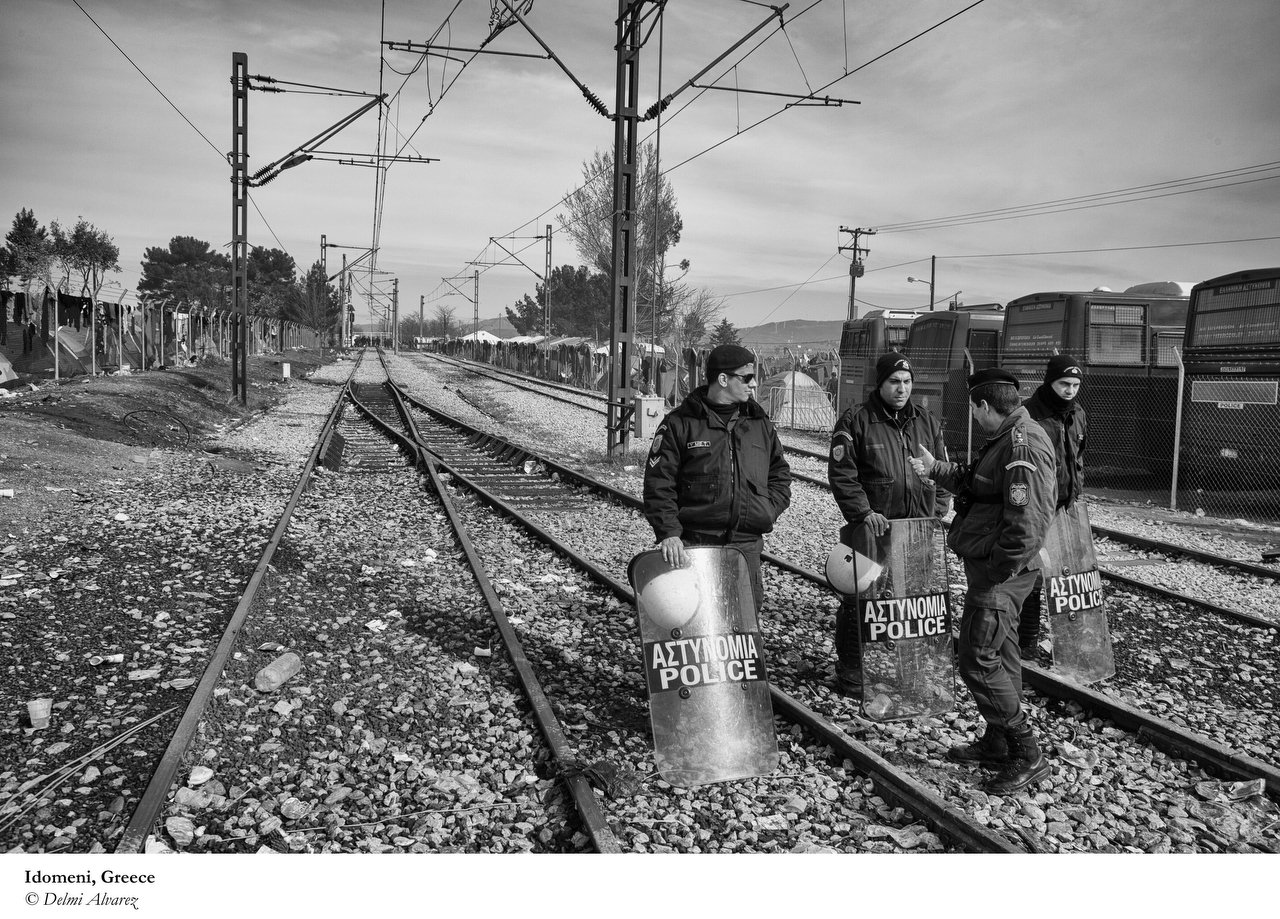
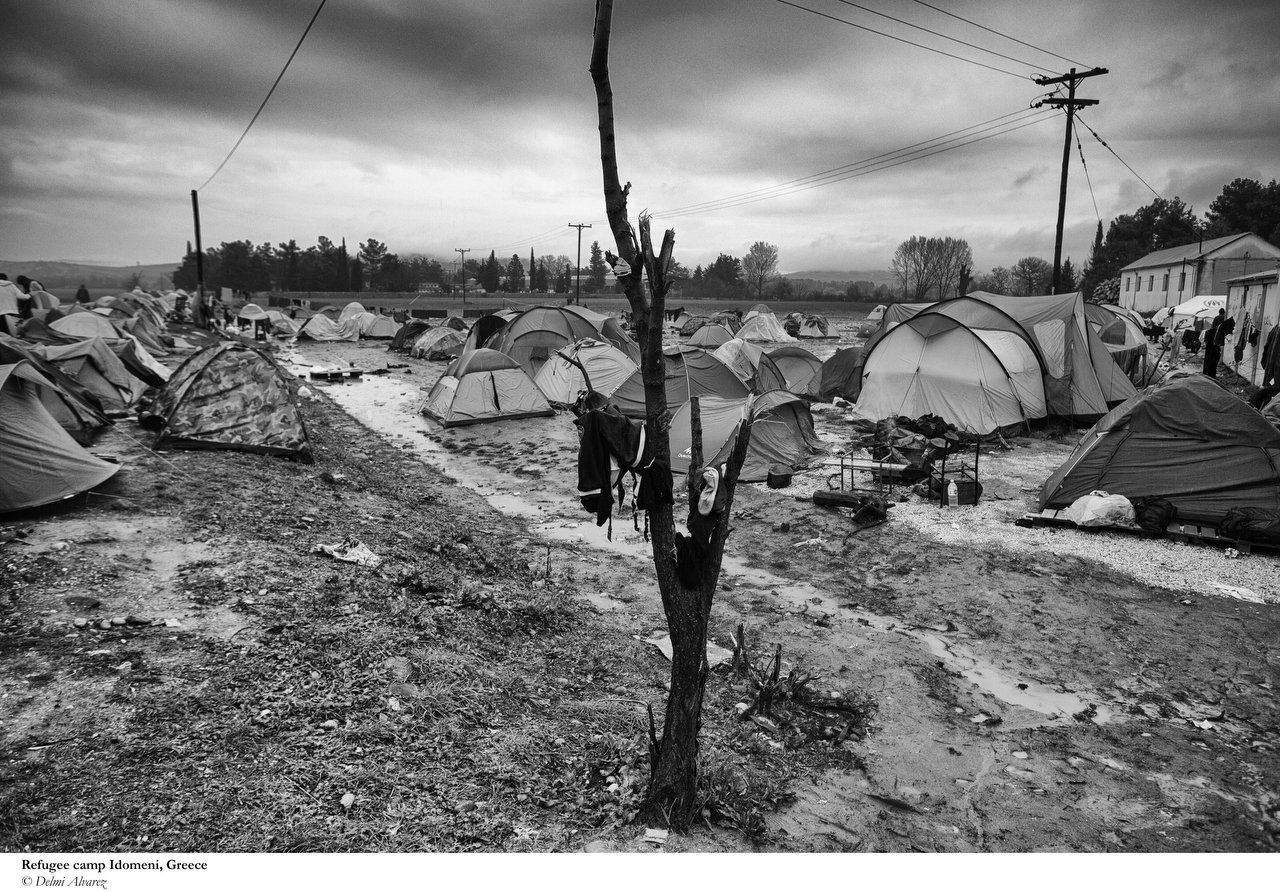
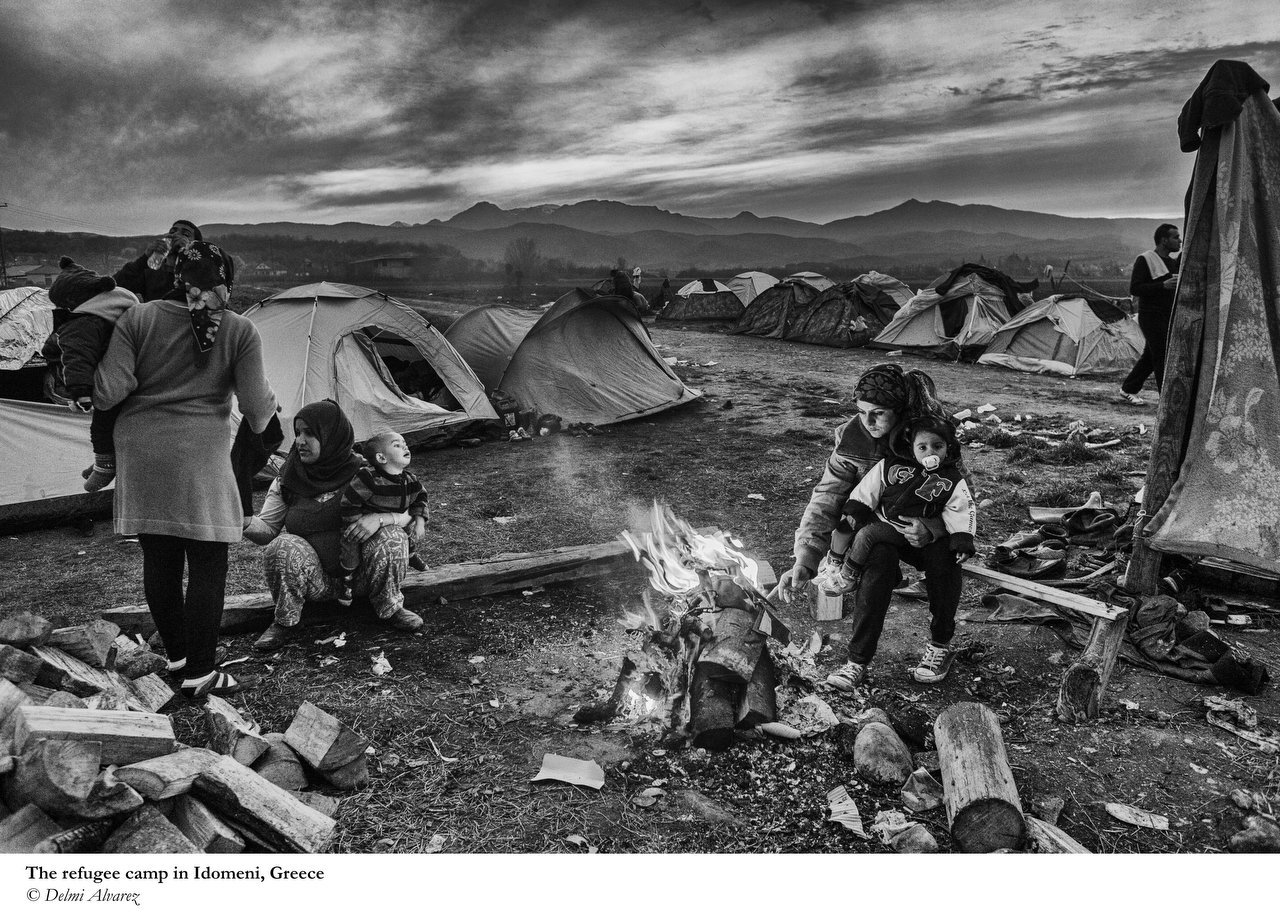
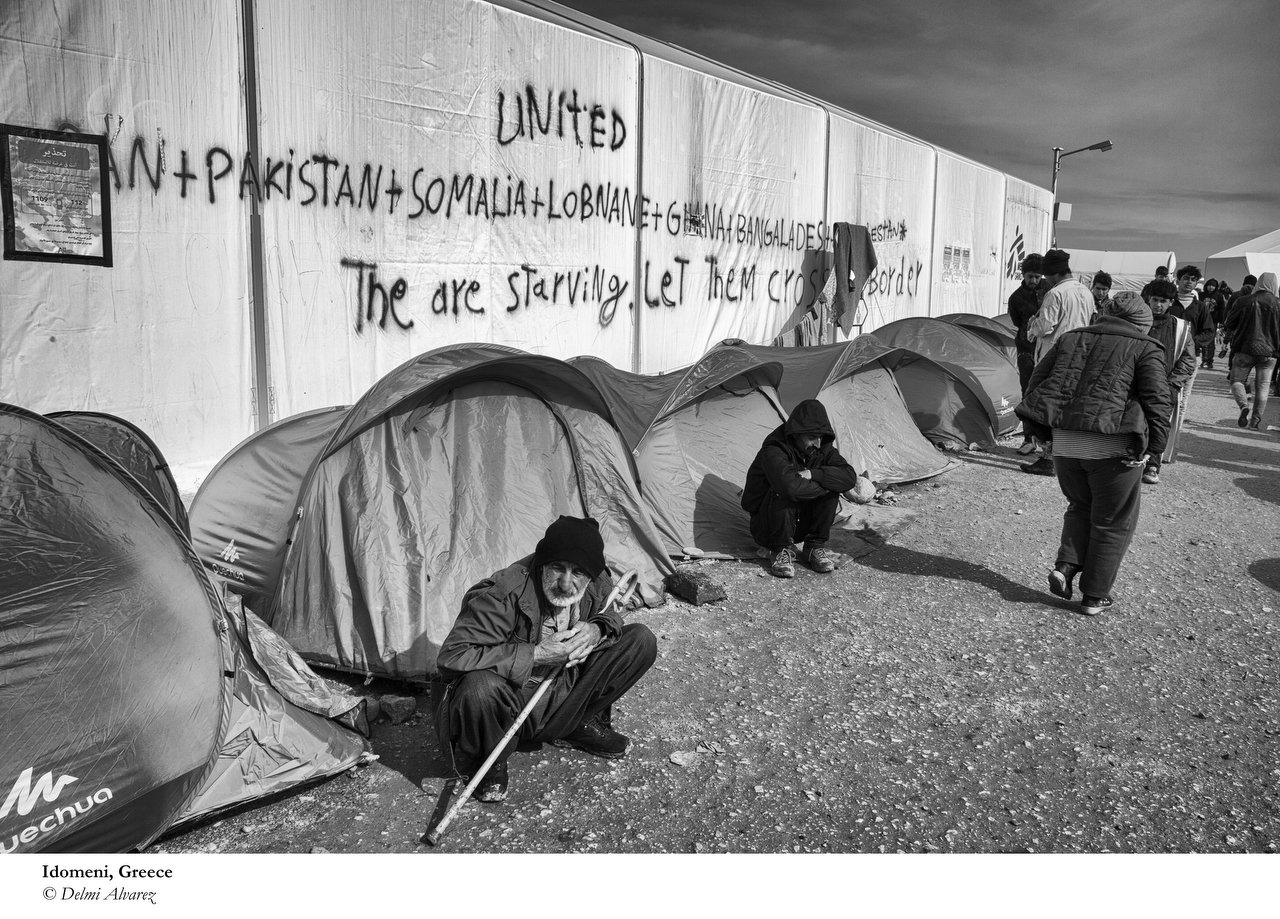
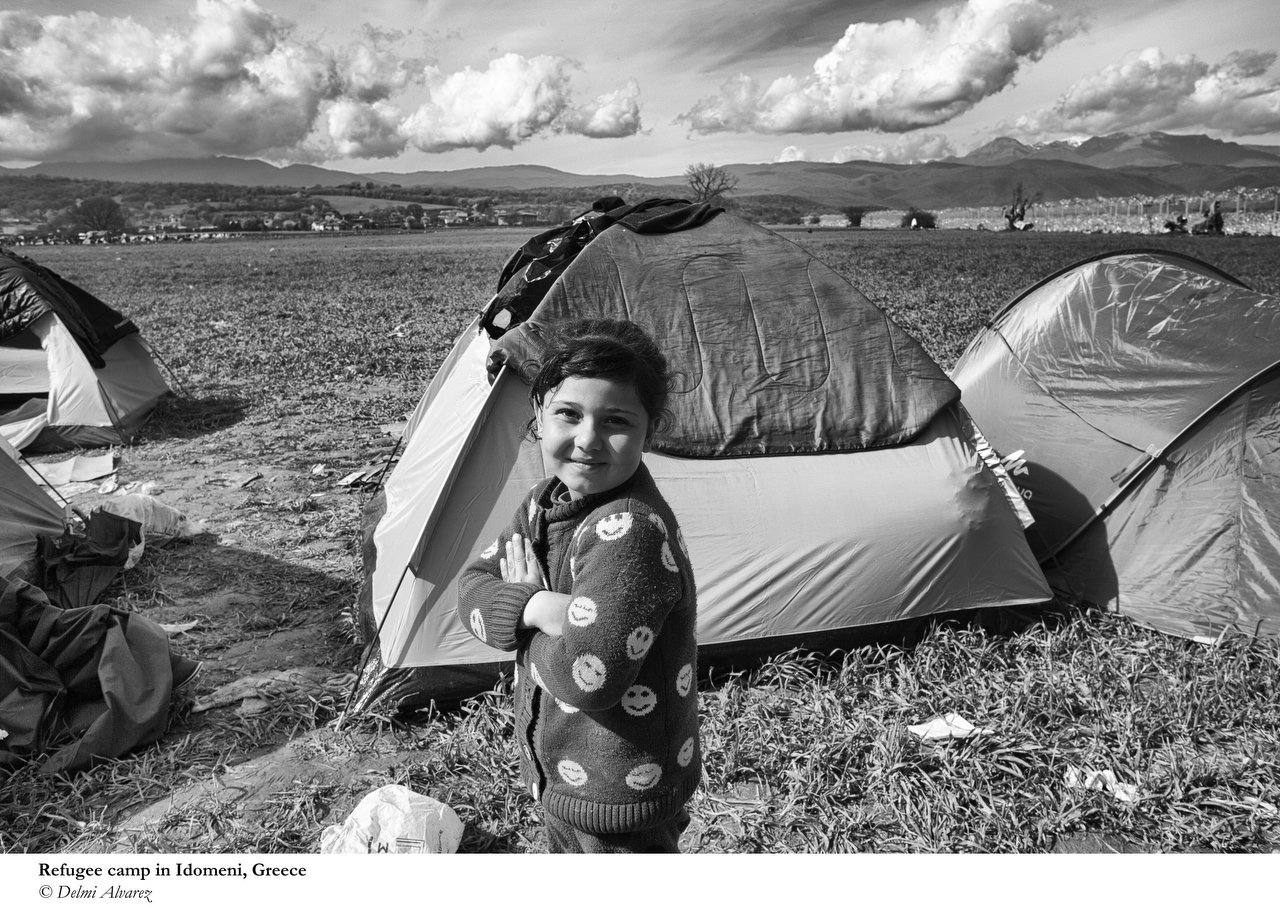
2016. Idomeni: Subhuman Camp at the Door of the Barbed Wire of Europe.
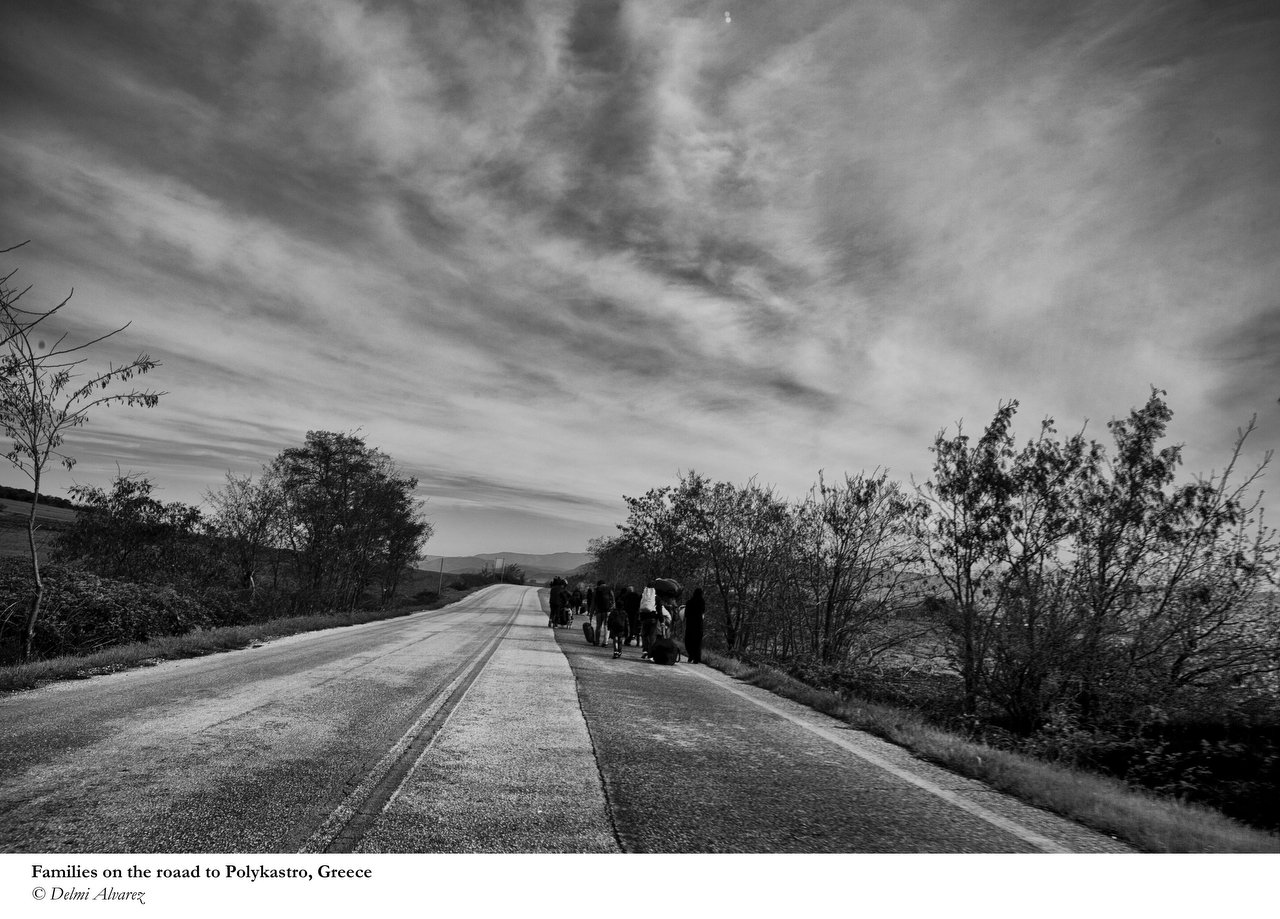
To get to Greece from Belgium, there are three options: Athens, Volos, or Thessaloniki. I booked a flight to Volos, three hours from Idomeni. I had a rental car with Hertz, but the employee told me he had to give it to other people. The fleet at the airport was empty, and the man wasn't very keen on giving me a refund. He offered me a free car to go only as far as Thessaloniki or gave me the only one he had left, which was very small. We tried the one he offered, but the seat didn't recline any further. I traveled 257 km in over three hours as best I could and stopped in Polykastro, a small town with a couple of hotels, but they were occupied by press and NGO volunteers. I got lost several times thanks to Google Maps, which indicated nonexistent roads and backtracking. The roads were in terrible condition, with hardly any cars passing, and I finally arrived in Idomeni at night. I parked the Topo Gigio on the side of the road and climbed into the wonderful down sleeping bag that always accompanies me.
Idomeni, Greece. 2016
There's only one hotel; the rest are family homes that either rent you out or not, asking whatever they feel like for a bed—no frills, spoiled as they were by the time the mainstream media paid in gold bars.
That first night I slept in the car, and the following nights as well. Ane Irazabal was at a nearby hotel, posting her dispatches; she was very nice, but always busy. The hotel owner promised me a room that wasn't really a room, but it had a bed. After five nights sleeping in a tiny car, it was my turn on the last night.
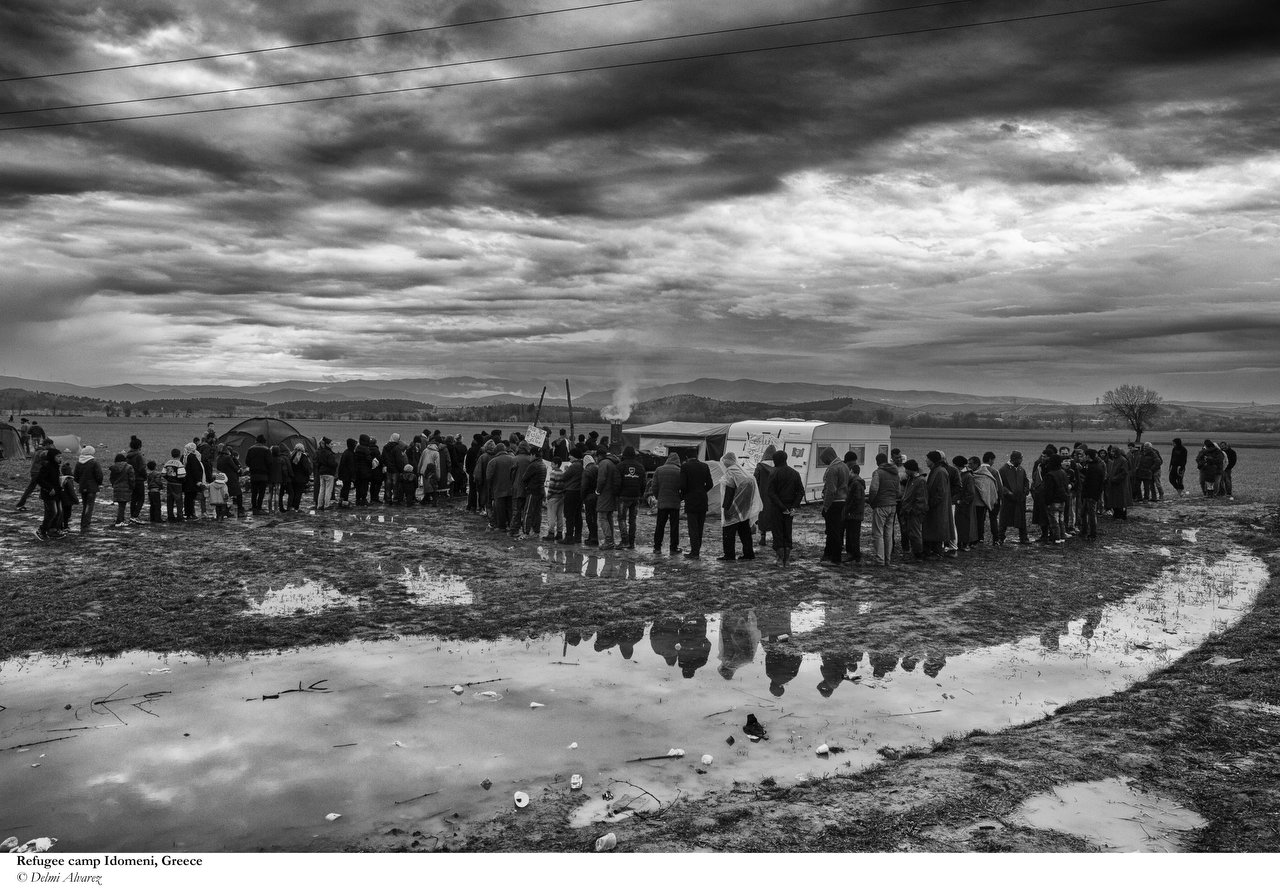
Row for breakfast. Idomeni. Greece. 2016
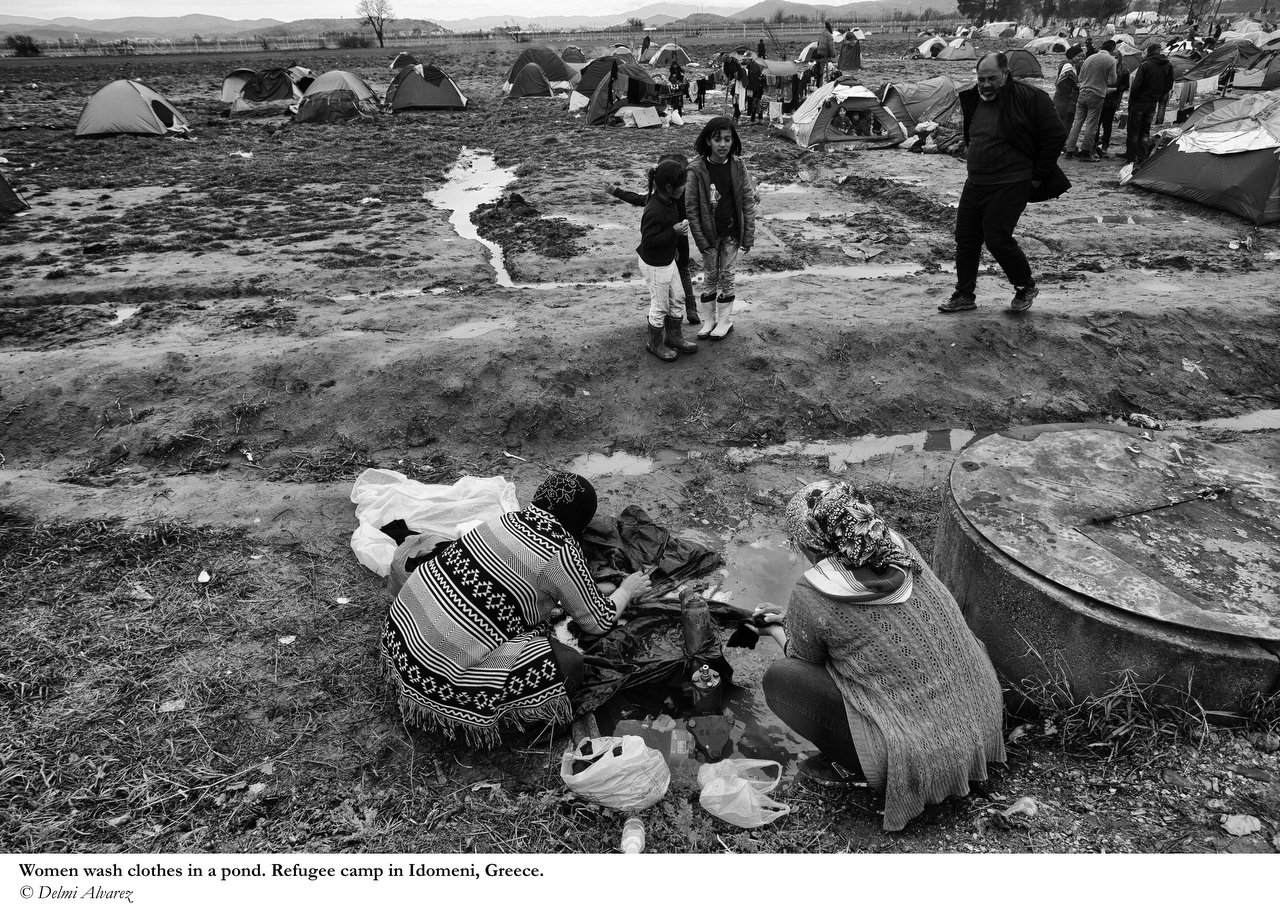
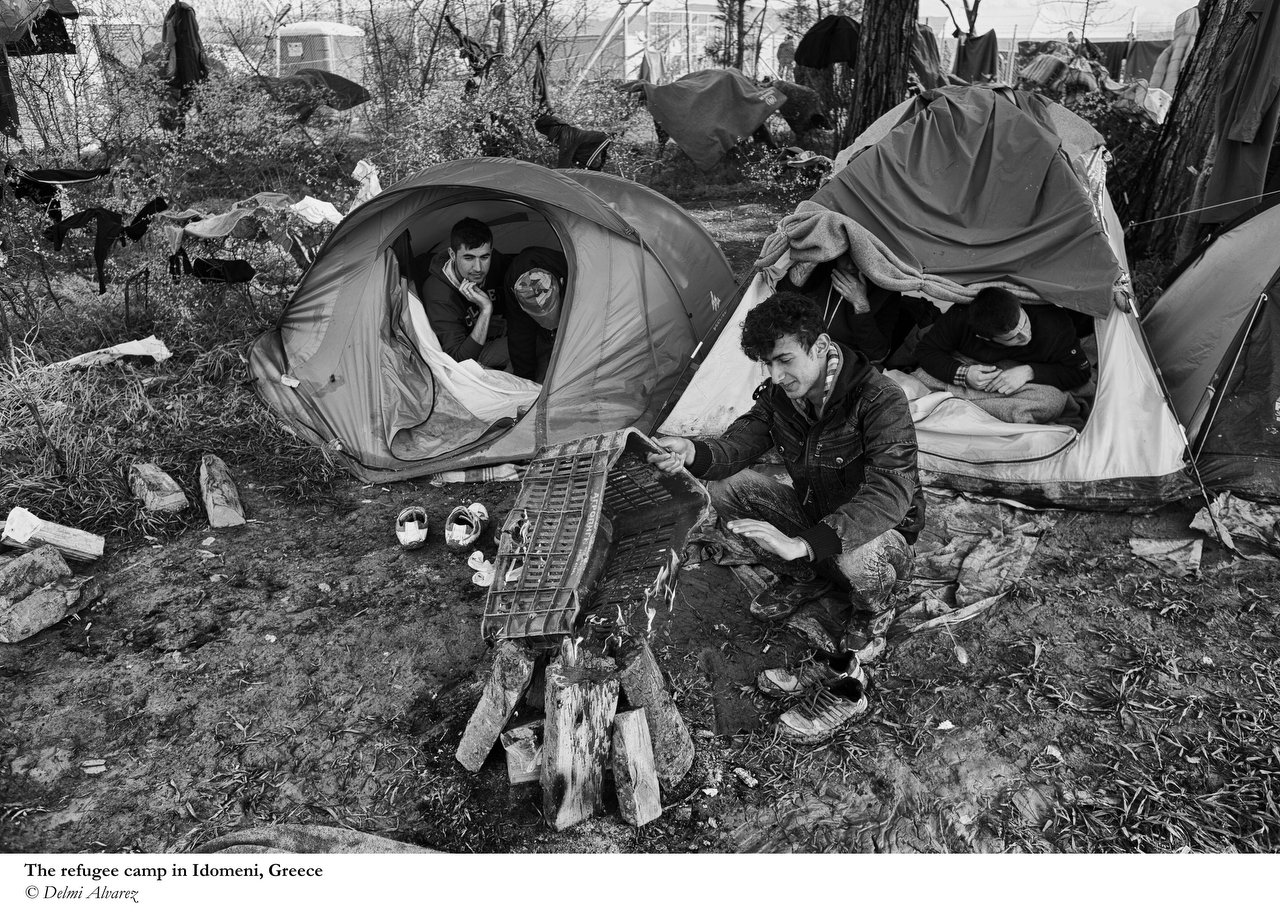
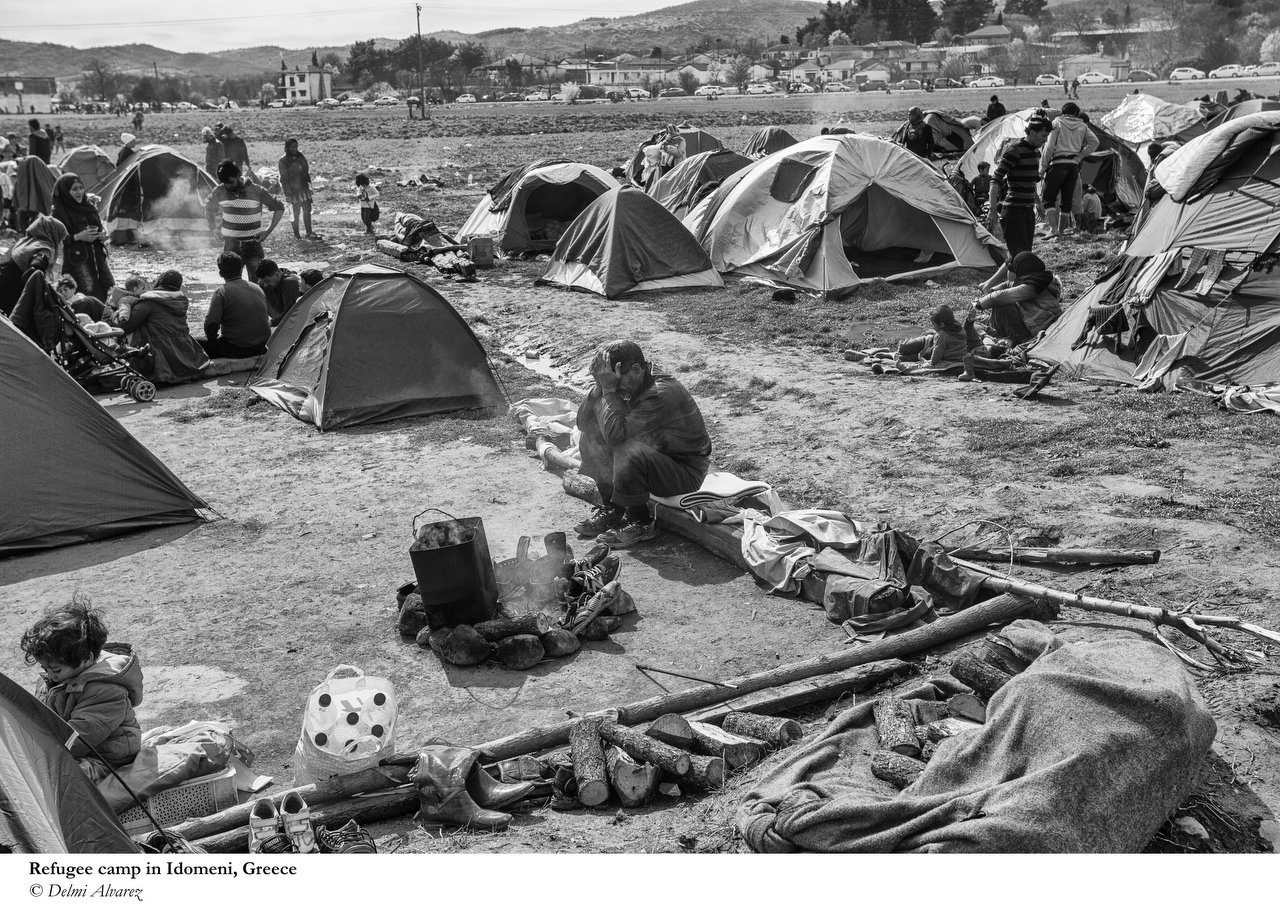
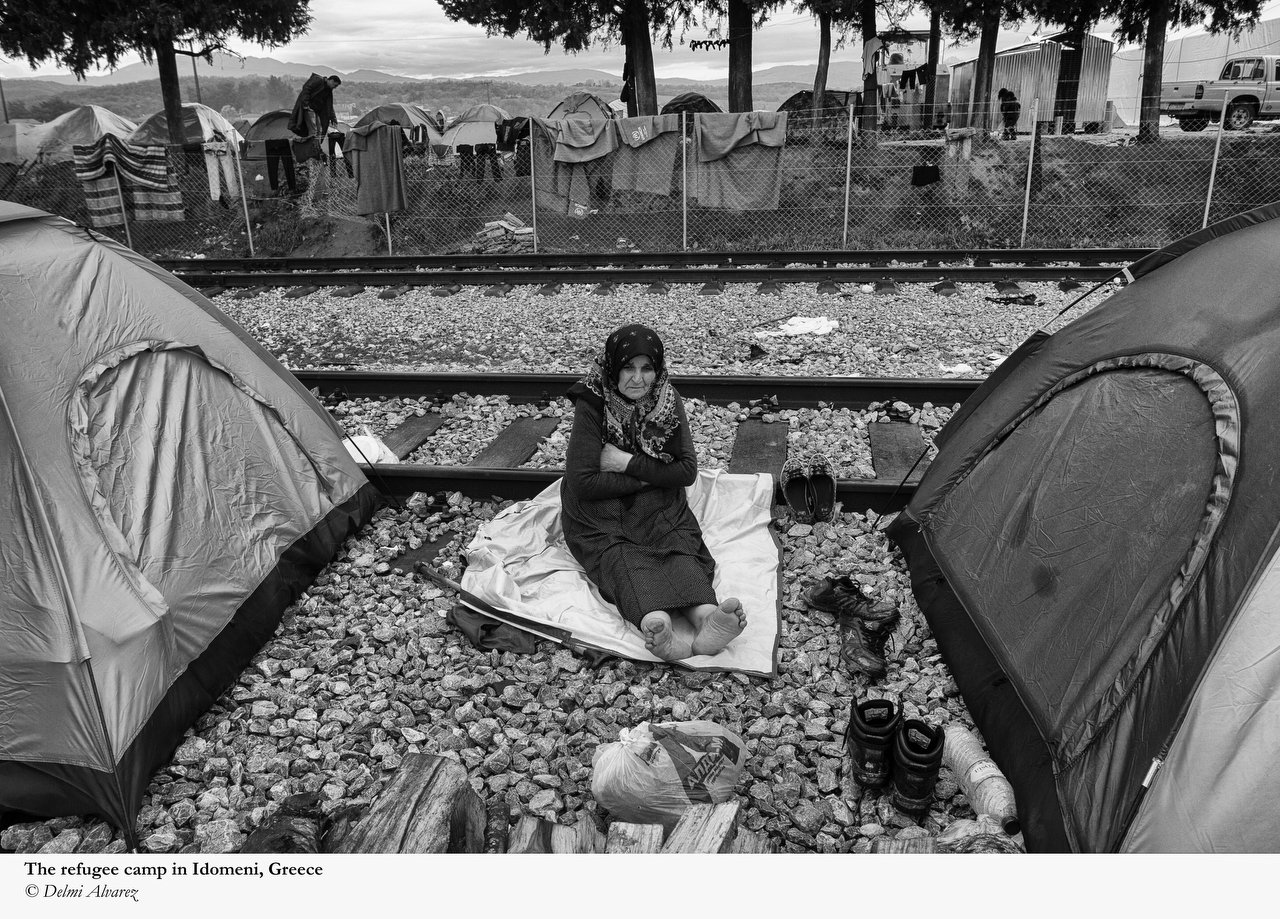
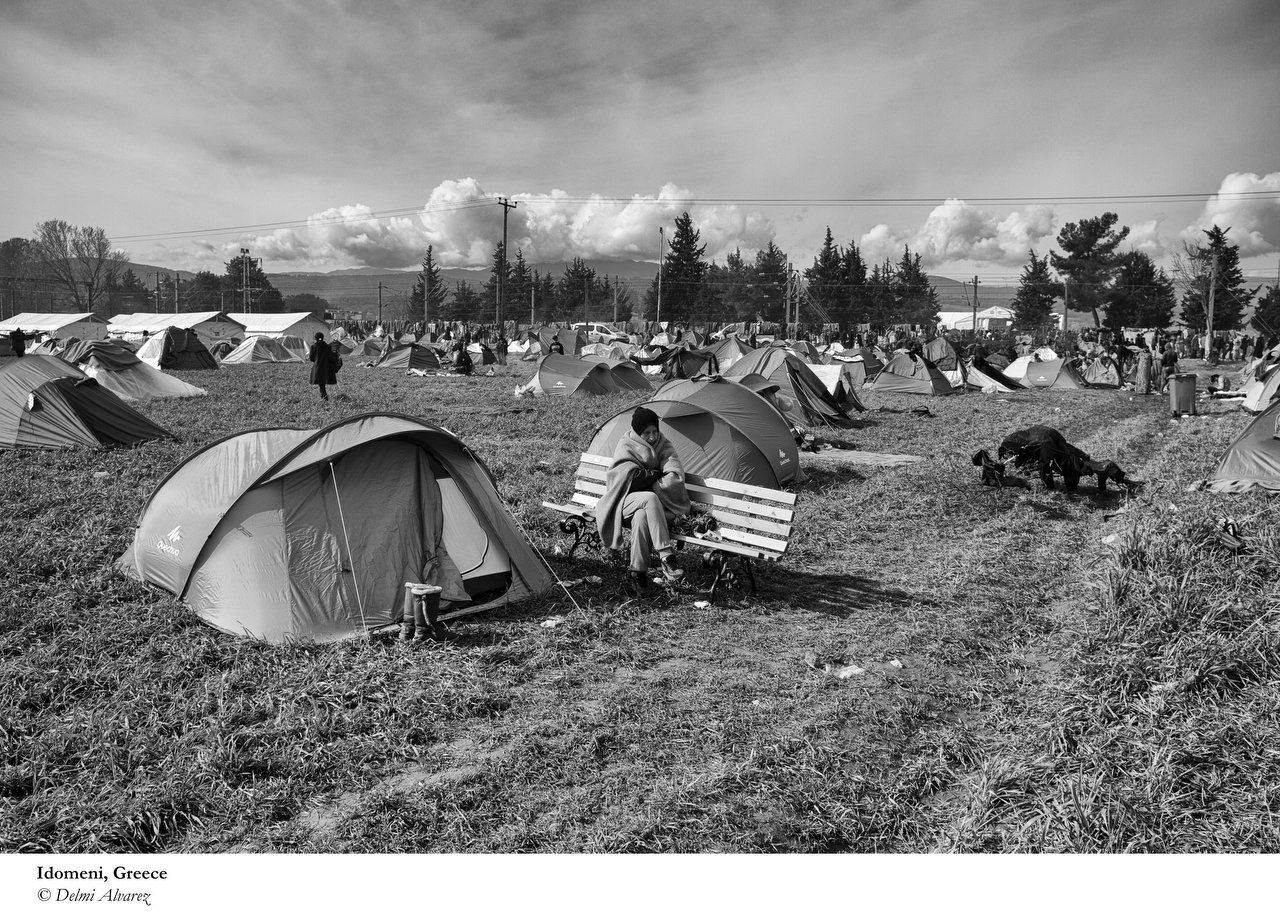
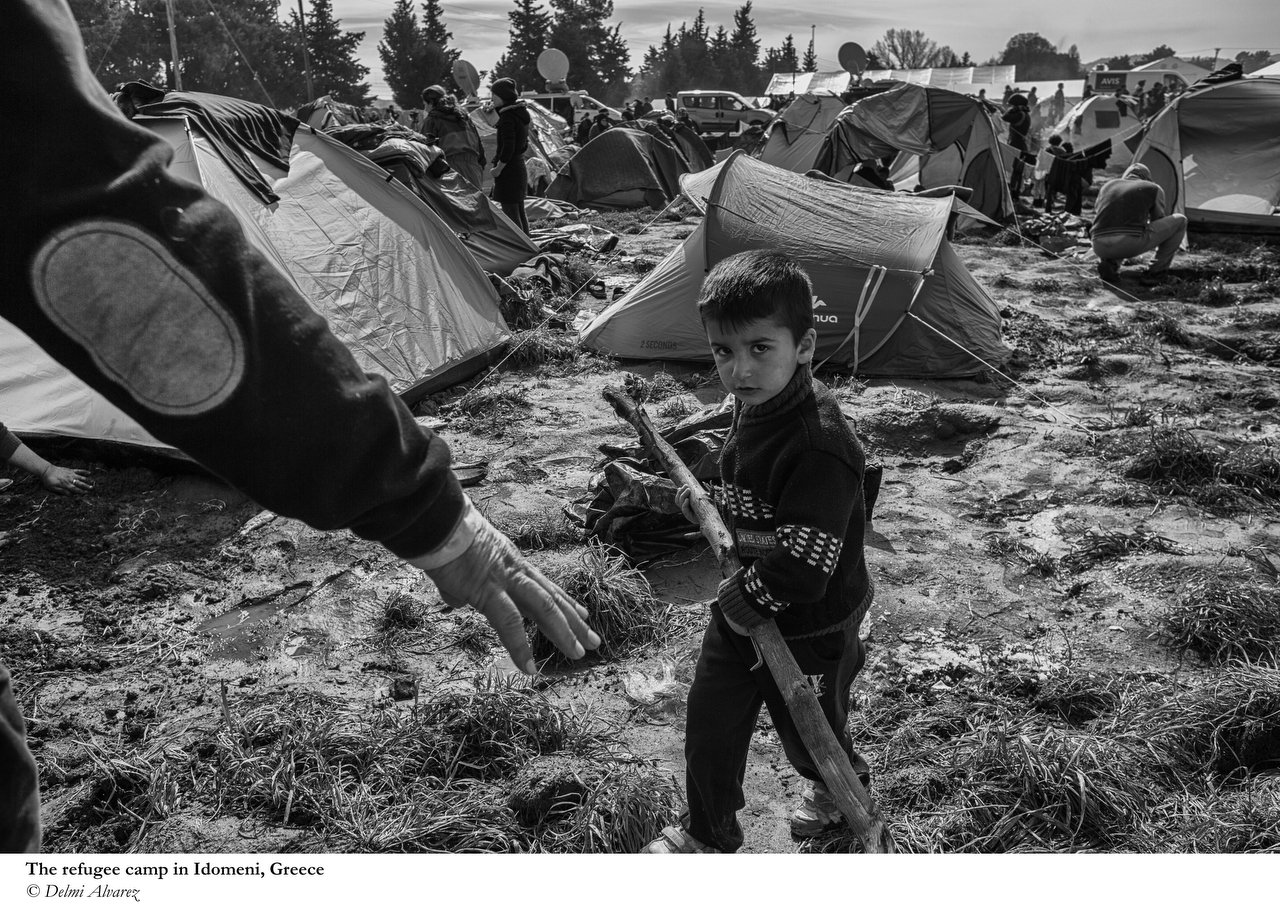
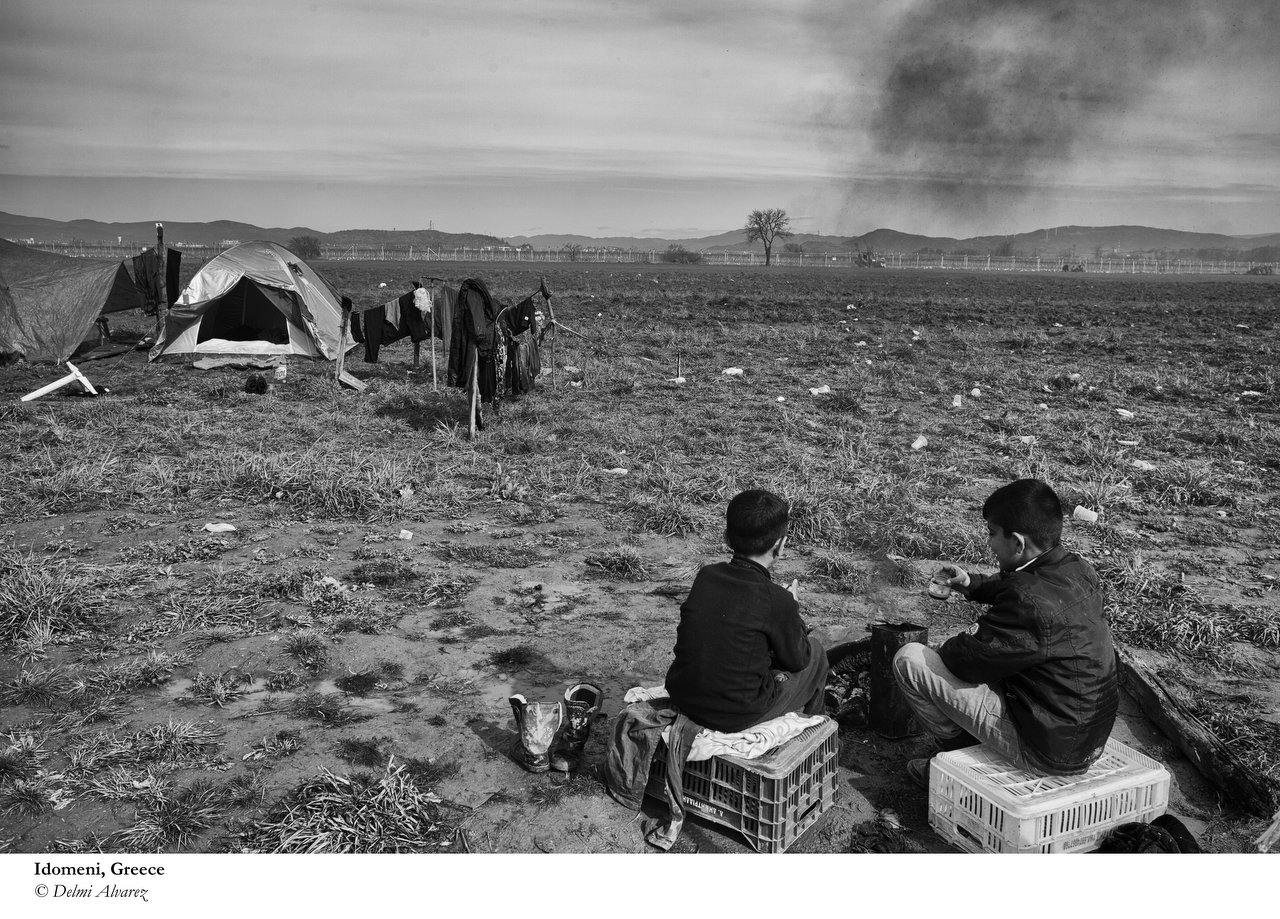
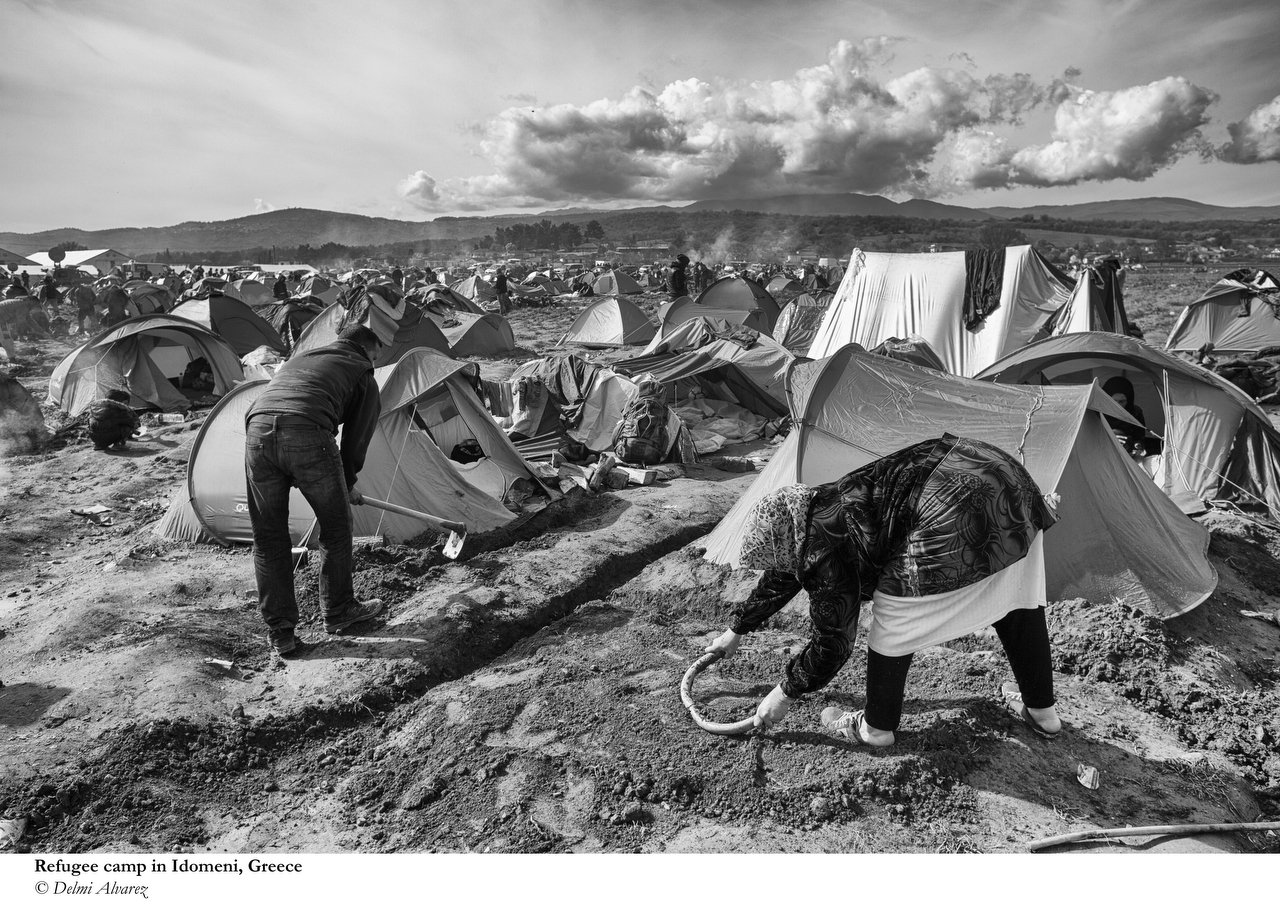
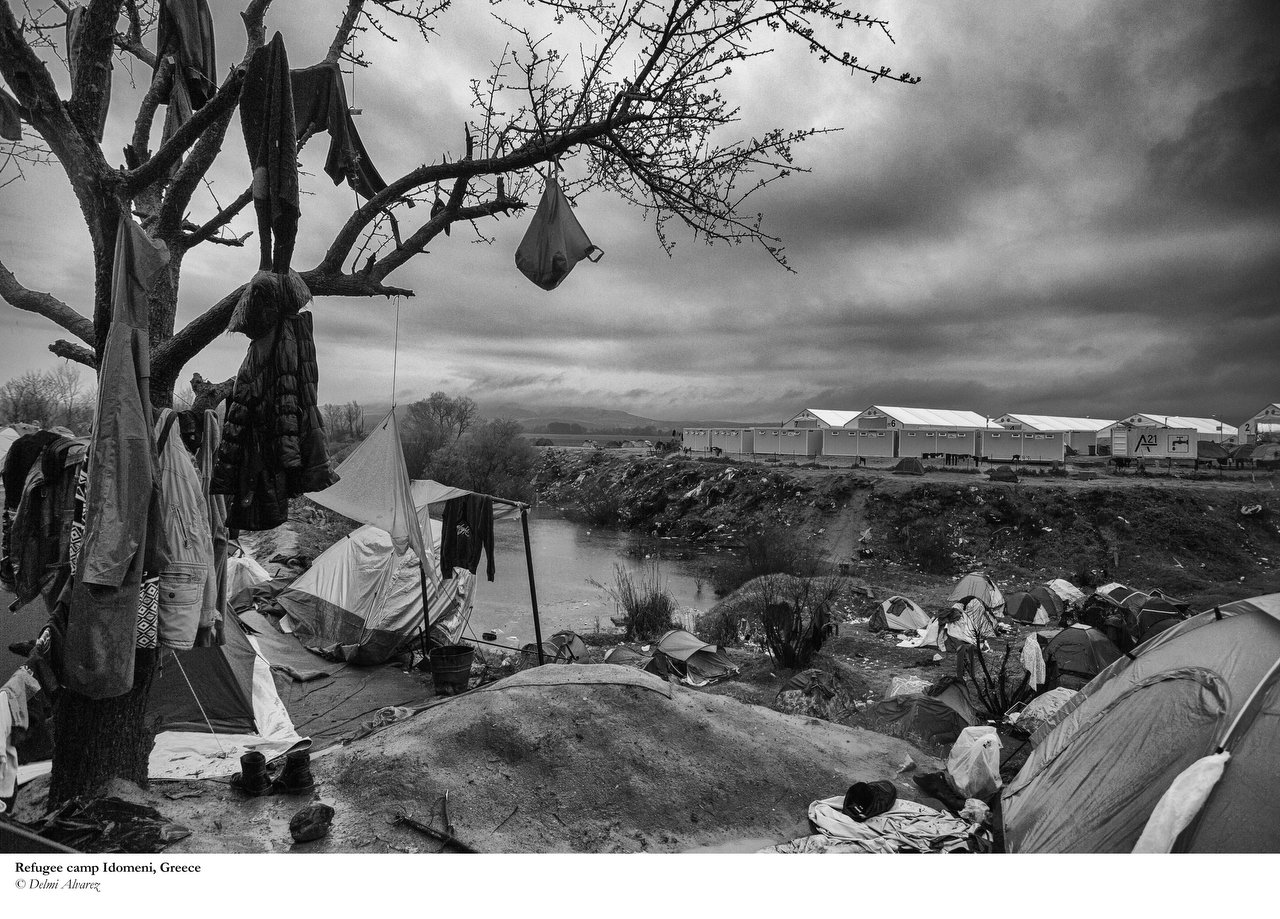
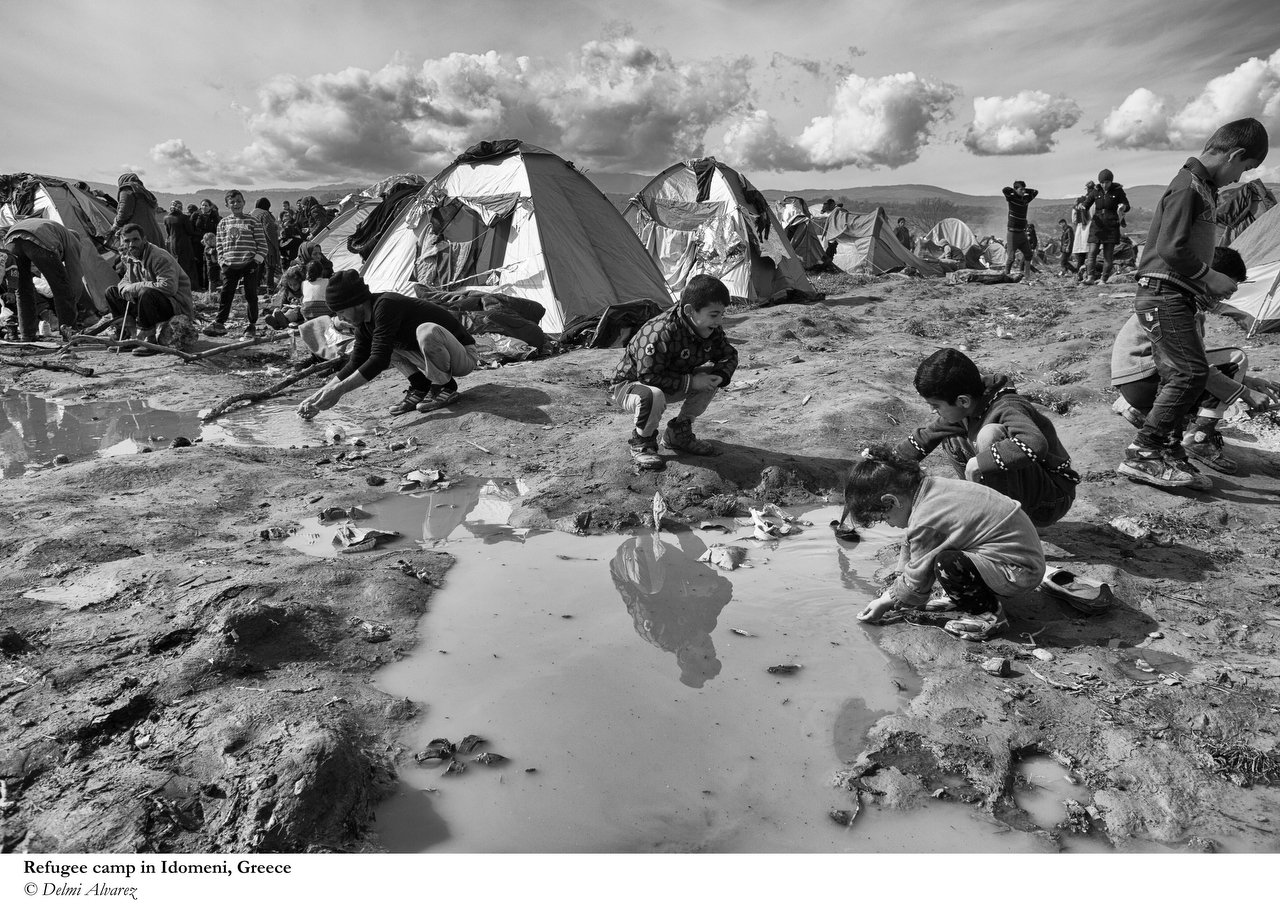
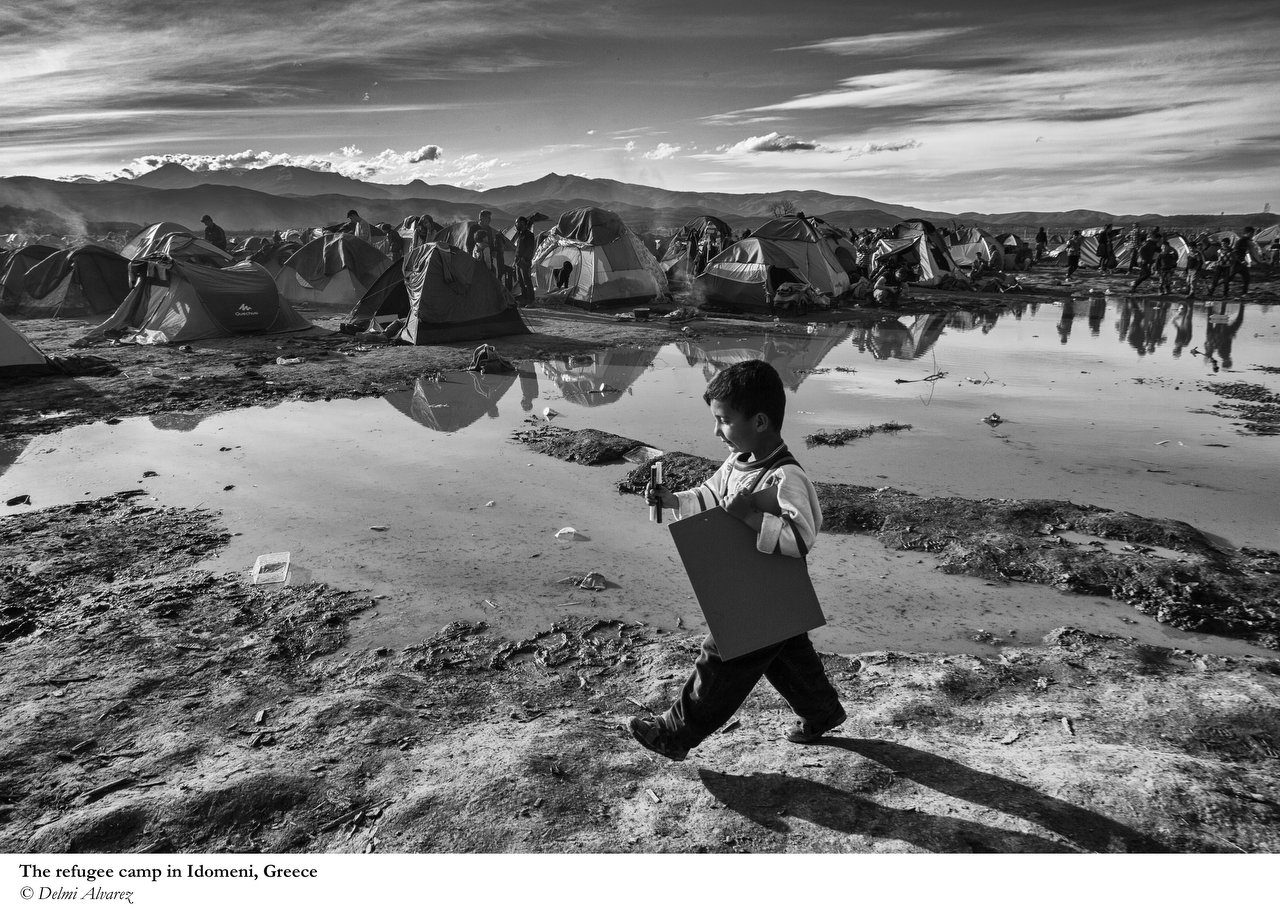
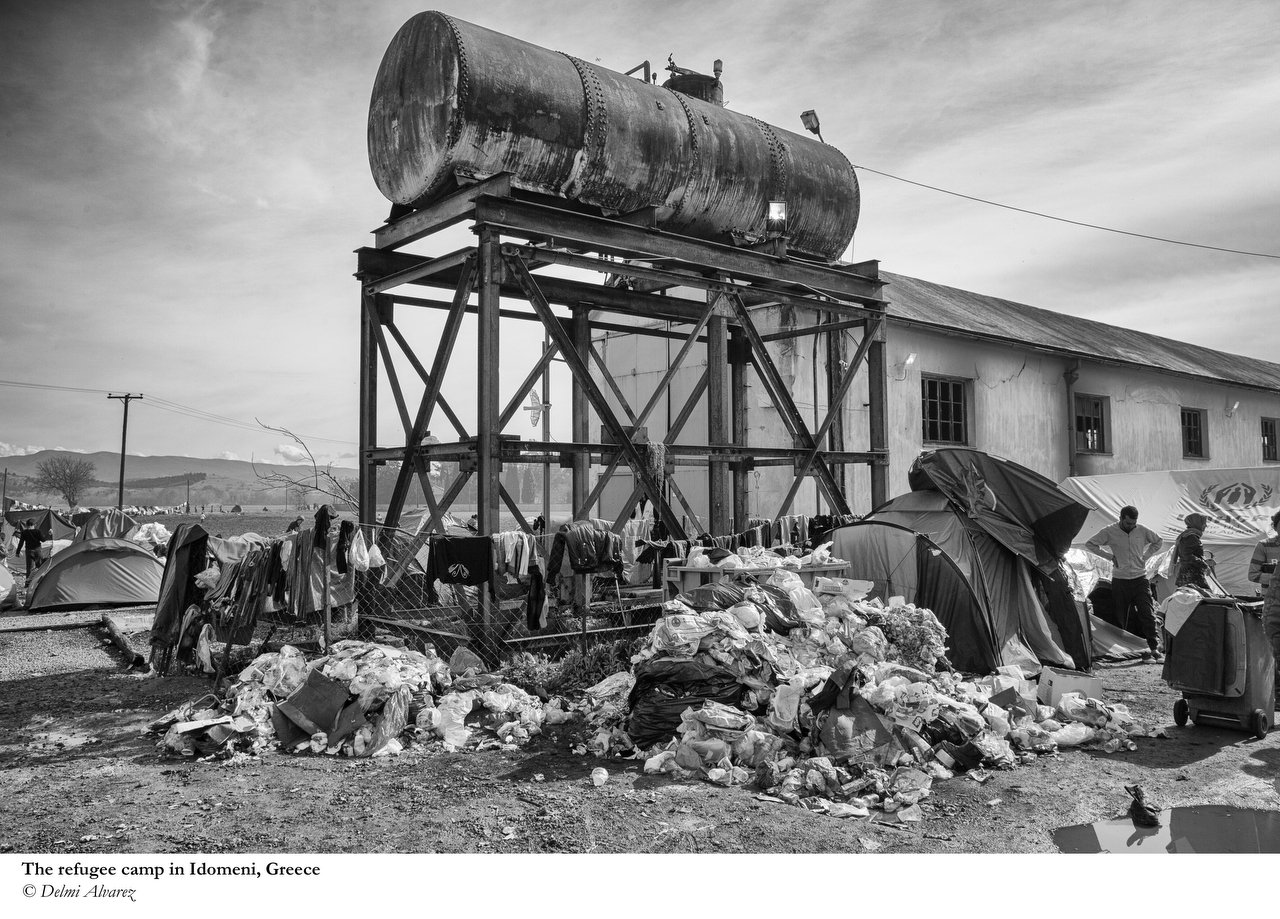
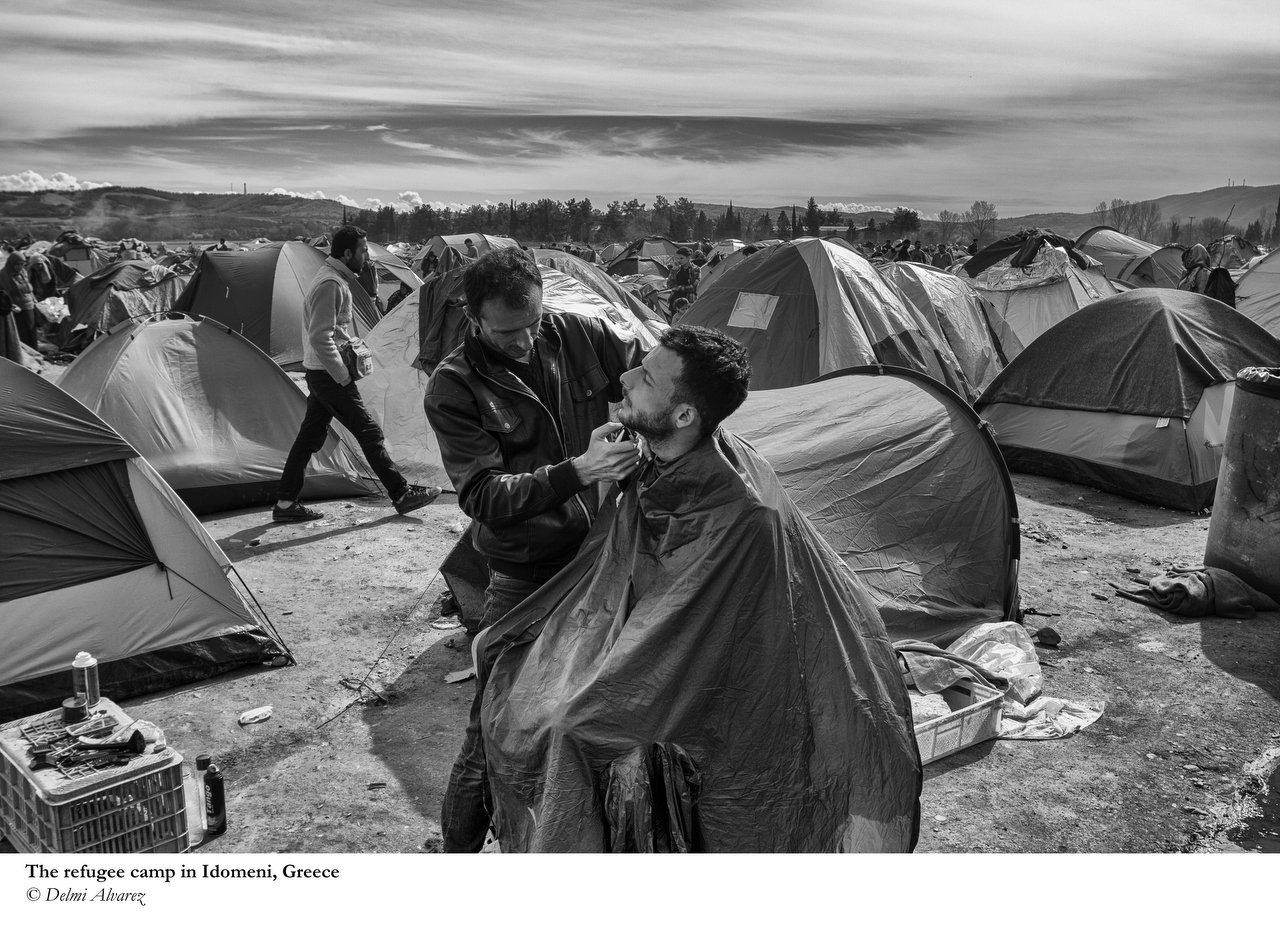
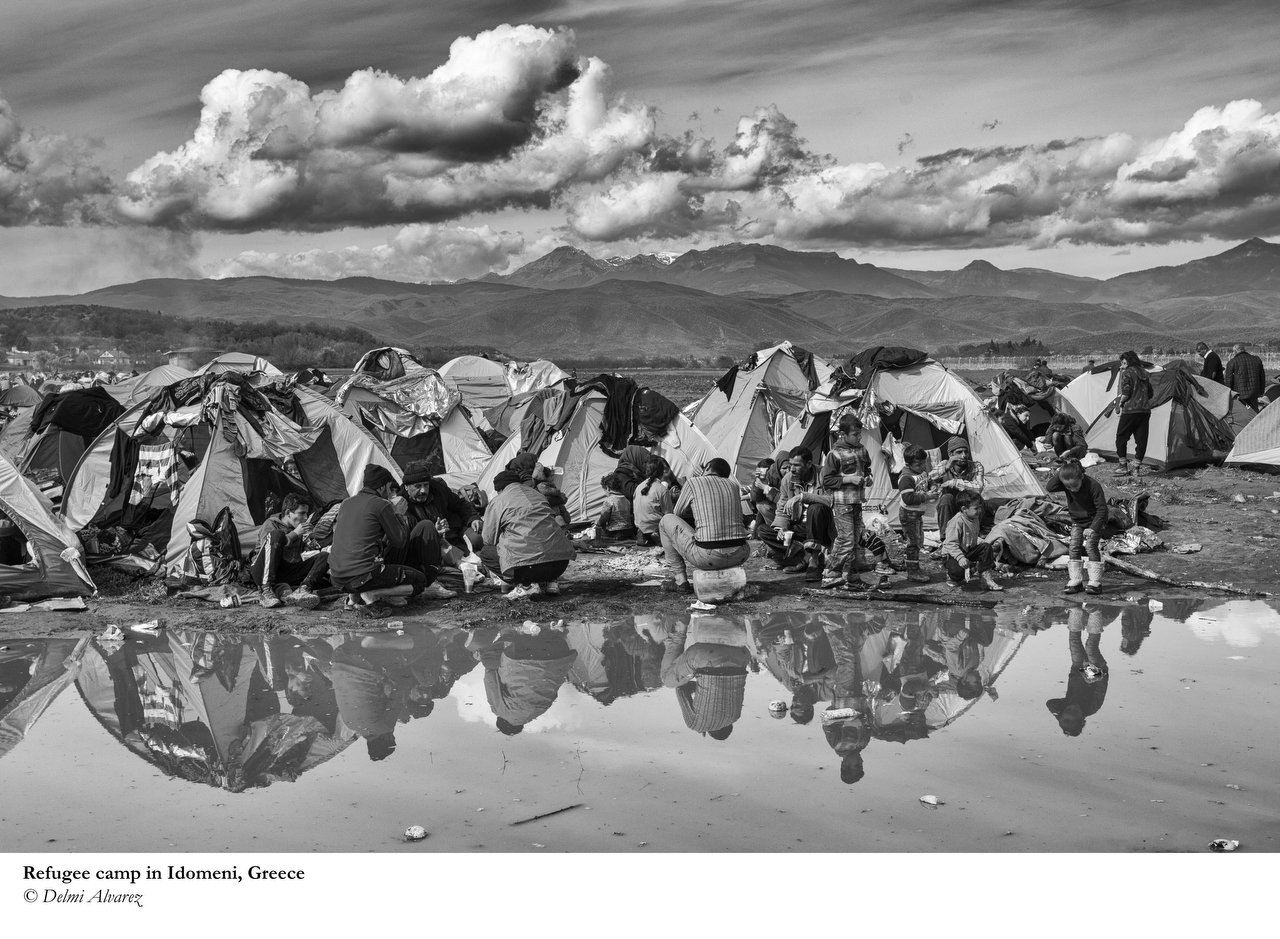
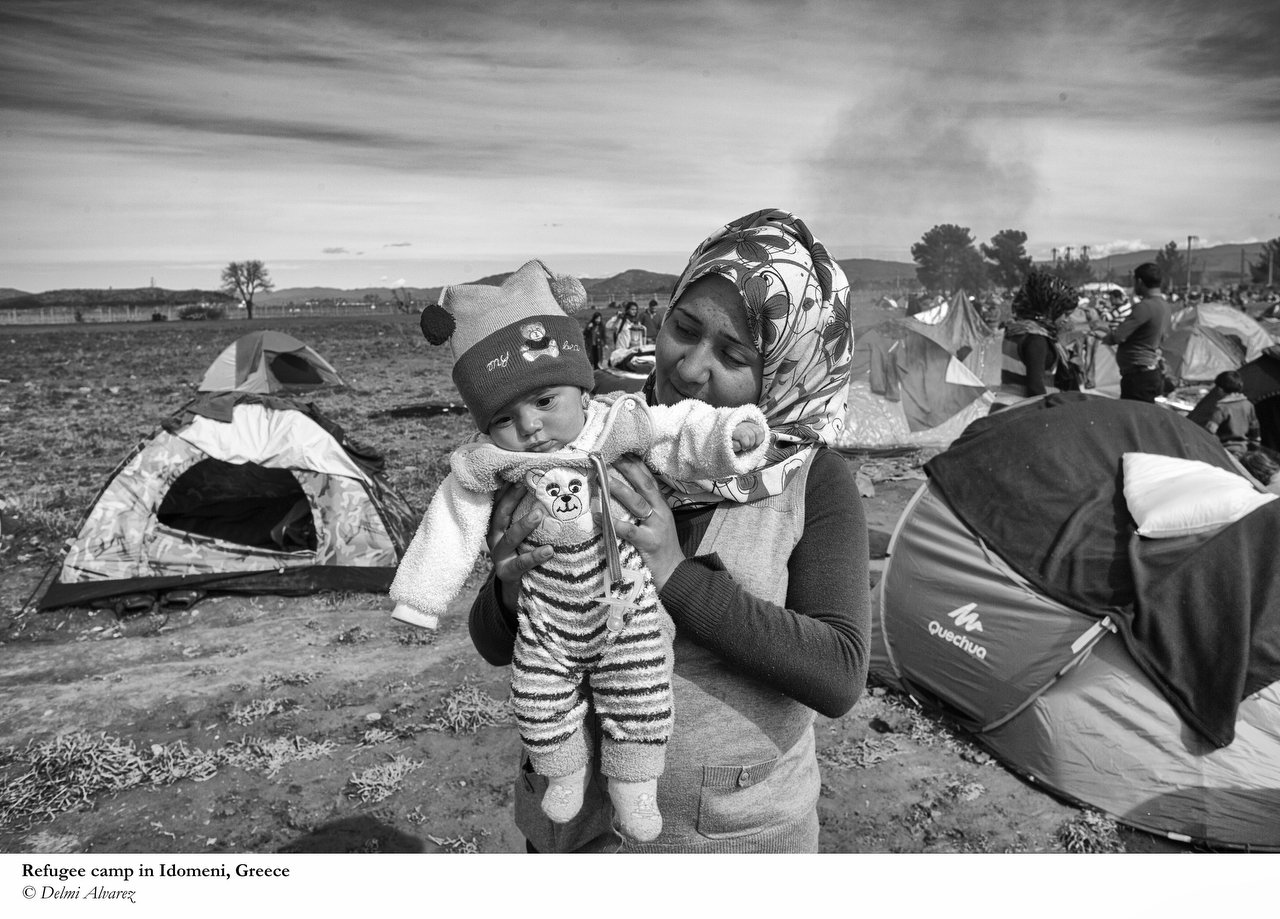
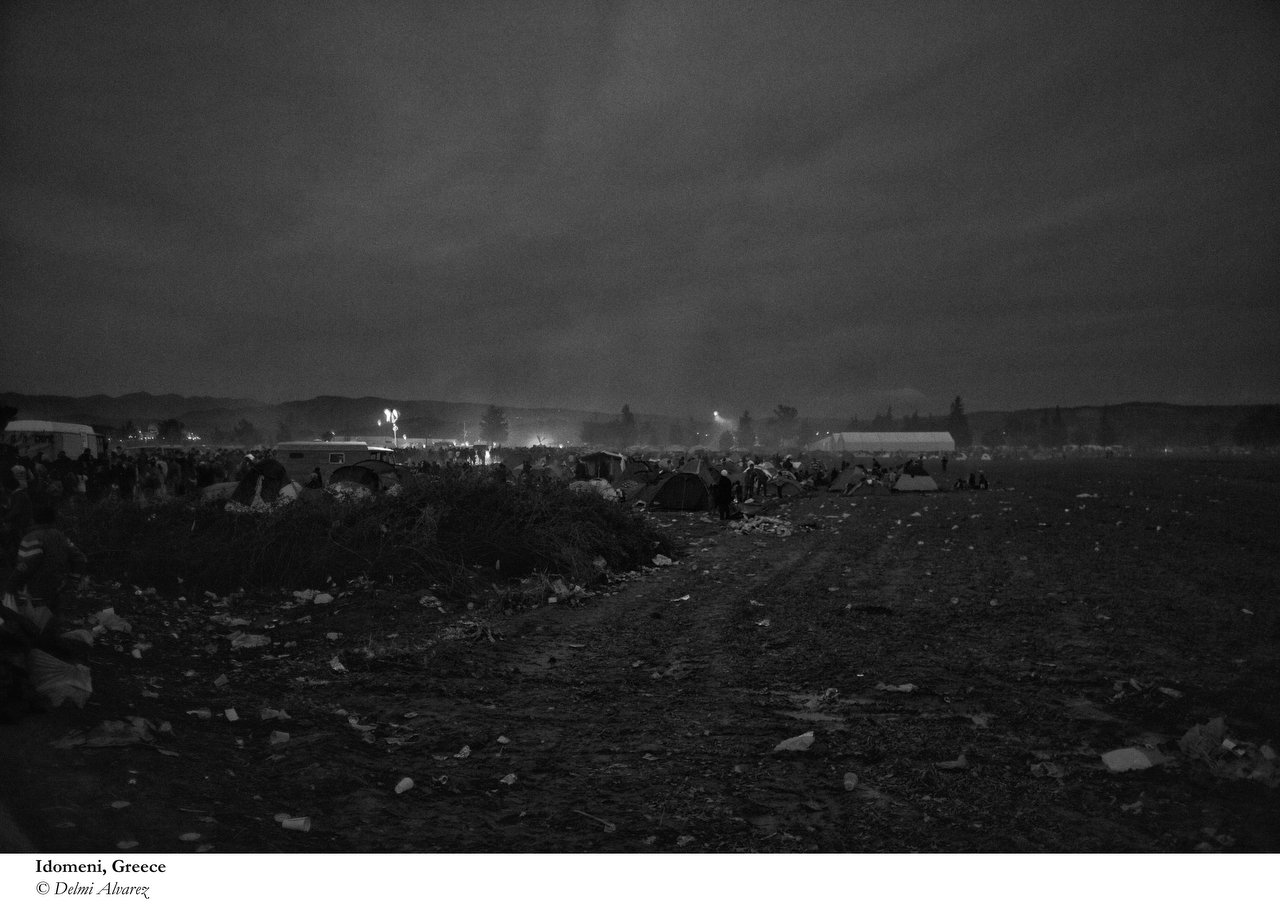
The coffee at the hotel or in the bar across the street was good, with bread, butter, and jam. Much better than the refugees could ever get, even if they paid. It had rained in the preceding days, and the fields were waterlogged; the colorful tents, pitched on both sides of the road and the railway line, were filled with water. I saw an elderly woman, helped by her granddaughter, digging furrows around the tent to drain the water and some children playing with boats made of wood and branches in one of the puddles.
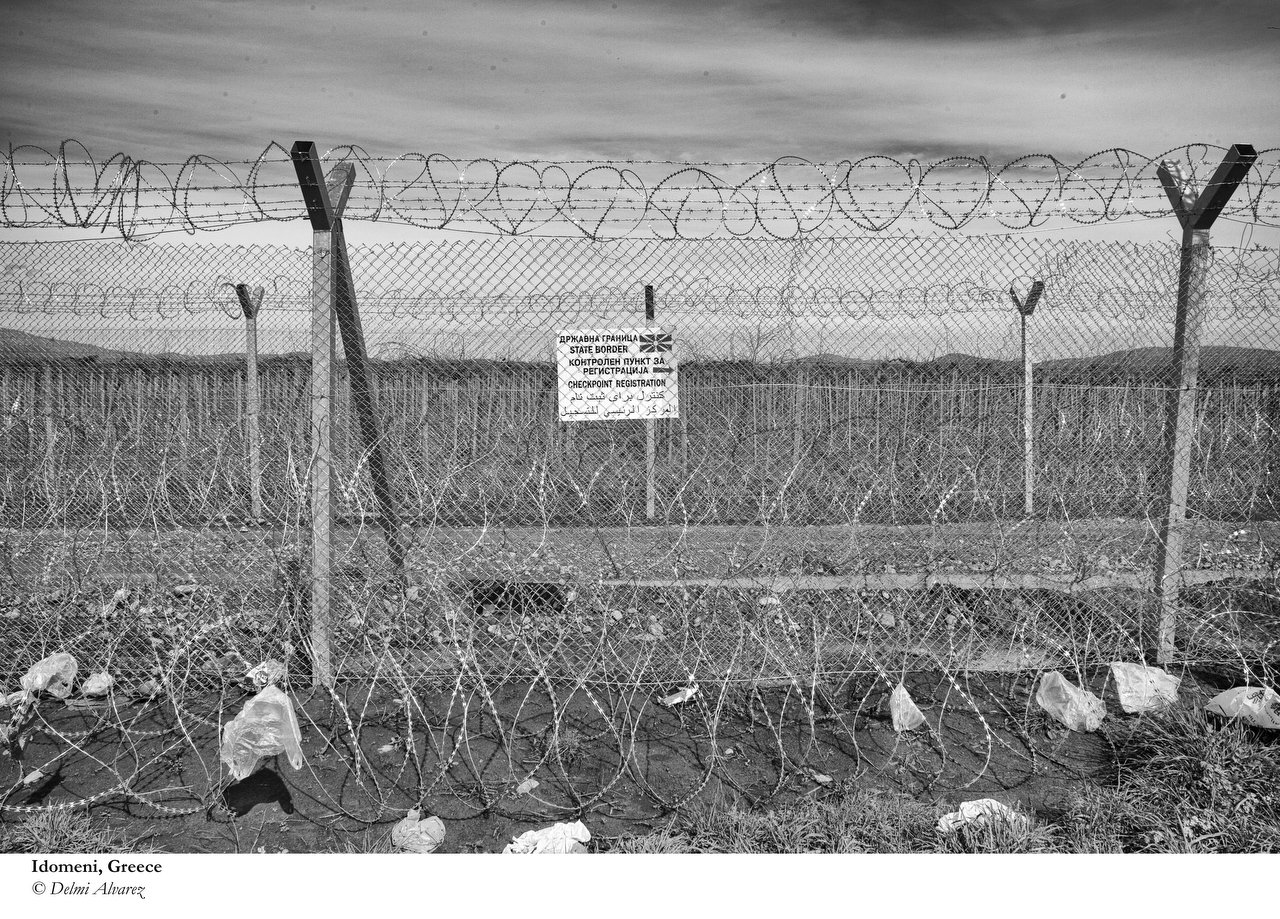
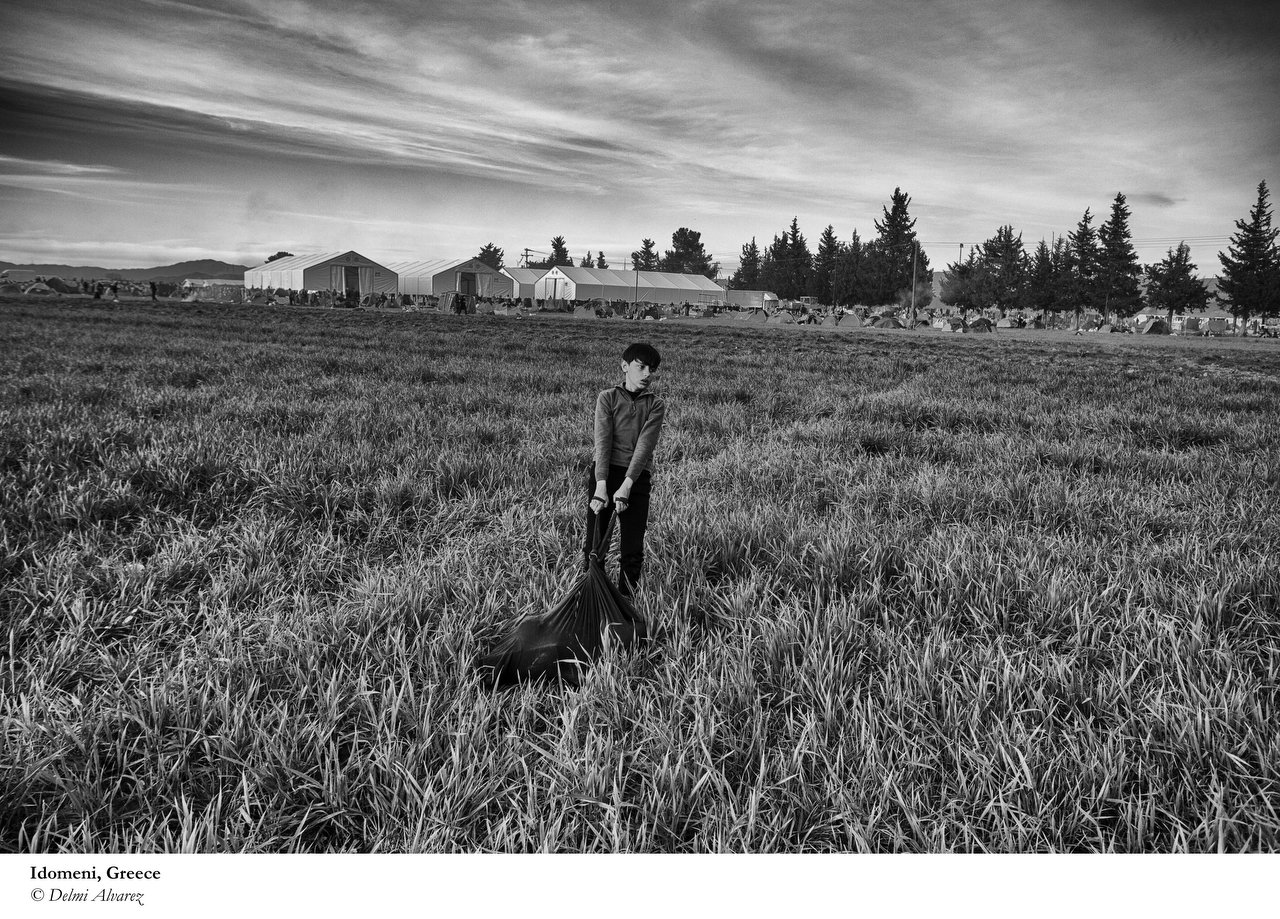
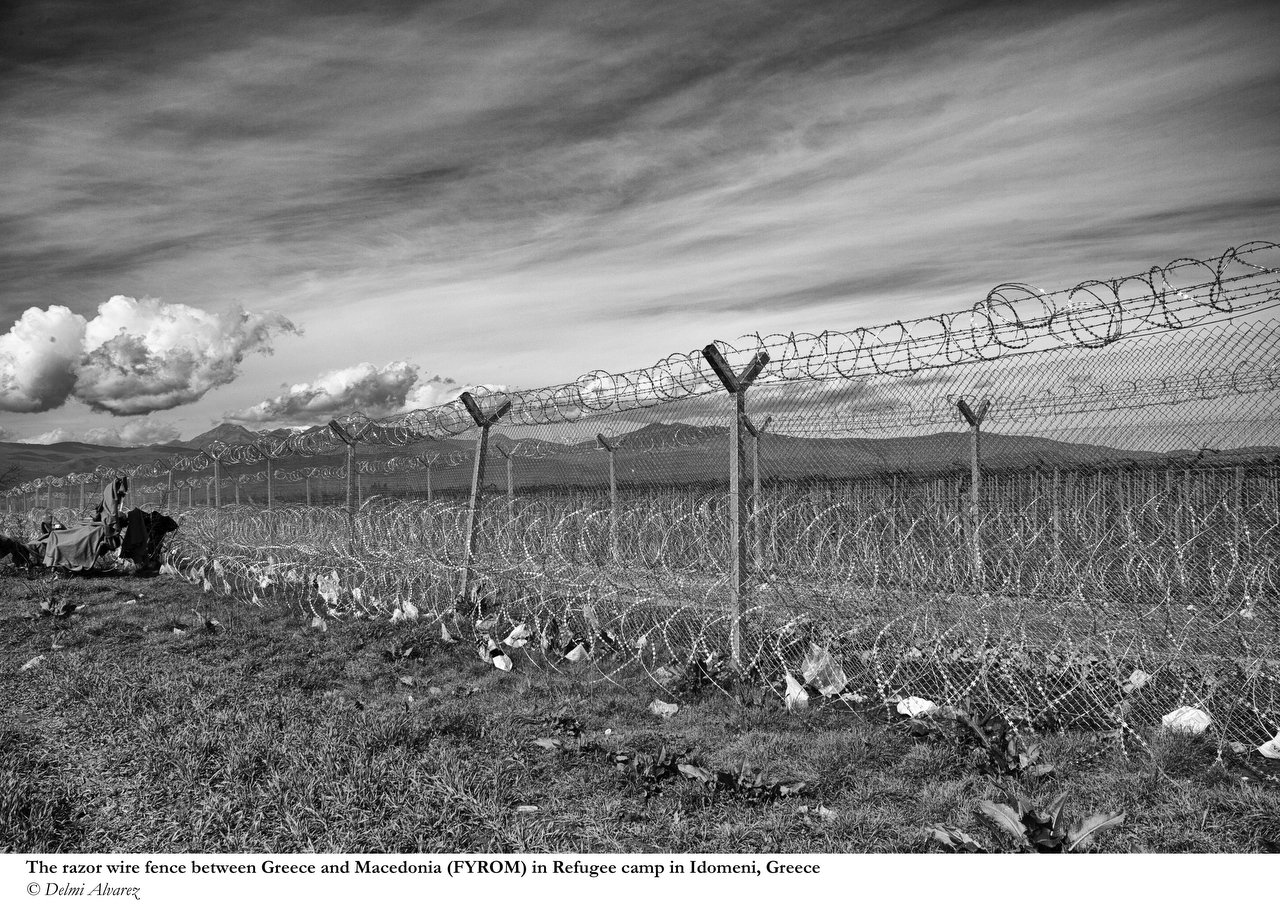
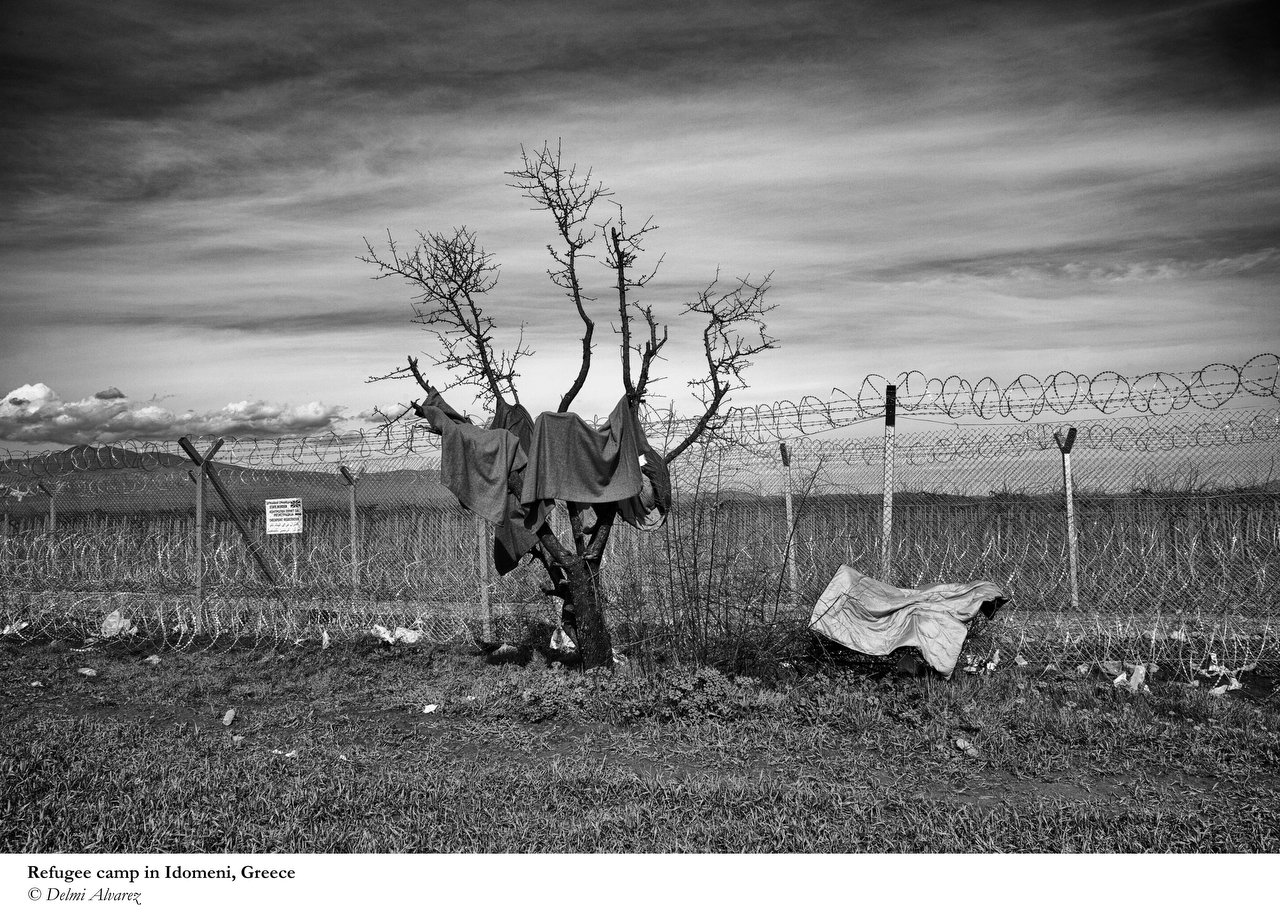
In the distance, some snow-capped mountains could be seen, and to the right, an immense, long, and high barbed-wire fence from which gray blankets hung, drying in the spring sun.
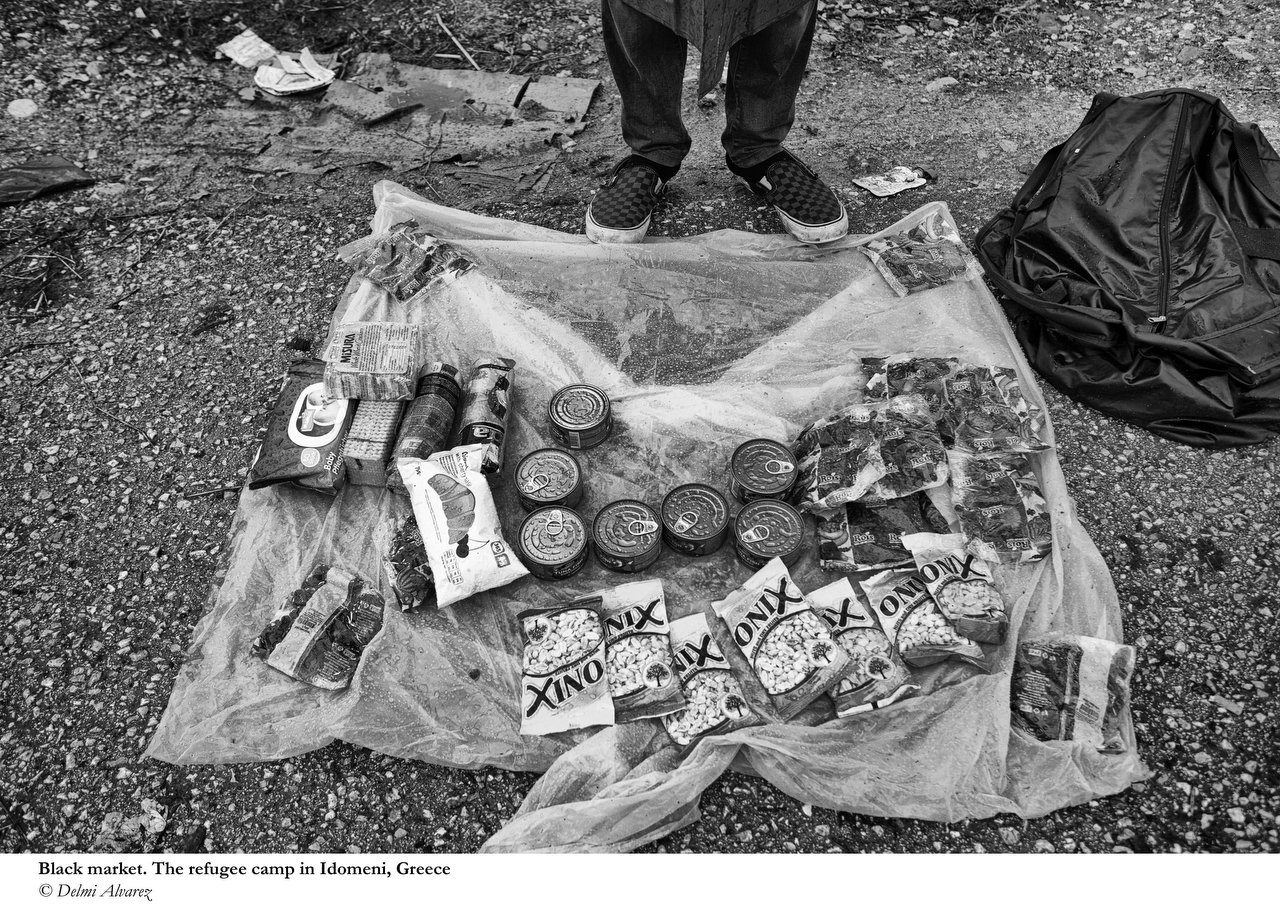
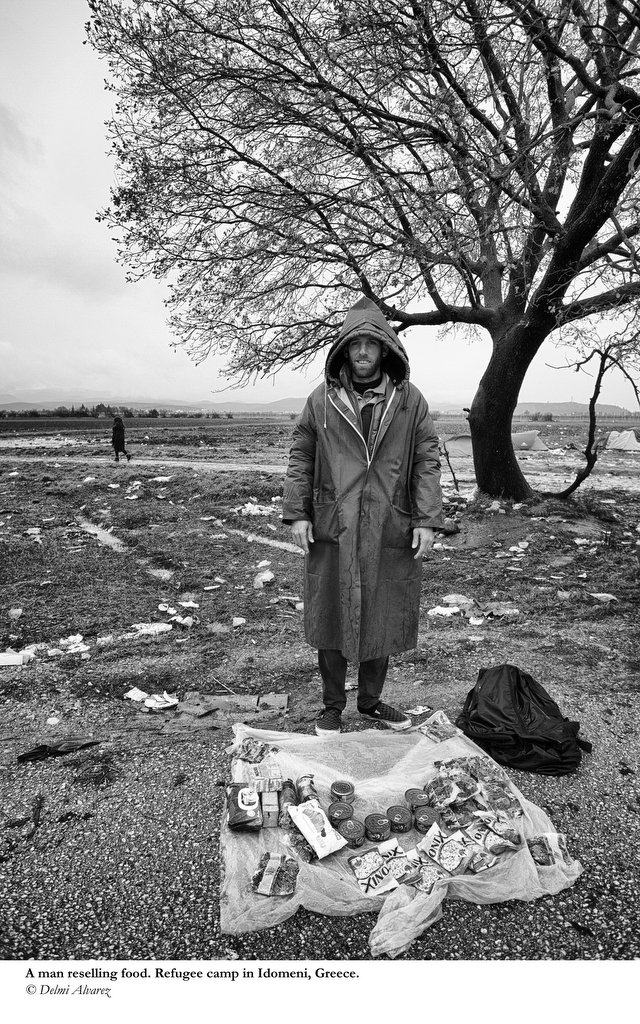
A man selling food. Idomeni, Greece, 2016
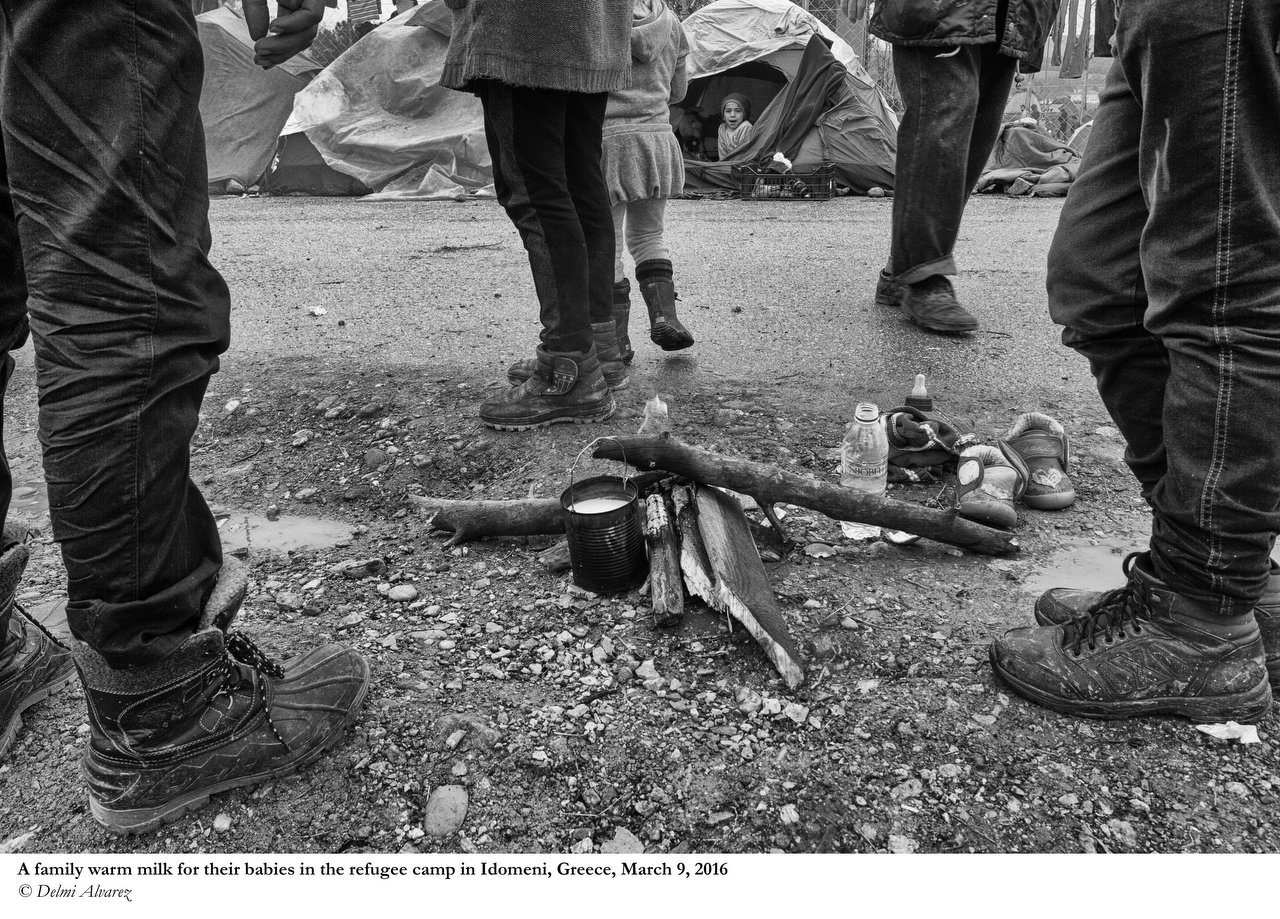
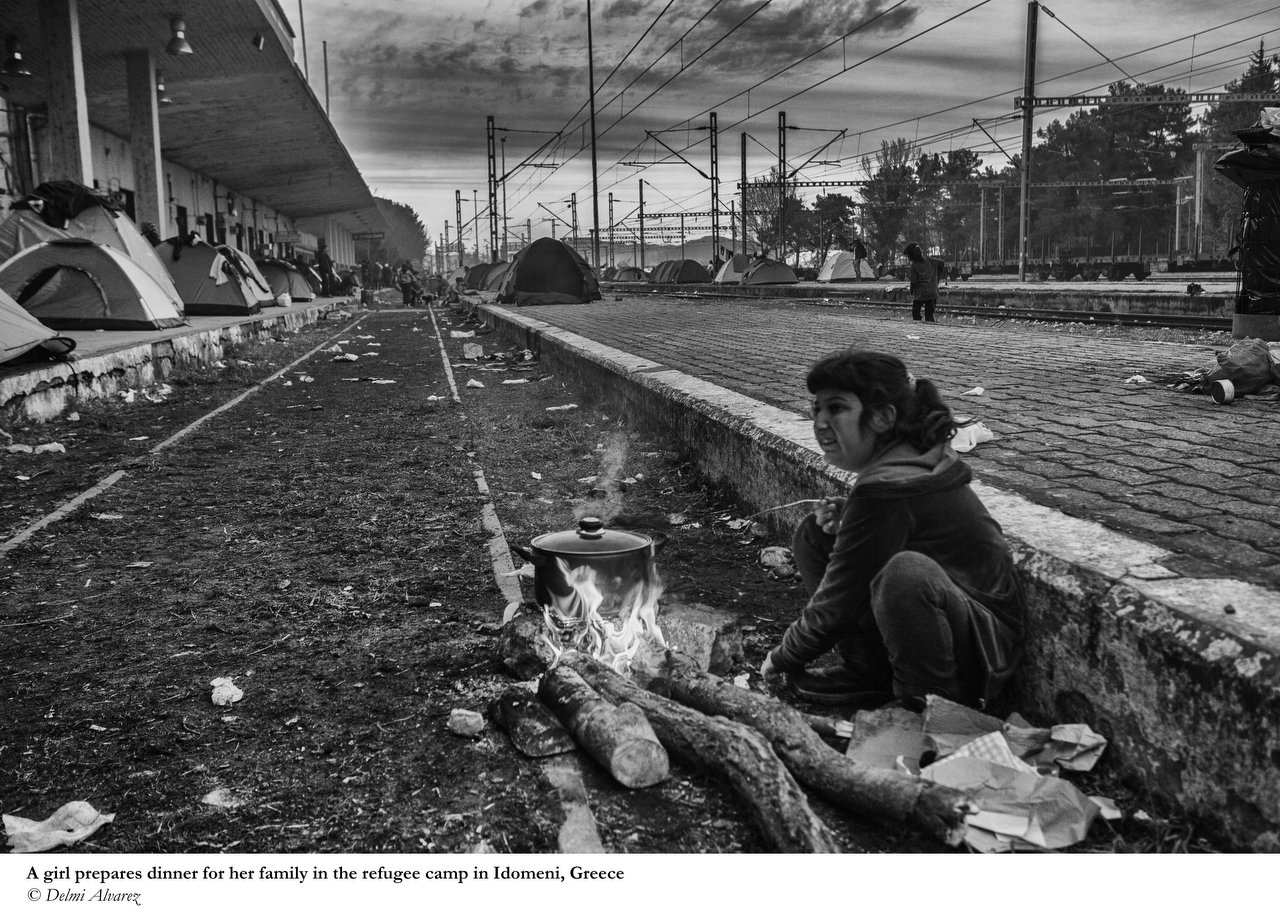
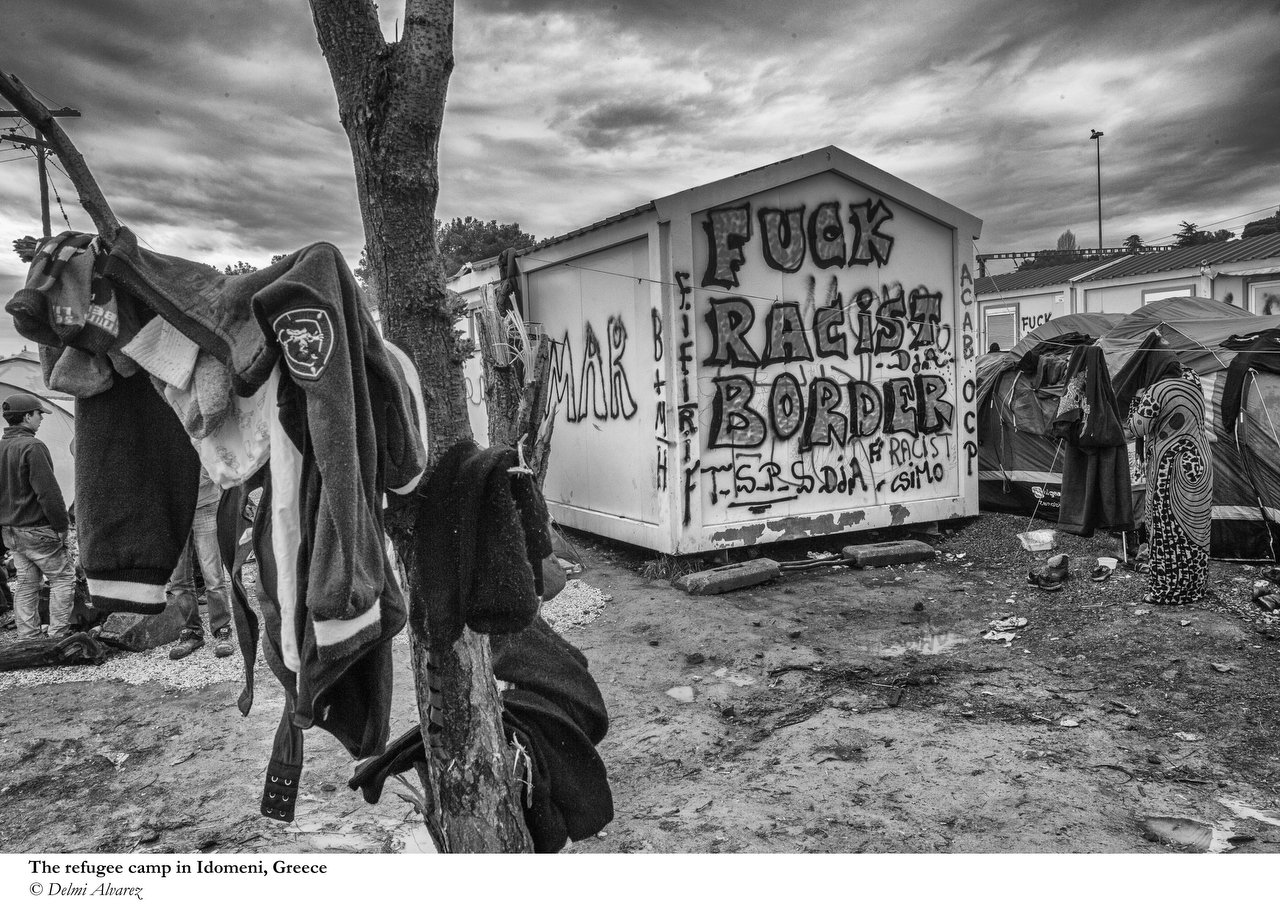
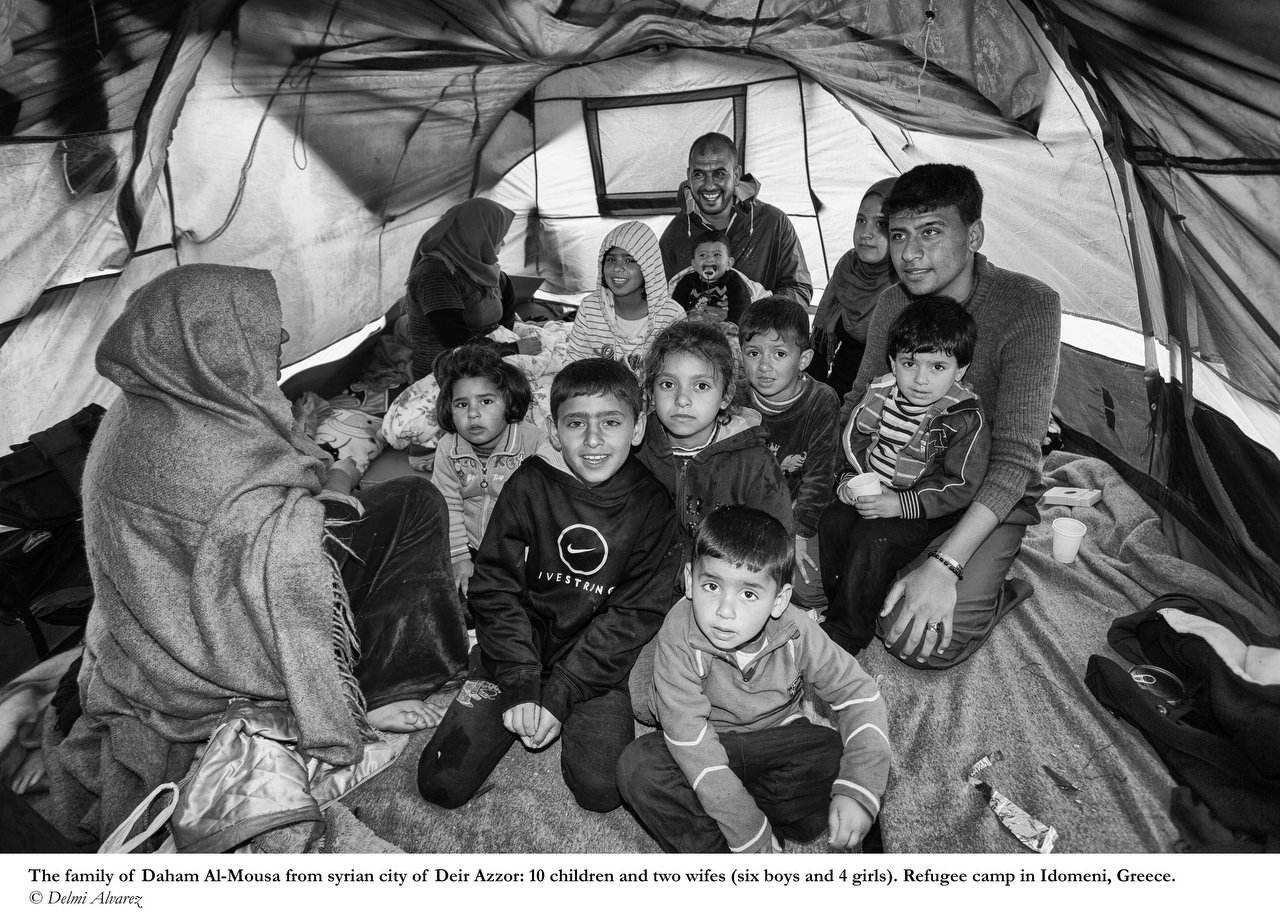
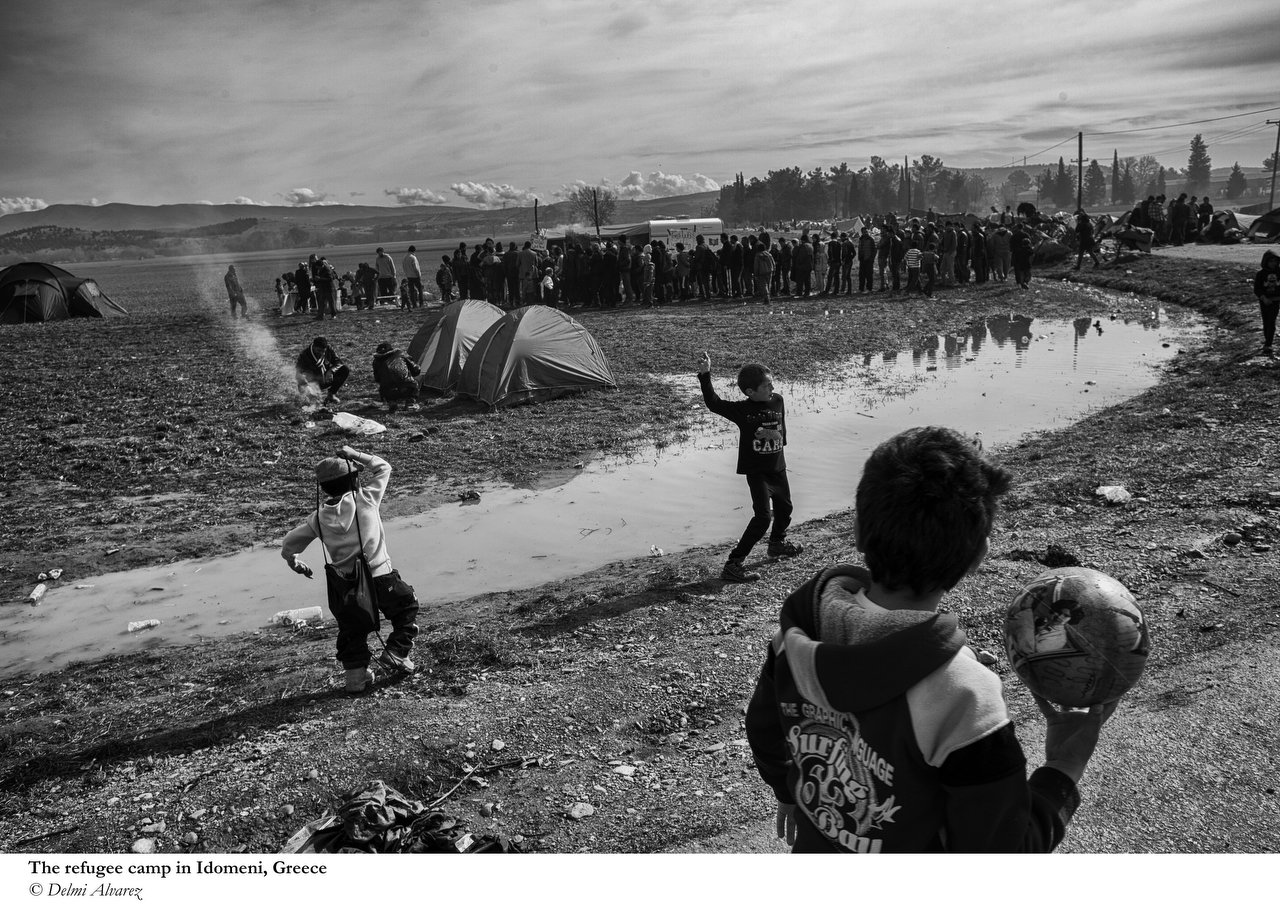
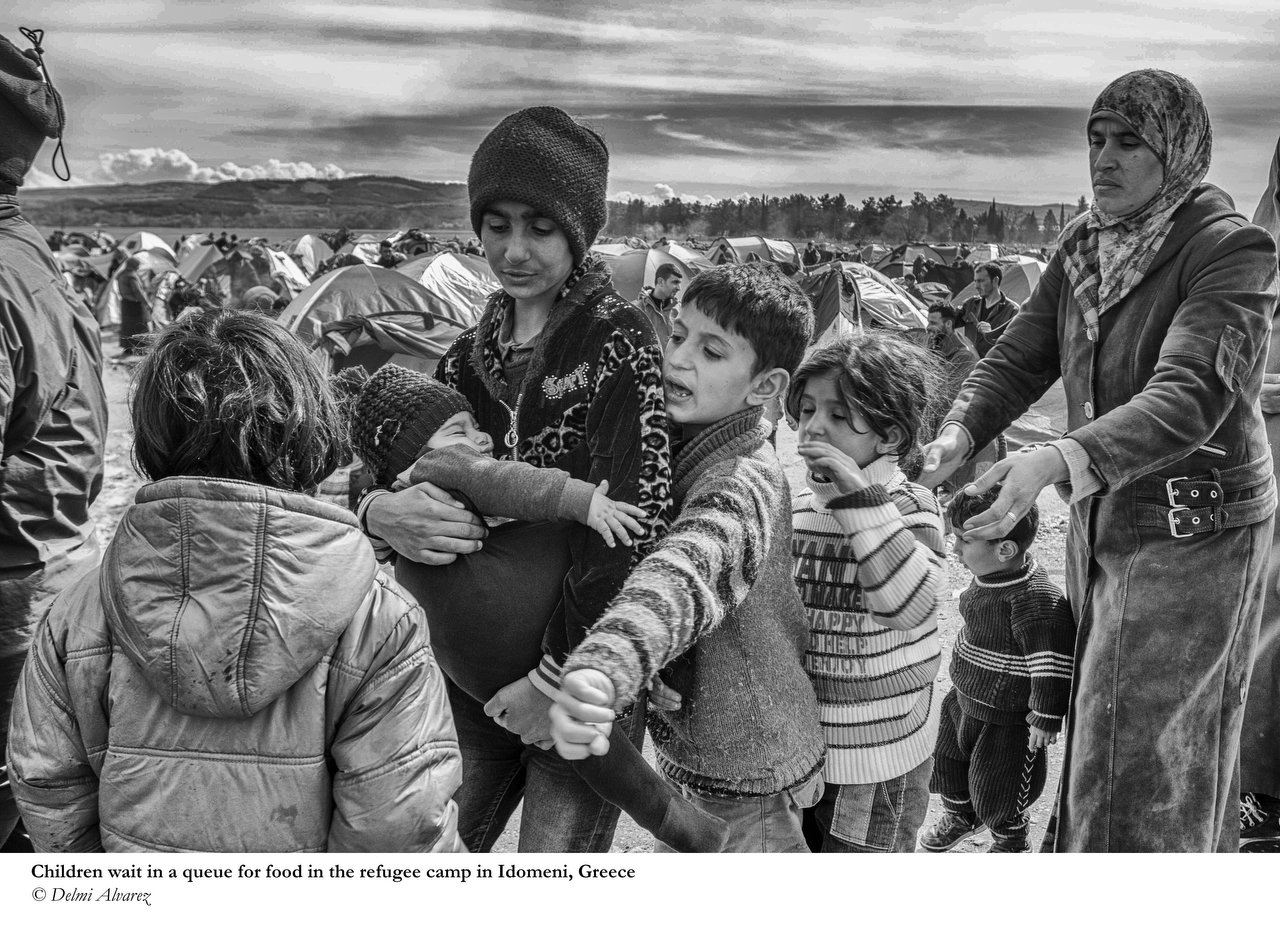
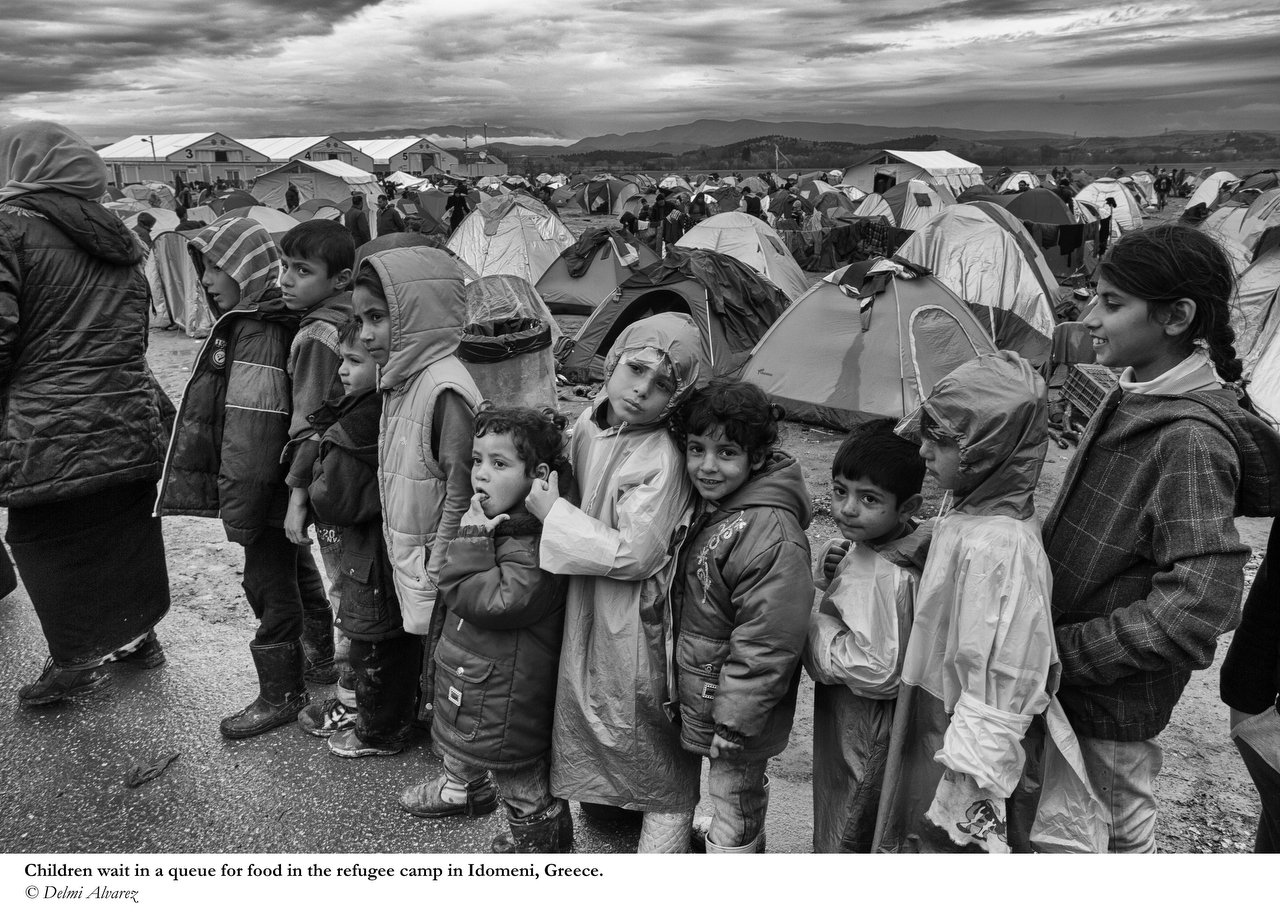
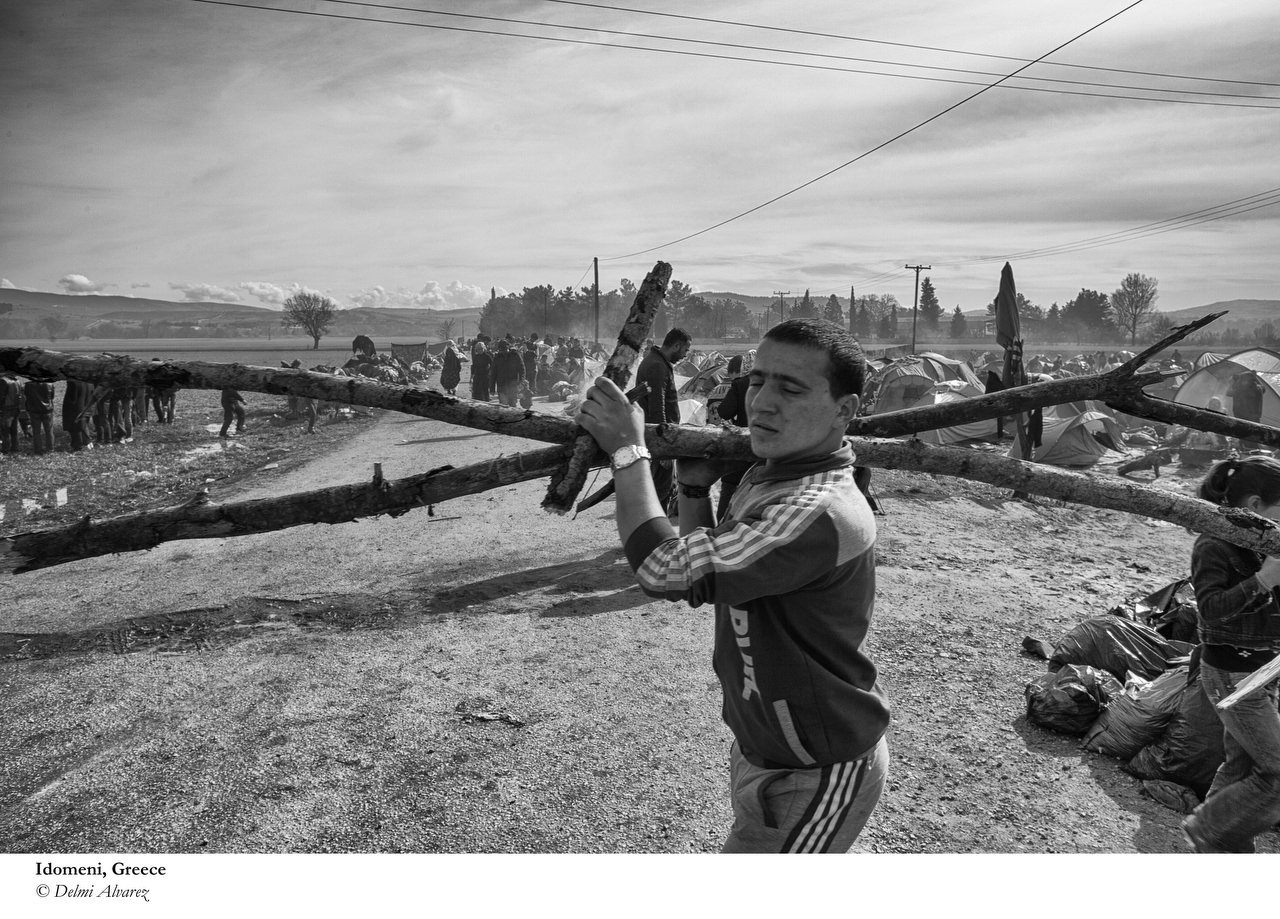
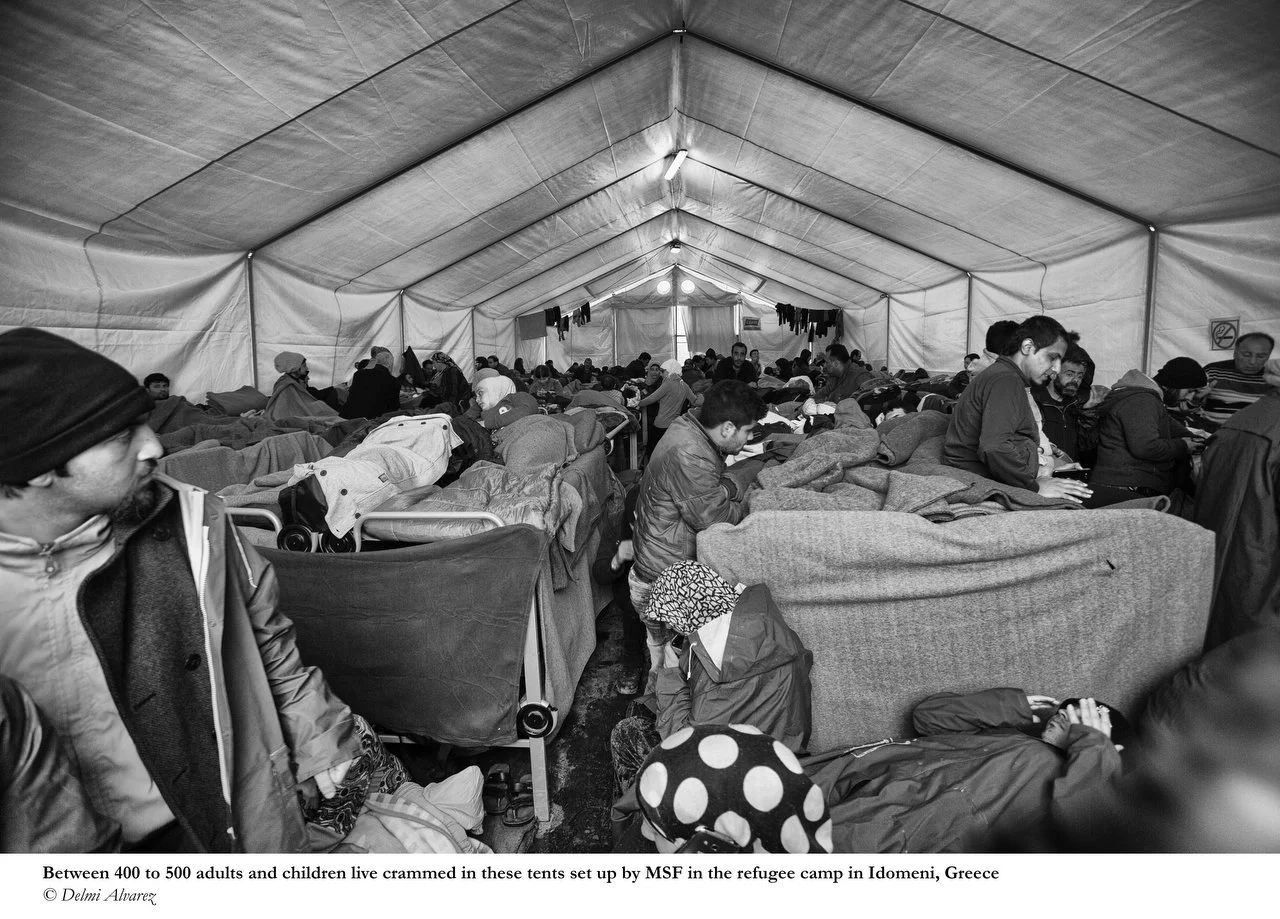
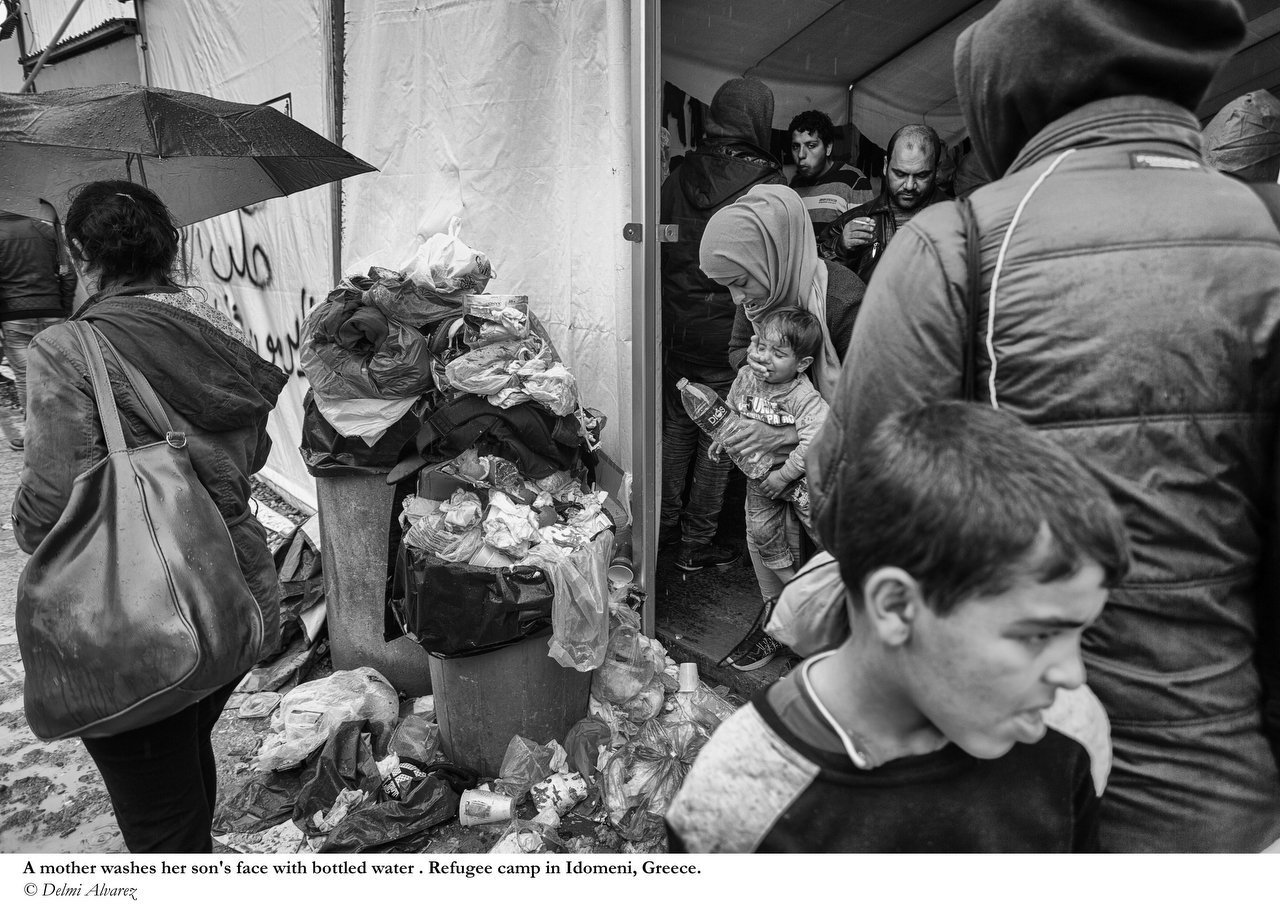
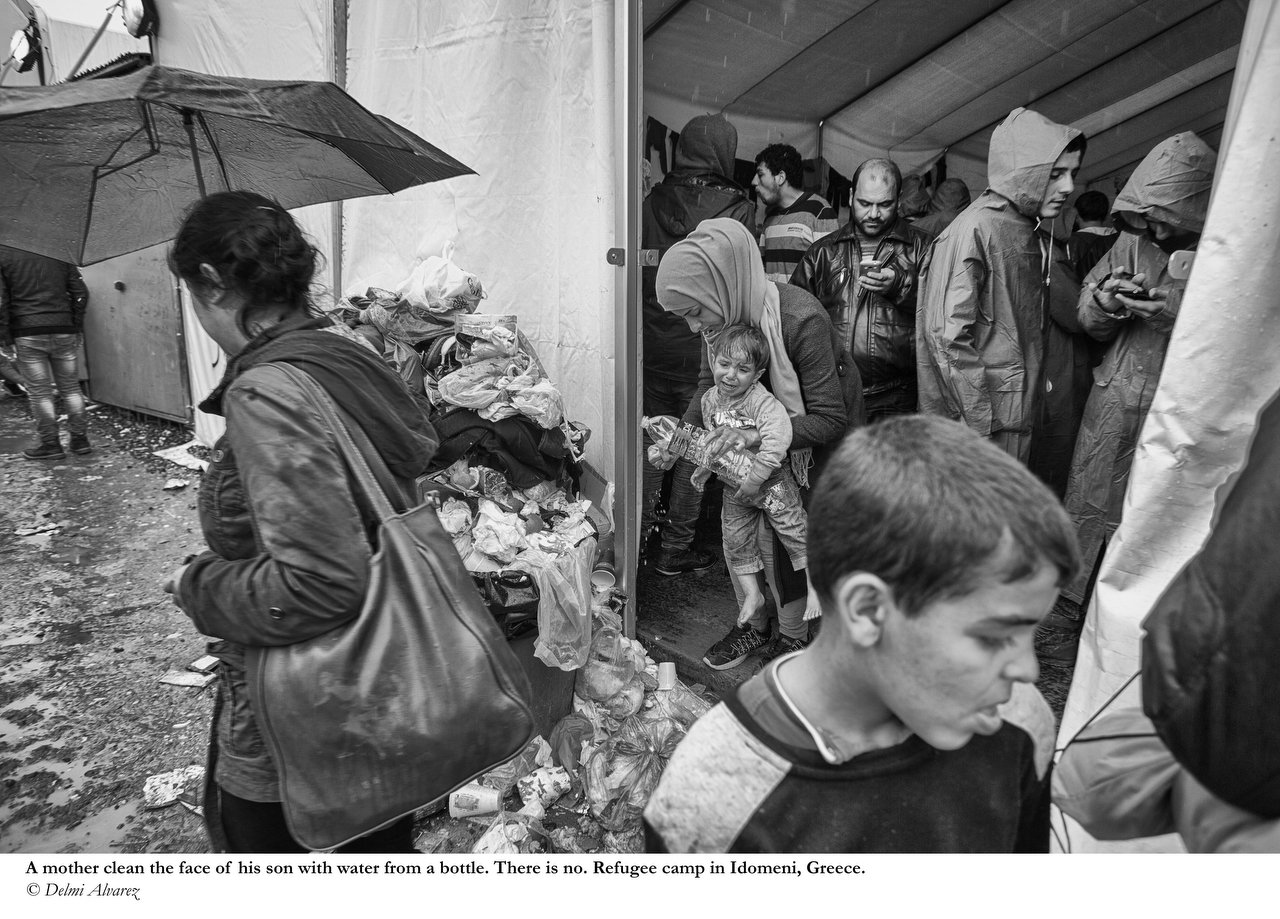
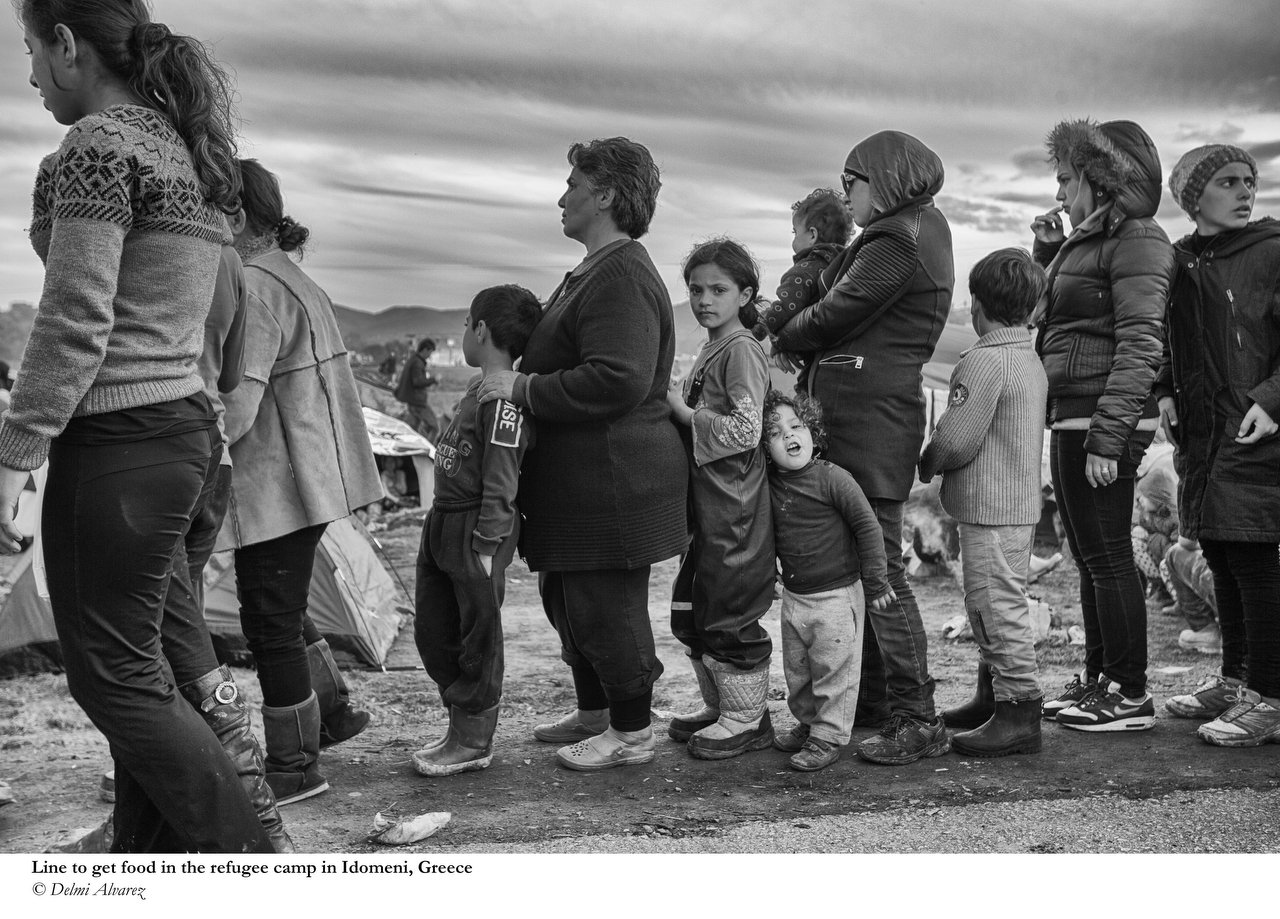
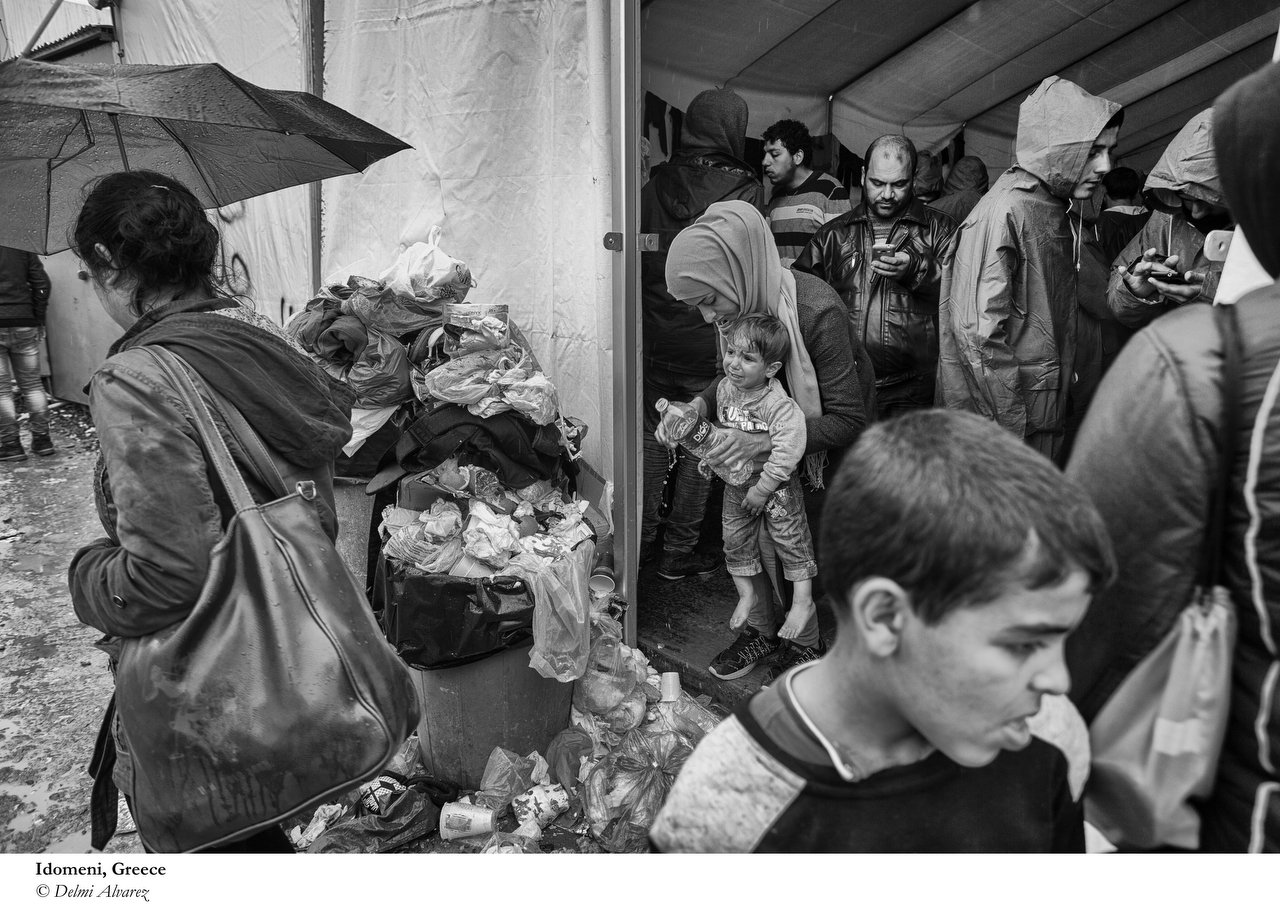
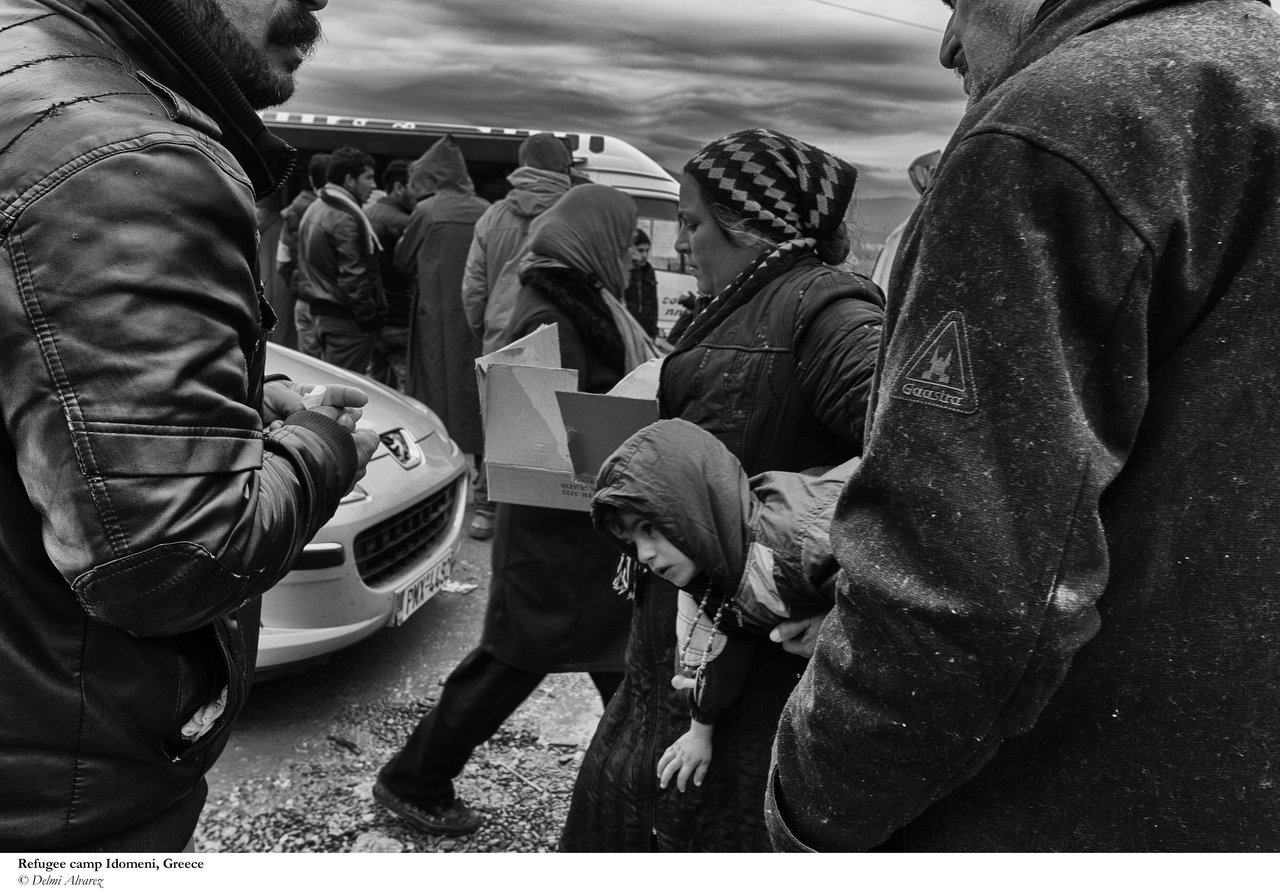
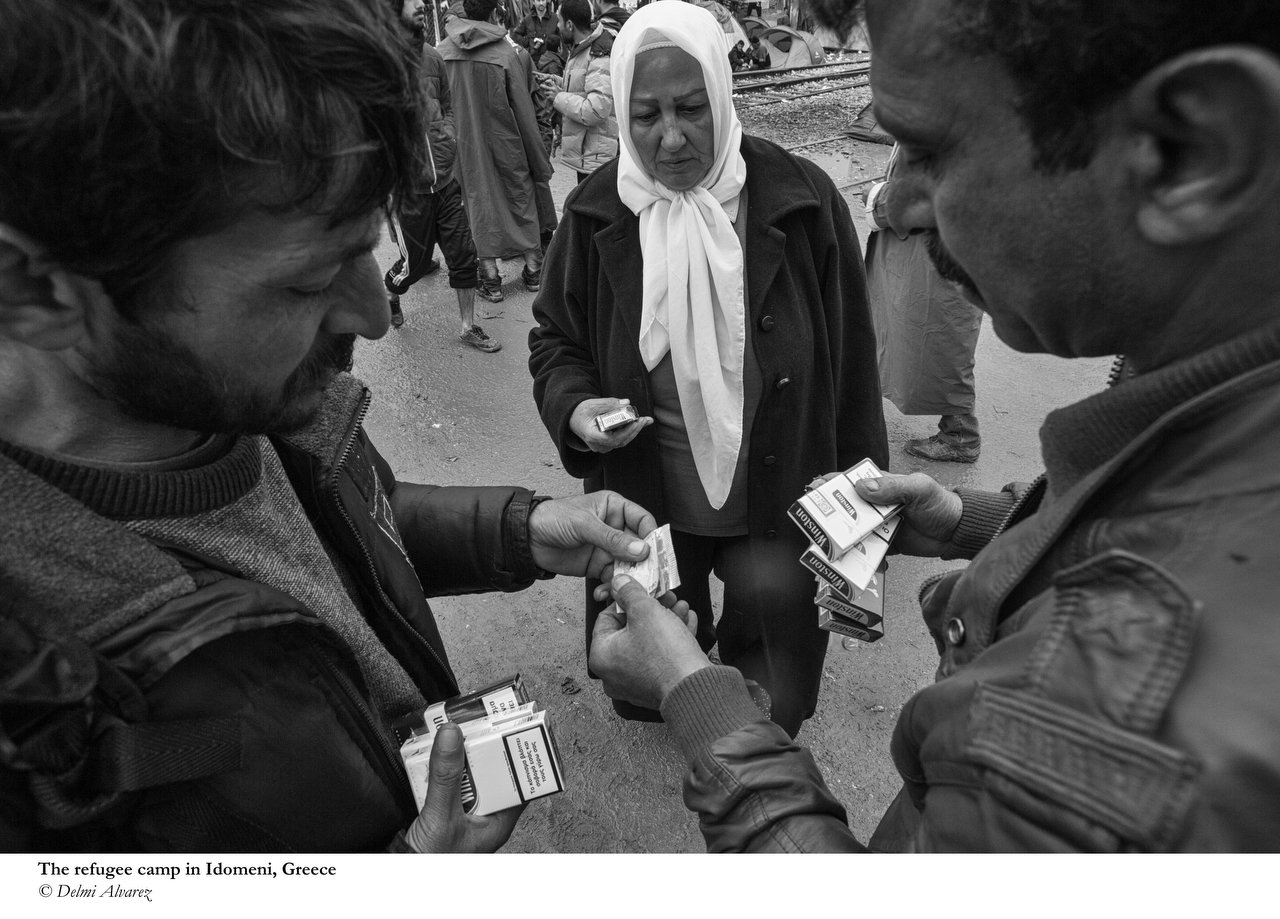
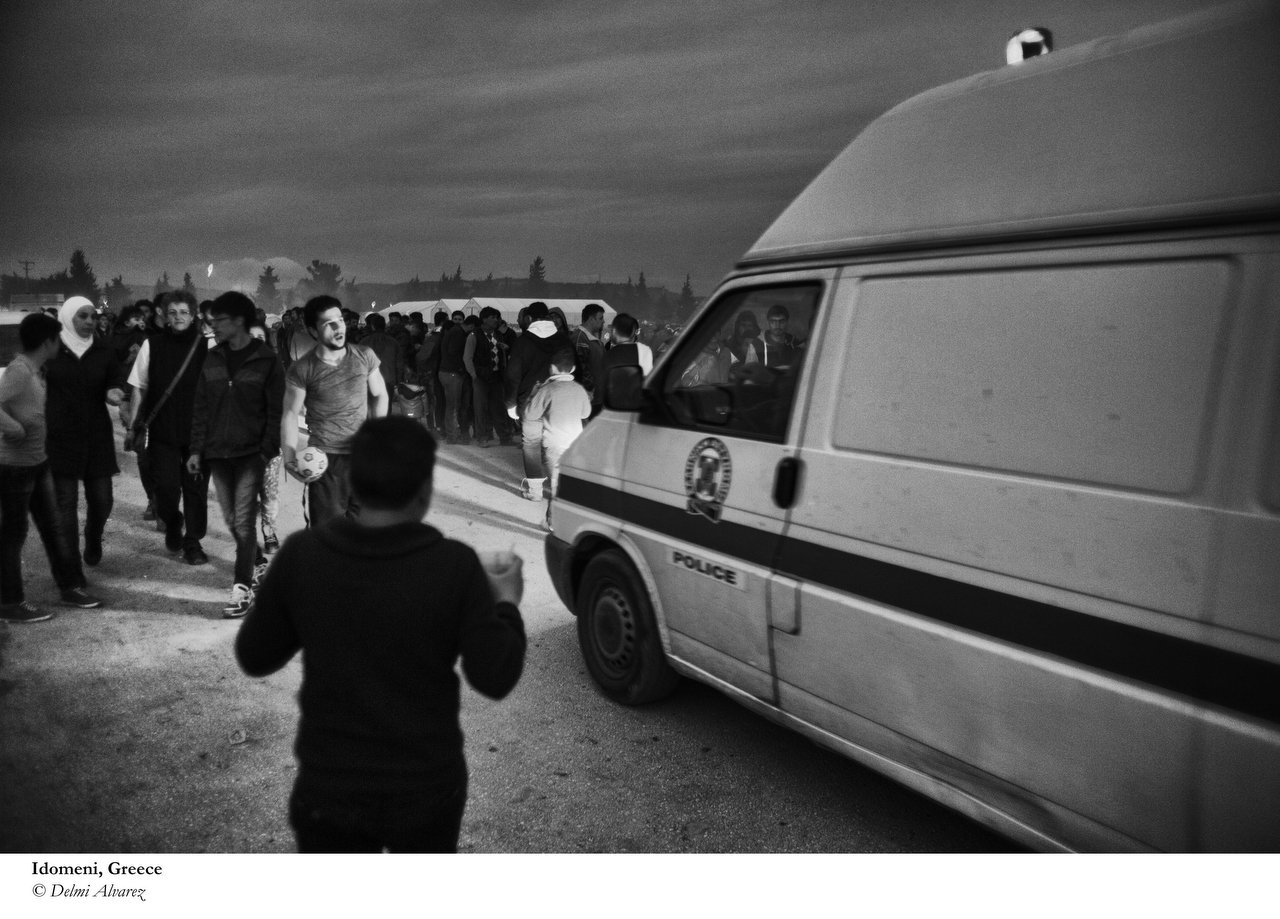
Life in the misnamed Idomeni refugee camp unfolded between the road leading to the train station, the railway tracks leading to Macedonia and its border, and the fields on either side of the road. At home, one of these areas was occupied by families from different countries, mostly from Asia. Within these groups were subgroups based on religion or culture. One afternoon, while making my rounds through the neighborhood, greeting people and leaving mints for the children or a few cookies I'd bought from a black marketeer, I saw several women with their children building a bonfire to prepare dinner. I spoke with them thanks to someone who spoke good English and a little Russian, and they explained that in Idomeni there were many university-educated people, very intelligent people with families and children, who were fighting tooth and nail to escape their circumstances. They always offered tea or coffee, and I, like other colleagues, brought them what we could; I never arrived empty-handed. Smuggling and the hustle to survive were done in plain sight. A woman of about 60 was selling tobacco, which she took out of a black plastic bag. The trucks that delivered food were just as filthy as one would expect. Upon their arrival, people would shove and push to try to get something, especially the young people, who were much more agile and lively. I saw that once, almost at dusk. It was heartbreaking.
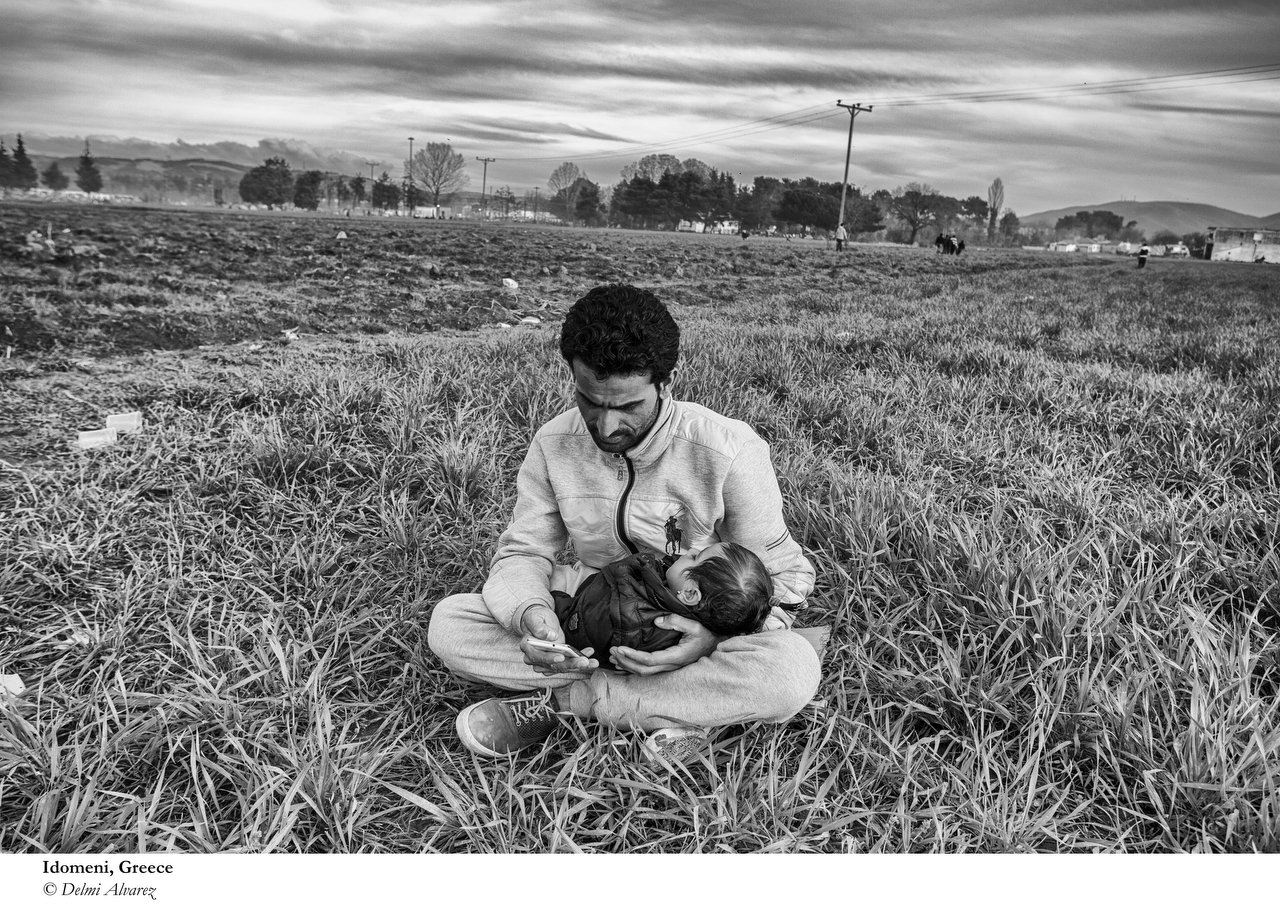
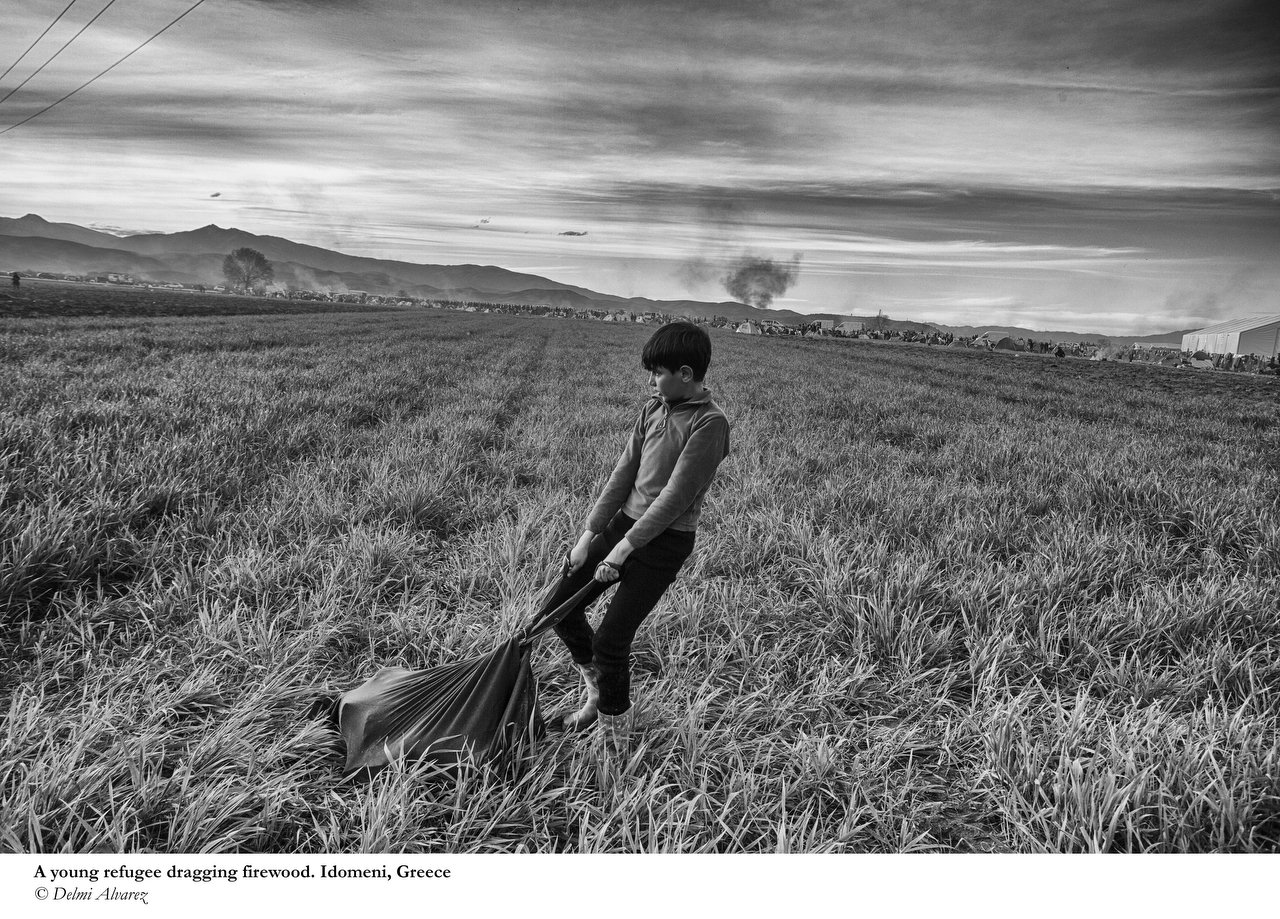
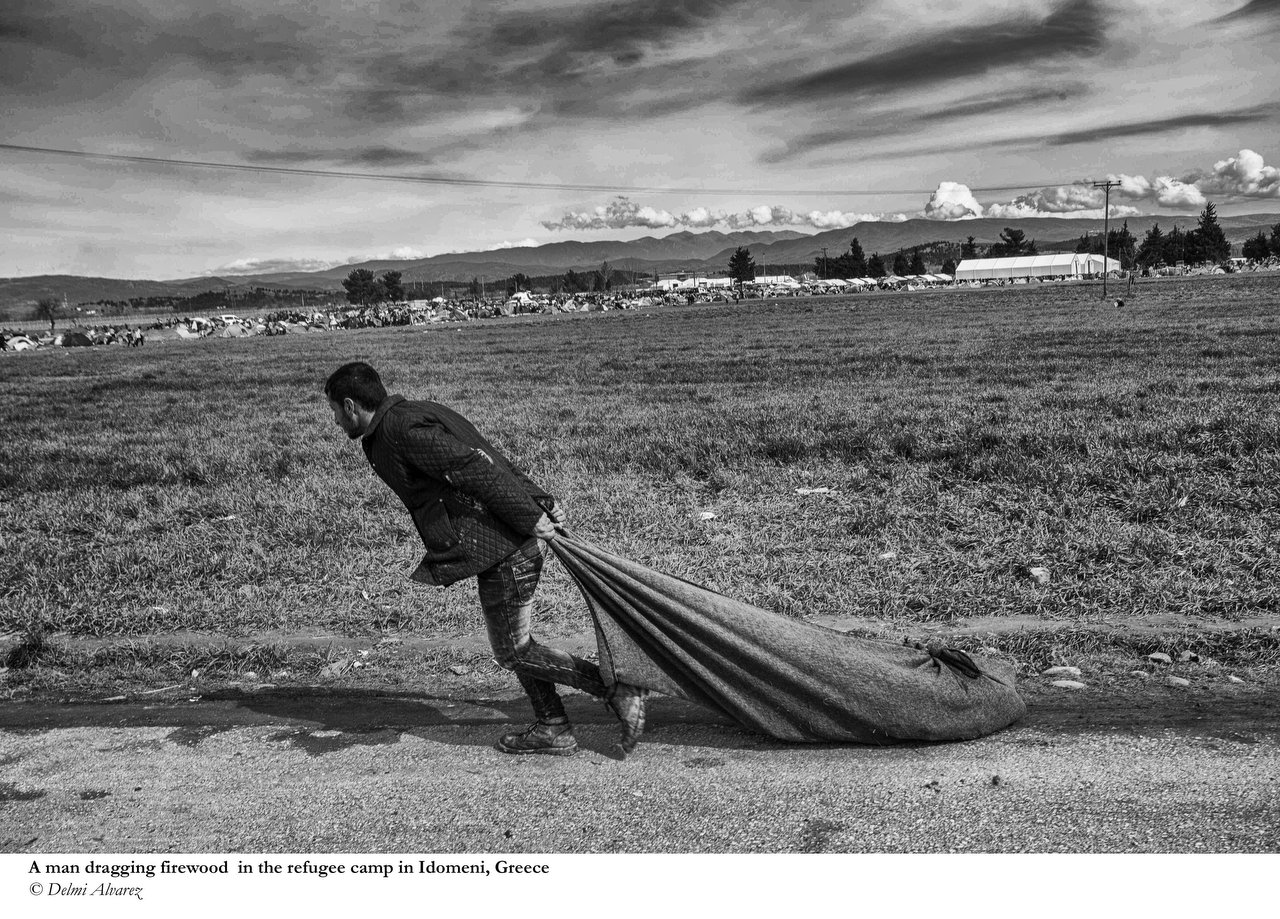
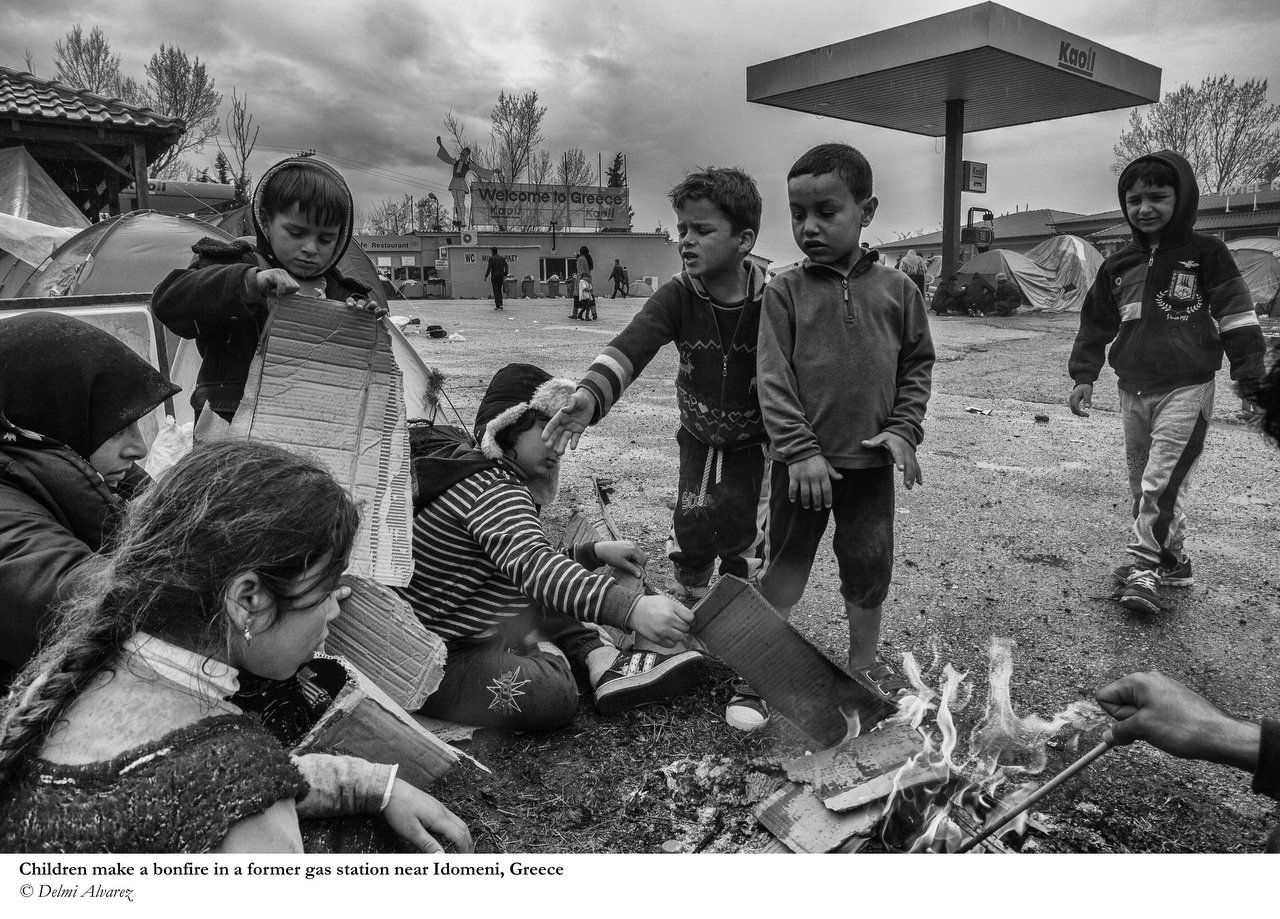
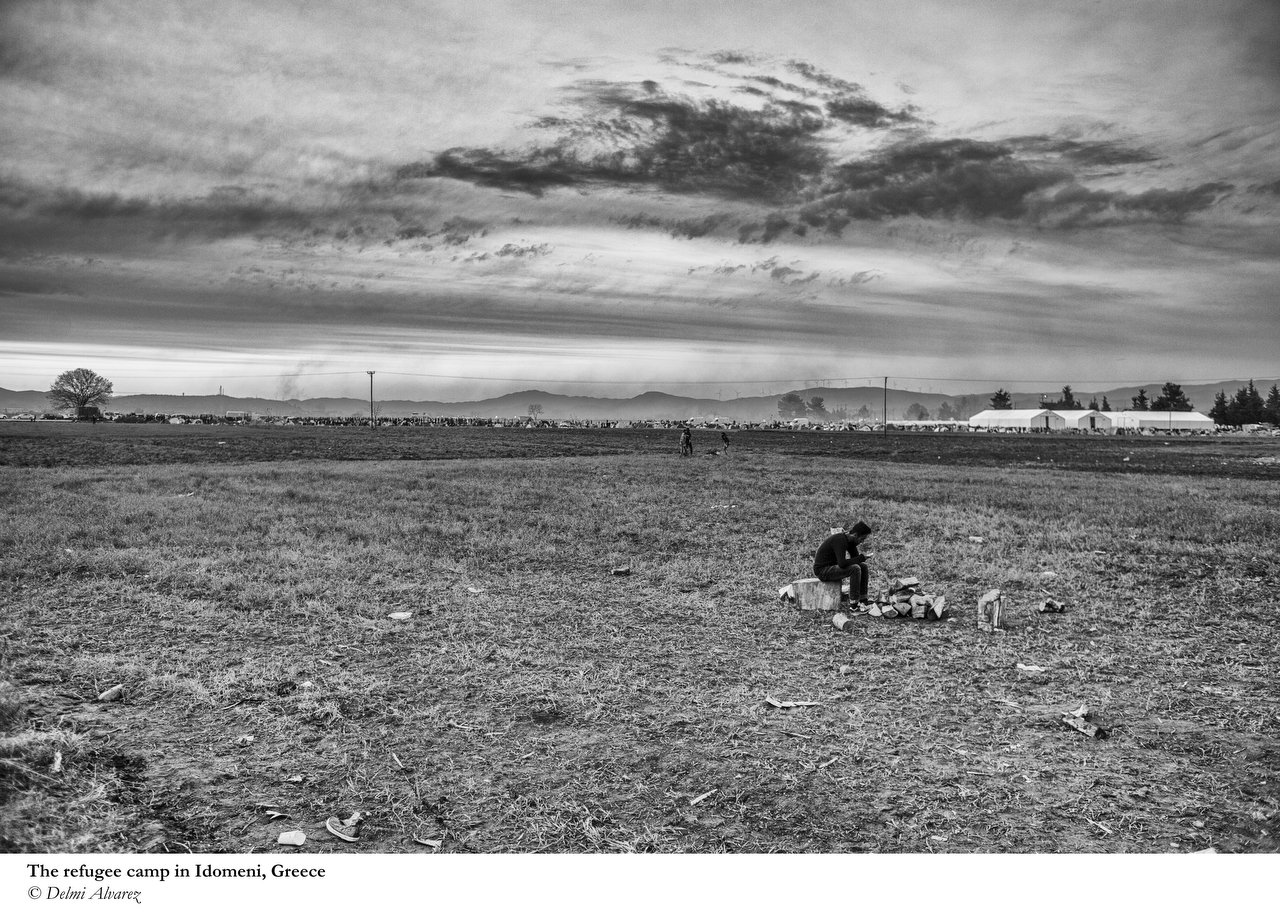
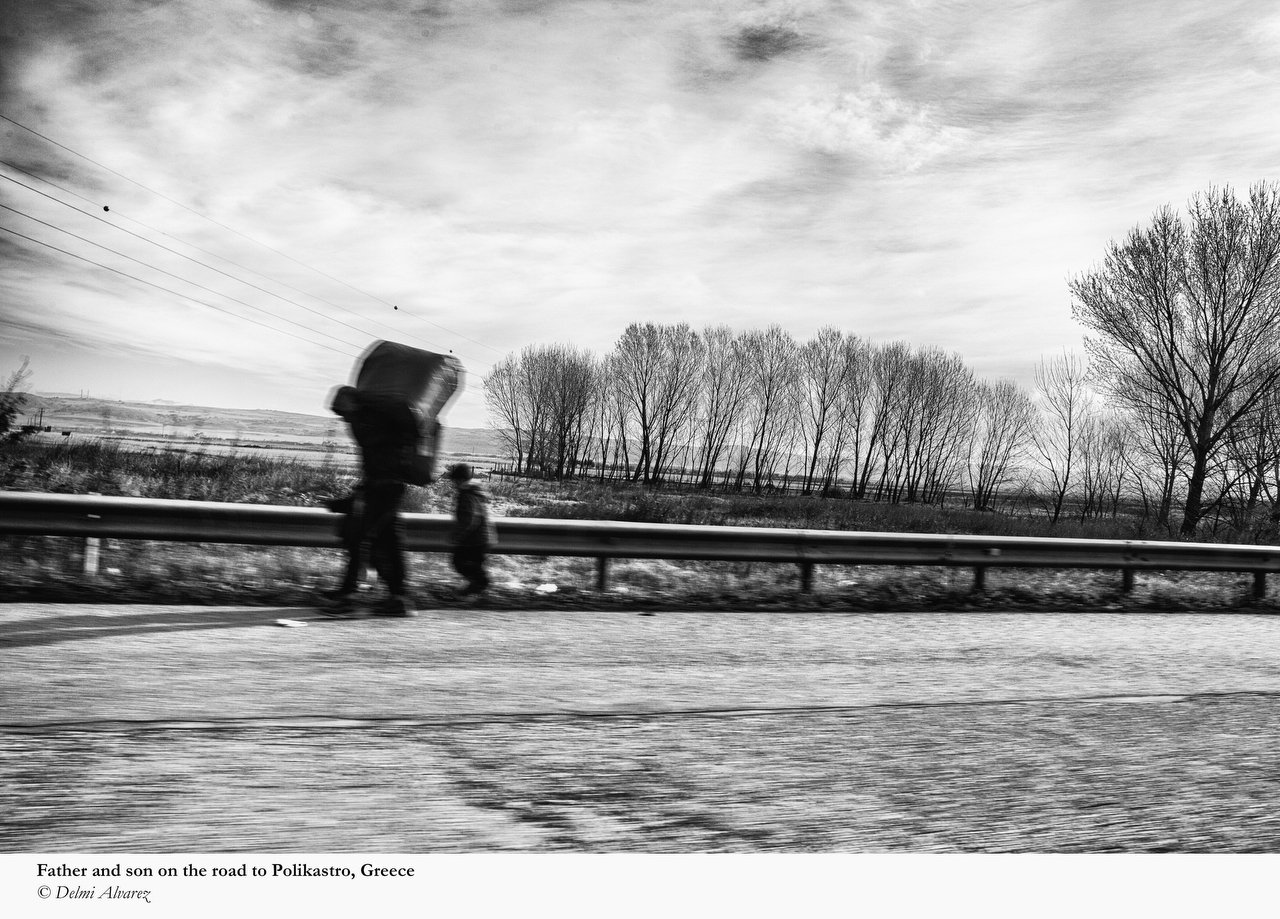
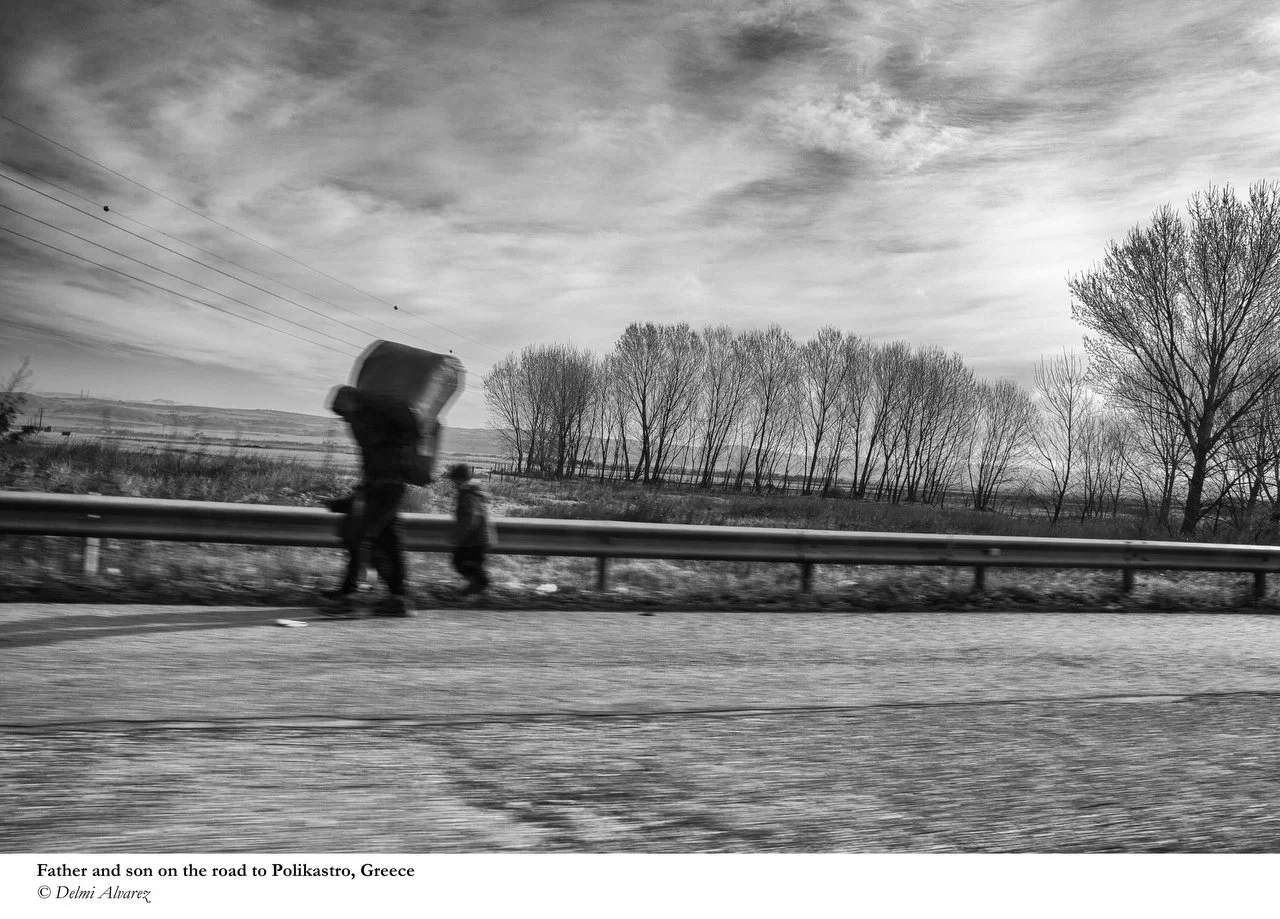
Many of those free goods were sold the next day by the roadside. There was everything: food, biscuits, tobacco, tools, salt, sugar, matches, firewood, powdered milk… In a restaurant a few kilometers from the camp, I found a dozen children building a bonfire. With them were several adults who didn't even flinch at my presence. They told me they were children without families, not under the care of any international organization. My presence there was for documentary purposes, as part of a long project begun in 2004. Transmigrants include different stages: Fortress Europe (Cyprus), the border guards (Latvia), the Calais jungle, Grande-Synthe, Idomeni, and Moria. It was possible to take photographs with relative ease, but sometimes you needed a strong stomach to frame the shot and press the shutter button. One day I saw a father with a very young child in the middle of a field. The coverage was poor, and the Greek government hadn't even installed a repeater with a good signal. People were walking back and forth, moving away from the crowds because the signal was so weak.